


Cyber attacks, hacktivism and disinformation campaigns have become a defining feature of the escalating conflict between Israel and Iran, according to Israeli threat intelligence firm Radware.
Both countries, along with aligned hacker groups, are using cyber space to disrupt vital systems, spread panic, and influence global opinion.
With the US now involved, analysts said the threat could soon extend beyond the region, endangering critical infrastructure worldwide.
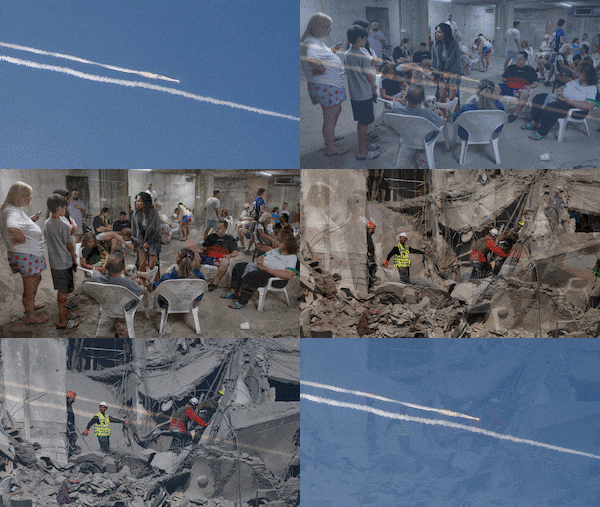
Since Israel’s missile attacks on Iran on June 12 and 13, aggression has spread.
Radware reported a significant rise in state-backed cyber operations, co-ordinated disinformation, and nearly 100 hacktivist groups joining the fray, with more than half of these groups supporting Iran.
The surge reflects a long-standing rivalry between Israel and Iran.
Bassant Hassib, a political cyber security expert, said that both nations view cyber power as essential to their military and political strategies.
Ms Hassib told The National that Israel views cyber power as part of its military strategy, a way to enhance its global technological image and restore public trust at home.
She said that Iran developed capabilities in response to attacks like Stuxnet and now uses them to retaliate and compensate for military losses on the ground.
“Internationally, it serves as both a deterrent and a commercial asset; domestically, it is instrumental in attempting to restore public trust in (Israeli Prime Minister Benjamin) Netanyahu’s regime, which has been damaged by the war on Gaza,” she said.
“Iran, on the other hand, developed cyber capabilities in response to the 2010 Stuxnet attacks on its uranium enrichment facilities – widely attributed to Israel and the US.”
Radware reported that Iranian cyber attacks against Israel increased by 700 per cent following the Israeli strikes. These included distributed denial-of-service attacks, phishing operations, and disinformation campaigns.
Marwan Hachem, co-founder of UAE-based cyber security company FearsOff, said operations in this conflict are no longer just defensive or opportunistic.
“Cyber security is already becoming a key weapon in the intensifying Iran and Israel war,” he said.
One example involved spoofed text alerts designed to look like messages from the Israeli military, warning of terrorist threats near bomb shelters.
Hacktivist groups have also intensified operations.
Mr Hachem highlighted reports of breaches against sensitive agencies, including alleged compromises of Israeli intelligence agencies’ data.
FearsOff cited reports of alleged breaches affecting Israeli intelligence agencies. These claims have not been independently verified.
According to Radware, people like Mr Hamza, commonly associated with pro-Palestinian and pro-Iranian defacement campaigns, and Arabian Ghosts, known for targeting Israeli infrastructure through denial of service attacks, have defaced pages, leaked data, and disrupted Israeli websites.
US involvement raises the stakes
With the US now engaged militarily, cyber security experts and US agencies talk of heightened risks.
"Especially given that Iran warned at the outset of the conflict that any US involvement would result in irreparable damage and could trigger an all-out war,” Ms Hassib said.
She added that pro-Iranian hacktivist groups have already threatened cyber attacks against other countries.
“For instance, the hacktivist group Mysterious Team Bangladesh announced on its Telegram channel that it would launch cyber attacks against critical government infrastructure in Jordan and Saudi Arabia if they support Israel,” she said.
Reuters reported on Wednesday that Israel-linked group Gonjeshke Darande, or Predatory Sparrow, claimed responsibility for disabling Iran’s Sepah Bank and attacking the cryptocurrency exchange Nobitex, destroying nearly $90 million in digital assets.

The US Department of Homeland Security issued a National Terrorism Advisory System bulletin on Sunday, warning that the Iran–Israel conflict has elevated the risk of “low-level cyber attacks against US networks by pro‑Iranian hacktivists” and that “cyber actors affiliated with the Iranian government may conduct attacks against US networks”.
Sectors most vulnerable to attack
Ms Hassib said that the widespread reliance on digital technologies across economies, infrastructure, militaries, and daily life means “nearly every sector is vulnerable to cyber attacks”.
She said that in times of conflict, cyber operations focus on critical sectors to inflict maximum damage.
“Energy, water, finance, defence, health care, telecoms and media are all high on the list because of their societal impact and strategic importance,” she said.
Ms Hassib added that AI-powered cyber security tools and autonomous systems, including drones, introduce risks because “they can be manipulated, hijacked or used for unwanted attacks and surveillance”.
Radware also highlighted that both sides in the conflict are using AI-generated deepfakes and doctored images to spread lies and justify military actions.
Beyond encryption: building resilience
While encryption remains vital, Ms Hassib said that organisations must adopt a broader resilience strategy.
She said this includes backups, regular penetration testing, employee training, incident response drills, and cross-sector intelligence sharing, according to Ms Hassib.
Sheadded that organisations should “learn from past incidents, co-ordinate with others on cyber security efforts and share threat intelligence with sectors most at risk”.
Consequences of a successful attack
The risks of major cyber attacks extend beyond technical disruption. Ms Hassib warned of the danger of economic losses, threats to national security, and even dangers to lives, especially if critical sectors like health care are hit.
“These attacks can cause operational disruption, economic losses, damage to reputation, and a loss of public trust,” she said, noting that critical sectors face unique risks.
“In healthcare, cyber attacks could put lives at risk or trigger a public health crisis. In defence, they could lead to espionage, undermine sovereignty, compromise national security and even result in the loss of control over sensitive military technology,” she said.
Industry experts warn that as the military conflict intensifies, cyber operations are likely to escalate, with businesses and governments urged to strengthen defences and prepare for more complex digital disruptions.

