



Morocco coach Walid Regragui said his team can improve on their 2-0 win over Belgium and that they "can do anything" at the World Cup.
A point in their final Group F assignment against already-eliminated Canada on Thursday will see Morocco reach the knockout round of a World Cup for the first time since 1986.
Goals from Romain Saiss and Zakaria Aboukhlal at Al Thumama Stadium secured Morocco their first World Cup win in 24 years on Sunday as the energetic North Africans made Belgium, ranked second in the world by Fifa, look pedestrian.
"We know if you don't give 100 percent it's impossible to win," Regragui told a press conference. "But with these fans, with these players and this spirit we can do anything.
"The competition is not over, we have to recover quickly for the game against Canada. Hopefully we can get a good result for the qualification."
Riots broke out in several Belgian and Dutch cities after Morocco’s upset win as Belgian police detained about a dozen people after they deployed water cannons and fire tear gas to disperse crowds in Brussels and eight more in the Northern city of Antwerp, the Associated Press reported.
Two police officials were injured in the Dutch port city of Rotterdam. By late evening Sunday, an uneasy calm had returned to most of the cities involved.
All five African teams were dumped out in the group stage in Russia four years ago but Morocco joined continental Senegal in winning their second match in Qatar.
The Atlas Lions sit top of the group on four points, having also held 2018 runners-up Croatia to a goalless draw.
Player ratings
-
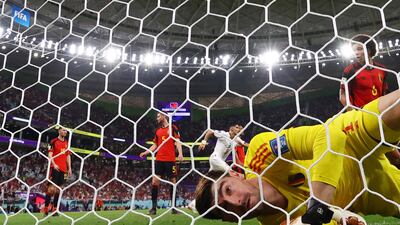
BELGIUM RATINGS: Thibaut Courtois 4 – Was twice undone by free-kicks, firstly from Ziyech and an effort that was later ruled out for offside, then again for the decisive goal at his near post. Could do little about the second. Reuters -
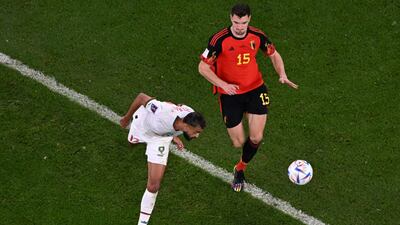
Thomas Meunier 4 – Overlapped well on the right but his final delivery always let him down. Was also guilty of giving needless free-kicks away in his own half. AFP -
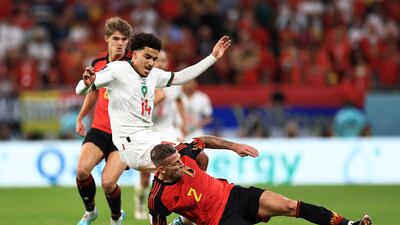
Toby Alderweireld 4 – Belgium’s tempo was too slow and that started from the back, with Alderweireld and others taking too many touches and allowing Morocco to recover their shape. He did, though, make a key interception towards the end with Morocco threatening. Getty -
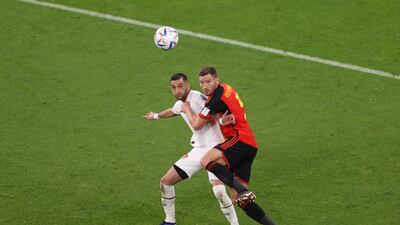
Jan Vertonghen 5 – Won a lot in the air but like Alderweireld, his passing was usually sideways, and slowed things down. He came close with a header in the final ten minutes. Getty -
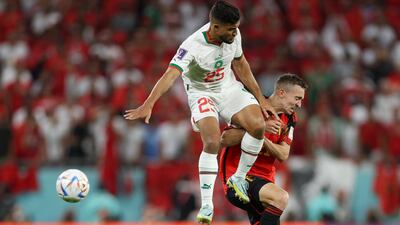
Timothy Castagne 5 – Looked to get forward when he could, but had his hands full with Ziyech. Getty -

Andre Onana 5 – Had a half chance from a Belgium corner. He beat Munir to the ball but could only head over. Soon after, he picked up a senseless yellow card that will see him miss the game against Croatia. Overall, he didn’t do enough. EPA -

Axel Witsel 5 – Ineffective going forward from the middle, and was guilty of slowing the play down. Did his defensive duties well. Getty -

Thorgan Hazard 6 – His creativity led to the first chance of the game, his angled through ball releasing Batshuayi, who tested Munir. Lively throughout, though unable to really penetrate the opposition. EPA -
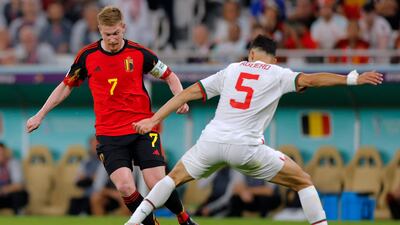
Kevin De Bruyne 5 – Yet to hit his stride at this World Cup, he cut a frustrated figure throughout. He came closest with a free-kick in the first half from a tight angle, but his effort landed on the roof of the net. AFP -
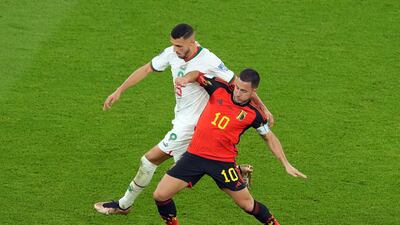
Eden Hazard 4 – Dropped deeper and deeper to receive the ball and so didn’t operate in dangerous positions. When he did manage to fashion a shooting opportunity, in the second half, he forced Munir into a save to his left. Ultimately, he was ineffective, and was substituted. PA -
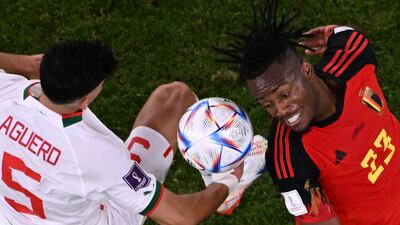
Michy Batshuayi 4 – Had a good early chance and, after timing his run to perfection, forced Munir into a save following good work from Thorgan Hazard. For a target man, though, he didn’t keep the ball enough, and strayed offside too many times. AFP -
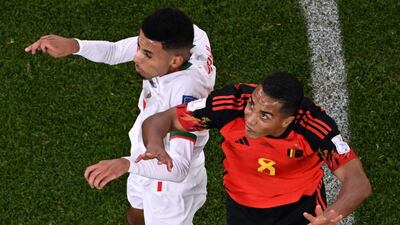
SUBS: Youri Tielemans (Onana, 60) 5 – Made a crunching tackle with his first touch to win the ball back in a dangerous area, then anonymous thereafter. AFP -

Dries Merterns (E Hazard, 60) 6 – Created a bit of magic within minutes of coming on; he created a shooting chance from the edge of the area and forced Munir into a save. AP -

Leandro Trossard (T Hazard, 75) N/A – Will no doubt have watched with frustration as both Hazard brothers flattered to deceive. Getty -
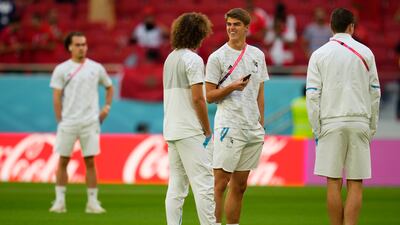
Charles de Ketelaere (Batshuayi, 75) N/A – Had little joy, like the player he replaced. AP -

Romelu Lukaku (Meunier, 81) N/A – It says much about Belgium’s performance that Roberto Martinez turned to Lukaku ahead of schedule. He won a corner with his first contribution. Getty -

MOROCCO RATINGS: Munir 7 – A late addition at kick-off, was called into action early on to block smartly from Batshuayi. He looked confident when defending corners, often clearing with a solid punch. Saved well to his right to deny Hazard in the second half. Getty -
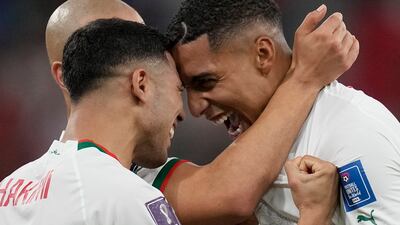
Achraf Hakimi 6 – Made a good and dangerous run into the area just after the half hour mark. He looked across and, with few options, he blazed over with a wild effort. Was carrying a knock and looked a little bit off his usual pace. AP -
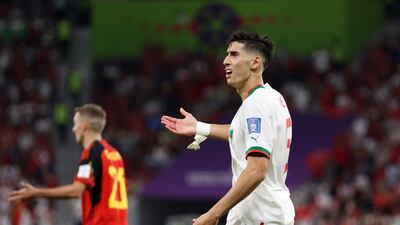
Nayef Aguerd 7 – Impressive throughout. He was aggressive in his tackling, but also accurate with both his long and short passing. Getty -
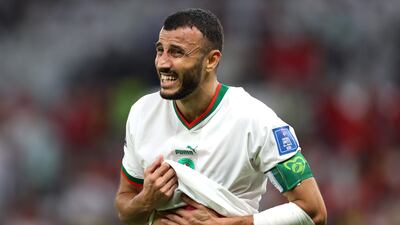
Romain Saiss 7 – Strayed offside during Ziyech’s goal-bound free-kick, which obscured Courtois’s view, and led to VAR ruling out the goal. He then did exactly the same when breaking the deadlock, but stayed onside. Kept Batshuayi quiet throughout. Getty -

Noussair Mazraoui 7 – Solid performance from Mazraoui who moved to right-back following Hakimi’s substitution. AFP -
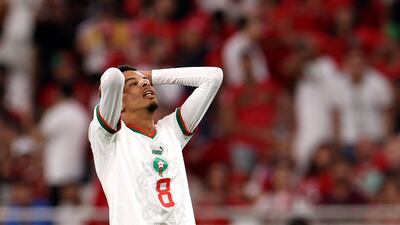
Azzedine Ounahi 7 – A raw performance from the youngster, who worked tirelessly throughout and gave everything to the cause while looking stylish with the ball at his feet. AFP -

Nordin Amrabat 8 – Worked tirelessly at both ends, winning the ball back and then attempting to drive his team forward. Was central to Morocco’s play throughout. EPA -

Selim Amallah 7 – One of four Moroccan players born and raised in Belgium, Amallah worked hard. He had a shooting opportunity in the first half, albeit a difficult one, and hit it high and wide. Was more involved in this match than he was against Croatia, getting a number of successful passes in. EPA -
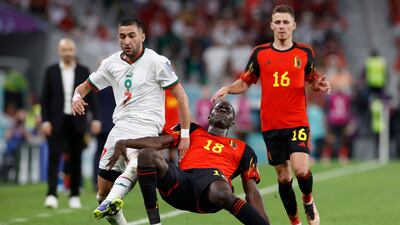
Hakim Ziyech, 9 – Always looked one of the more dangerous players, and he thought he’d given his side the lead when he converted from a free-kick. However, after a VAR check, Saiss was adjudged to have been offside. Came close again from distance following a progressive move from Morocco, but his effort drifted over the bar. Cut the ball back for Aboukhal to put the game beyond doubt. EPA -
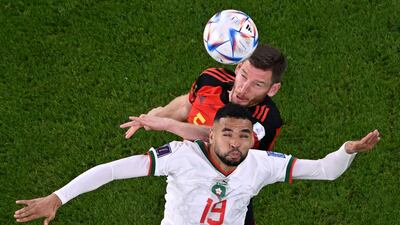
Youssef En-Nesyri 6 – Arguably the weak link in Morocco’s attack, and who didn’t offer as much as a threat as those playing behind him. AFP -
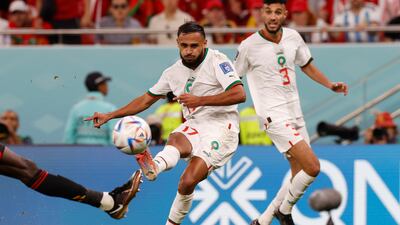
Sofiane Boufal 7 – While a lot of Morocco’s play came from the other side of the pitch, Boufal had one of the best chances of the game when, after dropping his shoulder, he lost Meunier and sent a low effort just wide of Courtois’s post. Always a threat. EPA -

SUBS: Yahya Attiat-Allah (Amallah, 68) 7 – Made an instant impact, winning the free-kick that led to the opening goal. Getty -
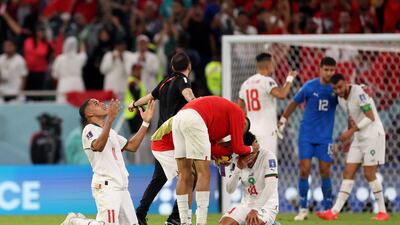
Abdelhamid Sabiri (Hakimi, 68) 8 – A stunning free-kick, a wicked delivery that caught out Courtois at his near post, put Morocco ahead. Reuters -
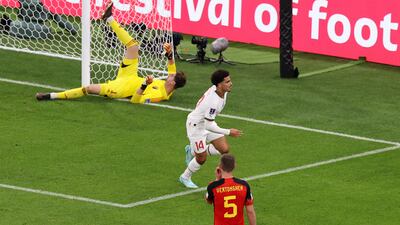
Zakaria Aboukhlal (Boufal, 73) N/A – Scored the decisive second following a neat cut back from Ziyech, an unstoppable finish into the top corner. Getty -
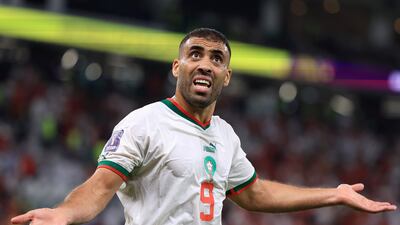
Abderazak Hamdallah (En-Nesyri, 73) N/A – Made a dangerous break in the closing stages and held the ball up well before forcing a corner. Getty -
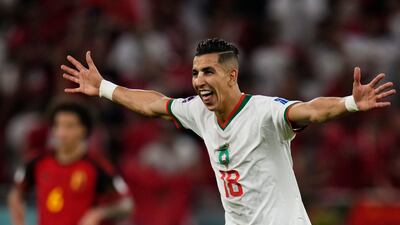
Jawad El Yamiq (Ounahi, 78) N/A – Made his World Cup debut and did little wrong in his 15-minute cameo. AP


"We can still be better," said Regragui, who only took over as coach from the sacked Vahid Halilhodzic in August. "I'm not happy with four points, I want more than that. I want to qualify.
"Of course it will be tougher if we get to the knockout stage but that's the level I want to get to. We've matched two of the best teams in the world."
The game started in bizarre fashion for Morocco, with goalkeeper Yassine Bounou asking to be withdrawn from the team after the national anthems.
Regragui said the Sevilla stopper had suffered an injury towards the end of Croatia game and felt something in the warm-up.
Munir El Kajoui took his place and made some crucial saves to keep a clean sheet.
"Munir did a great job. I have great players. They listen to the instructions and they fight with all of their heart," added Regragui. "Keep focused, keep positive and we will get great results."

Belgium coach Roberto Martinez was at a loss to explain why his side have been so poor in their opening two matches of the World Cup, but put Sunday’s surprise loss to Morocco down to a fear of losing and not enough quality in their attack.
Belgium stumbled past Canada 1-0 in their Group F opener and were below par again as they slipped to defeat against a spirited Moroccan side roared on by the majority of the 43,000 fans.
The setback leaves Belgium needing to beat group leaders Croatia in their final match to guarantee a place in the last-16
"We haven't been the best Belgium at this World Cup yet," he admitted. "Today I thought we played with the fear of losing. Without the ball we still work for each other but when we have the ball, we don't stand out, we are not ourselves. We have to work on that.
"We have to stay together now and become stronger. I know this group, we will be ready for Croatia."
The first goal scored by Saiss slipped in at goalkeeper Thibaut Courtois’s near post, a collective error in defending a set-piece, but Martinez said that did not point to a lack of organisation.
"We didn't take advantage of our good moments in the first half and that first goal from Morocco determined the rest of the game," he said.
"We have been defending those standard situations in the same way for six years [since he has been in charge]. If the ball is kicked well, those are very difficult balls for a keeper.
"After the goal, the game changed radically and we were not careful enough with the ball to hurt Morocco."

