



Michy Batshuayi's first-half goal proved enough for a below-par Belgium to squeeze to a 1-0 win over a Canada side playing their first World Cup match for 36 years on Wednesday.
Belgium goalkeeper Thibaut Courtois saved Alphonso Davies' early penalty and Batshuayi opened the scoring against the run of play in the 44th minute.
John Herdman's Canada, roared on by their vocal support, also had another strong penalty appeal turned down and dominated the second half to no avail.
Belgium were without injured record goalscorer Romelu Lukaku and struggled throughout with the pace of Canada's forwards.
But the 2018 semi-finalists clung on to move top of what could prove a hotly contested Group F after Croatia and Morocco's goalless draw earlier on Wednesday.
Canada will head into their game against Croatia on Sunday still full of confidence after more than matching the team ranked second in the world, who next face Morocco.
The North Americans, matching Belgium in formation by playing three at the back, made a bright start and Jonathan David's low effort was deflected wide.
From the resulting corner, Tajon Buchanan's strike was blocked by Yannick Carrasco with his arm and a penalty was awarded after a VAR check in the 11th minute.
But Davies produced a weak effort that was saved low to his right by Courtois, before David lashed the rebound over the crossbar.
-
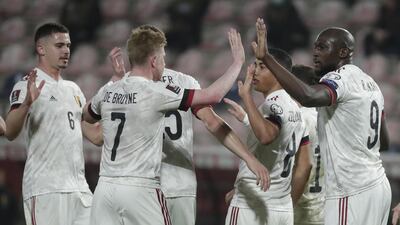
HOW BELGIUM QUALIFIED FOR WORLD CUP 2022: (Group E) March 24, 2021. Belgium 3 (De Bruyne 22', T Hazard 28', Lukaku pen 73') Wales 1 (Wilson 10'): The world's No 1-ranked side recovered from falling a goal down to start their campaign with a win, with Manchester City's Kevin de Bruyne among the scorers. Belgium manager Roberto Martinez said: "We knew it was going to be a tough game and it became even harder in the moment we conceded the first goal. I'm pleased with the style of the performance." EPA -

March 27, 2021. Czech Republic 1 (Provod 50') Belgium 1 (Lukaku 60'): Romelu Lukaku rescued a point for Belgium to make it 36 goals in his past 31 international appearances. Martinez said: "We didn't find our rhythm, or our level that we are used to. We needed to defend our box frequently. We created some good chances, but the draw is a fair result." Reuters -

March 30, 2021. Belgium 8 (Batshuayi 14', Vanaken 17', 89'), Trossard 38', 75', Doku 42', Praet 49' Benteke 70') Belarus 0: Brighton's Leandro Trossard and Leicester's Dennis Praet scored their first Belgium goals in a crushing victory. The hosts had 21 attempts on goal. Martinez said: "I'm delighted with what I've seen from every player. I've seen players taking decisive roles, I was very pleased with the performance of the young guys and how this group works together." Getty -
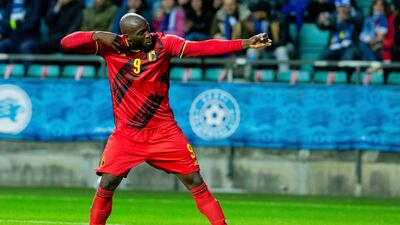
September 2, 2021. Estonia 2 (Kait 2', Sorga 83') Belgium 5 (Vanaken 22', Lukaku 29', 52', Witsel 64', Foket 76'): Chelsea striker Romelu Lukaku moved up to 66 goals in 99 games for Belgium with a double as they came from behind to seal three points. "With the first goal, all credit should go to Estonia," said Martinez. "It was a great shot. That happens in football. But I'm pleased that we remained calm." AP -

September 5, 2021. Belgium 3 (Lukaku 8', E Hazard 41', Saelemaekers 65') Czech Republic 0: Romelu Lukaku marked his 100th cap with an early goal that put Belgium on the way to an impressive win. Martinez said: "This game, having possession in the 'Belgian way', playing fast but smart, having the ball circulating a lot, was what I wanted to see. The players did exactly what I asked of them." AFP -
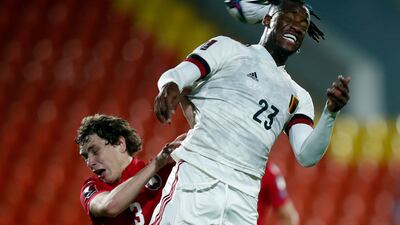
September 8, 2021. Belarus 0 Belgium 1 (Praet 33'): No repeat of the eight-goal battering Belgium dealt out to Belarus this time, with Dennis Praet's first-half goal sealing a narrow win. Martinez on injury-hit Eden Hazard's appearance as a substitute: “The fact that Eden wanted to come here, that he wanted to travel this far, knowing he couldn't play 90 minutes, shows that Eden is back on every level," AFP -
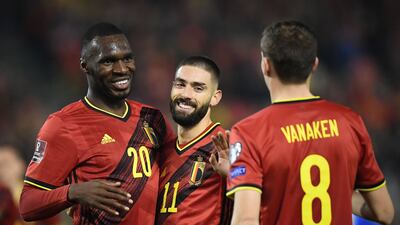
November 13, 2021. Belgium 3 (Benteke 11', Carrasco 53', T Hazard 74') Estonia 1 (Sorga 70'): Belgium sealed their spot in Qatar with a game to spare. Striker Christian Benteke, in for the injured Lukaku, scored the opener and hit the woodwork. Martinez said: "We did what we had to do. I would have liked to have scored the second goal in the first half. Apart from that, I am happy with the performance." AFP -
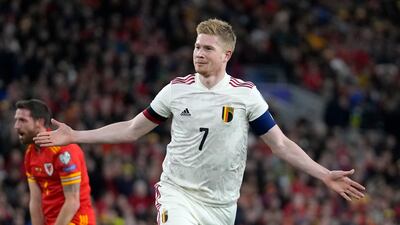
November 16, 2021. Wales 1 (Moore 31') Belgium 1 (De Bruyne 12'): De Bruyne's stylish early goal put Belgium ahead only for Kieffer Moore to equalise and seal a point that would take Wales into the play-offs in front of a jumping Cardiff City Stadium. Martinez said: "We congratulate Wales, they finished second. A fantastic atmosphere. We all wish that you have a fantastic draw in the play-offs." AP


Belgium's ageing defence were struggling with the pace of the Canada attackers and Junior Hoilett got in behind before firing a shot wide.
The underdogs kept coming, as Courtois palmed away right wing-back Alistair Johnston's fierce drive and David headed off target.
Canada had a big penalty appeal turned down despite a VAR review when Axel Witsel was outpaced by Richie Laryea inside the area and then tripped his opponent.
Belgium grabbed the lead out of nothing when a simple long ball over the top from Toby Alderweireld found the run of Batshuayi who hammered home left-footed.
There was still time for Canada to create, and waste, another glorious opportunity before the break, as Laryea's low cross was fired over on the slide by Buchanan from six yards out.
Belgium coach Roberto Martinez made a double substitution at half-time to try and stem the tide, with Thomas Meunier replacing Carrasco and Everton youngster Amadou Onana coming into the midfield.
Canada could have levelled just minutes after the restart, though, as David headed wide from Stephen Eustaquio's delicious cross after the Porto midfielder had nutmegged Kevin de Bruyne.
Herdman's men continued to flood forward, but could not find the finishing touch required, with Buchanan miskicking horribly from the edge of the box.
The more men Canada committed, the more dangerous Belgium looked on the break and Laryea made a wonderful last-ditch tackle to deny Batshuayi a second goal.
Substitute Cyle Larin, the top scorer in CONCACAF qualifying for the tournament, headed too close to Courtois in a frantic finale.
De Bruyne could have put the game to bed but blazed into the crowd, while Larin sent another header spinning over Courtois' bar as Belgium fell over the line.

