



Almost two years after the new coronavirus caused the World Health Organisation to declare a pandemic, the world has racked up some impressive vaccination statistics.
One of them is that more than 1.27 billion booster doses have already been administered as governments look to strengthen the immunity of their citizens.
Typically a booster has been a third shot, although sometimes it has been a second if the initial vaccine was single-dose.
Fourth doses have already been administered in some nations, including Israel, where they were introduced in December for people with weakened immune systems, for healthcare workers and for the elderly.
It raises the question of whether boosters will be required indefinitely, perhaps to protect against new variants, or to bum up immunity that wanes over time.
Do third doses bolster protection against Covid-19?
Recent studies have indicated that after a third shot, people are able to produce a much wider range of antibodies than after just two doses. One piece of research looked at memory B cells, a type of white blood cell that produces antibodies.
After a third mRNA vaccine dose, scientists found that the antibodies produced “showed significantly increased potency and breadth when compared to antibodies obtained after the second vaccine dose”.
This is thought to be why a third dose increases protection against variants like Omicron – which has numerous mutations distinguishing it from other variants – even though the vaccines were “not specifically designed to protect against variants”.
Other research found that in people given some of the most popular Covid-19 vaccines, T cells, a type of immune cell often linked to durable protection against pathogens, were 80 per cent as effective against Omicron as they were against other variants.
This indicates that, thanks to T cells, the protection against Covid-19 generated by vaccination may be sustained even after antibody levels may decline.
What do real-world studies say?
Aside from looking at people’s immune response after two or three doses, researchers are also analysing the real-world effectiveness of multiple jabs at preventing disease.
A US study published on February 11 found that during the two months after a third dose of an mRNA (messenger RNA) vaccine, the jab was 91 per cent effective at stopping a person from requiring urgent care. But by the fourth month after the third dose, this had dropped to 78 per cent.
In response, Dr Anthony Fauci, the director of the National Institute of Allergy and Infectious Diseases and the chief medical advisor to the US president, said “there may be the need for yet again another boost — in this case, a fourth-dose boost for an individual receiving the mRNA [vaccine]”.
Speaking at the same time, he suggested this could depend upon a person’s age and whether they have underlying conditions that make them more vulnerable to Covid-19.
Indeed the US and some other countries, such as the UK, now recommend a fourth dose for people with weakened immune systems.
-
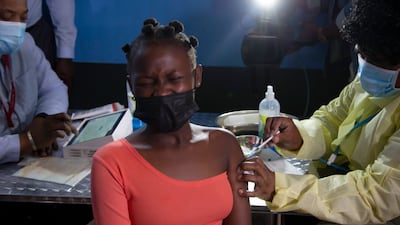
A young woman receives a Pfizer jab in Diepsloot Township near Johannesburg, South Africa. AP Photo -

A girl wearing a face mask rides on a merry-go-round at the Christmas market in Frankfurt, Germany. AP Photo -

People travel on a London underground tube train on the Jubilee Line, in London, during the pandemic. AP Photo -

People wait for the tram in Vienna, Austria, amid the crisis. AP Photo -

A woman passes by an empty terrace in the Marrolles quarter in Brussels, Belgium. AP Photo -

A teacher gives online lessons via webcam at the temporarily closed elementary school in the town of Trebisov, eastern Slovakia. TASR via AP -

Hairdressers and clients wear masks in Amsterdam, Netherlands. AFP -

A man disinfects seats for tourists at a beach in Kuta, Bali, Indonesia. EPA -

Israeli boy Itamar, 5, receives a dose of the Pfizer/BioNTech Covid-19 vaccine at the Meuhedet Healthcare Services Organisation in Tel Aviv. AFP -

A patient suffering from Covid-19 is admitted in the intensive care unit of the Basaksehir Cam and Sakura City Hospital in Istanbul, Turkey. Reuters -
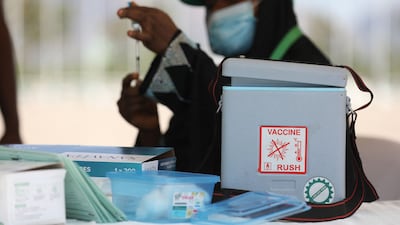
A health worker prepares to administer the AstraZeneca jab in Abuja, Nigeria. AFP


What else is known about how immunity will last over time?
While studies of B cells and T cells indicate the immunity may be durable in some people, information is limited by the fact that mass vaccination programmes began little more than a year ago (although some people on clinical trials were jabbed earlier).
“The data just doesn’t exist to say how the immunity will pan out,” said Prof Ian Jones, a professor of virology at the University of Reading in the UK.
“We simply don’t know what the rate of decline will be after being boosted … My guess would be for the coming year, certainly six months or 12 months, there will be detectable immunity in people who’ve received the booster.
“That will be deemed sufficient for the next wave – the standard [expected peak in] winter we have at the end of this year and beginning of next year.”
Prof Nicolas Locker, professor of virology at the University of Surrey in the UK, said scientists can follow the immunity of people over a certain period and use the information gathered to predict how immunity will change later on.
But this, he said, was no substitute for following people for a year or two years, and it would not indicate what protection would be like against new variants.
How effective is a fourth dose?
A trial in Israel, details of which were released on Wednesday indicates that a fourth dose of an mRNA jab tops up a person’s antibodies against Covid-19, but perhaps does not do much more than this.
The trial involved 274 healthcare workers given a fourth dose of either the Pfizer-BioNTech or Moderna jabs and compared them to hundreds of other people who were not administered the extra booster.
After a third dose, levels of neutralising antibodies (which can prevent the virus infecting human cells) tend to decline. Researchers found that a fourth dose increased antibody levels back up to where they were after the third dose, but typically no higher than this.
So while a third jab has been shown to significantly boost protection, especially against new variants, a fourth may have a less significant effect, at least among healthy people whose immune systems already responded well to the third dose.
Also, even after the fourth dose, the vaccine had limited effectiveness at protecting a person from being infected with the coronavirus, although infections tended to be mild or asymptomatic rather then severe.
The researchers concluded that the “low efficacy” at preventing infections “raise[s] the urgency of next-generation vaccine development”.
-
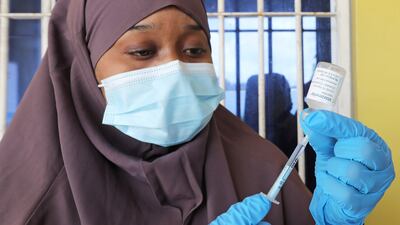
A healthcare worker prepares to administer a Covid-19 vaccine in Mogadishu, Somalia. Reuters -

Workers take samples for Covid-19 tests at a drive-through clinic in Auckland, New Zealand. AP -

A monk uses his mobile phone in Ho Chi Minh City, Vietnam. Reuters -
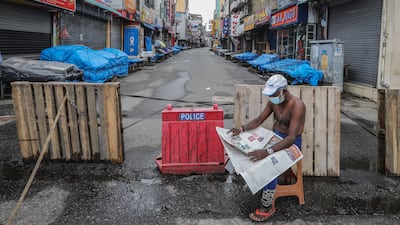
A man reads a newspaper next to closed shops after the government announced an island-wide lockdown in Colombo, Sri Lanka. EPA -

A woman instructs her grandson to clean his hands at the State Fair in Louisville, Kentucky. Reuters -

Medics transport a Covid-positive patient to a hospital in Houston, Texas. AFP -

Members of the security forces guard the Taj Mahal after sunset in Agra, India. EPA -

Vancouver Whitecaps goalkeeper Maxime Crepeau signs autographs before his team's match against Los Angeles FC in Vancouver, Canada. AP -

An employee stands at the entrance of a supermarket to check visitors' health app QR codes and body temperature in Shanghai, China. EPA -
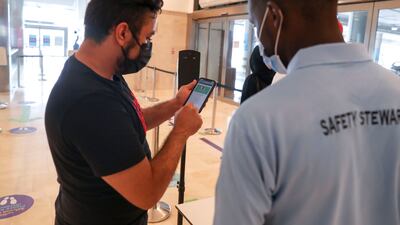
A man shows the green pass on his phone before entering a shopping mall in Abu Dhabi, UAE. Khushnum Bhandari / The National


Will Covid-19 boosters be required regularly?
There has been much discussion over whether repeated boosters will be needed to maintain protection against Covid-19.
Prof Paul Digard, chair of virology at the University of Edinburgh in the UK, said “there probably won’t be much call for a regular booster” unless significantly different variants emerge.
“Protection from virus infections and vaccination will give us some reasonable protection for a while. I’m not expecting to be queuing up for a fourth booster in the next few months,” he said.
“Even if your antibody titres [concentrations] have waned enough that you can be reinfected, you still have memory response; you will be able to mount a good immune response faster and better.”
Some experts, such as Prof Locker, think that governments may vaccinate populations periodically, as is the case against influenza in some countries.
“In the long term, provided vaccine coverage is increasing, we’ll probably move into a pattern of annual vaccination that covers us against circulating variants,” he said. “But this is only going to be efficient if we have good vaccine coverage worldwide.”

