
Reluctance or refusal to have a Covid-19 vaccine has been linked to traumatic events in childhood in a survey that found nine strong causal events rooted in early life.
People who suffer in childhood are also least likely to trust National Health Service information, wear masks during the pandemic or follow the rules, a team of experts found.
Adverse childhood experiences, or ACEs, also include physical, psychological or sexual mistreatment, and other criminal justice problems.
Parents separating or divorcing, abandonment, or having a parent with a mental health condition are other examples of adverse experiences.
In the study, published in the the open access journal BMJ Open, 2,285 people aged 18 and over in Wales were surveyed during lockdown restrictions, from December 2020 to March 2021.
Experts looked at nine different adverse childhood experiences and low trust in NHS Covid-19 information, whether people backed the removal of social distancing and mandatory masks, breaking Covid rules and vaccine hesitancy.
While 52 per cent of those in the study had not experienced any childhood trauma, about one in five had suffered one type, 17 per cent reported two to three, and one in 10 reported four or more.
The results showed that the more trauma people had experienced in childhood, the more likely they were to mistrust NHS Covid-19 information, to feel unfairly restricted by the government and to support the end of mandatory masks.
The nine childhood traumas included in the study were: physical, verbal, and sexual abuse; parental separation; exposure to domestic violence; living with a household member with mental illness; alcohol and drug misuse; or a family member in prison.
People were twice as likely to break Covid rules if they had four or more childhood traumas compared with none, while vaccine hesitancy was threefold higher with more than four compared with none.
More than four traumas were also associated with a desire to scrap social distancing.
-

Health workers collect swab samples at a newly opened Covid-19 test centre at Maracana Stadium in Rio de Janeiro, Brazil. EPA -
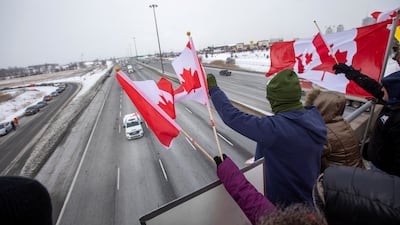
People in Toronto show their support for lorry drivers on their way to Ottawa to protest against cross-border vaccine mandates. Reuters -
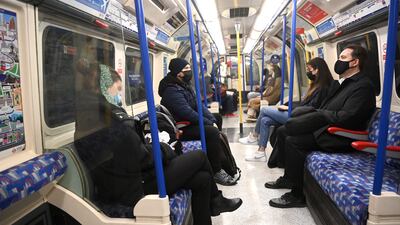
Passengers on an underground train in London. Although it is no longer legally compulsory to wear masks in indoor venues, some rail companies in England still require passengers to wear face coverings. EPA -
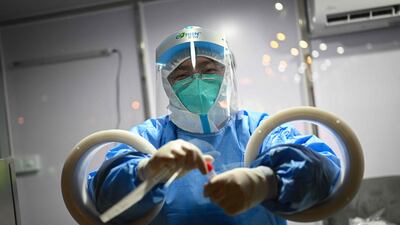
A health worker holds a swab sample collected from a member of the media before the start of the 2022 Winter Olympics in Beijing. AFP -

The House of Fraser department store, which has closed down during the coronavirus outbreak, on Oxford Street, London, on January 27. AP -
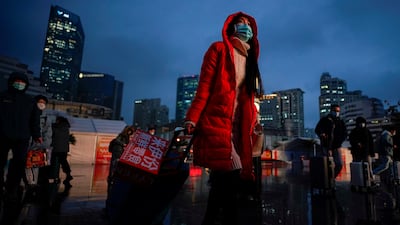
Crowds of people wait for the train at a railway station in Shanghai during the Chinese New Year travel rush. Reuters -
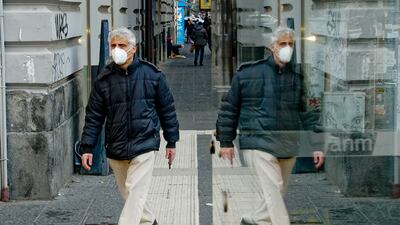
Naples, Italy. More EU countries now require people to wear FFP2 multi-layered face masks outdoors to curb the spread of the more contagious Omicron coronavirus strain. EPA -
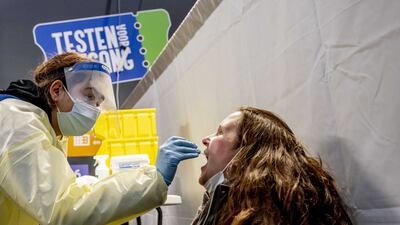
A health worker collects a swab sample at a Covid-19 test centre in Rotterdam, the Netherlands. EPA -
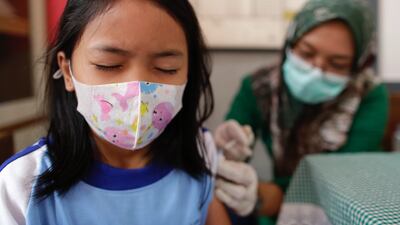
A pupil receives a dose of the Sinovac vaccine at a primary school in Tangerang, Indonesia. EPA -
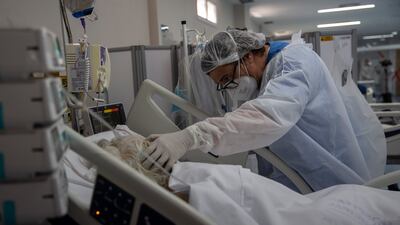
A health worker treats a Covid-19 patient in the intensive care unit of a hospital in Marica, Brazil. AP -
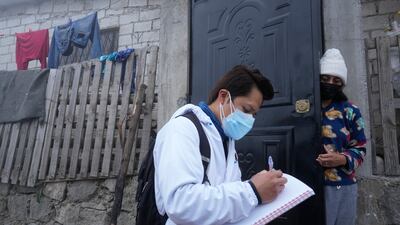
A doctor prescribes medicine for a person infected with Covid-19, in Quito, Ecuador. AP -
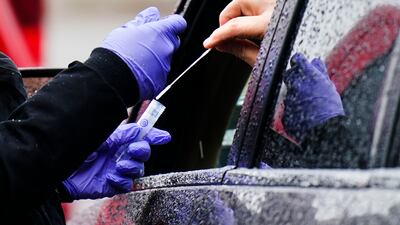
A driver places a swab into a vial at a drive-through test centre in Darby, Pennsylvania. AP -
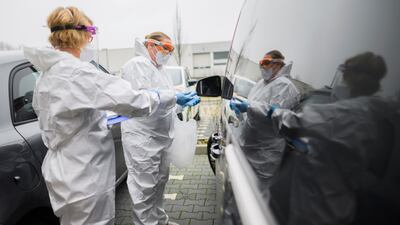
Medics take a swab from a patient outside a doctor's office in Laatzen, Germany. AP -
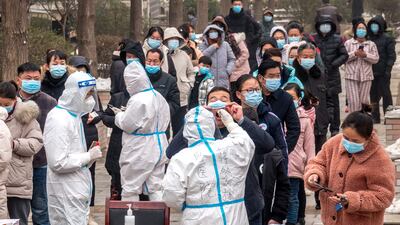
Residents undergo nucleic acid tests at a Covid-19 test centre in Anyang, China. AFP -
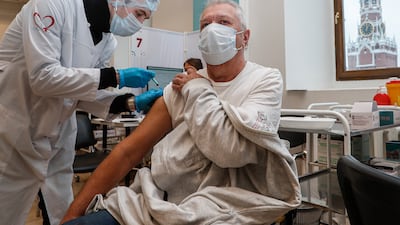
A man receives a shot of Russia's Sputnik V vaccine in Moscow. EPA -
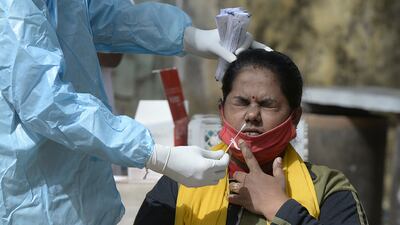
A health worker collects a swab sample at a government hospital in Hyderabad. AFP -

A health worker collects a swab sample from a member of the media before the start of the 2022 Winter Olympics in Beijing. AFP -
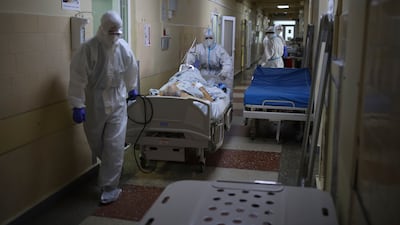
Medics transfer a Covid-19 patient at a hospital in Krasnodar, Russia. AP


Vaccine hesitancy was estimated at 38 per cent for those aged 18 to 29 with more than four childhood traumas, although older age groups were much more likely to have a vaccine.
Overall, 8 per cent of the entire study group would not agree to a vaccine. About a quarter of all those in the study also admitted to at least occasionally breaking the rules.
“While pandemic responses should consider how best to reach those suffering from ACEs, longer term, better compliance with public health advice is another reason to invest in safe and secure childhoods for all children,” the authors said.
Previous research has suggested that mistreatment as a child may undermine trust in the future, including of health and other public services.
The latest study suggested that if people had mistrust in one area, this was replicated in other areas.
Four out of 10 people reporting low levels of trust in NHS Covid-19 information also reported vaccine hesitancy, compared with just 6 per cent of those who did trust this source of information.
The study was funded by Public Health Wales.

