


The devastating Los Angeles wildfires have left behind post-apocalyptic scenes, with piles of smouldering rubble and blackened trees in place of what were leafy and prosperous neighbourhoods.
At least 10 people have been killed, about 180,000 have been told to leave their homes, while famous names including Anthony Hopkins, Paris Hilton, John Goodman and Billy Crystal have lost their houses. Estimates suggest that more than 10,000 structures have been destroyed.
This tragically fiery start to 2025 comes amid concern that climate change is increasing the risks posed by wildfires, after infernos caused greater-than-average damage in many parts of the world in recent years.
Stefan Doerr, professor of wildfire science at Swansea University in the UK and editor of the International Journal of Wildland Fire, said that the fires in Los Angeles were “very, very extreme”.
“They’re pretty much off the scale for what we could expect,” he said. “We’ve combined a really long drought with extremely strong Santa Ana winds.”
The Santa Ana winds, also referred to as devil winds, originate inland and regularly affect Los Angeles and southern California. If these winds are blowing, it can be “very difficult” to fight fires, according to Prof Doerr, who said that an absence of winter rainfall had made things worse. Ignition in these winds creates “the perfect storm for extreme fire”.
Is climate change to blame?
While wildfires have long been a fact of life in California, the wildfire season there is now “much longer than it used to be”, with climate change likely to blame for causing an extended drought.
Whether climate change has worsened this particular spate of fires is unclear, as scientists have yet to carry out an attribution analysis to determine how much more likely such a blaze has become. This analysis is likely to be completed, Prof Doerr said, over the next week or two.
However, there is already “good evidence in many parts of the world, especially the western United States”, that fires have worsened.
“This is related to drier conditions as well as stronger winds,” Prof Doerr said. “The drought alone can make fires worse. But it’s these strong winds in combination with drought that makes the fires more extreme. The likelihood of this combination is definitely increasing.”
The region is facing an increase in “fire weather” or conditions that help flames to develop and spread, said Bob Ward, of the Grantham Research Institute on Climate Change and the Environment, part of the London School of Economics and Political Science.
“That fire weather is creating more opportunity for these kinds of outbreaks,” he said.
Around the world the number of fire weather days – associated with strong winds, lengthy dry spells, high temperatures and low relative humidity – has increased by more than a quarter over the past four-and-a-half decades or so.
The amount of land burnt by wildfires globally has actually decreased in recent decades, largely because savannah and grassland in Africa that would regularly burn has been converted into agricultural land. Fire suppression has also improved in some areas.
However, in many regions affected by wildfires, destruction is intensifying. Australia has seen a doubling in wildfire frequency since 1980, while wildfires have become many times more common in the forests of the western US.
Mr Ward highlighted Greece and Portugal as both having experienced significant wildfires in recent years, while Canada suffered particularly fierce wildfires in 2023, and the regular fires in eastern Russia have strengthened.
-
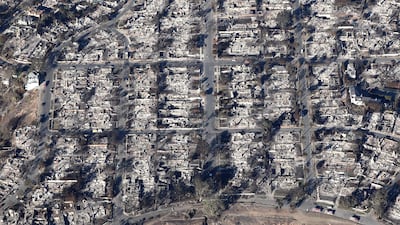
The Palisades Fire has destroyed thousands of homes in California. AFP -
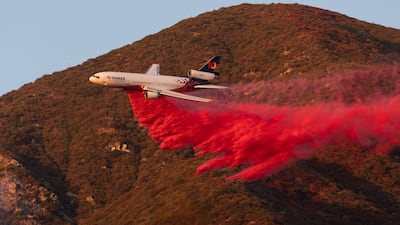
A plane drops fire retardant on the Eaton Fire, near Altadena, California. Bloomberg -
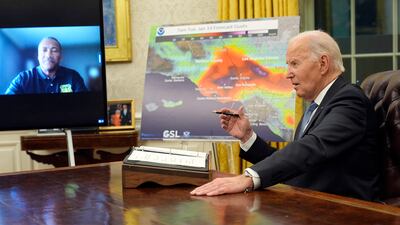
US President Joe Biden discusses the federal response to the wildfires with senior officials. AP -
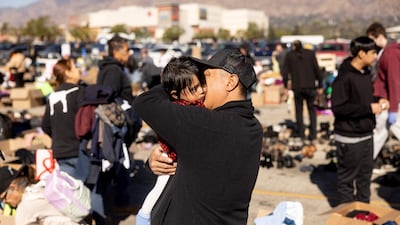
People who fled the Eaton Fire gather at a donation centre in Santa Anita Park, California. AFP -
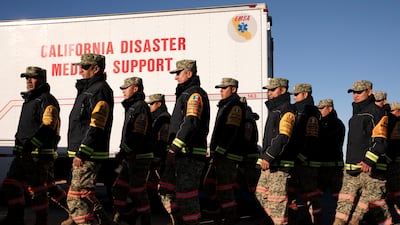
Mexican military personnel have joined the operation to tackle the Palisades Fire. Reuters -
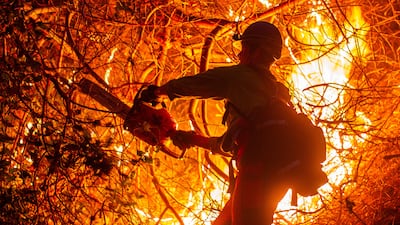
A firefighter in the Palisades area. The fire is one of several simultaneous blazes that have spread across Los Angeles County. Reuters -
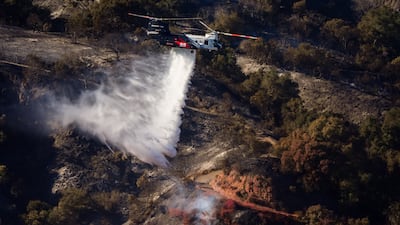
A helicopter drops water on hotspots in the Palisades Fire in Los Angeles, California. Bloomberg -
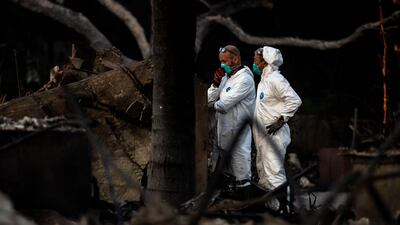
A search team works at a home destroyed by the Eaton Fire in Altadena. AP -
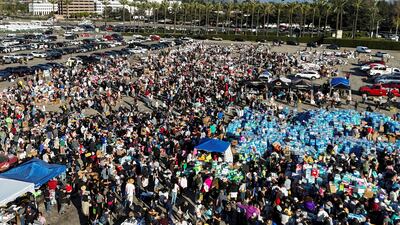
An aerial image shows people affected by the wildfires gathering at a donation centre, at the Santa Anita Park race track in Arcadia. Reuters -
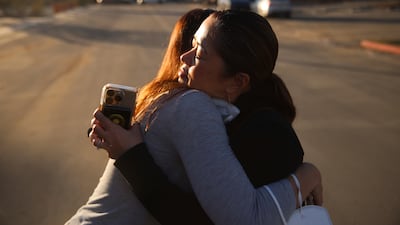
Pasadena Park Healthcare and Wellness Center chief Amy Johnson, left, hugs Rhea Bartolome, vice president of operations, outside their centre. AP -
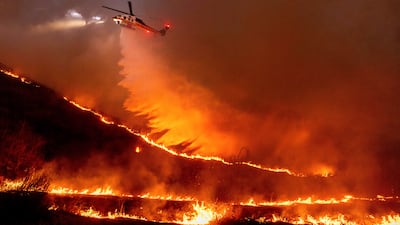
Water is dropped by helicopter on the Kenneth Fire in the West Hills section of Los Angeles. AP Photo -
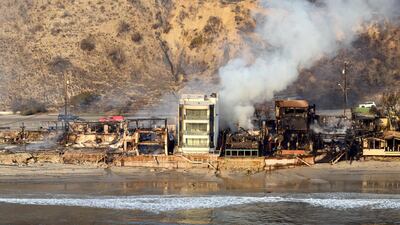
Burnt homes smoulder after the Palisades fire in the coastal community of Malibu in Los Angeles county. AFP -
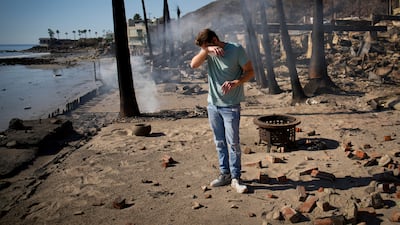
Resident Luke Dexter sifts through the remains of his family's fire-ravaged beachfront property in the aftermath of the Palisades fire. AP Photo -
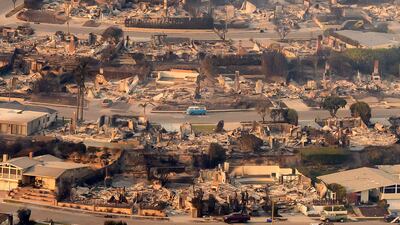
An aerial view shows the extent of the damage done to the Pacific Palisades neighbourhood in Los Angeles, California. AFP -
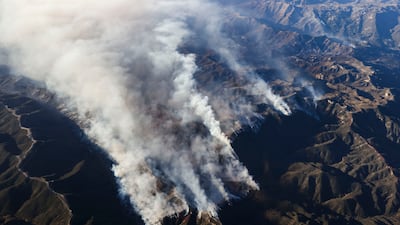
Smoke from the Palisades wildfires rises from the hills over Los Angeles on January 10. EPA


In July 2022, even east London was hit when, during the UK’s hottest-ever day, a compost fire got out of control and destroyed more than 15 homes.
In California, one of the worst wildfire events was in 2018, when more than 100 people died and over 24,000 structures were damaged or destroyed. Wildfires in the state in 2020 and 2021 burnt greater areas of land, but without the same destruction to developed areas.
Like many parts of the world regularly affected by wildfires, areas of California, including the Hollywood Hills, have vegetation adapted to fire.
Need for stronger land development regulations
Indeed in some landscapes, fire is a natural part of the ecosystem, and may stimulate new growth after it has swept through. But building on these areas – just like building on floodplains – brings the risk that homes and businesses and even lives will be lost.
In California, among other locations, “there’s not been a responsible policy” with respect to development, according to Mr Ward. “There are far too many houses being built on the edge of vegetated areas,” he said. “They’re at high risk of wildfires… We need to make strong regulations to prevent further development.”
Another way to help reduce the impact of wildfires on communities is to construct buildings from materials that do not burn easily. With this the western US “is failing”, Prof Doerr said.
“They’re building out of wood,” he said. “This is cheaper, but you’re exposing yourself to a more extreme risk of your property burning down.”.
Removing vegetation around property can “reduce the fire risk substantially”, according to Prof Doerr, although he said that with the very strong winds experienced by parts of California in recent days, it is not clear that this would have had much effect.
On a global level, cutting carbon emissions and speeding the move to net zero could limit the growth in the danger posed by wildfires.
“The climate is becoming more hostile for many reasons, including the increased risk of wildfires,” Mr Ward said. “Things will get worse until the world gets to net zero. On the most optimistic scenario that might be 2050, so for the next 25 years, it will get worse. Until then we need to stop further development in areas adjacent to the vegetation at risk.”

