


Since agriculture developed in the Middle East about 12,000 years ago, farmers have been at the mercy of the weather when hoping for a good harvest.
That remains the case today, but the age-old dependence on the weather is now being complicated by climate change's effects on rainfall, temperature and nutrient availability, among much else.
“The problem of climate change is that it will, on the one hand, reduce the average yields so there’s more scarcity, which contributes to rising food prices,” said Prof Matin Qaim, an agricultural economist who heads the Centre for Development Research, better known as ZEF, at the University of Bonn in Germany.
“On top of that, there’s increasing frequency of weather extremes. Regionally there may be harvest fails and prices may increase dramatically in one year and fall significantly in another year. This means the volatility of prices will increase.”
In temperate regions, such as much of Europe and North America, there had been an expectation that climate change would, overall, enhance yields, due to the fact that summers are set to become longer, according to Mark Maslin, professor of earth system science at University College London. This has turned out not to be the case, he said.
“What we’re finding is that it isn’t climate change itself that’s having the biggest impact on food. It’s the extreme events. A drought or a wildfire – we’re losing crops that way,” he said.
Here we consider how climate change may affect five of our most important crops in the years to come.
Coffee
Coffee could be particularly affected by climate change because it “has a particularly narrow climate range” that it can productively be grown in, Prof Maslin said. It requires fairly warm conditions all year round, with no temperature extremes.
For robusta, typically a cheaper kind that is often used for instant coffee, yields are expected to halve if average temperatures reach 2°C above pre-industrial levels, Prof Maslin said. Arabica, another type, is set to be even more heavily affected.
“The amount of land that coffee can be grown in will shrink markedly, even though there are areas it will expand to,” Prof Maslin said. “We’re looking at a coffee crisis because coffee drinking is increasing. Aspirational new middle classes want to drink coffee instead of tea.”

However, he said coffee was a “responsive market”, so that as production becomes less viable in some areas, farmers in other regions will start to grow the crop.
Consumers may not notice a huge change in price because the amount paid to farmers is a tiny fraction of the retail cost.
According to Fairtrade International, farmers earn only about 1 per cent of the cost of a cup in a coffee shop.
Olive oil

Olive oil is a key component of the famed Mediterranean diet, which is often eaten in Greece and southern Italy and is associated with lower rates of cardiovascular disease.
While linked to good health, olive oil, which is at the higher end in terms of price compared with some other vegetable oils such as sunflower oil, is becoming more expensive because of climate change.
Extreme hot weather, coupled with drought, has recently caused a halving in production in Spain, the world’s biggest producer of olive oil, with prices more than doubling as a consequence.
Olive groves have dried up in other key olive oil-producing nations such as Greece and Italy, affecting yields and causing prices to rise.
While prices have declined after peaking in September last year, many customers have already turned to cheaper types of vegetable oil, according to food industry media.
With summers continuing to get hotter and drier, the problems of 2023 could simply be a taste of things to come, with difficult growing conditions set to continue to affect prices.
Bananas

Warnings were made at the recent World Banana Forum in Rome that key Central American banana-producing nations such as Guatemala and El Salvador could suffer falling yields due to temperature increases.
It is not only the temperature rises themselves that will have an impact, but also the likelihood that they will increase dangers from pathogens such as fungi.
A key concern is Panama disease, caused by a fungus called TR4, which is believed to spread more easily as a result of climate change. These threats to banana production could translate into higher prices as yields decline.
The greater spread of disease as the global climate warms could affect the yields of many fruits and vegetables, not only bananas.
Maize

Maize is one of the world’s most important crops, with about 1.2 trillion tonnes produced in 2022, almost four times as much as half a century earlier.
Whether average production increases, which have averaged about 3 per cent a year, can continue is uncertain, given climate change’s potential effects on this crop, which is an ingredient in a huge array of foods, including breakfast cereals.
A 2020 European Commission report, Analysis of climate change impacts on EU agriculture by 2050, noted that in most parts of Europe, maize is mostly an irrigated crop.
As a result, it is heavily dependent on groundwater. However, if irrigation is no longer available, a scenario that was highlighted by the report because of the increasing pressure being put on groundwater reserves, then it would become a rain-fed crop.
Were this to happen, the report warned that there would be “a collapse” in EU maize production by 2050, with yields falling by a minimum of about a quarter and by as much as 80 per cent in some European countries.
“Therefore, in regions with unsustainable water use (using groundwater instead of renewable water) and where projected precipitation significantly decreases, maize production will no longer be viable,” the report said.
A study published in 2021 in Nature Food and co-written by Nasa scientists forecast that maize yields could drop by 24 per cent because climate change will make it harder to grow the crop in the tropics, with prices potentially rising as a result.
Wheat

Like maize, wheat is a key staple crop, being an important part of the diet of no fewer than 3.4 billion people.
Much is used in bread, with about 350 ears of wheat needed to make enough flour for an 800g loaf, according to the UK Flour Advisory Bureau.
Wheat illustrates how climate change’s effects on agriculture are by no means universally negative.
In their 2021 study in Nature Food, Nasa's scientists found that wheat yields could increase by 17 per cent as a result of climate change because the crop’s growing range could increase.
The climate in the UK, for example, is expected to remain favourable for wheat production, researchers wrote in 2020 in the Agricultural and Forest Meteorology journal.
There are potential hazards, though. Winter wheat, which is planted in the autumn in northern latitudes, will be put at greater risk of waterlogging as winters and springs become wetter, the scientists said.
“In a changing climate, the increased frequency and severity of adverse weather events, which are often localised, are considered a major threat to wheat production,” they added.
Such volatility in yields could affect prices.
With summers becoming hotter and drier in many parts of the world, researchers are working to develop plants that can cope with extreme conditions. “It will depend on technology being developed in order to prevent sharp rises in prices, technologies that may mean the crops become more drought and heat tolerant,” Prof Qaim said.
Global impact of climate change - in pictures
-

Internally displaced children Ali and Osman Abdulahi stand near carcasses of their family's livestock, killed by severe drought near Dollow, Somalia. Reuters -
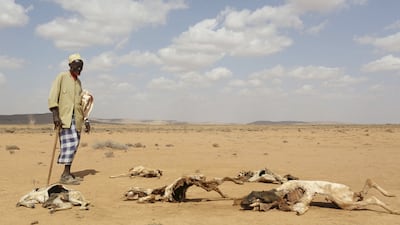
Quick distribution of climate funds agreed at Cop28 will help devastated populations get back on their feet, Somalia’s Deputy Prime Minister Salah Jama has said. Reuters -

Commuters ride on rickshaws on a flooded road after heavy rains in Dhaka, Bangladesh. Reuters -
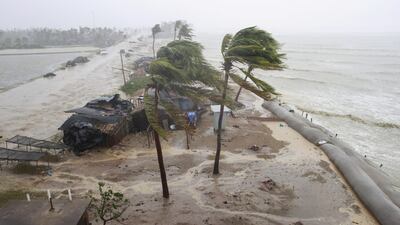
Cyclone Mocha makes landfall near Cox's Bazar, Bangladesh. A rise in extreme weather events around the world has been blamed on global warming caused by man-made greenhouse gases. EPA -
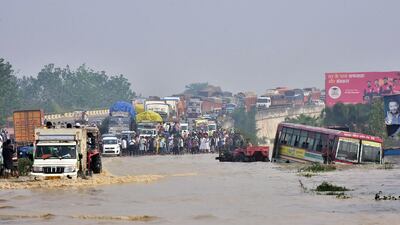
Commuters stand on a flyover, on a flooded motorway near Rampur, in India's Uttar Pradesh state, in 2021. AFP -

Monsoon floods and landslides killed about 100 people in Nepal and India earlier this year. AFP -
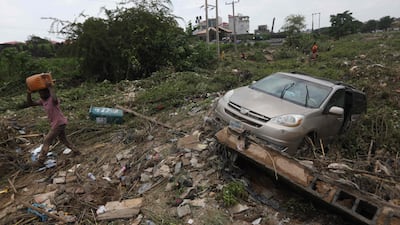
A man walks past a car swept by floodwaters in Abuja, Nigeria, in 2021. AFP -
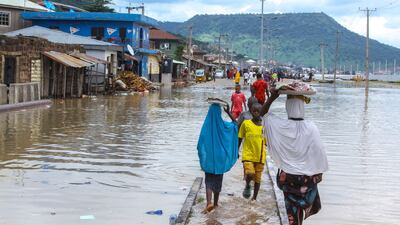
Flooding in Kogi, Nigeria, in October 2022. AP -
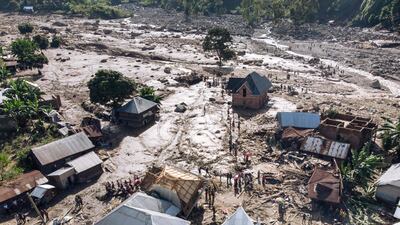
A landslide engulfs Nyamukubi village, eastern Democratic Republic of Congo. AFP -

A landslide in the Mont Ngafula district of Kinshasa, the capital of the Democratic Republic of Congo. AFP -
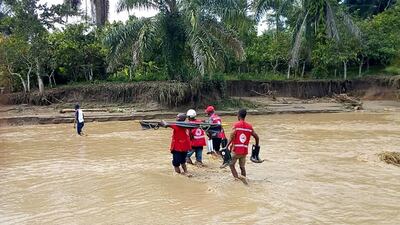
Aid workers crossing flooded areas in Bundibugyo, Uganda. Twitter/UgandaRedCross -

Villagers try to pull up a minibus in which 14 bodies were retrieved, in the river Nabuyonga in eastern Uganda, after flash floods. AFP



