


Rainfall will decrease markedly in the Middle East by 2040, sparking worsening food security, Oxfam warned on Wednesday, as it published a report warning of the humanitarian cost of increased water scarcity.
The report, Water Dilemmas, describes how a water security crisis, in large part driven by global heating from greenhouse gas emissions, will fuel hunger and disease and force more people to leave their homes.
Heatwaves will lead to effects on human life
Heatwaves in the region will rise by 16 per cent, leading to a drop in labour productivity of 7 per cent, with water prices expected to rise sharply.
This is likely to have a range of significant effects on human life and well-being in these regions, including limiting people’s ability to work outdoors.
This will also have disproportionate effects on women, with higher heat stress on pregnant women and those working outdoors, such as in agricultural labour.
Rise in mosquito-borne diseases
It has been forecast that there will be 37 million more people in the Middle East at risk of mosquito-borne diseases by 2050.
Cases of leishmaniasis (transmitted by sandflies – also known as kala azar) and schistosomiasis (commonly known as bilharzia disease and caused by a parasitic worm living in fresh water) will also increase in the region.
Climate change will affect the future of crops
Maize yields are forecast to increase by 5.45 per cent in the Middle East.
These impacts will be felt globally but particularly hard in countries of sub-Saharan Africa and elsewhere where maize is a staple.
Wells help Iraq harvest bumper wheat crop - in pictures
-
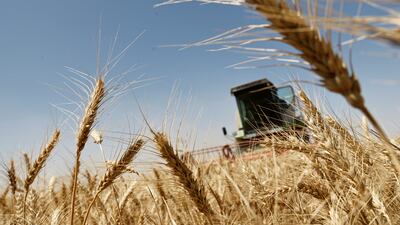
Iraqi farmers used to grow wheat near the Euphrates River, but droughts have forced them into the harsh desert of Najaf. All photos: Reuters -

Watered by sprinklers fitted to 100-metre-deep wells, Amin Salah produces double what he did near the river -

'It's golden season,' said Mr Salah: less money spent and water used, and a bigger and better quality harvest -
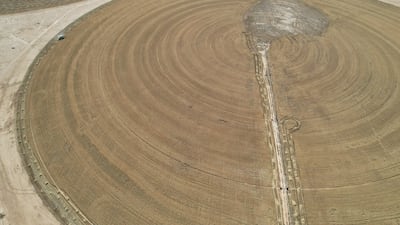
Iraq's government says the move has more than doubled wheat-cultivated areas to 850,000 hectares -

That has translated into a harvest of about four million tonnes of wheat – 80% of Iraq's needs -

The change in methods is driven by necessity: Iraq's two main rivers have lost more than half of their flow -

Drilling the desert for water may provide immediate relief but heavy use of the wells could bleed desert aquifers dry -

Some farmers have already noticed a drop in the water table -

Hadi Fathallah of consultancy Namea Group described using wells as 'very desperate' -

Iraq should focus on modernising agriculture and water diplomacy, Mr Fathallah said -

'This is not adaptation to climate change. It's a kind of morphine,' he said


But overall, it is important to note that crop yields will be affected differently and some could even be boosted under this scenario in certain areas.
Wheat yields could rise in Middle East countries by 7.97 per cent.
As different crops become more or less favourable, this will necessitate significant change in local agricultural practices and methods, and in infrastructure and markets, so that food production can adapt to climate change.

