A section of an Antarctic ice sheet showing the gaseous bubbles. University of St Andrews / PA

Carbon dioxide increasing 10 times faster than any time in 50,000 years


Soraya Ebrahimi
  • English
  • Arabic

Carbon dioxide in the atmosphere is increasing 10 times faster than at any point in the past 50,000 years, research in Scotland and the US has shown.

The study undertook a detailed chemical analysis of ancient Antarctic ice, revealing the stark findings and the effect of human emissions.

Oregon State University and the University of St Andrews led the research, which has been published in the Proceedings of the National Academy of Sciences.

It provides an important understanding of abrupt climate change periods in Earth’s past and offers insight into the possible effects of climate change.

The rate of carbon dioxide increase was described as “unprecedented”, and driven by human emissions.

When the gas enters the atmosphere, it contributes to warming of the climate due to the greenhouse effect.

In the past, the levels have fluctuated due to ice age cycles and other natural causes, but today they are rising because of human emissions, according to scientists.

“Studying the past teaches us how today is different. The rate of CO2 change today really is unprecedented," said Dr Kathleen Wendt, an assistant professor in Oregon State University’s College of Earth, Ocean and Atmospheric Sciences, and the study’s lead author.

“Our research identified the fastest rates of past natural CO2 rise ever observed, and the rate occurring today, largely driven by human emissions, is 10 times higher.”

Five ways to get on track to reduce your carbon footprint

  • Pawan Singh / The National
    Pawan Singh / The National
  • Lauren Lancaster / The National
    Lauren Lancaster / The National
  • Sarah Dea / The National
    Sarah Dea / The National
  • Christopher Pike / The National
    Christopher Pike / The National

Ice that built up in the Antarctic over hundreds of thousands of years includes ancient atmospheric gases trapped in air bubbles.

Scientists used samples of ice, collected by drilling cores up to 3.2km deep to analyse the trace chemicals and build records of the climate in the past.

The US National Science Foundation supported the ice-core drilling and the chemical analysis used in the study.

Previous research showed that during the last ice age, which ended about 10,000 years ago, there were several periods where carbon dioxide levels appeared to jump much higher than the average.

But the measurements were not detailed enough to reveal the full nature of the rapid changes, limiting scientists’ ability to understand what was occurring.

“You probably wouldn’t expect to see that in the dead of the last ice age," Dr Wendt said.

“But our interest was piqued, and we wanted to go back to those periods and conduct measurements at greater detail to find out what was happening.”

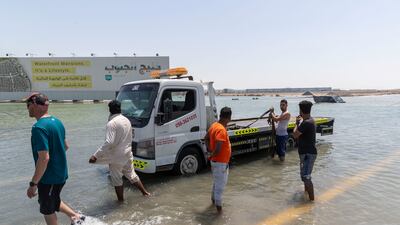
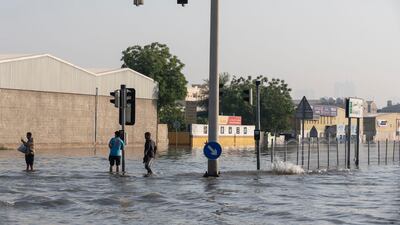
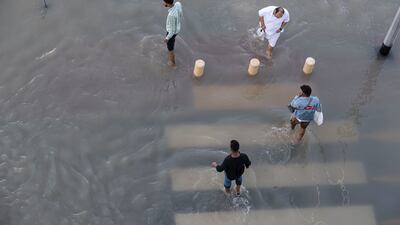
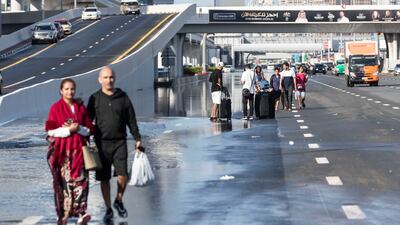
The effects of climate change on the Middle East region - in pictures

  • Flooding in the Al Barsha area of Dubai. Chris Whiteoak / The National
    Flooding in the Al Barsha area of Dubai. Chris Whiteoak / The National
  • Vehicles being recovered near Al Maktoum airport in Dubai. Antonie Robertson / The National
    Vehicles being recovered near Al Maktoum airport in Dubai. Antonie Robertson / The National
  • Flooding in the Al Barsha area of Dubai. Chris Whiteoak / The National
    Flooding in the Al Barsha area of Dubai. Chris Whiteoak / The National
  • Flooding along Sheikh Zayed Road in Dubai. Antonie Robertson / The National
    Flooding along Sheikh Zayed Road in Dubai. Antonie Robertson / The National
  • Flooding along Sheikh Zayed Road in Dubai. Antonie Robertson / The National
    Flooding along Sheikh Zayed Road in Dubai. Antonie Robertson / The National
  • Cars move through floodwater in Al Qudra, Dubai. Chris Whiteoak / The National
    Cars move through floodwater in Al Qudra, Dubai. Chris Whiteoak / The National
  • Flooding on Dubai's Al Khail Road. Chris Whiteoak / The National
    Flooding on Dubai's Al Khail Road. Chris Whiteoak / The National
  • People abandon their cars on Sheikh Zayed Road due to heavy rain. Antonie Robertson/The National
    People abandon their cars on Sheikh Zayed Road due to heavy rain. Antonie Robertson/The National
  • Flooding on Al Khail Road. Chris Whiteoak / The National
    Flooding on Al Khail Road. Chris Whiteoak / The National
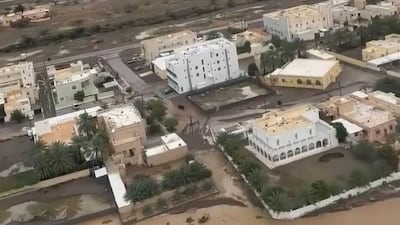
  • Flooding in Oman. Photo: Royal Oman Police
    Flooding in Oman. Photo: Royal Oman Police
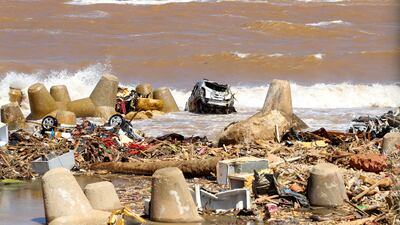
  • A damaged car in Derna, Libya. Reuters
    A damaged car in Derna, Libya. Reuters
  • A destroyed vehicle in Derna. AFP
    A destroyed vehicle in Derna. AFP
  • Abdul Salam Ibrahim Al-Qadi walks on rubble in front of his house, searching for his missing father and brother, in Derna. Reuters
    Abdul Salam Ibrahim Al-Qadi walks on rubble in front of his house, searching for his missing father and brother, in Derna. Reuters
  • An aerial view of the destruction in Derna. Reuters
    An aerial view of the destruction in Derna. Reuters
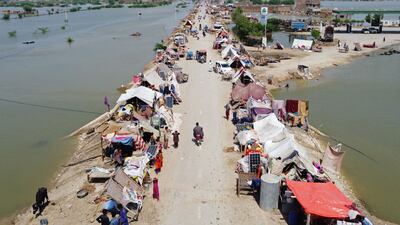
  • Flood-affected people taking refuge in a makeshift camp after heavy monsoon rains in Jaffarabad district of Balochistan province. AFP
    Flood-affected people taking refuge in a makeshift camp after heavy monsoon rains in Jaffarabad district of Balochistan province. AFP
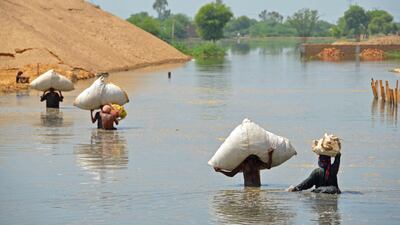
  • Internally displaced flood-affected people shift husk for their animals in a flood-hit area following heavy rains in Dera Allah Yar in Balochistan. AFP
    Internally displaced flood-affected people shift husk for their animals in a flood-hit area following heavy rains in Dera Allah Yar in Balochistan. AFP
  • The aftermath of flooding in Egypt's southern city of Aswan, 920 kilometres south of the capital. AFP
    The aftermath of flooding in Egypt's southern city of Aswan, 920 kilometres south of the capital. AFP
  • The Nile River from the top of Famine Stela, or Rock of Starvation, Egypt. Reuters
    The Nile River from the top of Famine Stela, or Rock of Starvation, Egypt. Reuters
  • Volunteers search for people in need following heavy rainfall in east Mosul, Iraq, in March 2020. Reuters
    Volunteers search for people in need following heavy rainfall in east Mosul, Iraq, in March 2020. Reuters
  • People clean up after floods in Duhok, Iraq, on March 19. Reuters
    People clean up after floods in Duhok, Iraq, on March 19. Reuters

Using samples from the West Antarctic Ice Sheet Divide ice core, Dr Wendt and colleagues investigated what was occurring during those periods.

They identified a pattern that showed the jumps in carbon dioxide occurred alongside North Atlantic cold intervals known as Heinrich Events, which are associated with abrupt climate shifts around the world.

“These Heinrich Events are truly remarkable. We think they are caused by a dramatic collapse of the North American ice sheet," said Christo Buizert, an associate professor in the College of Earth, Ocean and Atmospheric Sciences, and co-author of the study.

“This sets into motion a chain reaction that involves changes to the tropical monsoons, the Southern hemisphere westerly winds and these large burps of CO2 coming out of the oceans.”

Dr James Rae, from the School of Earth and Environmental Sciences at the University of St Andrews, and another co-author of the study, said: “These Heinrich Events kick off an astonishing sequence of rapid shifts in climate around the world.

"They start with a weakening of the North Atlantic’s circulation system, which causes rapid cooling in north-west Europe, sea ice expansion from Scotland to New York, and disruption to tropical monsoons.

“Our paper shows they also change winds and circulation in the ocean round Antarctica, which belches out CO2.”

During the largest of the natural rises, carbon dioxide increased by about 14 parts per million in 55 years, and the jumps occurred about once every 7,000 years or so – compared to current rates, when that magnitude of increase takes only five to six years.

Evidence suggests that during past periods of natural carbon dioxide rise, the westerly winds that play an important role in the circulation of the deep ocean were also strengthening, leading to a rapid release of CO2 from the Southern Ocean.

Other research has suggested that these westerlies will strengthen over the next century due to climate change.

The findings suggest that if that occurs, it will reduce the Southern Ocean’s capacity to absorb human-generated carbon dioxide, the researchers noted.

“We rely on the Southern Ocean to take up part of the carbon dioxide we emit, but rapidly increasing southerly winds weaken its ability to do so," Dr Wendt said.


About Karol Nawrocki

• Supports military aid for Ukraine, unlike other eurosceptic leaders, but he will oppose its membership in western alliances.

• A nationalist, his campaign slogan was Poland First. "Let's help others, but let's take care of our own citizens first," he said on social media in April.

• Cultivates tough-guy image, posting videos of himself at shooting ranges and in boxing rings.

• Met Donald Trump at the White House and received his backing.

First Person
Richard Flanagan
Chatto & Windus 

UAE currency: the story behind the money in your pockets
Skoda Superb Specs

Engine: 2-litre TSI petrol

Power: 190hp

Torque: 320Nm

Price: From Dh147,000

Available: Now

If you go:


Getting there:

Flying to Guyana requires first reaching New York with either Emirates or Etihad, then connecting with JetBlue or Caribbean Air at JFK airport. Prices start from around Dh7,000.


Getting around:

Wildlife Worldwide offers a range of Guyana itineraries, such as its small group tour, the 15-day ‘Ultimate Guyana Nature Experience’ which features Georgetown, the Iwokrama Rainforest (one of the world’s four remaining pristine tropical rainforests left in the world), the Amerindian village of Surama and the Rupununi Savannah, known for its giant anteaters and river otters; wildlifeworldwide.com

The%20Letter%20Writer
%3Cp%3E%3Cstrong%3EDirector%3A%3C%2Fstrong%3E%20Layla%20Kaylif%3C%2Fp%3E%0A%3Cp%3E%3Cstrong%3EStars%3A%3C%2Fstrong%3E%20Eslam%20Al%20Kawarit%2C%20Rosy%20McEwen%2C%20Muhammad%20Amir%20Nawaz%3C%2Fp%3E%0A%3Cp%3E%3Cstrong%3ERating%3A%3C%2Fstrong%3E%202%2F5%3C%2Fp%3E%0A
Timeline

2012-2015

The company offers payments/bribes to win key contracts in the Middle East

May 2017

The UK SFO officially opens investigation into Petrofac’s use of agents, corruption, and potential bribery to secure contracts

September 2021

Petrofac pleads guilty to seven counts of failing to prevent bribery under the UK Bribery Act

October 2021

Court fines Petrofac £77 million for bribery. Former executive receives a two-year suspended sentence 

December 2024

Petrofac enters into comprehensive restructuring to strengthen the financial position of the group

May 2025

The High Court of England and Wales approves the company’s restructuring plan

July 2025

The Court of Appeal issues a judgment challenging parts of the restructuring plan

August 2025

Petrofac issues a business update to execute the restructuring and confirms it will appeal the Court of Appeal decision

October 2025

Petrofac loses a major TenneT offshore wind contract worth €13 billion. Holding company files for administration in the UK. Petrofac delisted from the London Stock Exchange

November 2025

180 Petrofac employees laid off in the UAE

The biog

Nickname: Mama Nadia to children, staff and parents

Education: Bachelors degree in English Literature with Social work from UAE University

As a child: Kept sweets on the window sill for workers, set aside money to pay for education of needy families

Holidays: Spends most of her days off at Senses often with her family who describe the centre as part of their life too

The biog

Name: Shamsa Hassan Safar

Nationality: Emirati

Education: Degree in emergency medical services at Higher Colleges of Technology

Favourite book: Between two hearts- Arabic novels

Favourite music: Mohammed Abdu and modern Arabic songs

Favourite way to spend time off: Family visits and spending time with friends

UAE%20ILT20
%3Cp%3E%3Cstrong%3EMarquee%20players%3A%3C%2Fstrong%3E%0D%3Cbr%3EMoeen%20Ali%2C%20Andre%20Russell%2C%20Dawid%20Malan%2C%20Wanindu%20Hasiranga%2C%20Sunil%20Narine%2C%20Evin%20Lewis%2C%20Colin%20Munro%2C%20Fabien%20Allen%2C%20Sam%20Billings%2C%20Tom%20Curran%2C%20Alex%20Hales%2C%20Dushmantha%20Chameera%2C%20Shimron%20Hetmyer%2C%20Akeal%20Hosein%2C%20Chris%20Jordan%2C%20Tom%20Banton%2C%20Sandeep%20Lamichhane%2C%20Chris%20Lynn%2C%20Rovman%20Powell%2C%20Bhanuka%20Rajapaksa%2C%20Mujeeb%20Ul%20Rahman%0D%3Cbr%3E%3Cstrong%3EInternational%20players%3A%3C%2Fstrong%3E%0D%3Cbr%3ELahiru%20Kumara%2C%20Seekugge%20Prassanna%2C%20Charith%20Asalanka%2C%20Colin%20Ingram%2C%20Paul%20Stirling%2C%20Kennar%20Lewis%2C%20Ali%20Khan%2C%20Brandon%20Glover%2C%20Ravi%20Rampaul%2C%20Raymon%20Reifer%2C%20Isuru%20Udana%2C%20Blessing%20Muzarabani%2C%20Niroshan%20Dickwella%2C%20Hazaratullah%20Zazai%2C%20Frederick%20Klassen%2C%20Sikandar%20Raja%2C%20George%20Munsey%2C%20Dan%20Lawrence%2C%20Dominic%20Drakes%2C%20Jamie%20Overton%2C%20Liam%20Dawson%2C%20David%20Wiese%2C%20Qais%20Ahmed%2C%20Richard%20Gleeson%2C%20James%20Vince%2C%20Noor%20Ahmed%2C%20Rahmanullah%20Gurbaz%2C%20Navin%20Ul%20Haq%2C%20Sherfane%20Rutherford%2C%20Saqib%20Mahmood%2C%20Ben%20Duckett%2C%20Benny%20Howell%2C%20Ruben%20Trumpelman%0D%3Cbr%3E%3C%2Fp%3E%0A
Our legal consultant

Name: Dr Hassan Mohsen Elhais

Position: legal consultant with Al Rowaad Advocates and Legal Consultants.

Spider-Man%202
%3Cp%3E%3Cstrong%3EDeveloper%3A%3C%2Fstrong%3E%20Insomniac%20Games%0D%3Cbr%3E%3Cstrong%3EPublisher%3A%3C%2Fstrong%3E%20%20Sony%20Interactive%20Entertainment%0D%3Cbr%3E%3Cstrong%3EConsole%3A%20%3C%2Fstrong%3EPlayStation%205%0D%3Cbr%3E%3Cstrong%3ERating%3A%3C%2Fstrong%3E%205%2F5%3C%2Fp%3E%0A
Rooney's club record

At Everton Appearances: 77; Goals: 17

At Manchester United Appearances: 559; Goals: 253

The burning issue

The internal combustion engine is facing a watershed moment – major manufacturer Volvo is to stop producing petroleum-powered vehicles by 2021 and countries in Europe, including the UK, have vowed to ban their sale before 2040. The National takes a look at the story of one of the most successful technologies of the last 100 years and how it has impacted life in the UAE. 

Read part four: an affection for classic cars lives on

Read part three: the age of the electric vehicle begins

Read part two: how climate change drove the race for an alternative 

Updated: May 13, 2024, 9:56 PM