


A 4.7-fold increase in heat-related deaths by 2050 is projected due to persistent global inaction on the climate emergency, according to global forecasts from the 8th annual Lancet Countdown report.
In 2022, people faced an average of 86 days of health-threatening high temperatures, 60 per cent of which were made more likely by human-caused climate change, according to the report.
It highlights the catastrophic threat to the health and survival of billions globally if temperatures rise more than 1.5°C above pre-industrial levels.
Current projections show the world is on track for a 2.7°C increase by 2100, after energy-related emissions hit record highs in 2022, putting future generations at risk.
Prof Stella Hartinger, director of the Lancet Countdown Regional Centre for Latin America, told The National: “We must reduce greenhouse gas emissions through a just energy transition, to ensure that climate hazards don’t exceed the adaptive capacity of our health systems.”
Dr Marina Romanello, executive director of the Lancet Countdown at University College London, warned of the inadequacy of current mitigation efforts and the enormous human cost of inaction.
With a continued high rate of carbon dioxide emissions, adaptation becomes increasingly costly and challenging.
The report offers insights into household air pollution, financing of fossil fuels, and the health benefits of climate mitigation.
Despite the grim outlook, Dr Romanello believes there is still hope if Cop28 focuses on health and commits to rapid fossil fuel phase-out and increased mitigation and adaptation efforts.
The human and economic toll of climate inaction
Record-breaking global temperatures were recorded in 2023, causing heat-related deaths, jeopardising water security and increasing the spread of infectious diseases.
People have experienced health-threatening high temperatures, with those over 65 particularly vulnerable.
The economic losses due to extreme weather events were estimated at $264 billion in 2022, and heat exposure led to significant labour hours lost, disproportionately affecting low and middle-income countries.
Healthcare systems worldwide are struggling under the current 1.14°C rate of warming, with many cities reporting concerns over being overwhelmed.
Dr Georgiana Gordon-Strachan, director of the Lancet Countdown Regional Centre for Small Island Developing States, highlighted the disproportionate impact on poorer countries, which bear the brunt of health effects despite contributing the least to greenhouse gas emissions.
The failure of rich nations to fulfil funding pledges exacerbates the challenges of a fair transition to a healthy future.
“Rich nations have broken their long-standing pledge to deliver the comparatively modest sum of US$100 billion a year to help vulnerable countries cope with climate change, jeopardising a fair, equitable transition to a healthy future,” Dr Gordon-Strachan said.
The report said that heat-related deaths of people older than 65 years have increased by 85 per cent from 1990-2000, above the 38 per cent increase expected if temperatures had not changed.
Growing health risks
The report, supported by the Climate Vulnerability Forum (CVF), provides a disturbing glimpse into a future where the world fails to limit the temperature increase to 1.5°C.
This scenario predicts every monitored health hazard worsening if temperatures reach 2°C above pre-industrial levels by the century's end.
These projections include a 370 per cent increase in annual heat-related deaths by midcentury and a 50 per cent rise in global labour hours lost due to heat exposure.
More frequent heatwaves could result in 525 million more people facing moderate to severe food insecurity by 2041-2060, significantly increasing the risk of malnutrition.
Infectious diseases are also expected to spread more widely, with areas suitable for Vibrio bacteria expanding by 17–25 per cent, possibly leading to 23–39 per cent more cases.
Dengue fever's transmission potential is projected to increase by 36–37 per cent, contributing to its rapid global expansion.
Prof Hartinger stressed the importance of addressing the root causes of climate change through rapid mitigation across all sectors to prevent health system overloads.
“Unless governments finally start to act on these warnings, things will get much, much worse,” she said.
“The health sector has a big role to play in this transition, not only by demanding climate action, but also by decarbonising its own activities, which contribute to 4.6 per cent of all global greenhouse gas emissions, and by delivering public health interventions that simultaneously improve our health, and protect the environment it depends on,” she told The National.
“This includes stricter air pollution regulation, which goes hand-in-hand with a phase-out of the use of dirty fuels; supporting the uptake of healthier, more plant-based diets, which have lower environmental impact; and supporting healthier, people-centred cities.”
-
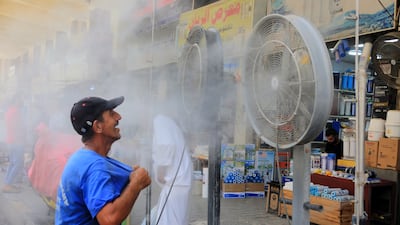
An Iraqi man cool himself off in a spray of water during a sweltering hot day at the Al-Khilani square in central Baghdad, Iraq. EPA -

Children play on water jets at a public square on a very hot afternoon in Madrid, Spain. Getty Images -

A costumed spiderman drinks during a heat wave in New York. Bloomberg -
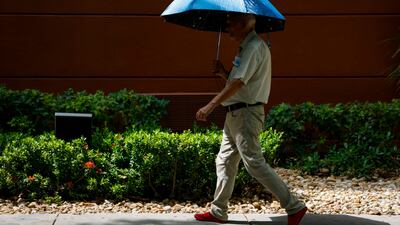
A pedestrian carries an umbrella during a heat wave in Miami, Florida, US. Bloomberg -

A Palestinian, Mustafa Abdou, repairs fan in his shop amid a heatwave at Shati refugee camp in Gaza City. Reuters -

A man dives into a canal during a hot day in Larkana district of Sind province. AFP -
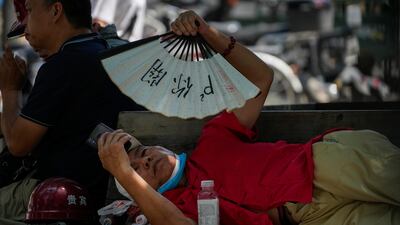
A man cools himself with a fan while browsing his phone on a sweltering day in Beijing. AP -
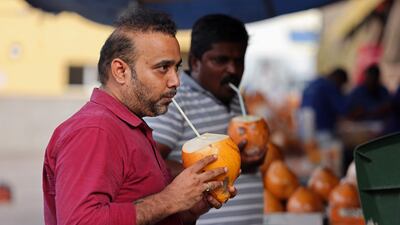
People drink coconut water at a market in Dubai to cope with the hot weather. AFP -
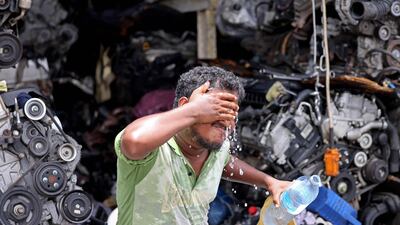
A worker washes his face to cope with the hot weather in Dubai. AFP -

An Egyptian girl cools off in the water amid a heatwave, at a Red Sea resort in Hurghada Egypt. Reuters -

Pedestrians hold umbrellas for protection from the sun during a heat wave in New York, US. Bloomberg -
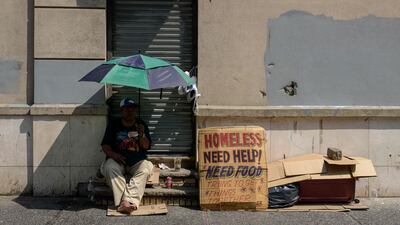
A homeless person holds an umbrella to block out the sun on a hot day in New York City. AFP -

Bottles of water being delivered on a hot summer day in Istanbul. AP -

Diving into the Treska river near Skopje, as temperatures in North Macedonia soared. AFP -

A woman takes a photograph of the Acropolis in Athens in high temperatures. AFP -

A woman shelters from the sun during a heatwave in Rome. Reuters -

Shelia Nunez, 40, cools her dog with ice while sitting under a shaded bus stop in Phoenix, Arizona. AFP -

A lion eats an icy treat containing meat and ostrich eggs to cool down during a regional heatwave at the Safari Zoological Centre in Ramat Gan, Israel. Reuters -

Children play in a water fountain near the walls of Jerusalem's Old City. Reuters -
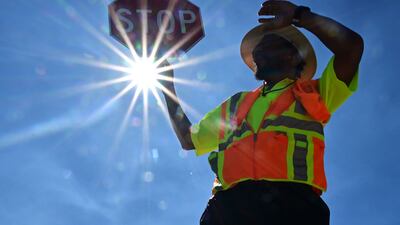
Traffic warden Rai Rogers works on his street corner under the hot sun in Las Vegas. AFP -

A woman uses a fan amid an alert for a heatwave in Shanghai. Reuters -
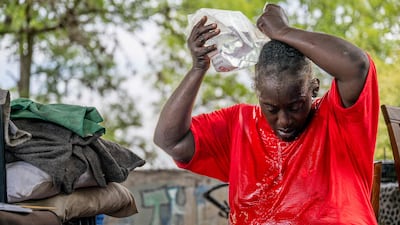
Andrea Washington pours water on herself in the Hungry Hill neighbourhood of Austin, Texas. Getty -

A busy beach in Rabat, Morocco. EPA -
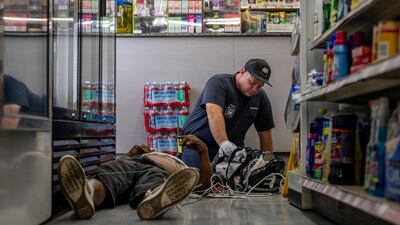
A person receives medical attention after collapsing in a shop in Phoenix, Arizona, in high heat. AFP -

An Iraqi dives into the Tigris to beat the heat in Baghdad. AP -

Youths play in a fountain at a park in the Syrian capital Damascus, as temperatures exceed 35°C. AFP


A world moving in the wrong direction
The world is deviating from the path of reducing health-harming fossil fuels.
The report shows an alarming trend of increasing investment and lending in fossil fuels, with global energy system carbon emissions growing to a record 36.8 gigatonnes in 2022.
Governments continue to incentivise fossil fuel expansion, with significant subsidies exceeding national health spending in some countries.
The finance sector's role in this adverse trend is notable, with substantial investments in fossil fuels impeding the transition to zero-emission energy.
The 20 largest oil and gas companies have increased their projected fossil fuel production, leading to greenhouse gas emissions that would pass the levels compatible with the 1.5°C target by 173 per cent in 2040.
Inequity in energy transition is evident, as most underserved countries are left behind, still dependent on polluting biomass for basic needs.
Only a meagre percentage of electricity in low-income countries comes from clean renewables, compared to wealthier nations.
Prof Hartinger said: “Despite plentiful renewable energy resources, clean renewables accounted for just 1 per cent and 0.4 per cent of the energy supply in Africa and small island developing states (SIDS) in 2020, respectively, compared with 3 per cent in Europe, and 6 per cent in Oceania.
“It means that we see a perpetuated reliance on polluting fuels, and higher levels of exposure to harmful air pollution.”
Prof Paul Ekins, Lancet Countdown Working Group Lead on Economics and Finance, criticised this continued investment in fossil fuels, urging a redirection towards clean renewable energy and public health improvement.
“Both the investment in fossil fuels and the subsidies that continue to be poured into fossil fuel production and consumption, must be urgently redirected to incentivise the expansion and affordability of clean renewable energy and to activities that improve public health and resilience,” Prof Ekins said.

Transformative opportunities of health-centred climate action
Despite these challenges, the report highlights significant health benefits from transitioning to a zero-carbon future that gives priority to equity and justice.
This includes accelerating the shift to clean energy and energy efficiency, especially in low-income countries.
Improvements in air quality could prevent millions of deaths from outdoor and indoor air pollution annually.
Shifting to sustainable transport and promoting healthier diets can also significantly improve health and reduce emissions.
Encouraging progress is seen in the decline of deaths from fossil fuel-derived air pollution and increased global investment in clean energy, which now exceeds fossil fuel investment.
Renewables are becoming a dominant force in electricity capacity growth, and employment in this sector is at a record high.
Prof Anthony Costello, Co-Chair of the Lancet Countdown, underscored the necessity of urgent mitigation through health-centred action.
“This will require defending people’s health from the interests of the fossil fuel and other health-harming industries,” he said.
“Transformative climate action is needed today to enable a future where present and future generations can thrive.”
In response to the report, UN Secretary General Antonio Guterres highlighted the unfolding human catastrophe due to climate breakdown, emphasising the urgent need for immediate and powerful action to limit global temperature rise and protect health worldwide.
“We are already seeing a human catastrophe unfolding with the health and livelihoods of billions across the world endangered by record-breaking heat, crop-failing droughts, rising levels of hunger, growing infectious disease outbreaks, and deadly storms and floods,” Mr Guterres said.
“The evidence is unequivocal. A just and equitable transition from fossil fuels to renewables together with a global surge in adaptation investment will save millions of lives and help protect the health of everyone on Earth.”

