
Makhtar Diop, managing director of the International Finance Corporation, has lauded the “energy” that has been brought to the climate agenda by the UAE as it prepares to host Cop28.
In an exclusive interview with The National, Mr Diop expressed his “thanks to the UAE authorities” and added: “I think that His Excellency Dr Sultan Al Jaber’s role as leading the effort for Cop28 will be very good.”
He went on to explain: “We have seen already the energy that has been put by the UAE authorities by His Excellency Dr Al Jaber [Minister of Industry and Advanced Technology], and we believe that with his leadership, we will be able to really accelerate [our] partnership” with entities such as the International Renewable Energy Agency and the International Energy Agency, but also “countries which are supporting the energy transition”.
Mr Diop discounted questions about having Dr Al Jaber, who is also Group CEO and Managing Director of Adnoc, as the Cop28 president designate, saying: “The reality is that today, the UAE is one of the countries that invests most in renewable energy. That's a reality, that is a fact. So one can say a lot of things, but facts are here.”
managing director of the IFC
“I do think that the commitment that we have seen, from the UAE, in accelerating that transition by having companies like Masdar, which are investing in the world, by having the Abu Dhabi Development Fund investing in the energy transition, speak for itself,” he added.
“For me, the dialogue that we have been having with Dr Al Jaber has been a very strong dialogue. And I'm very confident that he will do a great job.”
Speaking to The National during his visit to Dubai to attend the World Government Summit, Mr Diop also stressed the importance of public-private partnerships in dealing with climate change.
Getting the money to fight climate change
One of the biggest challenges facing climate action is that of finance. Raising the needed $100 billion per year, as agreed in Cop15 in 2009, has been a challenge for developed countries.
Ensuring climate investment in developing countries will be vital to mitigate climate change and help countries adapt to its ramifications.
The IFC invests in particular areas to encourage private investment.
“The way we are structuring deals to invest in the energy transition … is that we try to bring people into the frontier markets, also to invest in technology which are expensive, which are not yet totally profitable,” Mr Diop said. “So to do that, we need to bring some grant money and which allows investors to do risky investments.”
With the IFC committing funding, it is able to reduce the risk to private investors and gives a dose of confidence to an industry or field.
“What we have experienced is that anytime we put $1, we are able to mobilise not only our own capital at the IFC but to mobilise a lot of investment from the capital market, private investors, fund managers and pension fund managers … [who] are much more comfortable,” Mr Diop said.
“When we put $1 of grant money, it allows us not only to put a significant amount of money but to mobilise a large amount of money from the capital market. And the ratios that we have found so far are one to 10.”
Among the investments that the IFC was able to scale up and that will be critical to the energy transition is the scaling of solar power.
Mr Diop explained that by investing in solar, the IFC brought “standard contracting, transparency and at times competition” to the market, allowing others to invest.
“And the combined factors have really cut the cost significantly and attracted more and more investment — so that was 10 years ago,” he said.
Wind is now another source of power that is attracting investment, with the IFC and the UAE having recently invested in Egypt.
World Government Summit 2023 — in pictures
-

Sheikh Saif bin Zayed, Deputy Prime Minister and Minister of the Interior, concludes the World Government Summit with a talk entitled 'The Emirates: A Family of Solid Roots and a Vibrant Future'. WAM -
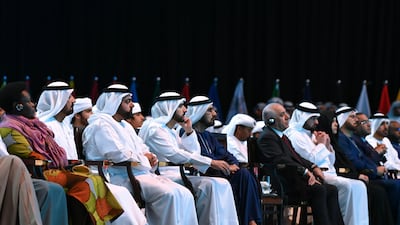
Sheikh Mohammed bin Rashid, Vice President and Ruler of Dubai, listens to Sheikh Saif. WAM -
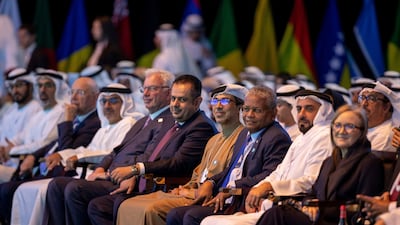
Najla Bouden, Prime Minister of Tunisia, Sheikh Saif bin Zayed, Deputy Prime Minister and Minister of Interior, Wavel Ramkalawan, President of Seychelles, Sheikh Mansour bin Zayed, Deputy Prime Minister and Minister of Presidential Affairs, Dr Maeen Saeed, Prime Minister of Yemen and Panagiotis Pikrammenos, Deputy Prime Minister of Greece, at the summit. Photo: Presidential Court -
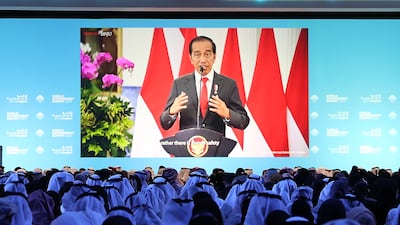
Joko Widodo, President, Government of the Republic of Indonesia speaking at the World Government Summit held at Madinat Jumeirah in Dubai. Pawan Singh / The National -
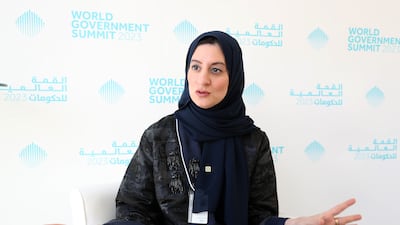
Huda AlHashimi, Deputy Minister of Cabinet Affairs for Strategic Affairs, United Arab Emirates during the interview at the World Government Summit held at Madinat Jumeirah in Dubai. Pawan Singh / The National -
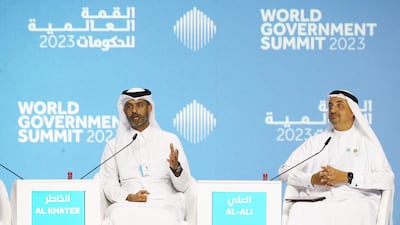
Left to Right - Nasser Al-Khater, Chief Executive Officer, FIFA World Cup Qatar 2022 and Najeeb AlAli, Executive Director, Expo 2020 Bureau speaking during the session on Hosting Major Events: An Arab Success Story at the World Government Summit held at Madinat Jumeirah in Dubai. Pawan Singh / The National -
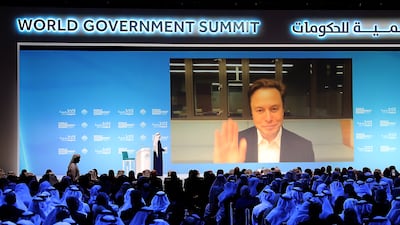
Elon Musk and Mohammad Al Gergawi, Minister of Cabinet Affairs, speak on day three of the World Government Summit in Dubai. Mr Al Gergawi is also chairman of the summit. Pawan Singh / The National -
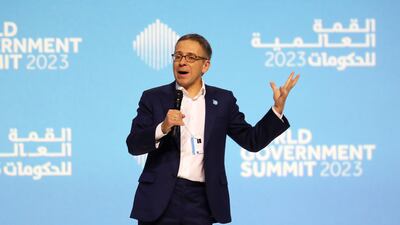
Ian Bremmer, president and founder of Eurasia Group, speaking during a session called 'Beyond 2023: A Global Outlook'. Pawan Singh / The National -
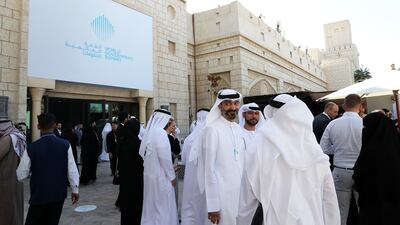
Delegates gather at Madinat Jumeirah for the summit. Pawan Singh / The National -
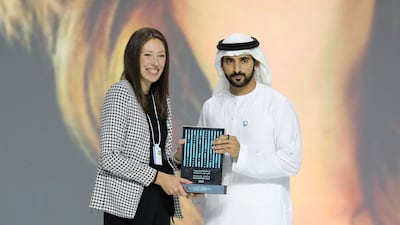
Sheikh Hamdan bin Mohammed, Crown Prince of Dubai, presents the World Data Visualisation Award to Lindsey Poulter. Pawan Singh / The National -
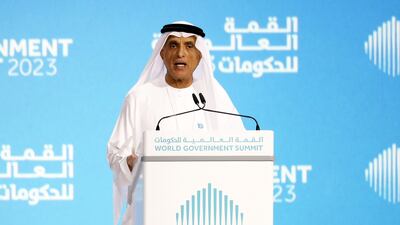
Sheikh Saud bin Saqr Al Qasimi, Ruler of Ras Al Khaimah, addresses delegates at the summit. Pawan Singh / The National -
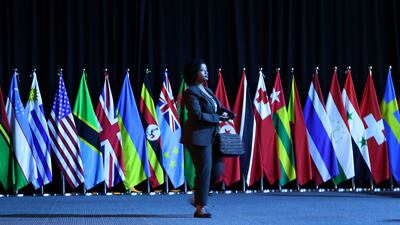
National flags displayed at the global event. Pawan Singh / The National -

Turkish President Recep Tayyip Erdogan speaks at the event using a video link. Antonie Robertson / The National -
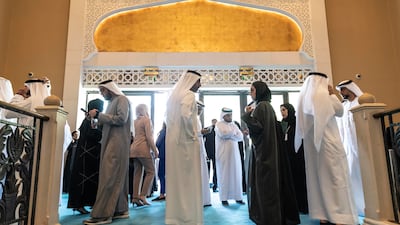
People gather for the second day of the summit. Antonie Robertson / The National -
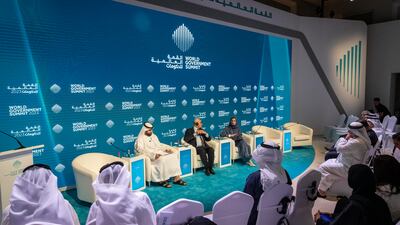
Huda Al Hashimi, right, Deputy Minister of Cabinet Affairs for Strategic Affairs, on stage with Waleed Al Ali, left, Secretary General of the Digital School, and Reda Hegazy, Egypt's Minister of Education. Antonie Robertson / The National -
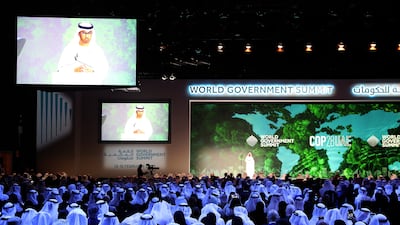
Dr Sultan Al Jaber, Minister of Industry and Advanced Technology, and Cop28 President-designate, speaks during a session titled The Road Map to Cop28: Prioritising Action. Pawan Singh / The National -
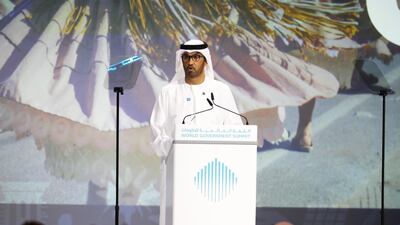
Dr Al Jaber, who is also the UAE's special envoy for climate change, addresses delegates in Dubai. Pawan Singh / The National -
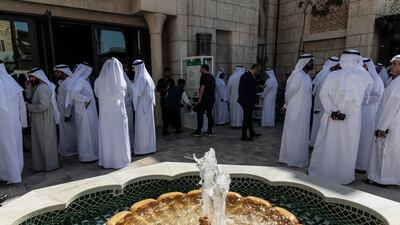
Day two of the World Government Summit. Antonie Robertson/The National -
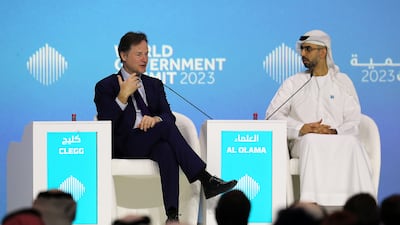
Omar Al Olama, Minister of State for Digital Economy, AI and Remote Work System, and Nick Clegg, president of Global Affairs at Meta, at the summit. Pawan Singh / The National -
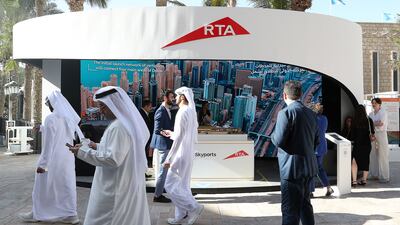
Delegates at the World Government Summit held at Madinat Jumeirah in Dubai. Pawan Singh / The National -
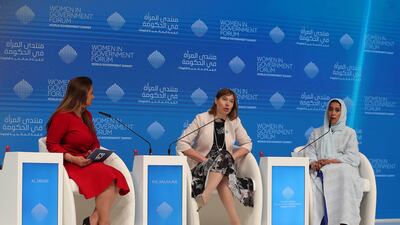
Mina Al-Oraibi, Editor-in-Chief of The National newspaper, Kersti Kaljulaid, fifth President of Estonia, and Mona Al Marri, vice president of the UAE Gender Balance Council. Pawan Singh / The National -
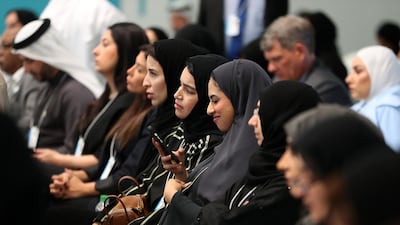
Delegates during the session on Women in Government: Powering the Future. Pawan Singh / The National -
President Sheikh Mohamed, Sheikh Mohammed bin Rashid, Vice President and Ruler of Dubai, and Egyptian President Abdel Fattah El Sisi. Photo: Dubai Media Office -
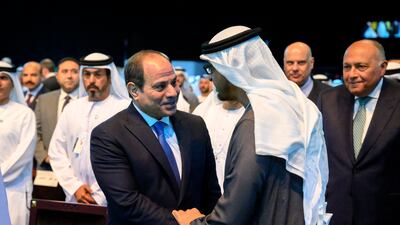
Sheikh Mohamed greets Mr El Sisi. Photo: Presidential Court -
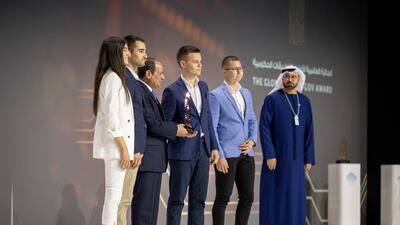
Mr El Sisi presents the Global Best M-Gov Award to the winners as Mohammed Al Gergawi, Minister of Cabinet Affairs, looks on. Photo: Presidential Court -
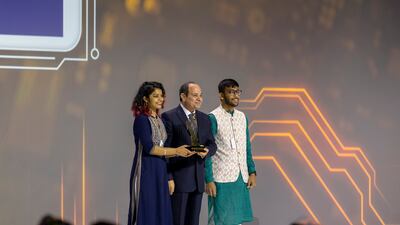
Mr El Sisi presents the Global Best M-Gov Award. Photo: Presidential Court -
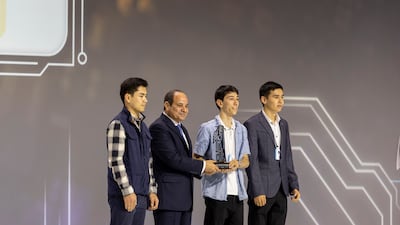
Mr El Sisi presents the Global Best M-Gov Award. Photo: Presidential Court -
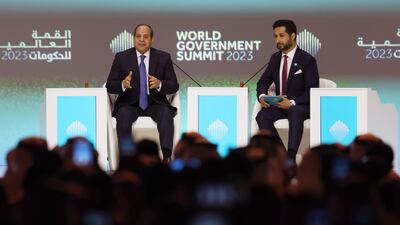
Sky News Arabia's media relations director Faisal bin Huraiz sits alongside Mr El Sisi at the summit. EPA -
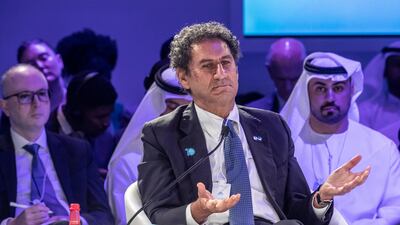
Francesco La Camera, Director General of International Renewabale Energy Agency, speaks at the summit. Antonie Robertson / The National -
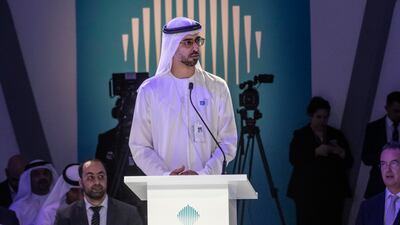
Omar Sultan Al Olama, Minister of State for Artificial Intelligence at the summit. Antonie Robertson / The National -

Mohamed Al Ramahi, Chief Executive Officer, Masdar. Antonie Robertson / The National -
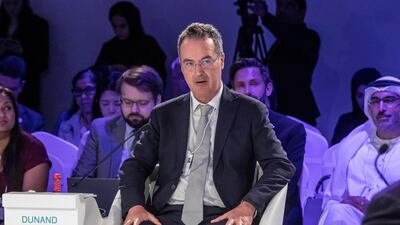
Marco Dunand, CEO and Co-founder, Mercuria Energy Group. Antonie Robertson/The National -
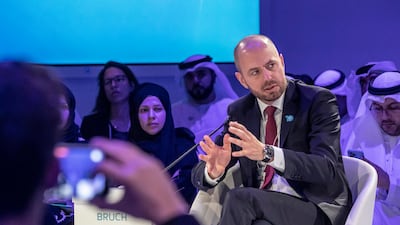
Christian Bruch, President and CEO, Siemens Energy. Antonie Robertson / The National -
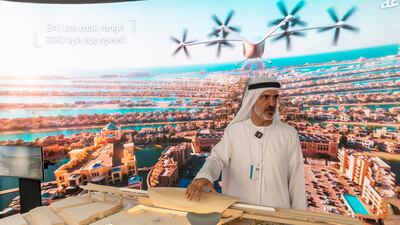
Ahmed Bahrozyan, chief executive of the Public Transport Agency at the RTA. Antonie Robertson / The National -
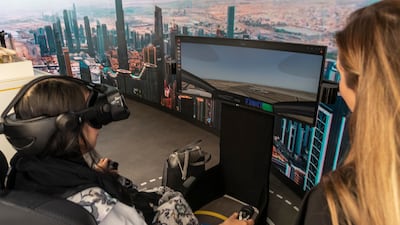
RTA's flyng taxi and sky port project powered by Joby. Virtual simulation of the flying experience. Antonie Robertson / The National -
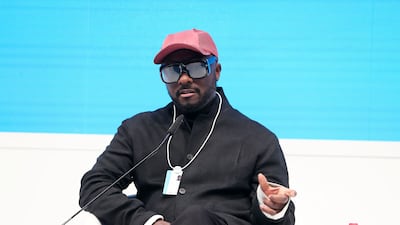
will.i.am speaking during the session on Accelerating Tech: The New Frontier for Policy-making at the World Government Summit in Dubai. Pawan Singh / The National -
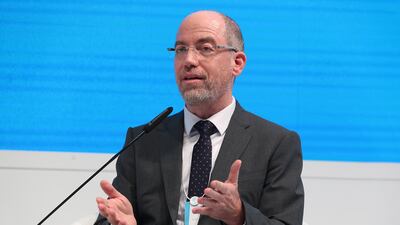
Doron Avni, Google VP of Government Affairs and Public Policy Emerging Markets speaking during the session on Accelerating Tech: The New Frontier for Policy-making at the World Government Summit in Dubai. Pawan Singh / The National -
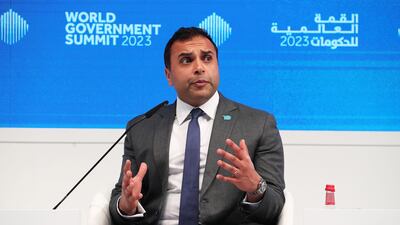
Sujay Jaswa, Founder and Managing Partner, WndrCo speaking during the session on Accelerating Tech: The New Frontier for Policy-making at the World Government Summit in Dubai. Pawan Singh / The National -
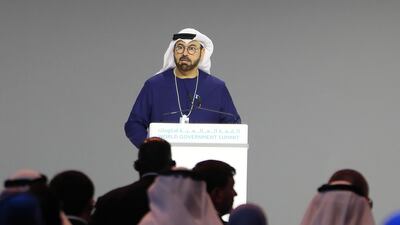
Mohammed Al Gergawi, Minister of Cabinet Affairs and the chairman of the World Government Summit, delivers the opening speech. Pawan Singh / The National -
Al Gergawi highlighted the rapid change the world has seen in the decade since the event was first held. Pawan Singh / The National -
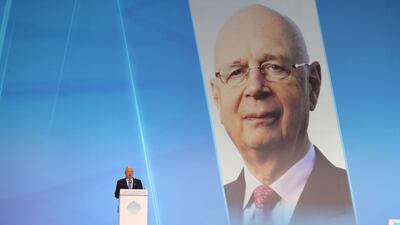
Klaus Schwab, Founder and Executive Chairman of the World Economic Forum, speaks at the summit. Pawan Singh / The National -
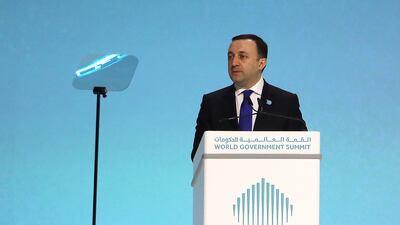
Georgia's Prime Minister Irakli Garibashvili speaks at the World Government Summit in Dubai. Pawan Singh / The National -
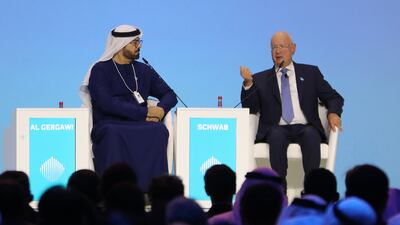
Al Gergawi and Schwab held a joint discussion. Pawan Singh / The National -
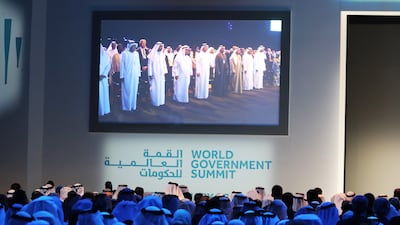
Delegates standing during the moment of silence for the Turkey – Syria earthquake before the start of World Government Summit in Dubai. Pawan Singh / The National -
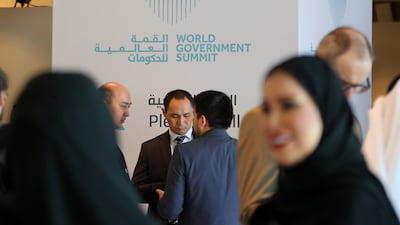
Delegates at the World Government Summit held at Madinat Jumeirah in Dubai. Pawan Singh / The National


Water resource management, hydrogen development and solar panels
Hydrogen is another power source attracting investment and attention.
“We are seeing a lot of excitement in hydrogen and green hydrogen … but we know that it's important to ensure that it's part of the supply chain,” Mr Diop said.
“So what can be done for ammonia, to be used also for fertilisers, and how we can be integrated in that chain.”
Hydrogen is difficult to transport, so it is generally used locally. Mr Diop said it is important to look at water in a number of ways, as it “is much less developed and important to look at” for the coming Cop28 in the UAE.
Water resource management, hydrogen development and cleaning solar panels all require the use of water and are among the areas the IFC plans to look into.
“More and more, we need to really to focus on the technology which allows us to reduce the cost of desalination to allow us to use maybe ocean water,” Mr Diop said. More investment will be crucial in water, he added.
Adapting to climate change remains underfunded, especially as returns are often lower, and Mr Diop said the private sector will be crucial for it.
He explained that “investing in adaptation is fighting poverty … because if we look at most of the interventions which are related to adaptation, they are really helping the poorest”.
Mr Diop named “smart agriculture and coastal erosion” as two important fields that are also related to fighting poverty.
This week, the IFC signed an agreement with Abu Dhabi Fund for $1.5 billion to invest in emerging markets.

The roots of the deal started a year ago when Mr Diop visited the UAE “and it actually went very fast”.
“What we are bringing is a portfolio of investment, the countries that we know very, very well, areas that we have been doing a lot of work with upstream teams, and new business development teams, and all that we bring them into the fund and say the $1.5 billion that you want to deploy in those countries, we can do co-financing,” he said.
Mr Diop stressed that there are a number of priorities in tackling the climate crisis, explaining that “the solution will not be mainly a public sector solution, because of the limitations that we are seeing in public funding”.
He added that “PPP [public-private partnerships] will be an important part of it”.
“And the first P, which is a public site, needs to be funded,” he added. “Often we have PPP, but the counterpart funding that is needed by the government is not really available.”
While the International Monetary Fund can be brought in to help, the IFC works at bringing in private-sector investment. Mr Diop also spoke of his organisation’s work with the International Energy Agency and Irena, saying of the latter: “We have been working with them for a long time and continue working with them.”
The need for investment comes at an economically difficult time for public sector financing in major global economies.
However, there is “capital available” that should be deployed, according to Mr Diop.
“Institutions like the IFC are critical at this time because we are in a unique place to be able to make that connection, to be able to talk with our colleagues from the World Bank Group to help put in place policies that are conducive to investment for the private sector,” he said.
“We are proud to work with the private sector; it is our raison d’etre to be able to move to mobilise capital.”
Mr Diop said the IFC would be doing much more work on climate change and added: “We have just closed our half-year numbers and half of our investment has been 50 per cent climate change-related.”
The IFC has beaten its own target, as it had committed to 35 per cent of its total annual investments to be climate-related.
However, Mr Diop said the work is only possible by working with others, from philanthropies to the UN Environmental Programme.
“We need to bring people working on macro policies, like our colleague from the IMF, the World Bank Group is working on, all the sectoral policy that needs to be done,” he said.
“And we are working with partners like Irena, international energy agencies and Unep. We are working also with them very closely. So this is a time where it's impossible to do anything if you don't work in partnership with others.”
Masdar projects — in pictures
-
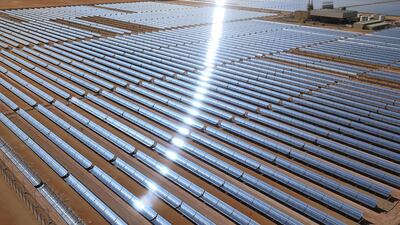
Shams 1 Solar Power Station in Abu Dhabi's Al Dhafra region. Photo: Masdar -

Shams 1 opened in 2013 and generates enough electricity to power tens of thousands of homes. Photo: Masdar -
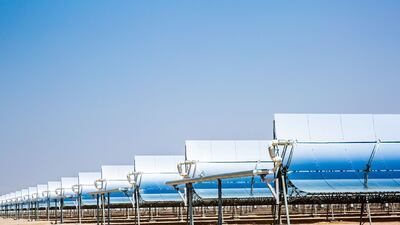
Shams uses 'parabolic trough' systems, meaning it directs heat on to liquid, which causes steam that then drives a turbine. Photo: Masdar -
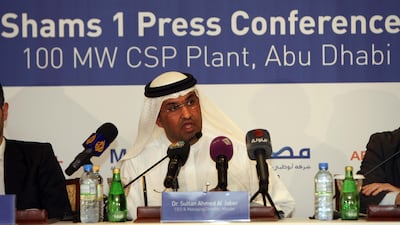
Dr Sultan Al Jaber announces the Shams 1 project back in 2010. Stephen Lock / The National -
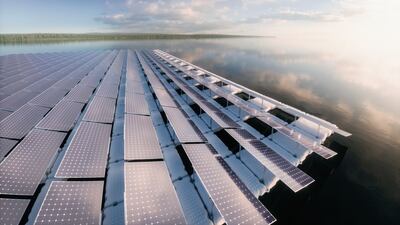
Cirata, a floating solar plant in Indonesia, expected to enter operation in 2022. Photo: Masdar -
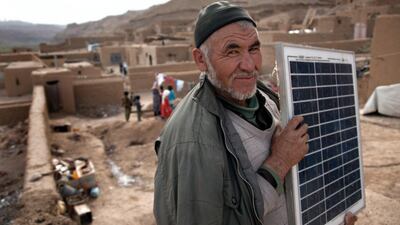
Masdar helped thousands of people in Afghanistan to access power though solar rooftop panels. Photo: Masdar -

It was the first time thousands of Afghan people had an electricity supply. Photo: Masdar -

Masdar's rooftop project in Afghanistan. Photo: Masdar -
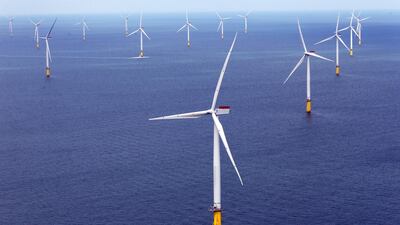
The London Array, the world's largest offshore wind farm in the Thames Estuary off the coast of the UK. Stephen Lock / The National -

Another view of the London Array. Stephen Lock / The National -
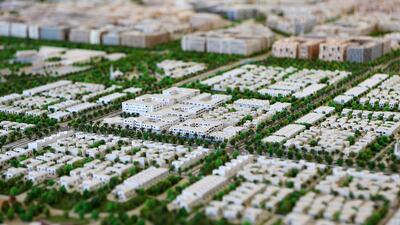
A model of Masdar City, which champions sustainable living. Pawan Singh / The National -
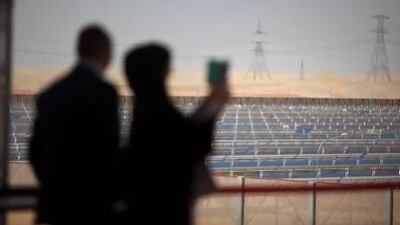
The opening of Shams 1 in 2013. Silvia Razgova / The National -
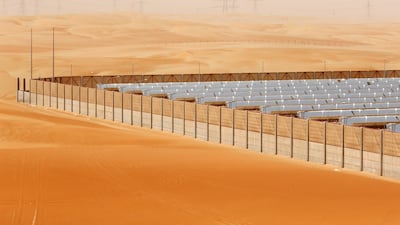
The Shams 1 plant was one of the first concentrated solar power plants in the region. Christopher Pike / The National -
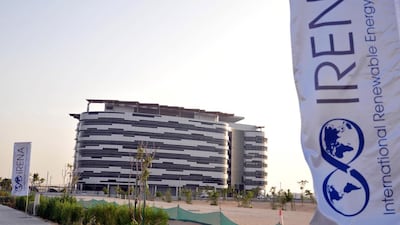
Irena's headquarters in Masdar City, Abu Dhabi. Wam -
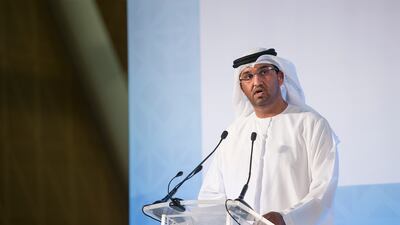
Dr Al Jaber is leading the charge to a greener tomorrow. Mona Al Marzooqi / The National



