


The UN’s climate change champion for Cop27 Egypt said financing clean energy projects is critical and bringing together investors and communities across the same table is crucial.
Mahmoud Mohieldin, UN Climate Change High Level Champion for Egypt and UN Special Envoy on Financing 2030 Sustainable Development Agenda, is looking forward to working with the UAE in the months leading up to Cop28.
The economist with more than 30 years of experience in international finance and development spoke at the Abu Dhabi Sustainability Week on Tuesday.
His message was that climate change discussions cannot be ‘elitist', or held in a vacuum and that it is important to include people who are affected but never part of the dialogue.
UN climate change high-level champion for Egypt Cop27
“There are many good solutions in farming, for instance, that can improve productivity or knowledge sharing about best crops or crop insurance,” he told The National in an interview.
“All these new solutions are about people but we need to put them in simple language, not to get people frightened.
"It’s not an elitist topic and I think hosting the Cop in Egypt and here in the UAE, that gets in closer to common people from the developing economies.”
High cost of doing nothing
Drawing in civil society, non-government institutions, universities and the private sector will be an essential part of the preparations before the next Cop in November.
He has already met senior officials in the UAE team, including his counterpart, Razan Al Mubarak, the UN climate change high-level champion for the UAE Cop28, and discussed this and other priorities.
“This was the subject that took a lot of time between me and Razan Al Mubarak, the new champion from the UAE,” he said.
He spoke of the need to convey to the wider public that “the cost of doing nothing is even more”, saying the price of handling the damage caused by climate change would be far higher than investing in solutions.
-
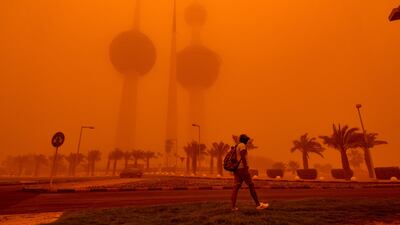
The Kuwait Towers are shrouded amid a sandstorm. The world has seen more extreme weather in the past decade, with the Gulf witnessing cyclones, flooding and extreme heat. EPA -
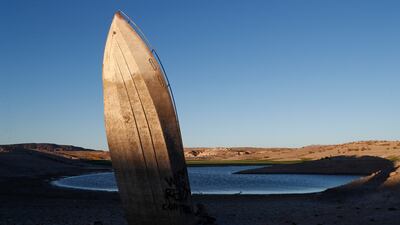
A formerly sunken boat sits upright on the shore of Lake Mead, Nevada, where water levels have dropped. EPA -
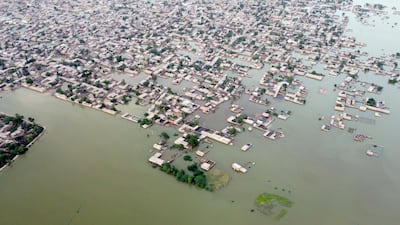
Homes surrounded by floodwater in Pakistan's south-western Baluchistan province earlier this year. AP Photo -
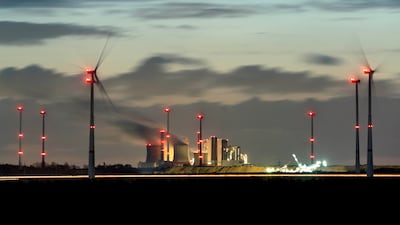
Steam rises from a coal-fired power plant near Grevenbroich, Germany. AP Photo -
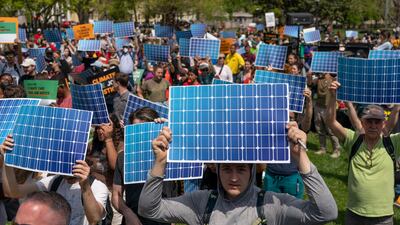
Activists display prints replicating solar panels during a rally to mark Earth Day in Washington. AP Photo -
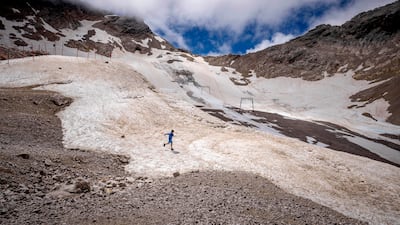
A glacier, which has lost most of its ice in the past few years, on Mount Zugspitze, Germany. AP Photo -
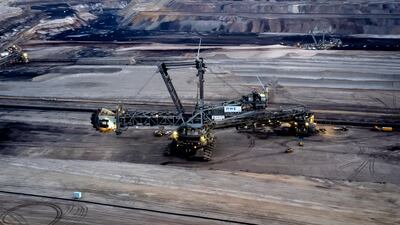
A bucket wheel excavator mining coal at an open-cast mine in Luetzerath, Germany. AP Photo -
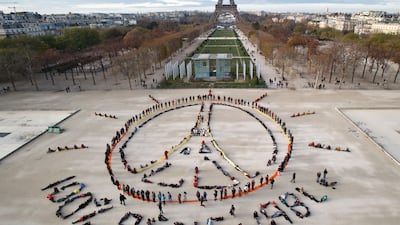
Climate activists form a human chain spelling out '100% renewable', at Cop21 in Paris in 2015. AP -
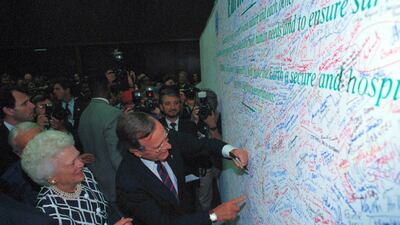
US president George W Bush and first lady Barbara Bush sign a pledge to protect the Earth in Rio de Janeiro in 1992. AP Photo -
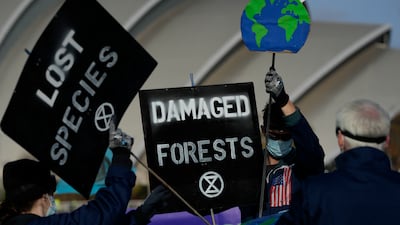
Extinction Rebellion activists holds placards at Cop26 last year in Glasgow, Scotland. AP Photo -

Demonstrators hold banners calling for a reduction in greenhouse gas emissions in Kyoto, Japan, in 1997. AP Photo -
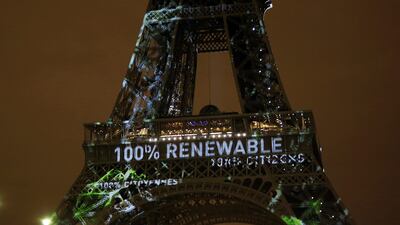
An artwork entitled 'One Heart One Tree' by Naziha Mestaoui is displayed on the Eiffel Tower before the 2015 Paris climate conference. AP Photo -
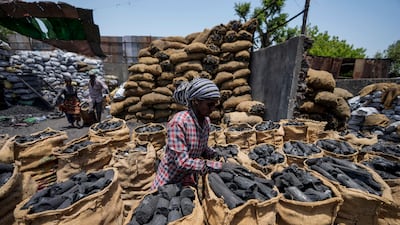
A woman works at a coal depot in Ahmedabad, India, in May. AP Photo -
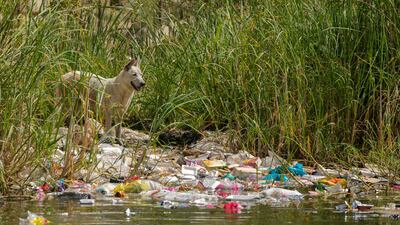
Plastic waste on the banks of the Nile in Cairo in September. AP Photo -
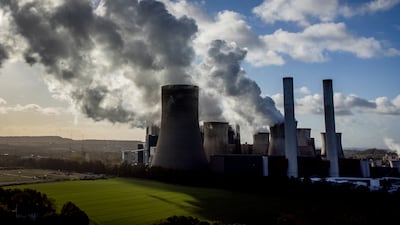
Steam rises from a coal-fired power plant Niederaussem, Germany. AP Photo -

Lake Poopo, home to the Uru Murato indigenous community in Bolivia, has largely become a desert. AFP -
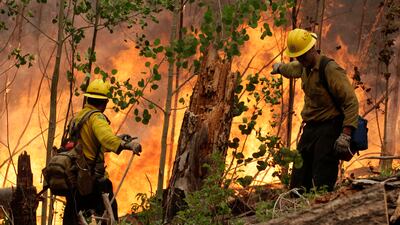
US firefighters battle a blaze near Los Alamos, New Mexico, in 2011. AP Photo -
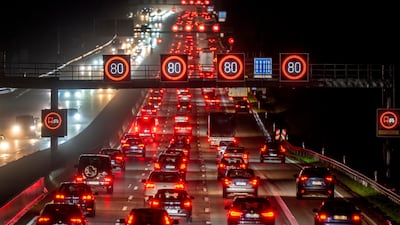
Cars on motorway in Frankfurt, Germany. Vehicle emissions are a contributor to climate change. AP Photo -
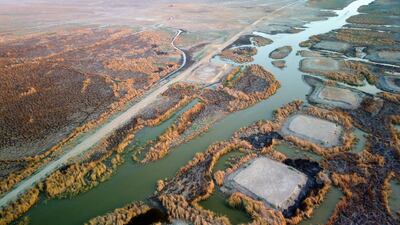
The rapidly drying marshes of Chibayish in Iraq's southern Dhi Qar province. AFP


Identifying strong green energy projects will provide an important road map for investment bankers looking for viable programmes, he said.
He was confident that the UAE, with its collaboration between the government and investors, would build on the work done in the Egyptian city of Sharm El Sheikh last year.
Having travelled extensively and seen projects introduced, Mr Mohieldin is enthusiastic about plans for wind farms, clean cooking and water management in South Asia and Africa that are among 128 projects identified by the UN in a pipeline of “investible opportunities” to help countries adapt.
Listening to economies in distress
The former minister of investment of Egypt is also an advocate of a level playing field.
He has outlined a bold approach of financing energy plans on concessional terms for middle and low-income countries with interest rates not exceeding 1 per cent, a grace period of no less than 10 years and repayment of 20 years.
This “holistic approach” takes into consideration countries in economic distress, particularly, with the war in Ukraine, amid soaring food prices and the energy crisis.
“I cannot just talk about climate finance as if there is no debt crisis looming in many countries,” he said.
“What we need to do is make climate finance as part of a holistic approach. We need to consider that there is more than 60 per cent of developing economies in debt distress. We cannot just say it’s going to be business as usual.”
Forced migration
Mr Mohieldin has also warned that the figure of $100 billion a year that rich countries pledged at Copenhagen at Cop15 in 2009 to help developing nations meet climate action goals was outdated.
A report before the Egypt summit last year said developing nations need $1 trillion a year until 2025 and $2.4 trillion until 2030 to deal with damage from climate change, cut emissions, adapt and boost resilience.
“I don’t like to play this card a lot but there is the fear factor as well,” he said.
“If we are not going to be contributing adequately to stop the problems, we are going to be seeing floods, more concerns about heat and people will not just complain about it, they will move.
“You will have an influx of refugees in the form of forced migration.
“People are displaced within their country first and then if one has an alternative somewhere in a cooler area, they will try all possible means to reach these places to protect their families.
“So let’s get into good acts of collaboration.
“I know, it’s very for many countries facing difficult economic conditions but actually the cost of doing nothing is huge.”
Mr Mohieldin believes limiting global temperatures to 1.5 degrees above pre-industrial levels is achievable with financing projects, the exchange of technology between countries, solar and wind solutions being invented.
He said: “1.5 degrees, it’s still alive.
“I actually see opportunities even in the worst of the political crisis today in Ukraine.
“In the short term it pushed some countries to burn everything and anything they can burn in order to produce energy including from coal.
“But at the same time it has renewed their interest in renewables and green solutions for energy as well.”

