

Smartphone shipments to the Gulf rose in the final three months of last year, driven by demand for the latest iPhone models and a rise in discretionary spending as pandemic restrictions eased and a vaccine rollout began.
Nearly 4.26 million smartphones were sold in the three months to December 31 – a 2.3 per cent increase on the third quarter, but a 17 per cent decline on the same period a year earlier, the International Data Corporation said in its Quarterly Global Mobile Phone Tracker report.
The growth was driven by the launch of four new models in the iPhone 12 series in October, with US-based Apple recording a 55.7 per cent quarterly increase in shipments. South Korean company Samsung's smartphone deliveries fell 4.1 per cent as it faced shortages for some models, the Massachusetts-based research company said.
"Apple enjoyed strong demand for the iPhone 12 series … while its iPhone 11 series continued to perform well in the region," Akash Balachandran, a senior research analyst at IDC, said.
The launch of more expensive models also meant the total value of the GCC's smartphone market surged almost 40 per cent quarter-on-quarter to $1.6 billion.

Samsung remained the market leader in the GCC, with a 42 per cent market share, followed by Apple (23 per cent), Xiaomi (11 per cent) and Huawei (8 per cent).
Most GCC countries returned to some state of normality during the quarter, with borders re-opening for travel. This was especially true in the UAE, where the vaccine rollout began in earnest, the IDC said.
“Although consumer spending remained focused on essentials, there was a release of pent-up demand, particularly for iOS devices,” it added
Fifth-generation devices accounted for 16.5 per cent of all smartphone shipments across the GCC in the last quarter.
“Significant growth is expected in the shipments of 5G-enabled devices in 2021, particularly as they increasingly become available in mid-tier price bands among Android devices," Ramazan Yavuz, a senior research manager at IDC, said.
Saudi Arabia, the Arab world’s biggest economy, accounted for 49.4 per cent of all smartphones shipped within the GCC region. However, the kingdom suffered an overall quarter-on-quarter decline in shipments due to component and supply shortages that affected lower-end Android devices, the report said.
The UAE, the region's second-largest market, saw its share of smartphone shipments increase to 26.1 per cent during the quarter.
The region’s smartphone market is forecast to experience a 0.7 per cent quarterly decline in shipments in the first quarter of this year.
"Supply constraints will likely continue to hamper growth in the region due to chipset and component shortages across most smartphone brands in the first half,” Mr Yavuz said.
“However, with supply returning to normal and with the vaccine rollout expected to significantly reduce the possibility of additional lockdowns and spikes in Covid-19 cases, the market is set to see growth return towards the second half of the year,” he added.
-
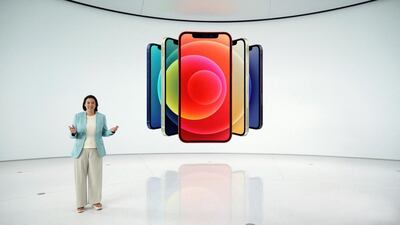
In this screen grab released by Apple, Apple's vice president of iPhone Product Marketing Kaiann Drance unveils the new iPhone 12 during an Apple event at Apple Park in Cupertino, California on October 13, 2020. (Photo by Apple Inc. / Apple Inc. / AFP) / RESTRICTED TO EDITORIAL USE - MANDATORY CREDIT "AFP PHOTO/ Apple Inc." - NO MARKETING - NO ADVERTISING CAMPAIGNS - DISTRIBUTED AS A SERVICE TO CLIENTS -
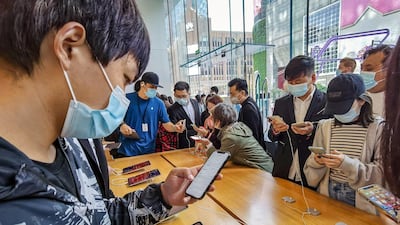
People try out the new iPhone 12 mobile phones at an Apple store in Shanghai on October 23, 2020. (Photo by STR / AFP) / China OUT -
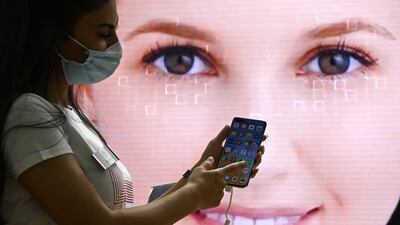
A fair hostess presents a Huawei P40 pro smartphone at the booth of Huawei during the Internationale Funkausstellung IFA international trade show for consumer electronics and home appliances on September 3, 2020 at the fair grounds in Berlin. - A special edition of the fair, adapted to health security measures amid the novel coronavirus / COVID-19 pandemic, will be running from September 3 to 5, 2020. (Photo by Tobias SCHWARZ / AFP) -
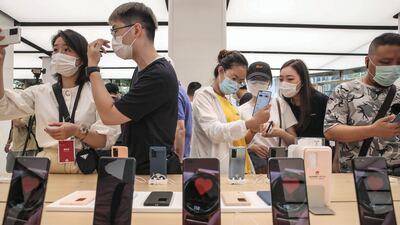
People queue to enter a newly-opened Huawei global flagship store in Shanghai on June 24, 2020. - Chinese telecoms giant Huawei opened the doors on its second global flagship store in Shanghai's commercial heart on June 24, part of plans to strengthen the brand in its core domestic market at a time when it faces headwinds overseas. (Photo by STR / AFP) / China OUT -
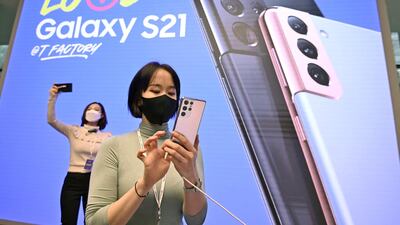
A woman looks at the Samsung Galaxy S21 smartphone during a domestic launch event at a flagship store of SK Telecom in Seoul on January 22, 2021. (Photo by Jung Yeon-je / AFP) -
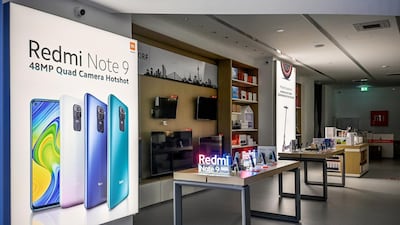
epa08939868 A salesroom of Chinese smartphone maker Xiaomi is seen in the city centre of Duesseldorf, Germany, 15 January 2021. Chinese smartphone maker Xiaomi is the latest to be added to the Trump administration?s military blacklist. On Thursday, the Department of Defense added nine companies to its list of alleged Chinese military companies, including Xiaomi. The Beijing-based company?s stock dropped 10.3 per cent in Hong Kong trading on 15 January 2021, hours after the Pentagon added it to a list of companies with suspected ties to the Chinese military. That, in conjunction with a separate executive order, will block US investors from buying its shares 60 days from now and will require Americans to eventually sell their holdings. Xiaomi was the world?s third-largest smartphone maker as of Q3 last year, coming ahead of Apple and trailing behind Samsung and Huawei, according to market researcher IDC. EPA-EFE/SASCHA STEINBACH -
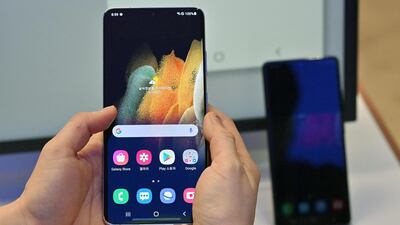
A visitor looks at the Samsung Galaxy S21 smartphone during a domestic launch event at a flagship store of SK Telecom in Seoul on January 22, 2021. (Photo by Jung Yeon-je / AFP) -
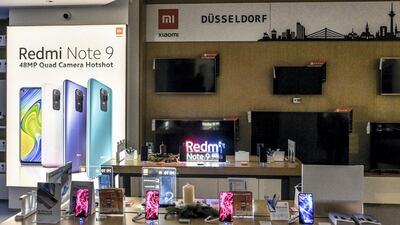
epa08939869 A salesroom of Chinese smartphone maker Xiaomi is seen in the city centre of Duesseldorf, Germany, 15 January 2021. Chinese smartphone maker Xiaomi is the latest to be added to the Trump administration?s military blacklist. On Thursday, the Department of Defense added nine companies to its list of alleged Chinese military companies, including Xiaomi. The Beijing-based company?s stock dropped 10.3 per cent in Hong Kong trading on 15 January 2021, hours after the Pentagon added it to a list of companies with suspected ties to the Chinese military. That, in conjunction with a separate executive order, will block US investors from buying its shares 60 days from now and will require Americans to eventually sell their holdings. Xiaomi was the world?s third-largest smartphone maker as of Q3 last year, coming ahead of Apple and trailing behind Samsung and Huawei, according to market researcher IDC. EPA-EFE/SASCHA STEINBACH



