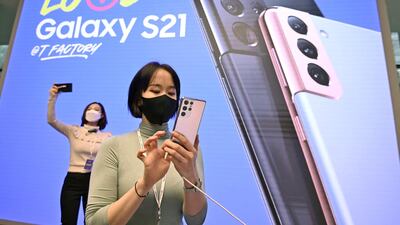
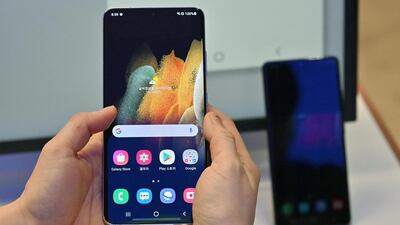
South Korean brand Samsung remained the market leader in the GCC, with a 42 per cent market share, in the fourth quarter of 2020. EPA

Demand for iPhones leads to rise in GCC smartphone shipments


Alkesh Sharma
  • English
  • Arabic

Smartphone shipments to the Gulf rose in the final three months of last year, driven by demand for the latest iPhone models and a rise in discretionary spending as pandemic restrictions eased and a vaccine rollout began.

Nearly 4.26 million smartphones were sold in the three months to December 31 – a 2.3 per cent increase on the third quarter, but a 17 per cent decline on the same period a year earlier, the International Data Corporation said in its Quarterly Global Mobile Phone Tracker report.

The growth was driven by the launch of four new models in the iPhone 12 series in October, with US-based Apple recording a 55.7 per cent quarterly increase in shipments. South Korean company Samsung's smartphone deliveries fell 4.1 per cent as it faced shortages for some models, the Massachusetts-based research company said.

"Apple enjoyed strong demand for the iPhone 12 series … while its iPhone 11 series continued to perform well in the region," Akash Balachandran, a senior research analyst at IDC, said.

The launch of more expensive models also meant the total value of the GCC's smartphone market surged almost 40 per cent quarter-on-quarter to $1.6 billion.

Samsung remained the market leader in the GCC, with a 42 per cent market share, followed by Apple (23 per cent), Xiaomi (11 per cent) and Huawei (8 per cent).

Most GCC countries returned to some state of normality during the quarter, with borders re-opening for travel. This was especially true in the UAE, where the vaccine rollout began in earnest, the IDC said.

“Although consumer spending remained focused on essentials, there was a release of pent-up demand, particularly for iOS devices,” it added

Fifth-generation devices accounted for 16.5 per cent of all smartphone shipments across the GCC in the last quarter.

“Significant growth is expected in the shipments of 5G-enabled devices in 2021, particularly as they increasingly become available in mid-tier price bands among Android devices," Ramazan Yavuz, a senior research manager at IDC, said.

Saudi Arabia, the Arab world’s biggest economy, accounted for 49.4 per cent of all smartphones shipped within the GCC region. However, the kingdom suffered an overall quarter-on-quarter decline in shipments due to component and supply shortages that affected lower-end Android devices, the report said.

The UAE, the region's second-largest market, saw its share of smartphone shipments increase to 26.1 per cent during the quarter.

The region’s smartphone market is forecast to experience a 0.7 per cent quarterly decline in shipments in the first quarter of this year.

"Supply constraints will likely continue to hamper growth in the region due to chipset and component shortages across most smartphone brands in the first half,” Mr Yavuz said.

“However, with supply returning to normal and with the vaccine rollout expected to significantly reduce the possibility of additional lockdowns and spikes in Covid-19 cases, the market is set to see growth return towards the second half of the year,” he added.

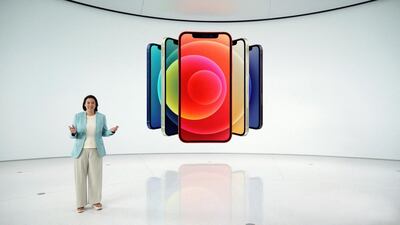
  • In this screen grab released by Apple, Apple's vice president of iPhone Product Marketing Kaiann Drance unveils the new iPhone 12 during an Apple event at Apple Park in Cupertino, California on October 13, 2020. (Photo by Apple Inc. / Apple Inc. / AFP) / RESTRICTED TO EDITORIAL USE - MANDATORY CREDIT "AFP PHOTO/ Apple Inc." - NO MARKETING - NO ADVERTISING CAMPAIGNS - DISTRIBUTED AS A SERVICE TO CLIENTS
    In this screen grab released by Apple, Apple's vice president of iPhone Product Marketing Kaiann Drance unveils the new iPhone 12 during an Apple event at Apple Park in Cupertino, California on October 13, 2020. (Photo by Apple Inc. / Apple Inc. / AFP) / RESTRICTED TO EDITORIAL USE - MANDATORY CREDIT "AFP PHOTO/ Apple Inc." - NO MARKETING - NO ADVERTISING CAMPAIGNS - DISTRIBUTED AS A SERVICE TO CLIENTS
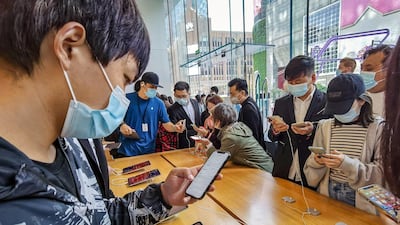
  • People try out the new iPhone 12 mobile phones at an Apple store in Shanghai on October 23, 2020. (Photo by STR / AFP) / China OUT
    People try out the new iPhone 12 mobile phones at an Apple store in Shanghai on October 23, 2020. (Photo by STR / AFP) / China OUT
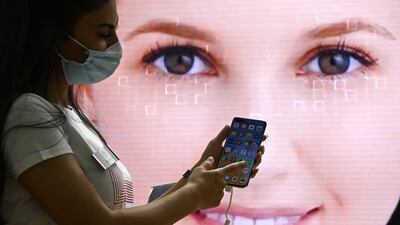
  • A fair hostess presents a Huawei P40 pro smartphone at the booth of Huawei during the Internationale Funkausstellung IFA international trade show for consumer electronics and home appliances on September 3, 2020 at the fair grounds in Berlin. - A special edition of the fair, adapted to health security measures amid the novel coronavirus / COVID-19 pandemic, will be running from September 3 to 5, 2020. (Photo by Tobias SCHWARZ / AFP)
    A fair hostess presents a Huawei P40 pro smartphone at the booth of Huawei during the Internationale Funkausstellung IFA international trade show for consumer electronics and home appliances on September 3, 2020 at the fair grounds in Berlin. - A special edition of the fair, adapted to health security measures amid the novel coronavirus / COVID-19 pandemic, will be running from September 3 to 5, 2020. (Photo by Tobias SCHWARZ / AFP)
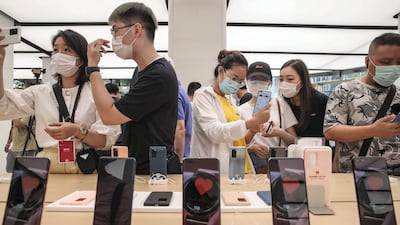
  • People queue to enter a newly-opened Huawei global flagship store in Shanghai on June 24, 2020. - Chinese telecoms giant Huawei opened the doors on its second global flagship store in Shanghai's commercial heart on June 24, part of plans to strengthen the brand in its core domestic market at a time when it faces headwinds overseas. (Photo by STR / AFP) / China OUT
    People queue to enter a newly-opened Huawei global flagship store in Shanghai on June 24, 2020. - Chinese telecoms giant Huawei opened the doors on its second global flagship store in Shanghai's commercial heart on June 24, part of plans to strengthen the brand in its core domestic market at a time when it faces headwinds overseas. (Photo by STR / AFP) / China OUT
  • A woman looks at the Samsung Galaxy S21 smartphone during a domestic launch event at a flagship store of SK Telecom in Seoul on January 22, 2021. (Photo by Jung Yeon-je / AFP)
    A woman looks at the Samsung Galaxy S21 smartphone during a domestic launch event at a flagship store of SK Telecom in Seoul on January 22, 2021. (Photo by Jung Yeon-je / AFP)
  • epa08939868 A salesroom of Chinese smartphone maker Xiaomi is seen in the city centre of Duesseldorf, Germany, 15 January 2021. Chinese smartphone maker Xiaomi is the latest to be added to the Trump administration?s military blacklist. On Thursday, the Department of Defense added nine companies to its list of alleged Chinese military companies, including Xiaomi. The Beijing-based company?s stock dropped 10.3 per cent in Hong Kong trading on 15 January 2021, hours after the Pentagon added it to a list of companies with suspected ties to the Chinese military. That, in conjunction with a separate executive order, will block US investors from buying its shares 60 days from now and will require Americans to eventually sell their holdings. Xiaomi was the world?s third-largest smartphone maker as of Q3 last year, coming ahead of Apple and trailing behind Samsung and Huawei, according to market researcher IDC. EPA-EFE/SASCHA STEINBACH
    epa08939868 A salesroom of Chinese smartphone maker Xiaomi is seen in the city centre of Duesseldorf, Germany, 15 January 2021. Chinese smartphone maker Xiaomi is the latest to be added to the Trump administration?s military blacklist. On Thursday, the Department of Defense added nine companies to its list of alleged Chinese military companies, including Xiaomi. The Beijing-based company?s stock dropped 10.3 per cent in Hong Kong trading on 15 January 2021, hours after the Pentagon added it to a list of companies with suspected ties to the Chinese military. That, in conjunction with a separate executive order, will block US investors from buying its shares 60 days from now and will require Americans to eventually sell their holdings. Xiaomi was the world?s third-largest smartphone maker as of Q3 last year, coming ahead of Apple and trailing behind Samsung and Huawei, according to market researcher IDC. EPA-EFE/SASCHA STEINBACH
  • A visitor looks at the Samsung Galaxy S21 smartphone during a domestic launch event at a flagship store of SK Telecom in Seoul on January 22, 2021. (Photo by Jung Yeon-je / AFP)
    A visitor looks at the Samsung Galaxy S21 smartphone during a domestic launch event at a flagship store of SK Telecom in Seoul on January 22, 2021. (Photo by Jung Yeon-je / AFP)
  • epa08939869 A salesroom of Chinese smartphone maker Xiaomi is seen in the city centre of Duesseldorf, Germany, 15 January 2021. Chinese smartphone maker Xiaomi is the latest to be added to the Trump administration?s military blacklist. On Thursday, the Department of Defense added nine companies to its list of alleged Chinese military companies, including Xiaomi. The Beijing-based company?s stock dropped 10.3 per cent in Hong Kong trading on 15 January 2021, hours after the Pentagon added it to a list of companies with suspected ties to the Chinese military. That, in conjunction with a separate executive order, will block US investors from buying its shares 60 days from now and will require Americans to eventually sell their holdings. Xiaomi was the world?s third-largest smartphone maker as of Q3 last year, coming ahead of Apple and trailing behind Samsung and Huawei, according to market researcher IDC. EPA-EFE/SASCHA STEINBACH
    epa08939869 A salesroom of Chinese smartphone maker Xiaomi is seen in the city centre of Duesseldorf, Germany, 15 January 2021. Chinese smartphone maker Xiaomi is the latest to be added to the Trump administration?s military blacklist. On Thursday, the Department of Defense added nine companies to its list of alleged Chinese military companies, including Xiaomi. The Beijing-based company?s stock dropped 10.3 per cent in Hong Kong trading on 15 January 2021, hours after the Pentagon added it to a list of companies with suspected ties to the Chinese military. That, in conjunction with a separate executive order, will block US investors from buying its shares 60 days from now and will require Americans to eventually sell their holdings. Xiaomi was the world?s third-largest smartphone maker as of Q3 last year, coming ahead of Apple and trailing behind Samsung and Huawei, according to market researcher IDC. EPA-EFE/SASCHA STEINBACH
Mobile phone packages comparison
World Cricket League Division 2

In Windhoek, Namibia - Top two teams qualify for the World Cup Qualifier in Zimbabwe, which starts on March 4.

UAE fixtures

Thursday February 8, v Kenya; Friday February 9, v Canada; Sunday February 11, v Nepal; Monday February 12, v Oman; Wednesday February 14, v Namibia; Thursday February 15, final

Name: Peter Dicce

Title: Assistant dean of students and director of athletics

Favourite sport: soccer

Favourite team: Bayern Munich

Favourite player: Franz Beckenbauer

Favourite activity in Abu Dhabi: scuba diving in the Northern Emirates 


Specs%3A%202024%20McLaren%20Artura%20Spider
%3Cp%3E%3Cstrong%3EEngine%3A%3C%2Fstrong%3E%203.0-litre%20twin-turbo%20V6%20and%20electric%20motor%3Cbr%3E%3Cstrong%3EMax%20power%3A%3C%2Fstrong%3E%20700hp%20at%207%2C500rpm%3Cbr%3E%3Cstrong%3EMax%20torque%3A%3C%2Fstrong%3E%20720Nm%20at%202%2C250rpm%3Cbr%3E%3Cstrong%3ETransmission%3A%3C%2Fstrong%3E%20Eight-speed%20dual-clutch%20auto%3Cbr%3E%3Cstrong%3E0-100km%2Fh%3A%3C%2Fstrong%3E%203.0sec%3Cbr%3E%3Cstrong%3ETop%20speed%3A%20%3C%2Fstrong%3E330kph%3Cbr%3E%3Cstrong%3EPrice%3A%3C%2Fstrong%3E%20From%20Dh1.14%20million%20(%24311%2C000)%3Cbr%3E%3Cstrong%3EOn%20sale%3A%3C%2Fstrong%3E%20Now%3C%2Fp%3E%0A
HIJRA

Starring: Lamar Faden, Khairiah Nathmy, Nawaf Al-Dhufairy

Director: Shahad Ameen

Rating: 3/5

Our legal consultant

Name: Hassan Mohsen Elhais

Position: legal consultant with Al Rowaad Advocates and Legal Consultants.

Mercer, the investment consulting arm of US services company Marsh & McLennan, expects its wealth division to at least double its assets under management (AUM) in the Middle East as wealth in the region continues to grow despite economic headwinds, a company official said.

Mercer Wealth, which globally has $160 billion in AUM, plans to boost its AUM in the region to $2-$3bn in the next 2-3 years from the present $1bn, said Yasir AbuShaban, a Dubai-based principal with Mercer Wealth.

Within the next two to three years, we are looking at reaching $2 to $3 billion as a conservative estimate and we do see an opportunity to do so,” said Mr AbuShaban.

Mercer does not directly make investments, but allocates clients’ money they have discretion to, to professional asset managers. They also provide advice to clients.

“We have buying power. We can negotiate on their (client’s) behalf with asset managers to provide them lower fees than they otherwise would have to get on their own,” he added.

Mercer Wealth’s clients include sovereign wealth funds, family offices, and insurance companies among others.

From its office in Dubai, Mercer also looks after Africa, India and Turkey, where they also see opportunity for growth.

Wealth creation in Middle East and Africa (MEA) grew 8.5 per cent to $8.1 trillion last year from $7.5tn in 2015, higher than last year’s global average of 6 per cent and the second-highest growth in a region after Asia-Pacific which grew 9.9 per cent, according to consultancy Boston Consulting Group (BCG). In the region, where wealth grew just 1.9 per cent in 2015 compared with 2014, a pickup in oil prices has helped in wealth generation.

BCG is forecasting MEA wealth will rise to $12tn by 2021, growing at an annual average of 8 per cent.

Drivers of wealth generation in the region will be split evenly between new wealth creation and growth of performance of existing assets, according to BCG.

Another general trend in the region is clients’ looking for a comprehensive approach to investing, according to Mr AbuShaban.

“Institutional investors or some of the families are seeing a slowdown in the available capital they have to invest and in that sense they are looking at optimizing the way they manage their portfolios and making sure they are not investing haphazardly and different parts of their investment are working together,” said Mr AbuShaban.

Some clients also have a higher appetite for risk, given the low interest-rate environment that does not provide enough yield for some institutional investors. These clients are keen to invest in illiquid assets, such as private equity and infrastructure.

“What we have seen is a desire for higher returns in what has been a low-return environment specifically in various fixed income or bonds,” he said.

“In this environment, we have seen a de facto increase in the risk that clients are taking in things like illiquid investments, private equity investments, infrastructure and private debt, those kind of investments were higher illiquidity results in incrementally higher returns.”

The Abu Dhabi Investment Authority, one of the largest sovereign wealth funds, said in its 2016 report that has gradually increased its exposure in direct private equity and private credit transactions, mainly in Asian markets and especially in China and India. The authority’s private equity department focused on structured equities owing to “their defensive characteristics.”

Avatar: Fire and Ash

Director: James Cameron

Starring: Sam Worthington, Sigourney Weaver, Zoe Saldana

Rating: 4.5/5