


Shares of Alphabet rallied after the company reported a 15 per cent jump in its second-quarter net profit driven by a surge in Google Search and YouTube divisions, while the company's cloud business outperformed.
The world's largest provider of search and video advertisements reported a net profit of almost $18.4 billion, the company said late on Tuesday.
The California company reported a 7 per cent annual surge in its last quarter’s revenue to more than $74.6 billion, beating analysts’ estimates of $72.8 billion.
Better-than-expected quarterly earnings were welcomed by investors, with the company's shares jumping as much as 7 per cent in after-hours trading to $130.74 a share.

Alphabet's shares jumped 0.56 per cent to $122.21 at market close on Tuesday and gained 6 per cent in after hours trading.
The stock has gained 37.13 per cent so far this year and the company had a market value of about $1.55 trillion at the close of the market on Tuesday.
“There’s exciting momentum across our products and the company, which drove strong results this quarter,” said Sundar Pichai, chief executive of Alphabet and Google.
“Our continued leadership in AI [artificial intelligence] and our excellence in engineering and innovation are driving the next evolution of Search, and improving all our services."

Alphabet earned more than 47 per cent of its second-quarter revenue, or more than $35 billion, from the US market.
In Europe, the Middle East and Africa, the company earned more than $22.2 billion, or more than 29 per cent of its total sales.
Alphabet’s operating income soared 12.2 per cent on an annual basis in the second quarter to about $21.8 billion. Its earnings for each share increased 19 per cent yearly to $1.44.
Google services business – which includes advertisements, Android, Chrome, hardware, Maps, Search, Google Play and YouTube – accounted for nearly 89 per cent of the company’s total sales.
It added more than $66.2 billion to overall revenue, nearly 5.4 per cent more than the second quarter of 2022.
Google’s advertising revenue from Search, YouTube and other businesses increased 3.2 per cent to about $58.1 billion in the second quarter.
“With 15 products that each serve half a billion people, and six that serve over two billion each, we have so many opportunities to deliver on our mission,” Mr Pichai said.
The total revenue from the cloud business grew an annual 28 per cent to about $8 billion in the June quarter.
Google Cloud includes the company’s infrastructure and data analytics platforms, collaboration tools and other services for enterprise customers.
It generates revenue mainly from fees received for cloud platform services and workspace collaboration tools.
Alphabet said its operating income in the cloud segment reached $395 million during the quarter. It improved from the second quarter of last year, when the division’s loss was $590 million.
Thomas Monteiro, senior analyst at Investing.com, told The National: "Google has finally consolidated itself as a leading force in the highly disputed cloud sector and now has room to focus its expansion in the AI field, which should garner investors' attention over the next quarter.”
"Not only did Google deliver fantastic earnings per share, exceeding expectations at a time when investors were questioning its ability to keep up with other tech giants amid the AI frenzy, it also did so by a considerable margin.”

The company’s operating loss from other bets, or subsidiaries, reached about $813 million in the last quarter, narrowed from a loss of more than $1.3 billion in the same period for 2022.
Other bets are derived mainly through the sale of internet offerings, as well as licensing and research and development services.
This includes Alphabet’s X lab, self-driving unit Waymo and other non-Google companies.
Alphabet spent more than $10.5 billion on research and development, nearly 14.2 per cent of its total sales in the second quarter. This was about 7.5 per cent more than the R&D expenditure for the same period in 2022.

“Our financial results reflect continued resilience in Search, with an acceleration of revenue growth in both Search and YouTube, as well as momentum in Cloud,” said Ruth Porat, chief financial officer of Alphabet and Google.
“We continue investing for growth, while prioritising our efforts to durably reengineer our cost base company-wide and create capacity to deliver sustainable value for the long term."
The company’s long-time chief financial officer, Ms Porat, would assume a new role, Alphabet said. She will become chief investment officer and president from September 1.
YouTube added almost $7.7 billion to Alphabet’s revenue, increasing about 4.4 per cent annually.
Google’s total acquisition costs stood at more than $12.5 billion, up nearly 2.6 per cent on an annual basis, against analysts’ expectations of $12.3 billion.

TACs are payments that search companies make to affiliates and online companies for bringing traffic to their websites. It is a major expense for companies such as Google and Yahoo.
Alphabet’s total cash, cash equivalents and marketable securities reached almost $118.3 billion at the end of June, from $113.7 billion at the end of last year.
-

A meeting room at Google's Munich office. Courtesy Google -
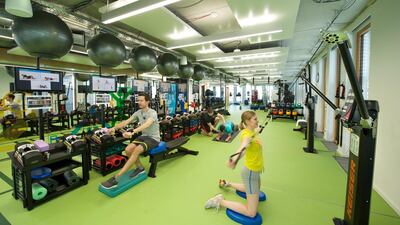
A fully functioning gym equipped with all the latest equipment, complete with motivational messages from Arnold Schwarzenegger. Courtesy Google -
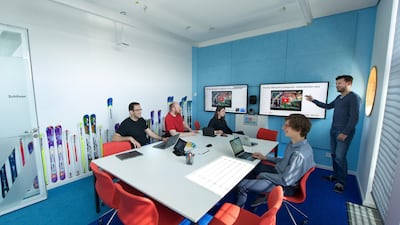
A meeting room at Google's Munich office. Courtesy Google -
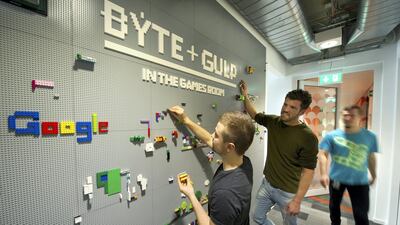
A Lego wall at Google's Munich office. Courtesy Google -
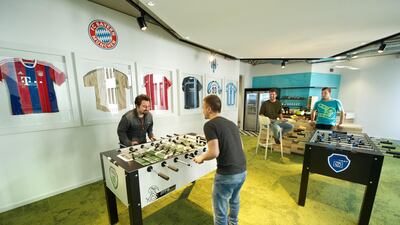
Games room equipped with two foozball tables. Google Munich Office. Photo Courtesy: Google -
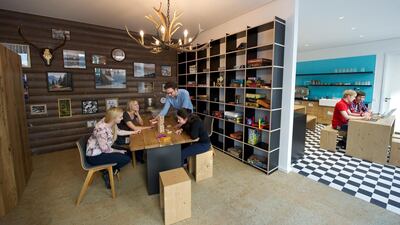
A library at the Google Munich Office. Courtesy Google -

The biophelia Lab where plants hang from the ceilings to give a feeling of the outdoors. Courtesy Google -
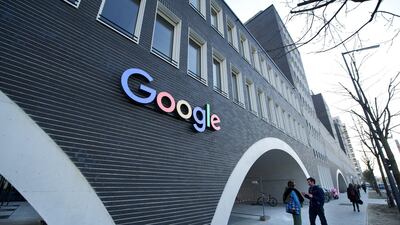
The entrance to Google's Munich office where dogs are also welcome. Courtesy Google



