

Another day and another tweet from Elon Musk, announcing yet another major change for the microblogging platform.
Since his $44 billion acquisition of Twitter in October, the billionaire has been on a mission to revamp every aspect of the company, from technical features to consumer policies.
On July 1, he announced that Twitter would be temporarily limiting the number of tweets people can read in a day. On July 2, he followed that up with a Tweet encouraging users to “step away from the phone”.
The limits are at 10,000 posts a day for verified users, 1,000 posts a day for unverified users and 500 posts a day for new unverified users, Mr Musk said.
The social media platform now also requires users to have an account and be logged in to view user profiles and tweets, a move Mr Musk claims will prevent data from being “pillaged so much”.
Unregistered users who want to view a Twitter profile will be prompted to log in or sign up, while those attempting to view tweets will be greeted with the “Something went wrong. Try reloading” message, The National can confirm.
The moves are aimed at boosting user experience and diversifying the platform’s revenue sources, according to Mr Musk.
Twitter is roughly breaking even and would become cash-flow positive in the coming quarters as advertisers return, he told the BBC in April.
Here are some of the major changes announced since the change of management:
1. Twitter 2.0 The Everything App
In line with the industry shift towards “ultra apps”, which provide a number of services to retain users, Mr Musk announced plans for the Twitter 2.0 The Everything App in November, soon after his takeover.
As part of the revamp, Mr Musk said in May that video and voice calls were “coming soon” to the microblogging platform.
With the move, Twitter would take on other established apps that offer the same feature, most notably those from Meta Platforms, which include Facebook, Instagram and WhatsApp.
As part of the revamp, Twitter also said it was also moving forward with plans to introduce a payments feature, steering it towards Mr Musk's goal of tapping into new revenue streams, the Financial Times reported in January.
2. Paid subscription for blue tick
In December, Twitter relaunched Twitter Blue, the platform's top-tier account, which indicates that a user is verified, as a paid subscription service.
The premium feature’s fees start at $8 a month for individuals, with new joiners getting subscriber-only features including Edit Tweet, 1080p video uploads, reader mode, the coveted blue check mark and longer tweets.
The costs of keeping the ticks start at $1,000 a month for organisations, plus $50 monthly for each affiliate or employee account.
Twitter also recently boosted the character limit for its Blue subscribers to 25,000, from 10,000 earlier.
3. Two-factor authentication for Blue users
In February, Twitter said that it would charge its users to use two-factor authentication (2FA) to secure their accounts by text message.
Phone number-based 2FAs are being “used and abused by bad actors”, Twitter said in a blog post at the time.
4. Publishers allowed to charge users
The microblogging social platform said in April that it would allow publishers to charge users on a per article basis from May.
The move will enable users who do not sign up for a monthly subscription “to pay a higher per article price for when they want to read an occasional article”, Mr Musk said in a tweet at the time.
5. Twitter to take 10 per cent cut on content subscriptions
Twitter will take a 10 per cent cut on content subscriptions after the first year, Mr Musk said in late April.
This followed an announcement allowing users to be able to offer their followers subscriptions to content, including long-form text and hours-long video.
Mr Musk also said that the company would not take a cut for the first 12 months of content subscriptions.
6. Open source 'literally everything'
In April, Mr Musk said the social media company would make “literally everything” open source as part of his pledge to promote transparency on the platform.
The move is expected to allow the public to inspect and scrutinise the social media company's proprietary software, pitch their ideas to developers on how to change Twitter's code or even use the algorithm in their own applications.
7. Bans accounts linking to rival social media platforms
Last year, Twitter said it would remove the accounts of users who link to its rival platforms.
The list of rivals mentioned by Twitter included Facebook, Instagram, Mastodon, Truth Social, Tribel, Post and Nostr. TikTok was not included.
8. Restructuring staff with thousands of layoffs
Mr Musk cut thousands of jobs after acquiring Twitter last year, saying that it was losing $4 million a day and advertisers were fleeing the microblogging platform.
Twitter shed about 80 per cent of its employees since Mr Musk took over in October, CNBC reported in January, citing internal records it had seen.
9. Leadership changes
In June, Linda Yaccarino took over as Twitter's chief executive.
Previously the head of advertising at NBC Universal, Ms Yaccarino has been given the task of revitalising Twitter's revenue streams.
She replaced Mr Musk, who was asked by a majority of Twitter users to step down as chief executive in a poll he conducted in December.

10. Merger with X Corp
In April, Twitter was merged with Mr Musk’s firm X Corp.
In the past, he has indicated that acquiring Twitter would be an “accelerant” for creating X, an “everything app”.
He said he intended to make X similar to WeChat, China's most popular messaging service.
11. Move towards AI
In March, Mr Musk said the company would use artificial intelligence to curb manipulation of public opinion on the platform.
He was said to be in discussions with Igor Babuschkin, who left DeepMind AI, to lead a group of artificial intelligence researchers in the effort, The Information reported at the time.
-
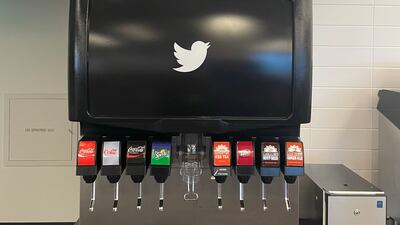
Manitowoc Ice Machines & Beverage Dispensers. Photo: HGP Auction -

Rotisol Rotisserie. Photo: HGP Auction -

LA Marzocco Espresso Machines. Photo: HGP Auction -
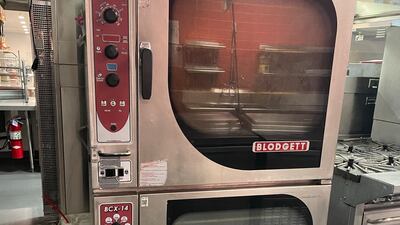
Blodgett Stacked Ovens. Photo: HGP Auction -

Knoll “Task Chairs”. Photo: HGP Auction -
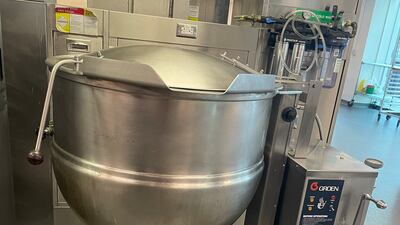
Groen Braising Pans. Photo: HGP Auction -

NEC Projectors. Photo: HGP Auction -

Vulcan Grills and Griddles. Photo: HGP Auction


12. Rebrand as X
Twitter rebranded as X on July 24 after Mr Musk unveiled its new logo, a day after he said that the microblogging platform's bird would soon be replaced.
In the past, he had indicated that acquiring Twitter would be an “accelerant” for creating X, an “everything app”. He said he intended to make X similar to WeChat, China's most popular messaging service.
Of course, the logo change led to a spate of memes on Twitter, as users questioned the rationale behind replacing the bird.
13. An ad revenue sharing programme
X rolled out its advertisement revenue sharing programme with content creators on July 29, as Mr Musk sought to diversify revenue sources.
The company had already given payouts to a number of creators earlier in July. But with the announcement, users globally who meet the eligibility criteria can apply for the programme from the monetisation tab in the X's settings, the company had said.
The programme, first announced by Mr Musk in February, will let creators set up ad revenue sharing and creator subscriptions independently.
To be eligible, the account must be a subscriber to Blue Verified or be a Verified Organisation, have at least 15 million impressions on cumulative posts within the past three months or have at least 500 followers. They also must have an account with payment processor Stripe to receive payouts.
14. Fixing shadow banning
On August 17, Mr Musk said that shadow banning on X will be “fixed soon”, in an another apparent move to make good on his pledge to make the platform more transparent.
Shadow banning, in simple terms, is used to restrict or limit a user's activity and reach instead of outright banning them – all without informing the user. It is used as a content-moderating technique also known as ghost banning, stealth banning and comment ghosting.
Its use, therefore, is two-pronged: while it can be used to curb misinformation, hate speech and fake news, platforms can also use it to limit the visibility of users they deem to be critical or unfair to them – or, in extreme cases, even as a form of punishing them.
Mr Musk himself has been accused of using this technique. This week, X was reported to have delayed access to the websites of companies that have been critical of his companies, as well as social media rivals.
15. Dropping the block feature
On August 18, Mr Musk said that the “block” feature on X will soon no longer be available for users. “It will be deleted as a 'feature', except for DMs”, or direct messages, he said.
The block button is a critical component in applications, most notably in email and social media. It helps users remove unwanted posts and followers, including spam messages, trolls, users who harass and other content they deem inappropriate or offensive.
This has drawn fire from Twitter users: in an age where users and society have heightened sensitivities, the removal of the block feature will be a blow.

