

Avocados can be tricky. Their ripeness window is so narrow that memes poke fun at the fine art of deciding when to eat them.
Dutch entrepreneur Marco Snikkers aims to solve that problem with an avocado scanner unveiled this week at the Consumer Electronics Show tech show in Las Vegas and designed for use in supermarkets.
It uses optical sensing and artificial intelligence to determine ripeness, displaying on a screen whether an avocado is firm or ready to eat.
Mr Snikkers's start-up, OneThird, is not just trying to reduce frustration in the kitchen. According to the UN, about one third of food is wasted globally. That means all the carbon emitted to grow, ship and distribute that food was for naught.
“That’s a huge problem,” Mr Snikkers says. “That’s a trillion-dollar issue for our world and it has a huge impact on carbon dioxide emissions and water usage.”
OneThird is one of several start-ups at this year’s CES working to solve different components of the problem, from helping the food industry limit what it throws away to offering rapid composting solutions to help keep food scraps out of methane-producing landfills.
Mr Snikkers's start-up already works with growers, distributors and others along the supply chain to predict the shelf life of avocados, tomatoes, strawberries and blueberries.
It will further expand its ability to determine ripeness for more produce later this year, aiming to help reduce the amount of food that is wasted around the world. And it's testing the consumer-friendly avocado scanner at a supermarket in Canada this month.
Another Dutch entrepreneur, Olaf van der Veen, is working to empower restaurants to reduce food waste, most of which happens in a kitchen before a meal is even served.
His device, Orbisk, uses a camera positioned over a rubbish bin to scan whatever food is about to be tossed. In addition to seeing the type of food, amount and time of day, “we can see if it’s on a plate, in a pan, on a cutting board, which gives circumstantial information on why it was lost", Mr van der Veen says.
Orbisk organises and shares that insight with the restaurant so they can understand their disposal patterns, helping them save money and reduce food waste, and with it, emissions and water use.
The start-up's devices are positioned in commercial kitchens in about 10 European countries, with some clients as far as India.
He said that even after some surplus food is donated, there's more food waste per restaurant in the US than in Europe. That's why the company is at CES, he says, hoping to expand its nascent market further.
Reducing the amount of wasted food is preferable, but keeping tossed food out of landfills is the next best option.
-

BMW project manager Stella Clarke with the colour-changing BMW i Vision Dee concept EV at the event. AFP -

Hollywood actor Arnold Schwarzenegger at CES 2023, at the Pearl Theater at Palms Casino Resort in Las Vegas. All photos: AFP -

Ms Clark with the concept vehicle. The event runs from January 5 to 8. AP -

The BMW i Vision Dee. More than 100,000 visitors are expected at CES 2023. AFP -
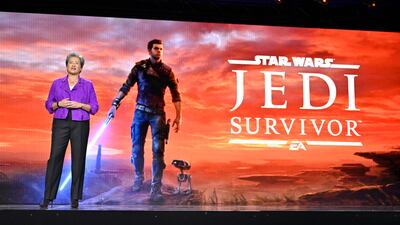
AMD chairwoman and chief executive Lisa Su at the trade show. AFP -
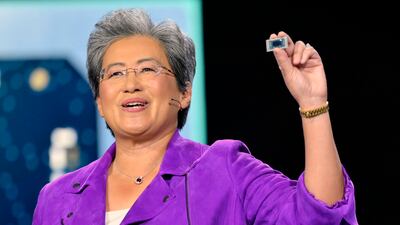
Ms Su displays an ADM Ryzen 7040 series chip at CES, which is to feature about 3,100 exhibitors. AFP -

Magic Leap chief executive Peggy Johnson addresses visitors at CES 2023. AFP -

A prototype of Afeela, an electric vehicle by Sony Honda Mobility on display in Las Vegas. Bloomberg -

Jim Ryan, president and chief executive of Sony Interactive Entertainment, was among the speakers. Bloomberg -

Visitors look at items related to the PlayStation 5. EPA -

Kenichiro Yoshida, chairman, president and chief executive of Sony Group Corporation. AFP -

Mr Yoshida was among the speakers. AFP -

Former Nasa astronaut Cady Coleman speaks at the event. AFP -

Alana Gomez-Solis, corporate marketing and communications specialist at Samsung Electronics America, at CES. Bloomberg -

Shin Baik, principal engineer and technical programme manager of the security team at Samsung Electronics, addresses the event. Bloomberg -
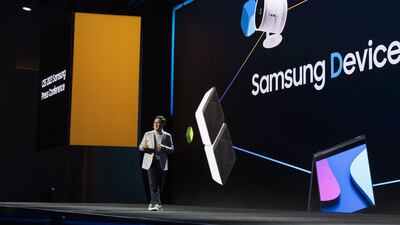
Han Jong-hee, chief executive and head of visual display business at Samsung Electronics, at the event in Las Vegas. Bloomberg -

TCL North America senior vice president Chris Hamdorf speaks before the start of the CES tech show. AP -
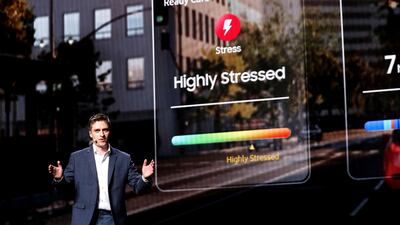
Marcus Futterlieb, software lead and project manager for Harman International, speaks about automotive technology during CES. Reuters -

Jason Mack Williams, Kokoma co-creator and mixed reality project adviser at Canon USA, uses an MREAL mixed reality headset. AFP -

TCL Mobile chief marketing officer Stefan Streit wears a pair of TCL RayNeo X2 augmented reality glasses at CES. AFP -
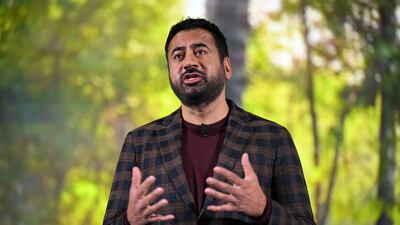
Actor Kal Penn speaks at the Panasonic press conference during CES. AFP -
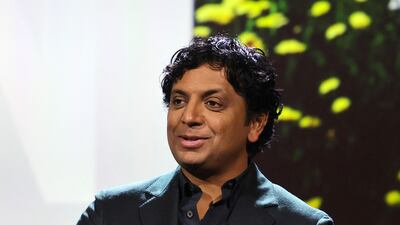
Filmmaker M Night Shyamalan at CES 2023. AFP -
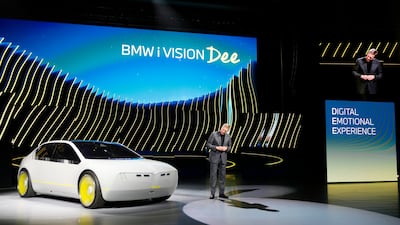
Oliver Zipse, chairman of the board of management of BMW AG, with the BMW i Vision Dee concept car. AP -

Artist Punita Bajaj was among the speakers at the show. AFP


When food scraps are properly composted, they release carbon dioxide as part of the biological process of turning into nutrient-rich soil.
When food is trapped in landfills, the decomposition process produces methane — a potent greenhouse gas that contributes significantly to global warming because it packs a stronger short-term punch more than 80 times stronger than even of carbon dioxide.
The 2006 London Protocol banned dumping food waste into the ocean, prompting South Korea to set up a system of mandatory composting. While the infrastructure allows the country to properly dispose of nearly all its food waste, residents have to haul bags of food to designated roadside bins.
Reencle is designed to make that process easier. The metal bin is a hyper-fast composting system showcased at CES this year, and helps households reduce 1kg of food scraps by 90 per cent volume in just 24 hours.
While the product has sold tens of thousands of units in South Korea, Reencle’s parent company Hanmi Flexible hopes to expand to overseas markets, marketing director Jinhwi Bang said.
executive director of Californians Against Waste
How is it so fast? The device uses self-replicating micro-organisms to turn scraps into compost. Its competitor, Lomi, grinds and dehydrates food scraps, requiring the by-product to be mixed with soil before composting, whereas Reencle says its by-product can be composted directly.
Mark Murray, executive director of Californians Against Waste, says he hopes people don’t think advanced technology is needed to be able to compost.
But he says he understands that not everyone has a yard or a patio, and that “all of the tools in the toolbox have to be on the table".
Technology is part of the solution. But Mr Murray says economic incentives and systemic change are the other key components to reducing global food waste.
“We need to make it more expensive to waste food,” he said. “That’ll create the incentive for commercial enterprises, for restaurants, for stores, for even consumers to invest in systems and technology for making sure that we don’t waste food.”

