

In recent months, brightly-branded battery swapping stations have cropped up around Kenya's capital Nairobi, allowing riders of electric motorcycles to exchange their low battery for a fully-charged one.
It is a sign of an electric motorcycle revolution starting to unfold in Kenya, where petrol-fuelled motorbikes are a cheaper and quicker way to get around than cars, but according to environmental experts are 10 times more polluting.
East Africa's biggest economy is leading the region's shift to zero-emission electric mobility, by using electric-powered motorcycles, its renewables-heavy power supply and position as a technology and start-up hub.
The battery swapping system not only saves time — essential for more than a million motorcyclists in Kenya, most of whom use the bikes commercially — but also saves buyers money, as many sellers follow a model in which they retain ownership of the battery, the bike's most expensive part.
“It doesn't make a lot of economic and business sense for users to acquire a battery … which would almost double the cost of the bike,” said Steve Juma, the co-founder of electric bike company Ecobodaa.
Ecobodaa has 50 test electric motorcycles on the road. It plans to have 1,000 by the end of 2023. Each is sold for about $1,500 — about the same price as a combustion-engine bike thanks to the exclusion of the battery from the cost.
-
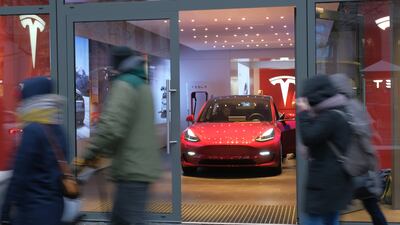
1. Tesla Model 3 – 34,783 sold in 2021. Getty Images -

2. Kia e-Niro – 12,271. Getty Images -
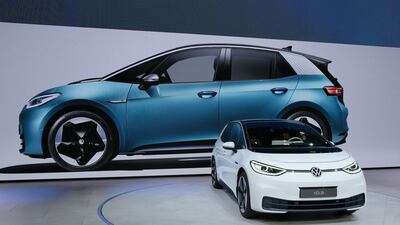
3. Volkswagen ID 3 – 11,032. Getty Images -
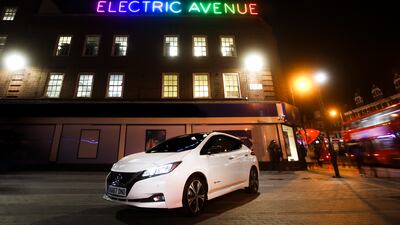
4. Nissan Leaf – 9,052. Getty Images -
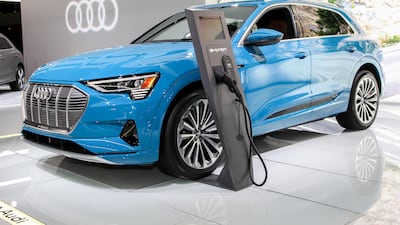
5. Audi e-tron – 7,396. Alamy -
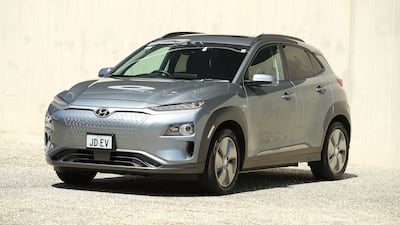
6. Hyundai Kona – 7,199. Getty Images -
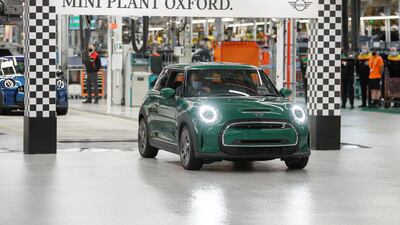
7. Mini Electric – 6,615. Getty Images -
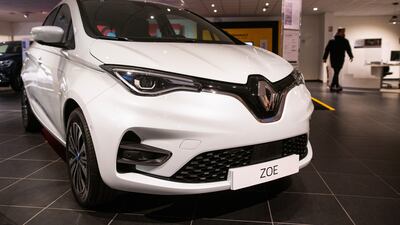
8. Renault Zoe – 5,778. Getty Images -
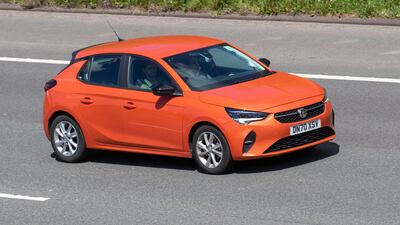
9. Vauxhall Corsa-e – 5,605. Alamy -
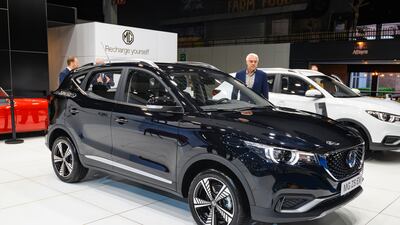
10. MG ZS – 5,380. Getty Images


After the initial purchase, the electric motorcycle — designed to be sturdy enough to traverse rocky roads — is cheaper to run than its petrol-guzzling equivalent.
“With the normal bike, I will use fuel worth approximately 700-800 Kenyan shillings ($5.70-$6.51) each day, but with this bike, when I swap a battery I get one battery at 300 shillings,” said Kevin Macharia, who transports goods and passengers around Nairobi.
Ecobodaa is one of several Nairobi-based electric motorcycle start-ups working to prove themselves in Kenya before expanding in East Africa.
Kenya's consistent power supply, which is about 95 per cent renewable, led by hydroelectricity and has a widespread network, provides major support for growth of the sector, said Jo Hurst-Croft, founder of ARC Ride, another Nairobi-based electric motorcycle start-up.
The country's power utility estimates it generates enough to charge two million electric motorcycles a day. Access to electricity in the country is over 75 per cent, according to the World Bank, and even higher in Nairobi.
Uganda and Tanzania also have robust and renewables-heavy grids that could support electric mobility, said Mr Hurst-Croft.
“We're putting over 200 swapping stations in Nairobi and expanding to Dar es Salaam and Kampala,” he said.

