


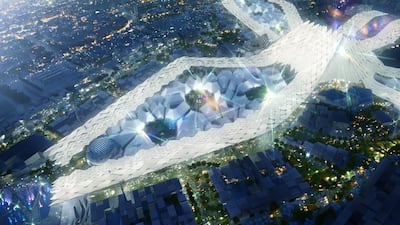
Dubai is attracting millions of new tourists, and the property industry is focused on building enough hotel rooms to accommodate them and enough malls, theme parks and resorts to entertain them. Here are 10 of the projects that are set to transform the city in the coming years.
-
-
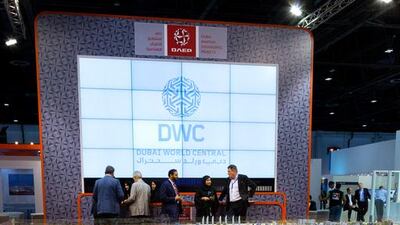
2. Al Maktoum International Airport Dubai Airports got the green light for a US$32 billion expansion of its second airport, Al Maktoum International at Dubai World Central (DWC), which could have an annual capacity of 200 million passengers. The airport, which opened its passenger terminal last October, already accommodates carriers including Qatar Airways, Kuwait’s Jazeera Airways, Bahrain’s Gulf Air and the Hungarian budget airline Wizz Air. The first phase of the project will take six to eight years to complete and could accommodate 120 million annual passengers. Passenger traffic at Dubai International Airport is expected to reach 100 million by the end of 2020, according to Dubai Airports. The development of the second airport will help to accommodate the increase. “With limited options for further growth at Dubai International, we are taking that next step to securing our future by building a brand new airport that will create the capacity we will need in the coming decades,” said Paul Griffiths, the chief executive of Dubai Airports. The airport will cover an area of 56 square kilometres and will include two satellite buildings. It will have the capacity to accommodate 100 Airbus A380s at any one time. Emirates Airline is the world’s biggest customer of the A380. It currently operates 50 of the superjumbos and has 90 more on order. The carrier will relocate its international operations hub to DWC by the mid-2020s, said Dubai Airports. Duncan Chard for the National -
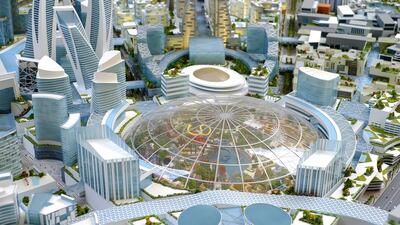
3. Mall of the World Even for a city famed for its flamboyant real estate and tourism projects, Dubai’s Mall of the World sets a new benchmark for the emirate’s dizzying ambition. The project encompasses an 8 million square foot mall connected to a theme park and as many as 100 hotels and serviced apartment buildings with 20,000 rooms. If all that wasn’t enough, the Dubai Holding project will be temperature-controlled, enabling shoppers and tourists to amble along a retail street network spreading over 7 kilometres, unaffected by the punishing summer heat. “The growth in family and retail tourism underpins the need to enhance Dubai’s tourism infrastructure as soon as possible,” said Sheikh Mohammed bin Rashid, Vice President of the UAE and Ruler of Dubai. “This project complements our plans to transform Dubai into a cultural, tourist and economic hub for the two billion people living in the region around us; and we are determined to achieve our vision.” The Mall of the World will be located alongside Sheikh Zayed Road, opposite the Mall of the Emirates. The entire development is likely to cost up to Dh25 billion and will take about 10 years to complete. Antonie Robertson / The National -

4. Mohammed bin Rashid City The Dh30 billion Mohammed bin Rashid City, named after the Vice President and Ruler of Dubai, was inaugurated at the beginning of 2014 after years on the shelf in the aftermath of the financial crisis. Developed by Saeed Humaid Al Tayer, the Meydan Group chairman and chief executive, the mixed-use, leisure and sports development will span more than 54 million square feet of prime freehold land. The city, scheduled to open between 2018 and 2019, will feature 600 hectares of open and green space including city parkland, waterways, woodlands, water parks, 7 kilometres of lagoons and 14km of man-made beaches. Once complete, it will be surrounded by 1,500 villas, to be built in four phases ahead of Expo 2020. The city plans also will include a sprawling shopping mall, more than 100 hotels, golf courses, a hub for the arts and centres to develop small businesses. The city will be located between Sheikh Zayed Road, Emirates Road and Al Khail Road. Courtesy Sobha Developers -
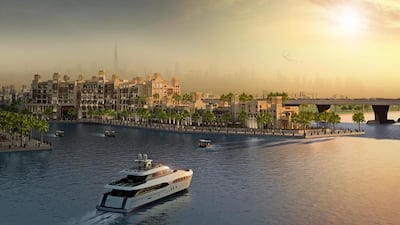
5. Dubai Culture Village First announced in 2007, Dubai Culture Village in the city’s Al Jadaf area from Dubai Properties Group was revived last year. The development will have its own metro train station on the green line to cater to its residents and to visitors heading to the Art Jameel Centre, other art galleries and exhibition spaces as well as entertainment venues. The village will also feature wind towers overlooking cobblestone walkways, waterways, creekside souqs, studios and workshops for artists and dining outlets besides a dockyard to showcase the area’s shipbuilding and dhow-making tradition. The Japanese architecture firm Nikken Sekkei is designing the project’s second phase. In earlier plans, the Amsterdam-based UNStudio was hired to design a Museum of Middle East Modern Art, which was also expected to feature a 60-room boutique hotel and a retail promenade. The Culture Village project is located between Al Garhoud bridge and Business Bay bridge on the Bur Dubai side of the creek close to Dubai Festival City. Courtesy photo -
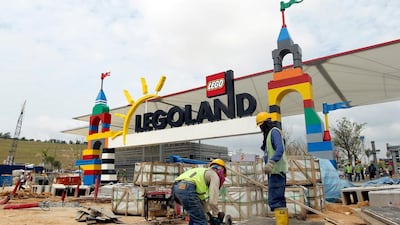
6. Dubai Parks & Resorts This complex of five linked theme parks will be built in Jebel Ali close to the Expo 2020 site. The first phase of the project, comprising the world’s first Bollywood theme park, Legoland Dubai and a Hollywood theme park called Motiongate Dubai, is due for completion in 2016. It is to also include a grand plaza of shops, restaurants and entertainments and a family-focused hotel. Merass is the developer behind the Dh10 billion project. Groundwork began in February. When completed, the ambitious project is expected to draw five million visitors a year. Meraas appointed the South Korean contractor Samsung C&T to oversee the overall project. The five-ring plan for the theme parks near the Expo site (and also near the new Al Maktoum airport) was announced in 2012 as part of a government push to double annual visitor numbers to 20 million by 2020. Since then, Meraas has said it had “made substantial progress towards finalising key components and partnerships” with movie studios, contractors and theme park operators. Stephen Morrison / EPA -
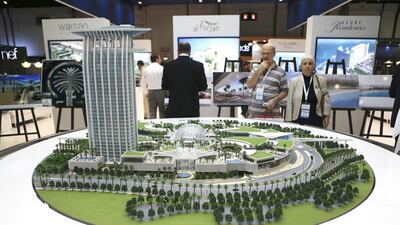
7. Nakheel Mall Nakheel Mall, a Dh2.5 billion, 418,000 square metre project on the Jumeirah Palm, is set to be completed in 2016. It will house a five-star hotel, a multiplex cinema, and a 180-metre high observation tower. It will have five storeys of retail outlets targeting affluent consumers, and Nakheel hopes that the mall will “compete with the world’s most iconic fashion destinations”. A Dh1.2 billion contract to build the project was jointly awarded to United Engineering Construction and Acto General Contracting Company in May. Dar Al Handasah, which won the contract to design Egypt’s new Suez canal project, has been hired as an engineering consultant for the mall. Nakheel says agreements to lease out more than half of the project’s retail space are already in place. The company is also building a 50-storey mixed-use tower block adjacent to the mall, and a 130-apartment residential building, which will connect to the mall by a walkway. Sarah Dea / The National -
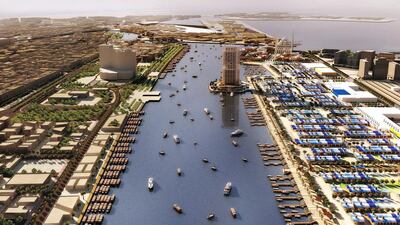
8. Deira Islands The Deira Islands development is a key part of the plan to revive one of Dubai’s oldest quarters that has not yet experienced the same scale of construction activity felt elsewhere in the city. Nakheel’s push into retail includes the Deira Islands Mall with more than 200,000 square metres of leasable space, hundreds of shops, cinemas and a variety of cafes and restaurants. It will be part of a 620,000 sq metre entertainment hub featuring retail and dining. The Islands were planned in 2007 to be part of Palm Deira. The developer has awarded a contract for nearly Dh40 million to RSP Architects, Planners and Engineers as the design and supervision consultant for Deira Islands Mall. The wide development will add 21 kilometres of beachfront to Dubai’s coastline and pave the way for hundreds of tourism, leisure and residential developments including hotels, resorts, serviced apartments, mixed-use buildings and waterside homes. Deira Islands Mall is planned to sit alongside a host of other attractions – including a night market, hotel, 30,000 seat amphitheatre and a marina big enough to accommodate large yachts. Courtesy Nakheel -
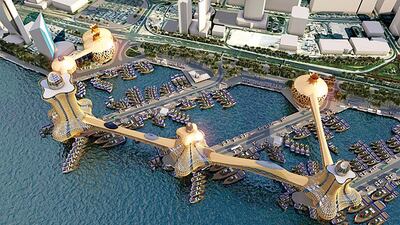
9. City of Aladdin The City of Aladdin project is set to transform the Deira side of the Dubai Creek. Work began in April this year and consists of three connected towers with a design inspired by “ancient legends and heritage” including tales from Sinbad the Sailor. The towers will be spread over a distance of 450 metres in the traditional commercial vessel ports and include hotels and offices, which aim to utilise the marina area of the Creek, where vessels sailed far and wide from Dubai. To combat the searing summer temperatures, bridges connecting towers, driveways and car parks will be air conditioned. The buildings themselves will resemble the palaces and “oddly shaped domes” of Arabian stories, while the bridges will take the shape of exotic and magical creatures such as dragons and snakes. Dubai Municipality hopes it will have both cultural and historical impact for the emirate. The project will be built in the ship dock using land reclaimed from the creek. The municipality has applied for Dubai Creek and the surrounding area to be registered as a Unesco World Heritage Site. The City of Aladdin is located outside that zone. Courtesy Dubai Municipality -
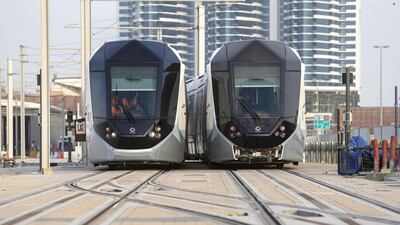
10. Dubai Tram Dubai’s careful planning over the past few years has paved the way for an efficient public transport network. The world-class metro services, which recently completed five years of service, will be joined by a tram service. The Dubai Tram, formerly Al Sufouh Tram, which was delayed during the international financial crisis, will commence service on November 11. The first phase of the 10.6 kilometre-long tram network will run from Jumeirah Beach Residence to Al Sufouh and include 11 stations. The service is expected to make life easier for those living in Jumeirah Beach Residence and the Marina and for workers in Knowledge Village and Dubai Media City. The emirate’s Road and Transport Authority initially plans to put 11 trams into service, expecting them to shuttle about 27,000 passengers a day. Once the entire network is in place by 2020, RTA expects to use 25 trams and carry 66,000 passengers daily. Property in the Marina, Jumeirah Lakes Towers and JBR, already among the most popular addresses in the city, is expected to command an additional premium as the new transport option comes online. Antonie Robertson / The National
In pictures: The property hotspots driving Dubai growth
Most popular today

