
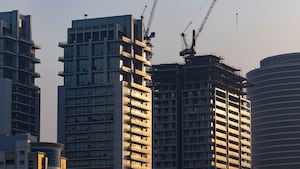
A building site in Riyadh. Non-Saudis will be able to buy in designated areas of the city. Reuters

Saudi foreign property ownership rules will be 'transformational' for long-term expats


Deena Kamel
  • English
  • Arabic

Saudi Arabia updating its rules to allow foreigners to buy property in specific zones will encourage long-term expats to invest in homes, boost the real estate sector and benefit businesses from banks to cement companies, analysts said.

Non-Saudis will be able to own property in designated areas in Riyadh and Jeddah, with “special requirements” for ownership in Makkah and Madinah, the state-run Saudi Press Agency said this week.

“This decision could be transformational for long-term non-GCC expatriates, who represent an estimated 40 per cent of the total population, particularly those who have lived in Saudi for many years without the option to buy,” Haider Tuaima, managing director and head of real estate research at ValuStrat, told The National on Thursday.
They would benefit from greater financial security, the ability to build equity over time and “stronger roots” in the community, which would encourage longer stays in the kingdom, he added.

Saudi Arabia's latest move comes after cities such as Dubai, Abu Dhabi and Doha designated areas where overseas investors can buy property.

“We have seen the benefits of allowing foreigners to buy property in Dubai,” Junaid Ansari, director of investment strategy and research at Kamco Invest, told The National. “A similar benefit can be expected for the real estate market in Saudi Arabia, which lags behind Dubai by over 50 per cent in terms of transaction value (year-to-date until May) despite the economic size difference.”

“We believe that regional banks will be more encouraged to expand business in Saudi Arabia, as we have seen in the case of some UAE-listed banks over the last few quarters. Much more sources of funds are needed if the law is implemented on the lines of Dubai.”

The move will ultimately help to create more long-term Saudi residents, with home ownership a key to “creating a sense of belonging” and helping individuals and families to set down roots in the country, Matthew Green, head of research at CBRE Mena, told The National.

The step will “contribute to raising the real estate supply by attracting investors and real estate development companies to the Saudi market”, Majed Al Hogail, Minister of Municipal Rural Affairs and Housing, said in the SPA report.

The updated rules will come into effect in January 2026 and the Real Estate General Authority will be responsible for proposing the areas where non-Saudis can own properties. The authority will present the executive regulations of the system on the Istitlaa platform within the next six months.

The decision is likely to benefit companies who could invest in apartments or villas to accommodate their staff as an alternative to expensive hotel stays. It is also expected to give established expats the opportunity to buy a home in the kingdom.

“This is a very positive step for the Kingdom that would help the government achieve the Vision 2030 targets in terms of population growth and FDI and support local businesses and employment,” Mr Ansari said.

Main sectors to benefit

The new rules will primarily benefit Saudi real estate companies as they open the sector for foreigners to invest, but other related businesses such as banks, consultants, cement companies and construction firms will also benefit, according to analysts.

Banks will benefit through real estate financing and mortgages, Mr Ansari said. “Saudi cement companies had 30 per cent excess capacity with merely 5 per cent exports, so this excess capacity could be better utilised in the local market,” he added.

The move is aligned with Saudi Arabia’s Vision 2030 goals to diversify the economy, attract foreign investment and support jobs.

“This move is likely to attract foreign capital into the real estate and construction sectors and could stimulate job creation and local spending,” Mr Tuaima said.

“This could also benefit the banking sectors, legal and advisory services, as well PropTech and real estate services.”

Win for landowners

The new regulations are a “win-win” as they will help to generate additional wealth for existing Saudi and GCC landowners, Mr Green said. Land values are likely to rise further due to the creation of a larger target market and the potential for generating higher sales values for properties with foreign freehold titles, Mr Green said.

“The move will also help to create a more competitive real estate market, with much of the GCC already offering freehold titles to foreign nationals,” he said.

More broadly, the move is likely to boost Saudi Arabia's GDP and non-oil sector growth, with property accounting for about 6.5 per cent of total GDP in 2024, while growing at 2.5 per cent year-on-year, Mr Green said, citing figures from the General Authority for Statistics.

“It will also help to generate increased employment, with growth in residential construction anticipated as developers look to tap into the global real estate investment market,” he said.

Saudi Arabia has already taken measures to boost its attractiveness as a global investment destination, as part of its Vision 2030 plan.

In January, the kingdom said it would allow foreigners to invest in publicly listed local companies that own property in Makkah and Madinah, in a step aimed at funnelling international capital into the sector.

This month, Saudi Arabia also introduced a work permit classification system that recruiters say will introduce more flexibility in hiring high-skilled expats and attracting global talent.


If you go

Flights

Emirates flies from Dubai to Phnom Penh with a stop in Yangon from Dh3,075, and Etihad flies from Abu Dhabi to Phnom Penh with its partner Bangkok Airlines from Dh2,763. These trips take about nine hours each and both include taxes. From there, a road transfer takes at least four hours; airlines including KC Airlines (www.kcairlines.com) offer quick connecting flights from Phnom Penh to Sihanoukville from about $100 (Dh367) return including taxes. Air Asia, Malindo Air and Malaysian Airlines fly direct from Kuala Lumpur to Sihanoukville from $54 each way. Next year, direct flights are due to launch between Bangkok and Sihanoukville, which will cut the journey time by a third.

The stay

Rooms at Alila Villas Koh Russey (www.alilahotels.com/ kohrussey) cost from $385 per night including taxes.

Dubai World Cup factbox

Most wins by a trainer: Godolphin’s Saeed bin Suroor(9)

Most wins by a jockey: Jerry Bailey(4)

Most wins by an owner: Godolphin(9)

Most wins by a horse: Godolphin’s Thunder Snow(2)

Wenger's Arsenal reign in numbers

1,228 - games at the helm, ahead of Sunday's Premier League fixture against West Ham United.
704 - wins to date as Arsenal manager.
3 - Premier League title wins, the last during an unbeaten Invincibles campaign of 2003/04.
1,549 - goals scored in Premier League matches by Wenger's teams.
10 - major trophies won.
473 - Premier League victories.
7 - FA Cup triumphs, with three of those having come the last four seasons.
151 - Premier League losses.
21 - full seasons in charge.
49 - games unbeaten in the Premier League from May 2003 to October 2004.

Mercer, the investment consulting arm of US services company Marsh & McLennan, expects its wealth division to at least double its assets under management (AUM) in the Middle East as wealth in the region continues to grow despite economic headwinds, a company official said.

Mercer Wealth, which globally has $160 billion in AUM, plans to boost its AUM in the region to $2-$3bn in the next 2-3 years from the present $1bn, said Yasir AbuShaban, a Dubai-based principal with Mercer Wealth.

Within the next two to three years, we are looking at reaching $2 to $3 billion as a conservative estimate and we do see an opportunity to do so,” said Mr AbuShaban.

Mercer does not directly make investments, but allocates clients’ money they have discretion to, to professional asset managers. They also provide advice to clients.

“We have buying power. We can negotiate on their (client’s) behalf with asset managers to provide them lower fees than they otherwise would have to get on their own,” he added.

Mercer Wealth’s clients include sovereign wealth funds, family offices, and insurance companies among others.

From its office in Dubai, Mercer also looks after Africa, India and Turkey, where they also see opportunity for growth.

Wealth creation in Middle East and Africa (MEA) grew 8.5 per cent to $8.1 trillion last year from $7.5tn in 2015, higher than last year’s global average of 6 per cent and the second-highest growth in a region after Asia-Pacific which grew 9.9 per cent, according to consultancy Boston Consulting Group (BCG). In the region, where wealth grew just 1.9 per cent in 2015 compared with 2014, a pickup in oil prices has helped in wealth generation.

BCG is forecasting MEA wealth will rise to $12tn by 2021, growing at an annual average of 8 per cent.

Drivers of wealth generation in the region will be split evenly between new wealth creation and growth of performance of existing assets, according to BCG.

Another general trend in the region is clients’ looking for a comprehensive approach to investing, according to Mr AbuShaban.

“Institutional investors or some of the families are seeing a slowdown in the available capital they have to invest and in that sense they are looking at optimizing the way they manage their portfolios and making sure they are not investing haphazardly and different parts of their investment are working together,” said Mr AbuShaban.

Some clients also have a higher appetite for risk, given the low interest-rate environment that does not provide enough yield for some institutional investors. These clients are keen to invest in illiquid assets, such as private equity and infrastructure.

“What we have seen is a desire for higher returns in what has been a low-return environment specifically in various fixed income or bonds,” he said.

“In this environment, we have seen a de facto increase in the risk that clients are taking in things like illiquid investments, private equity investments, infrastructure and private debt, those kind of investments were higher illiquidity results in incrementally higher returns.”

The Abu Dhabi Investment Authority, one of the largest sovereign wealth funds, said in its 2016 report that has gradually increased its exposure in direct private equity and private credit transactions, mainly in Asian markets and especially in China and India. The authority’s private equity department focused on structured equities owing to “their defensive characteristics.”

LILO & STITCH

Starring: Sydney Elizebeth Agudong, Maia Kealoha, Chris Sanders

Director: Dean Fleischer Camp

Rating: 4.5/5

Updated: July 10, 2025, 3:08 PM