


The number of offers accepted on luxury homes in London hit a 10-year high in November as demand shifted back to the capital when the pandemic appeared to be receding.
While prime central London sales were up 116 per cent from the same month a year earlier, the luxury market in outer London recorded a 25 per cent annual increase, according to property consultancy Knight Frank, as the city moved firmly back on to the radar of buyers.
Uncertainty surrounding the new Omicron variant could still have a dampening impact on the market, the company warned, if its severity is worse than expected, with some overseas buyers already delaying viewings until after Christmas.
“Activity has picked up dramatically across the board,” said James Clarke, head of London sales at Knight Frank. “In the last few weeks a large number of deals have come to fruition.”
London’s property market took a hammering during the pandemic compared with the rest of the UK, when many buyers looked outside the capital in search of homes with more space and gardens.
However, the easing of coronavirus restrictions led to a resurgence in the market, with the ratio of demand of new prospective buyers to sales instructions reaching its highest level in November since the start of the pandemic.
This suggests “upwards pressure on prices” will be maintained, Knight Frank said.
London also recorded the biggest UK annual increase in the number of new prospective buyers in the three months to November.
Price growth has solidified across many London markets with average prices in prime central London up 1.2 per cent on the year for the second consecutive month in November, while outer London prices rose 3.1 per cent over the same period.
However, the biggest rises were still recorded in outer London as space and greenery remained priorities for buyers, with annual prices up the most in Wimbledon at 11.4 per cent, Richmond at 7.3 per cent and Queen’s Park at 6.6 per cent. In central areas the biggest rise was in Islington at 6 per cent following by South Kensington at 3.6 per cent.
-

SW1 - Knightsbridge (above), Belgravia, St James’s, Westminster, Victoria, Pimlico, Sloane Square and part of Chelsea. 253 £5m+ sales between 2017 and April 2021. Getty Images -
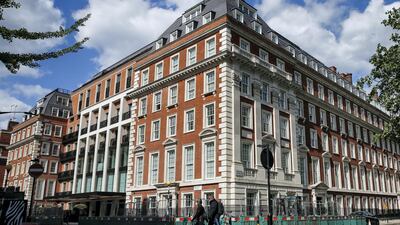
W1 - Mayfair (above), Marylebone, Fitzrovia, Soho. 220 £5m+ sales between 2017 and April 2021. Getty Images -
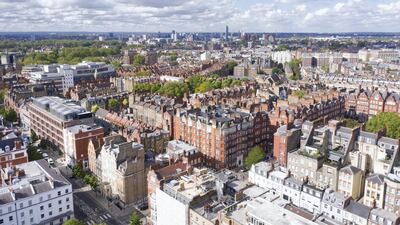
SW3 - Chelsea (above), Knightsbridge. 160 £5m+ sales between 2017 and April 2021. Getty Images -

W8 - Kensington (above), Holland Park. 156 £5m+ sales between 2017 and April 2021. Getty Images -

W11 - Notting Hill (above), Ladbroke Grove (south) and part of Holland Park. 96 £5m+ sales between 2017 and April 2021. Getty Images -
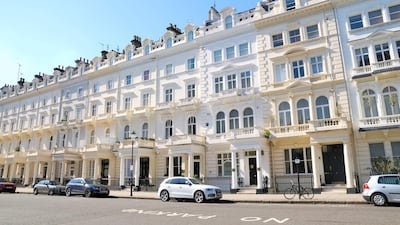
SW7 - South Kensington (above), part of Knightsbridge. 95 £5m+ sales between 2017 and April 2021. Getty Images -
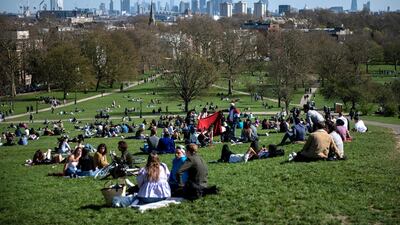
NW8 - St John’s Wood, Primrose Hill (south) (above), Marylebone (north). 87 £5m+ sales between 2017 and April 2021. Getty Images -
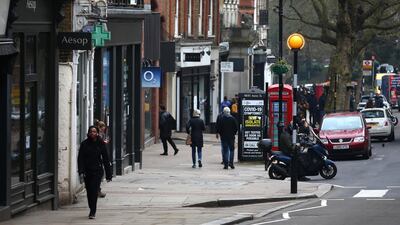
NW3 - Hampstead (above), Belsize Park, Primrose Hill (north). 74 £5m+ sales between 2017 and April 2021. Getty Images -
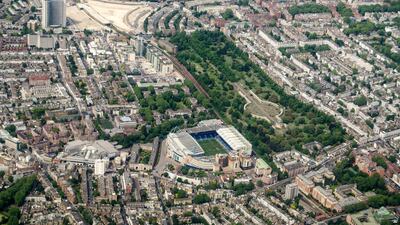
SW10 - West Brompton (above), part of Chelsea. 52 £5m+ sales between 2017 and April 2021. Alamy -

W2 - Paddington, Bayswater, Hyde Park (above), part of Little Venice, part of Notting Hill . 51 £5m+ sales between 2017 and April 2021. Getty Images


Looking ahead, how badly the new variant affects the market will depend on how it compares with the Delta strain.
“If the severity is broadly equivalent, January could bring a ‘relief bounce’ in the London sales market,” Knight Frank said.
“If the severity is lower than Delta, the transmissibility higher and Omicron becomes the dominant strain, it could trigger even higher levels of activity if the end of the pandemic appears closer. If severity is worse than Delta, much will depend on to what extent and how quickly a vaccine can be adapted.”

