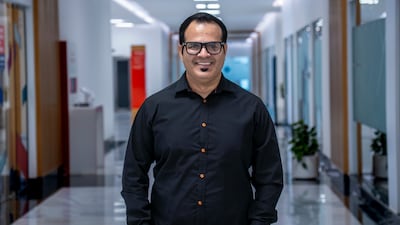

A career setback during the Covid-19 pandemic was what motivated Zain Sohail to start thinking seriously about building something of his own.
The 35-year-old Pakistani national started his career with a monthly pay of Dh2,500 ($680). As his income increased, Zain used the salary to save for and invest in an e-commerce gig.
He started buying and selling home, kitchen and lifestyle products online. Zain calls that stage "experimental" as he learnt the ropes of the marketplace business.

The pandemic was a reality check, Zain says. Being unemployed showed him that a job would not be the safety net that he had hoped for.
In 2025, he was drawing Dh17,000 ($4,630) a month but faced yet another career transition – a nudge that helped him take on the business full time.
The entrepreneur launched Xeller – a platform that supports online retailers to optimise sales and inventory on marketplaces such as Amazon and Noon. Zain combines his corporate experience in operations with his e-commerce skills to run Xeller, while also selling products under his own brands.
Today, he draws Dh25,000 to Dh30,000 as a monthly salary from his business income, reinvesting and saving the rest.
What was your first job and first salary?
I moved to the UAE in 2013, shortly after graduating with a degree in electrical engineering from the National University of Science & Technology in Pakistan. I started as a technical support engineer and earned Dh2,500 a month.
What's your current role?
I operate e-commerce businesses, mainly across the UAE and Saudi Arabia, and I am also building Xeller, a marketplace operations company that helps brands enter, operate and grow across the GCC.
Before this, I spent more than a decade working across technical services, project management and operations in the UAE. A large part of my career involved managing people, inventory, suppliers, logistics, equipment and multi-site operations.

What do you earn now?
I currently take around Dh25,000 to Dh30,000 per month from the businesses.
I don't treat everything the businesses earn as money available for me to spend personally. A large portion stays inside for inventory, working capital, new products and future opportunities.
What are your major monthly expenses?
I spend the most on family, household and general living costs. My personal and household expenses are usually around Dh20,000 per month. Anything left over is generally kept in emergency savings or allocated towards future investments.
When my income increased, I tried not to increase my lifestyle at the same speed. A simple example would be my car. As my salary improved, I could have upgraded to a more expensive car and committed myself to a bigger monthly instalment. Instead, I kept adding products, buying inventory and building our own brands.
Do you save and invest?
I'm definitely more of a saver and investor than a spender. A large part of my wealth has been built by reinvesting in businesses I understand.
That doesn't mean I don't enjoy spending. Family is probably where I spend most happily. I also enjoy good food and gadgets.
2025 was an important year for me financially because I bought my first property. I took a significant amount of money out of both our international and UAE businesses to do it, even though I could have continued reinvesting that money.
What is the biggest lesson moving from a 9-5 job to a business?
That revenue, profit and cash are three very different things.
With a salary, you work for the month and a predictable amount reaches your bank account. In business, you can have a great sales month and still be short of cash because money is sitting in inventory, marketplace receivables, stock in transit or the next purchase order.
So I have learnt not to become too impressed by revenue. The more important questions are: what did we actually make, how much cash came back and can the business comfortably fund the next cycle?
Do you have any debt?
I don't currently carry any significant debt. I did have a bank loan, which I partly used to support the business during a cash-intensive growth period, while another portion went into a small real estate investment. That loan has now been fully repaid.
I still use credit cards regularly but I clear them fully rather than carry balances and pay interest.
Growing up, were you taught how to handle money?
Money was never really a source of stress in our home. My father did a very good job of providing for all of us, so my siblings and I were fortunate that we didn't grow up constantly worrying about it.
One of my earliest memories of becoming curious about money happened before high school. I desperately wanted a phone – specifically a Nokia 7610. That summer, my father started teaching me a little about how the stock market worked. He also gave me some money to invest so I could understand the process. I got lucky. The investment did well enough that I could buy the Nokia.
At the time, I was far more excited about the phone than the financial lesson. Looking back, it was probably my first practical introduction to the idea that money doesn't only have to be spent or saved. It can also be put to work.
What money challenges have you had?
One of my biggest financial lessons has been understanding how much cash a physical product business can consume. You can be profitable on paper, have valuable inventory sitting in warehouses and still need a significant amount of money for the next purchase order.
Then there was a major setback from our international expansion, around $50,000. It wasn't financially devastating because other markets were performing well, but it consumed profits that could otherwise have been withdrawn or invested elsewhere and probably cost us one to two years of progress.
That experience made me much more disciplined about where I put capital.
What are your financial goals?
My main goal is financial freedom and eventually, geographical freedom. I want to build businesses and assets that can support my family regardless of my daily involvement.
Longer term, I want the businesses to be structured well enough that my physical presence is not required for them to operate. Being able to manage them from anywhere is one of the reasons e-commerce has always appealed to me.

