


Demand from central banks and retail investors, geopolitical uncertainties, persistent inflation and the anticipation of interest rate cuts support a positive outlook for gold in the second half of the year, experts have said.
With more than 40 countries holding elections this year, political risk is also a major theme driving gold prices.
Gold prices have entered a consolidation phase after hitting a record high of $2,449.89 on May 20 amid a rally which happened against traditional headwinds such as a strong dollar and high interest rates.
The metal was trading at $2,300 at 9.05am UAE time on Thursday.
“Robust demand from emerging markets, especially from central banks, global geopolitical tensions and lower yields due to rate cut expectations fuelled appetite in gold so far this year,” says Ipek Ozkardeskaya, a senior analyst at Swissquote Bank.
“The political uncertainties on both sides of the Atlantic Ocean, the ballooning US debt and raising worries about the safety of the greenback helped bring investors to the yellow metal this year.
“These supportive factors are still in play. Therefore, we could see gold prices advance to fresh highs, especially in the run-up to the US elections after summer. Therefore, gold outlook remains positive for the second half of the year.”
The price of gold is up about 12.9 per cent in the year to date (in US dollars).
$3,000 for gold?
The Bank of America put out a note on Monday suggesting that gold could hit $3,000 an ounce over the next 12 to 18 months. The key is investment demand, the lender said.
Data from trade body the World Gold Council suggests central banks are feeling increasingly warm towards gold as a useful financial asset rather than a historic keepsake.
On June 7, data showed that China’s central bank had paused gold purchases for its reserves in May after 18 months of buying, sending bullion to its biggest daily drop since November 2020.
However, an annual survey of central banks by the council delivered its highest share of respondents saying they expected their gold reserves to increase within 12 months due to continuing macroeconomic and political uncertainty, despite high prices for the precious metal.
Demand for gold from central banks has been elevated in the past two years as some countries diversify their foreign currency reserves amid de-dollarisation. Their demand contributed to the gold price rally in the March to May period.
The survey, which was conducted from February to April with 69 responses, showed that 29 per cent of central banks expected their gold reserves to increase in the next 12 months.
This is the highest level since the WGC began the survey in 2018, and compares with 24 per cent in 2023.
The council said 81 per cent of respondents expected global central bank gold reserves to increase over the next 12 months compared with 71 per cent a year ago.
Gold reserves rise
The top three reasons for central banks to hold gold today are long-term store of value or inflation hedge, performance during times of crisis and effective portfolio diversifier, according to the WGC survey.
While in previous years, gold’s “historical position” was the top reason to hold it, this factor dropped to fifth in this year's survey.
Central banks in emerging market and developing economies maintained their positive outlook for gold’s future share in reserves portfolios.
They were joined by advanced economy central banks, which now view gold more positively.
More than half (57 per cent) of this group said gold would account for a higher proportion of reserves five years from now, a significant increase compared to 2023, when 38 per cent of respondents indicated the same view.
“Extraordinary market pressure, unprecedented economic uncertainty and political upheavals around the world have kept gold front of mind for central banks,” according to Shaokai Fan, global head of central banks and head of Asia-Pacific at WGC.
“Many of these institutions have become more aware of the asset’s value as a way to manage risks and diversify their portfolios.”
MUFG Bank picked gold as its most favourite trade this year on a trifecta of Fed cuts, supportive central bank demand and bullion’s role as the geopolitical hedge of last resort.
Election risks
“US fiscal sustainability concerns, combined with incremental risks from the election cycle can be seen as another dimension of burgeoning structural tailwinds with a positive influence on gold buying,” says Ehsan Khoman, head of research – commodities, ESG and emerging markets for Europe, Middle East and Africa at MUFG Bank.
Central bank purchases predominantly explain the increase in global gold demand since 2023, which has offset jewellery demand that has remained stable and investment demand that has fallen, he adds.
While most central bank gold buying is now unreported, six EM central banks – China, Poland, Turkey, Singapore, India and Qatar – have been predominantly behind the reported net monetary purchases since 2023, according to MUFG Bank.
Gold has consistently held above key technical levels around $2,280, benefiting from early speculative demand from managed money traders, such as hedge funds, contributing to lower volatility than other metals, explains Ole Hansen, head of commodities strategy at Saxo Bank.
While China’s temporary pause in gold buying and subdued ETF (exchange-traded fund) investor interest due to high interest rates are expected to prolong consolidation, several factors continue to support a bullish outlook, he says.
“Strong retail demand in China, continued central bank purchases, and geopolitical uncertainties remain key drivers. Rising debt-to-GDP ratios in major economies and persistent inflation further enhance gold’s appeal,” Mr Hansen says.
“We maintain our ‘Year of the Metal’ theme, anticipating that clarity on the timing and depth of US rate cuts will provide additional support.
“Given these conditions, we foresee continued support for gold and set a price target of around $2,500, potentially achieving this level later in the year.”
The current consolidation phase, with gold trading mostly within the $2,280 to $2,380 range, suggests that the market is stabilising at higher levels, Mr Hansen points out.
The relatively low volatility compared to other metals such as silver, platinum and copper indicates that managed money traders and hedge funds sustain their positions, avoiding major sell-offs, he says.
Furthermore, ETF investors have remained mostly net sellers since 2022, reducing speculative inflows that could otherwise increase volatility, he adds.
Gold is also poised to benefit significantly from anticipated interest rate cuts.
Lower interest rates decrease the cost of funding a gold position, increasing the metal's attractiveness as an investment.
Additionally, rate cuts often signal a weaker economy, enhancing gold’s appeal as a safe-haven asset.
Gold souq in Dubai – in pictures
-

Dubai Gold Souq in Deira is gearing up for a busy Eid Al Fitr. All photos: Pawan Singh / The National -

Gold prices have reached record highs in 2024 -

The surge in global gold prices is being driven by factors such as anticipated US interest rate cuts, speculation, people seeking a safeguard against geopolitical uncertainty and major spending in China -
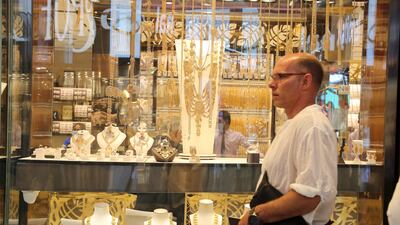
Traders say they are still selling relatively well despite the price rises for several reasons including the increase in tourist arrivals since Dubai opened up swiftly after the Covid-19 pandemic -
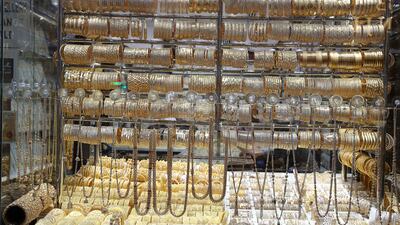
The traditionally busy Eid season that starts around now before the formal holiday is expected to help sales -
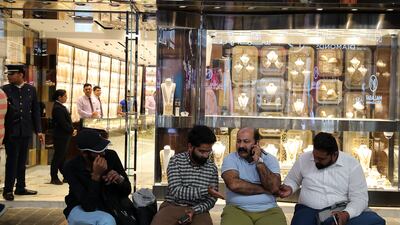
People rest at the gold souq on a Ramadan afternoon -
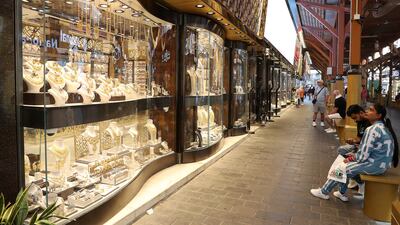
Lavish displays of gold at the historic souq


“Our outlook anticipates two to three interest rate cuts in 2024, followed by similar cuts the following year. This monetary easing is expected to reduce the opportunity cost of holding non-yielding assets like gold, thereby boosting demand,” Mr Hansen says.
“Furthermore, as lower rates typically lead to a weaker dollar, gold prices denominated in USD would likely rise.”
While the current consolidation phase may persist in the short term, the anticipated rate cuts provide a supportive backdrop for higher gold prices in the medium to long term, he forecasts.
“Heading into the second half of the year, the fundamental backdrop remains positive,” says Fawad Razaqzada, market analyst at City Index and Forex.com.
“Inflation is still going strong in the US. Investors (and central banks) that missed out on the big move will be keen to get their hands on the shiny metal on any noticeable dips in prices.”
What could end gold’s bull trajectory?
Factors that could affect gold's rise are, first, an imminent peaceful resolution to the confluence of geopolitical tensions, notably in Ukraine and Gaza, Mr Khoman forecasts.
Second would be a stymie in emerging market central banks' gold-purchasing programmes, and third, a significant hawkish Fed adjustment, leading to hikes that may present escalating headwinds to gold given its infinite duration, he estimates.

