

Prenuptial or premarital agreements, often called “prenups”, have a reputation for being a tool the ultra-wealthy use to protect their assets. But as marriages have evolved, so have prenups – and they might have more uses than you think.
Prenups can give couples an opportunity to communicate about their finances and establish a clear framework for the division of property and responsibilities in case of separation, divorce or even the distribution of one partner’s estate.
True, it’s not very romantic to prepare for the worst while you’re in a state of premarital bliss.
However, marriage is one of the most significant contracts you can enter, and legal proceedings such as divorce and probate can be so costly and time-consuming that a prenup may be better to have and not need than to need and not have.
Prenups can ensure that you, your partner and even your children are in the best possible financial position no matter what happens. Here’s how to know if you need one, could benefit from one or may want to consider a different option.
Famous divorces – in pictures
-

Jerry Hall cited irreconcilable differences as the reason for her split from billionaire Rupert Murdoch. Reuters -
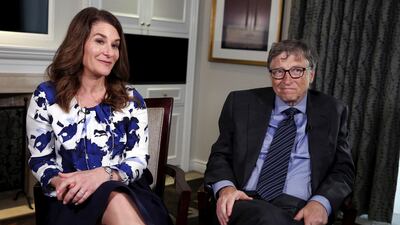
After 27 years of marriage, Microsoft co-founder Bill Gates and his wife Melinda filed divorce documents on May 3, 2021, citing a broken relationship as the reason for the split. Reuters -
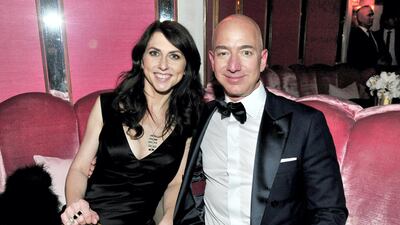
Jeff Bezos and his wife MacKenzie split in 2019. Mr Bezos paid $38bn to settle the divorce. Getty -

French-American businessman and art dealer Alec Wildenstein divorced his wife of 21 years, Jocelyn Wildenstein in 1999. AFP -

Mr Murdoch and journalist Maria Torv were married for 31 years, but the couple agreed to separate in 1998. Getty -

Former Formula One boss Bernie Ecclestone divorced international model Slavica Radic in 2009 after 25 years of marriage. Photo: Alamy -
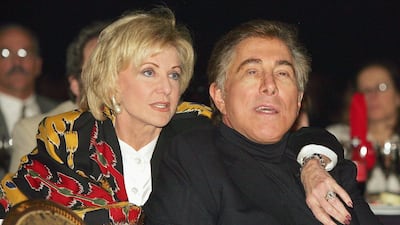
Steve Wynn and his wife Elaine were married to each other twice, from 1963 to 1986 and from 1991 to 2010. Getty -

Oil magnate Harold Hamm wrote his wife Sue Ann Arnall a $974.8 million cheque as part of divorce proceedings. Getty -

Saudi billionaire Adnan Khashoggi paid his wife Soraya a divorce settlement of $874m in 1982. Getty -

Cellular and Clearwire founder Craig McCaw separated with Wendy McCaw in 1998, earning her a $460m payout. Getty


Not all marriages are created equal
If you’re inheriting a family business, have children from a previous marriage or are entering a marriage with significant debt, a prenup can give both partners – and their families – peace of mind. These conditions don’t mean the marriage is more likely to end, just that the stakes are higher and more parties could be affected.
“I think everybody could benefit from a prenup; some more than others, depending on assets,” says Nicole DiGiacomo, managing attorney of her own family and matrimonial law offices in New York. If your assets are complex or high-value, a prenup may be especially worth considering.
A prenup isn't a death sentence
Some couples might be wary of prenups because it feels like they’re planning for divorce before the marriage has even started. However, protecting yourselves – and each other – in case of divorce doesn’t mean you’re aiming for it, just like writing a will doesn’t mean you’re hoping for your life to end.
A prenup is “basically a will for a marriage”, Ms DiGiacomo says.
“Most people want to have a will because they want to be able to decide what happens to their assets and not have a court decide.”
Prenups allow you to agree on a division of property that feels fair while things are good so that you’re in control of the things that matter in a worst-case scenario.
“I try to encourage people not to view it as a bad omen or a sign of mistrust,” Ms DiGiacomo says. “It’s just accounting for a future possibility. No one wants to think about when they die, just like nobody wants to think of the death of their marriage.”
Prenups can start important conversations
Prenups can even give a couple the space to communicate openly about their finances.
A prenup can be “a really helpful tool at the beginning [of a marriage] to get a good understanding of where each party stands”, says Craig Harris, an estate planning attorney at the Law Offices of Daniel A Hunt.
According to Mr Harris, a prenup can help some couples align their plans to handle everyday marital finances, such as contributing to a joint account or keeping retirement savings separate.
“It’s just a good way to get agreements down ahead of time, so it’s not a surprise,” he says.
Ms DiGiacomo agrees, saying: “I’ve never had it get ugly. It’s a very co-operative process.”
Prenups aren't the only option
Although they can be a helpful tool, prenups aren’t the only way to align with your future spouse on critical financial decisions.
It’s just as important to have open communication about your assets and a clear, mutual understanding of “yours, mine and ours”. In fact, some lawyers think that a prenup may not be necessary.
“If you’re coming into the marriage with money, you don’t need a premarital agreement to protect that money, so long as you keep it in your own account, in your own name,” says Michael Doman, principal divorce attorney at the Law Offices of Michael P Doman.
Mr Doman considers himself old-fashioned regarding marriage and doesn’t personally advocate for prenups.
“I like to think that if you’re getting married, you’re getting married forever and, if not, let the cards fall where they may,” he says.
While he does draft them for clients without judgment, Mr Doman recommends that couples seriously consider their views on money and marriage before entering into a partnership, prenup or not.
Marriage isn’t just an expression of love; it’s also a legal contract. And while it can be beautiful, it can be financially risky.
Whether or not you have a prenup, it’s essential to acknowledge that risk and accept the possible consequences.

