

Last week’s news headlines were dominated by the two-pronged collapse of Silvergate and Silicon Valley Bank, taking the cryptocurrency market on another wild ride into the weekend.
On Saturday, panic spread through the cryptocurrency community as USDC — one of the most respected stablecoins in the market — lost its peg to the US dollar as a direct result of SVB’s collapse.
Sceptics were quick to point the finger at cryptocurrency, proclaiming that this time it was surely dead. As ever, though, the reality differs from the headlines.
A small bank with about $16 billion in assets at its peak, Silvergate was yet another casualty of the FTX collapse.
Since 2016, Silvergate had been a key player in the cryptocurrency ecosystem, acting as an on and off-ramp for major cryptocurrency exchanges, including the collapsed FTX.
The FTX connection and widespread loss of faith in cryptocurrency eroded the bank’s deposits by more than 50 per cent in the fourth quarter of last year, forcing it to sell its assets at a discount to meet redemptions: a classic bank-run scenario.
After several unsuccessful attempts to save the ailing business, on March 8, the bank finally decided to throw in the towel.
However, it is notable that the bank went into liquidation voluntarily, outlining a winding down plan that included “full repayment of all deposits”.
In addition, the bank’s failure had been expected by the market and largely priced in.
Bigger than crypto
However, the demise of SVB came as a shock for clients, investors and regulators alike when the bank was forced into Federal Deposit Insurance Corporation (FDIC) receivership on March 10.
So much so that it triggered an emergency meeting of the Federal Reserve’s board of governors.
Unlike Silvergate, SVB happened to be the 16th-largest bank in the US, with about $209 billion in assets at the end of 2022. Its failure is second only to the collapse of Washington Mutual during the 2008 financial crisis.
SVB focused primarily on the technology sector, serving venture-backed start-ups. As such, its demise has nothing to do with cryptocurrency — although it does share eerie similarities with Silvergate.
Namely, SVB also experienced a classic bank-run scenario. As was the case with Silvergate, it also sold assets from its balance sheet at a discount to cover the value of these withdrawals.
Yet in both cases, these assets were not volatile cryptocurrency tokens — rather, they were US Treasuries.
While both banks had bought T-bills as collateral when deposits were coming in thick and fast in the boom years, the value of these bonds declined significantly as the US Fed wielded its aggressive post-pandemic monetary policy.
Far from blaming cryptocurrencies, we should be asking how many other US banks find themselves in this situation?
US banks are currently sitting on more than $600 billion of unrealised losses, thanks to Treasury bonds now worth a lot less than was paid for them, according to CNN.
The regulators are coming
Yet the impact this news had on the cryptocurrency market will not escape the attention of the regulators.
Most notably, a stablecoin issued by Circle, USDC, fell more than 10 per cent from its $1 peg on Saturday after Circle announced that $3.3 billion of its $40 billion reserves were stuck in SVB.
If the events of recent months were not reason enough to push cryptocurrency up the regulatory agenda, this latest crisis surely is.
However, the reality is that regulators are barking up the wrong tree.
For one thing, unlike Celsius or FTX, Circle has sufficient backing to cover all necessary redemptions. The company calmed the market on Saturday by announcing that “as a regulated payment token, USDC will remain redeemable one for one with the US dollar”.
It went on to say that in the event SVB doesn’t return all deposits, Circle would cover the shortfall using corporate resources.
The market reacted instantly, with USDC registering a strong recovery at the time of writing.
Contrary to what the sceptics would have us believe, the collapse of Silvergate and SVB is not a sign of weakness in cryptocurrency.
Cryptocurrencies — in pictures
-

The crypto market, which includes currencies such as Bitcoin, pictured, has lost $2 trillion of its value in six months. Unsplash -

The price of Ethereum, the second largest cryptocurrency by market size, has fallen by 70 per cent this year. Investors and analysts are watching to see if it will dip below $1,000. Unsplash -

Dogecoin, supported by Elon Musk, is about 90 per cent down from May last year, yet it is outperforming Bitcoin and Ethereum in the current crash. Unsplash -
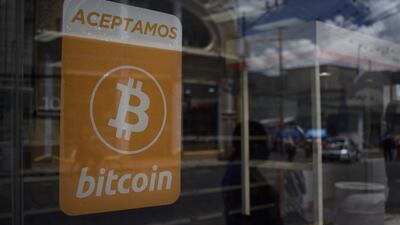
The government of El Salvador has invested $105 million in Bitcoin. President Nayib Bukele's embrace of the cryptocurrency as legal tender is being questioned as the market crashes. Getty -

Changpeng Zhao, founder of crypto exchange giant Binance, has compared the current market turmoil to the dotcom bubble of the early 2000s. Still, the company is aggressively pursuing licensing in international jurisdictions and introducing new products. Getty -

Tether is the biggest issuer of stablecoins, a type of cryptocurrency pegged to a traditionally stable asset like the US dollar. Most stablecoins are meant to maintain a constant price of $1 and are backed by real reserve funds, making it easy to convert crypto investments into cash. But Tether's financial statements show that may not be true, leaving the issuer and its investors vulnerable. Unsplash -

The recent crypto crash can in part be attributed to the collapse of TerraUSD, a stablecoin pegged to the US dollar through algorithms and linked to a "sister" cryptocurrency named Luna. When the price of Luna plummeted, TerraUSD also fell, creating a “death spiral” to practically zero for both coins. Unsplash -

On June 12 crypto lender Celsius Network said it had paused customer withdrawals, saying it needed “to stabilise liquidity and operations”. Investors are still waiting, with no signs that the current meltdown will let up. Getty


On the contrary, we are witnessing the resilience of this ecosystem to shocks.
However, more importantly, these events highlight the vulnerabilities of the traditional financial system itself.
We now see the US government having to step in to bail out the banks once more.
As of Monday morning, the US government had announced that it would ensure that all depositors of SVB and Signature Bank — another bank-run casualty — will be made whole.
A decentralised future
This is not to say that cryptocurrencies will not feel the negative effects of this latest crisis. It will, undoubtedly, dent the fragile confidence of investors still reeling from the pain of 2022.
The loss of Silvergate Exchange Network (SEN) — an accessible marketplace for centralised exchanges — is also a major inconvenience.
As regulation ramps up, we are unlikely to see its equal in the US any time soon.
However, far from stifling cryptocurrency for good, this will only create room for other jurisdictions to step in, while US businesses that want to be involved in Web3 will take their activities offshore.
Notable examples could be China, which is quietly opening the door to digital currencies via Hong Kong; and the UK, whose Prime Minister Rishi Sunak has indicated a commitment to turning London into a cryptocurrency hub.
When mainstream adoption finally comes, countries that have been supportive of cryptocurrencies will have the upper hand. The question isn’t if, but simply when.
Stefan Rust is chief executive of independent inflation data aggregator Truflation and former chief executive of bitcoin.com

