

Being passive is rarely seen as a virtue, while being active is considered a positive trait, but the opposite has long been the case in the investment world.
For the past 25 years, investors have poured money into low-cost exchange traded funds (ETFs), which dispense with expensive active fund managers and passively track the fortunes of a string of global market indices.
Instead of actively trying to beat the market, they passively follow it up, down or wherever it goes.
Yet, incredibly, being passive has been an active success. In 2009, ETF holdings topped $1 trillion for the first time. Last year, the total hit a staggering $10 trillion.
Tracker funds have two big advantages over their actively managed rivals. First, they do not have to pay fat fees to fund managers, which means they can cut costs to a minimum and pass on the savings to investors.
The cheapest ETFs, sold by iShares, SPDR, Vanguard and others, have no upfront charges and annual fees as low as 0.03 per cent a year.
The impact of charges on total investment returns should never be underestimated. Someone who invested, say, $100,000 with a low-cost ETF would have $426,167 after 25 years, if it returned an average 6 per cent a year.
If they invested the same sum in an active fund charging 1.5 per cent a year they would have just $300,543. That’s around $125,000 less, even if both funds grew at exactly the same rate. Fund manager fees take huge bites out of your wealth.
The second big attraction of a tracker is that fund managers find it desperately hard to beat the market.
Report after report shows that more than three quarters underperform their chosen index over the longer run.
This has been confirmed by the latest S&P Indices vs Active (Spiva) Scorecard, which compares the short and long-term performance of active funds to their global benchmarks.
Over the past 10 years, a staggering 90.03 per cent of all actively managed large cap US funds underperformed the S&P 500.
It’s the same story in Europe, where 87.81 per cent of European funds underperformed the S&P Europe 350. In the Middle East and North Africa region, 91.43 per cent of funds underperformed. In Brazil, 88.49 per cent fell short. In Japan, it was 86.18 per cent.
Fund managers had a better tale to tell in India, where 32.64 per cent of funds outperform. In South Africa, 27.74 per cent of managers can hold their heads up. These were rare success stories.
It isn't hard to see why ETFs have been so popular, although some argue the pendulum is about to shift in their favour.
The past decade saw a huge economic experiment as central bankers flooded markets with cheap money and fuelled “an explosion of speculative trading and financial engineering”, says Andrew Parry, head of investments at J O Hambro Capital Management and Regnan.
Unintended consequences included cryptocurrency mania, hyperactive day traders on apps like Robinhood and the US tech stock boom.
Watch: What is Bitcoin and how did it start?
“This created the reflexive feedback loop of money flowing into the passive products, where market returns became dominated by a handful of mega-cap companies,” Mr Parry says.
Passive funds now make up 57 per cent of domestic funds in the US, but ETFs face a new challenge as inflation rockets, interest rates recover, the crypto sector implodes and day traders count their losses.
This finally gives fund managers a chance to demonstrate their market-beating skills. “The potential reward for being different to the market will be higher than it’s been in the era of cheap money,” Mr Parry says.
But can fund managers take advantage? History suggests they might still struggle.
Spiva data goes back 15 years and over that term, only 10.62 per cent of US large cap funds actually beat the US S&P 500.
To be fair, the US large-cap market is notoriously hard to beat, as it is pored over by analysts, and spotting opportunities others have missed isn’t easy.
Active fund managers tend to do better when investing in medium-sized and smaller company sectors, and emerging markets, where they can use their skills to pick winners and gain an edge, says Vijay Valecha, chief investment officer at Century Financial.
“By finding undervalued companies and taking advantage of short-term fluctuations in stock prices, they can outperform passive funds. Historically, they do best in unstable conditions such as inflation, supply chain problems and geopolitical conflicts,” Mr Valecha says.
Cost of living crisis in the UK — in pictures
-

People demonstrate in central London against the rising cost of living. EPA -

Former British prime minister Boris Johnson said workers should accept a pay cut to avoid spiralling inflation. AFP -
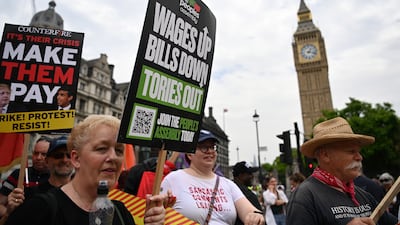
Inflation in the UK hit an annual rate of 9.1 per cent in May. EPA -

The British government told workers they cannot expect pay rises to keep up with the increasing cost of living. EPA -
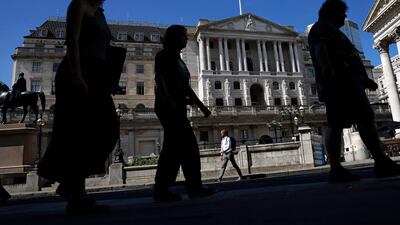
The Bank of England, which says it can do nothing to stop the sharp increase in prices, is raising rates at an unprecedented rate. AFP -

The UK was also brought to standstill by the biggest rail strike in 30 years this week, with 40,000 RMT union members walking out in a row over a below-inflation pay offer. PA -

The RMT picket line outside Bristol Temple Meads station. PA -

The cost of petrol continues to rise. AFP -
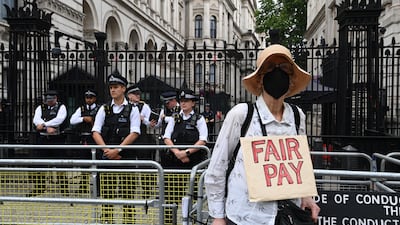
A protester demonstrates outside Downing Street. EPA -

Volunteers in Bradford, northern England, prepare food parcels at the Bradford Central Foodbank. More and more people are visiting the centre. AFP


In bear markets, active investors can switch into defensive assets such as cash or government bonds, while passive funds must stick to stocks. “This gives fund managers an exit plan that trackers do not have.”
Passive investing is fine when you’re investing in a bull market and you just want to capture the overall upswing, with low friction costs, says Jason Hollands, managing director of fund platform Bestinvest.
“But in more difficult times, the last thing you want is to slavishly follow the markets downwards.”
Trackers are blunt instruments as they weight holdings based purely on market capitalisation. “This leaves investors exposed during investment bubbles, as we have seen this year with the bursting of the bloating price of mega-cap tech stocks,” Mr Hollands adds.
They also offer investors less diversification than they realise.
“A tracker following the UK’s FTSE All-Share gives investors exposure to 590 stocks, of which 240 are smaller companies. Yet those small caps make up just 2.6 per cent of the fund — less than amount invested in Glencore, a single mining stock,” Mr Holland says.
“In fact, 42 per cent of your cash will be in just 10 companies. So much for diversification.”
He agrees that many active managers clearly underperform, often because they sneakily track the index, while charging higher fees.
“If you are going to invest in actively managed funds, you need to be super selective and check the manager’s track record, performance, experience and consistency.”
You must regularly review your fund choices to ensure they are delivering and watch out when a successful manager moves on.
“Also be conscious of fund size. It is one thing to deliver successful performance on a small, nimble fund, quite another if it grows to many billions in size,” Mr Hollands says.
Mr Hollands notes that if Spiva carried out the same exercise with passive funds, 100 per cent would underperform, as they track the market minus costs.
That is true. However, they wouldn’t underperform by much.
So how have active fund managers done this bear market?
Over the past troubled 12 months, 44.57 per cent of fund managers did manage to outperform the crashing S&P 500, Spiva shows.
However, that still leaves 55.43 per cent underperforming in a falling market, while charging higher fees for the privilege.
And that is just one year. Over five, 10 and 15 years, the figures show that most have fallen short.
Fund managers still have a lot of work to do to convince investors that being active really is a virtue.

