A billboard promoting the use of Bitcoin in Caracas, Venezuela. Cryptocurrency is now seen by many observers as the saviour of the Venezuelan economy, which is experiencing hyperinflation. Bloomberg

Why cryptocurrencies are a lifeline for people in developing countries


  • English
  • Arabic

In simple terms, inflation is a general increase in prices and a subsequent fall in the purchasing power of money.

Even modest inflation is a difficult situation for any country and its people to tackle, especially when wage growth is not keeping pace with rising prices. However, hyperinflation, which occurs when inflation exceeds 50 per cent, is devastating for citizens of affected countries.

Like a war or a terrorist attack in a distant land, hyperinflation is often seen as a vague and obscure threat. While we wince at the thought of it, watch with morbid curiosity as it unfolds and feel empathy for those suffering, we remain relatively indifferent to the threat of hyperinflation until it reaches our doorstep.

But hyperinflation has been steadily gaining momentum in developing countries for decades. In these places, rapid currency devaluation has led to political instability.

Many citizens in these countries have turned to cryptocurrency as a lifeline for the purchase of essential goods, to store wealth or to protect their purchasing power.

Cryptocurrency brings stability

Venezuela has recorded uninterrupted inflation rates between a modest 6.3 per cent and a mind-boggling 130,060.2 per cent over the past 40 years.

More recently, it has gone through one of the world’s most prolonged bouts of hyperinflation, which lasted four years, driven by socioeconomic and political issues.

The socialist government, led by President Nicolas Maduro, only recently stopped printing money after the widespread adoption of the US dollar as the preferred currency.

Reactive cryptocurrency adoption has been ubiquitous in Venezuela since its inflationary meltdown.

Cryptocurrency is now seen by many observers as the saviour of the Venezuelan economy, as it allows people to engage in peer-to-peer trading and to use it as a form of payment.

The government has even created the Decentralised Stock Exchange of Venezuela, where fiat currencies and digital assets can be traded.

Uncertainty holds the high throne during an economic crisis, especially in a country such as Lebanon, where inflation has paralysed the economy and is now running at 210 per cent.

Trust in the Lebanese pound has vanished. As citizens turned to the US dollar as an alternative, banks started increasing the exchange rate between the greenback and the Lebanese pound.

This directive led to many Lebanese — from politicians to media personalities to taxi drivers — to stash their savings in digital money to shield themselves from currency depreciation.

For the Lebanese, digital currencies are now even more tangible than the US dollar in their bank accounts.

Most transactions taking place in Lebanon’s cryptocurrency communities are between a few hundred and a few thousand dollars’ worth of stablecoins such as USDT and USDC, the value of which hovers at about $1 per unit.

These digital dollars can be traded for other cryptocurrencies such as Bitcoin or Ether.

Cryptocurrencies — in pictures

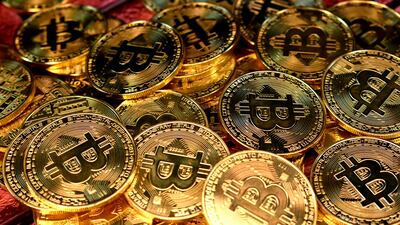
  • The crypto market, which includes currencies such as Bitcoin, pictured, has lost $2 trillion of its value in six months. Unsplash
    The crypto market, which includes currencies such as Bitcoin, pictured, has lost $2 trillion of its value in six months. Unsplash
  • The price of Ethereum, the second largest cryptocurrency by market size, has fallen by 70 per cent this year. Investors and analysts are watching to see if it will dip below $1,000. Unsplash
    The price of Ethereum, the second largest cryptocurrency by market size, has fallen by 70 per cent this year. Investors and analysts are watching to see if it will dip below $1,000. Unsplash
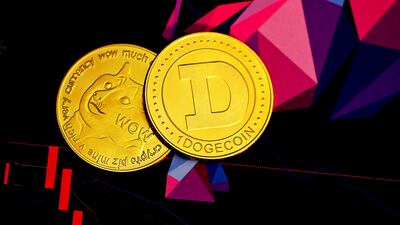
  • Dogecoin, supported by Elon Musk, is about 90 per cent down from May last year, yet it is outperforming Bitcoin and Ethereum in the current crash. Unsplash
    Dogecoin, supported by Elon Musk, is about 90 per cent down from May last year, yet it is outperforming Bitcoin and Ethereum in the current crash. Unsplash
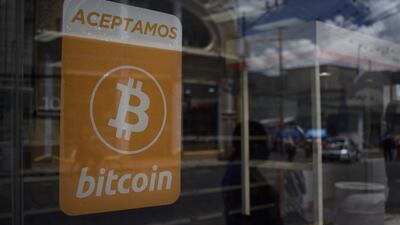
  • The government of El Salvador has invested $105 million in Bitcoin. President Nayib Bukele's embrace of the cryptocurrency as legal tender is being questioned as the market crashes. Getty
    The government of El Salvador has invested $105 million in Bitcoin. President Nayib Bukele's embrace of the cryptocurrency as legal tender is being questioned as the market crashes. Getty
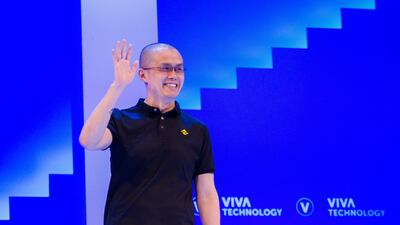
  • Changpeng Zhao, founder of crypto exchange giant Binance, has compared the current market turmoil to the dotcom bubble of the early 2000s. Still, the company is aggressively pursuing licensing in international jurisdictions and introducing new products. Getty
    Changpeng Zhao, founder of crypto exchange giant Binance, has compared the current market turmoil to the dotcom bubble of the early 2000s. Still, the company is aggressively pursuing licensing in international jurisdictions and introducing new products. Getty
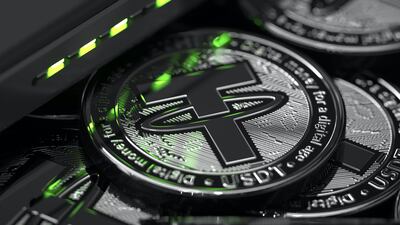
  • Tether is the biggest issuer of stablecoins, a type of cryptocurrency pegged to a traditionally stable asset like the US dollar. Most stablecoins are meant to maintain a constant price of $1 and are backed by real reserve funds, making it easy to convert crypto investments into cash. But Tether's financial statements show that may not be true, leaving the issuer and its investors vulnerable. Unsplash
    Tether is the biggest issuer of stablecoins, a type of cryptocurrency pegged to a traditionally stable asset like the US dollar. Most stablecoins are meant to maintain a constant price of $1 and are backed by real reserve funds, making it easy to convert crypto investments into cash. But Tether's financial statements show that may not be true, leaving the issuer and its investors vulnerable. Unsplash
  • The recent crypto crash can in part be attributed to the collapse of TerraUSD, a stablecoin pegged to the US dollar through algorithms and linked to a "sister" cryptocurrency named Luna. When the price of Luna plummeted, TerraUSD also fell, creating a “death spiral” to practically zero for both coins. Unsplash
    The recent crypto crash can in part be attributed to the collapse of TerraUSD, a stablecoin pegged to the US dollar through algorithms and linked to a "sister" cryptocurrency named Luna. When the price of Luna plummeted, TerraUSD also fell, creating a “death spiral” to practically zero for both coins. Unsplash
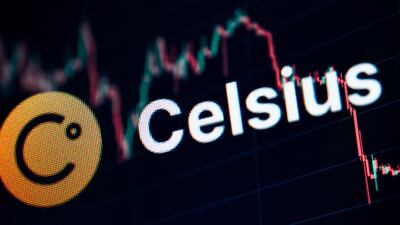
  • On June 12 crypto lender Celsius Network said it had paused customer withdrawals, saying it needed “to stabilise liquidity and operations”. Investors are still waiting, with no signs that the current meltdown will let up. Getty
    On June 12 crypto lender Celsius Network said it had paused customer withdrawals, saying it needed “to stabilise liquidity and operations”. Investors are still waiting, with no signs that the current meltdown will let up. Getty

Digital assets embraced as fiat falls

The adoption of cryptocurrency has proven to be a lifeline in developing economies, where rapidly devaluing currencies and political instability have offered citizens few options.

In these places, the attraction of an entirely decentralised financial system untethered to a government or the economy is clear.

People in these regions have gained more control over their money through the use of cryptocurrency, while access to capital has become easier.

Cryptocurrency and decentralised finance specifically do not have the same high barriers to entry that plague the traditional financial system. Anyone with an internet connection is able to participate.

Financial inclusion has long been one of the hard sells of cryptocurrency and today, we see that coming to fruition in developing countries around the world.

This does not mean that cryptocurrency is the answer to all economic woes, however.

Compared to stable currencies such as the US dollar, euro, British pound and Japanese yen, even US dollar-backed stablecoins present a high level of risk. This makes cryptocurrency less attractive inside stable economies.

But what cryptocurrencies and blockchain technology offer any economy is a level of objectivity — and this will become increasingly attractive, even in developed countries.

Cryptocurrency is politically agnostic. It allows the citizen of any country to participate in finance and preserve and grow their wealth, and it even allows them to make basic purchases through card payment providers and peer-to-peer systems.

We are, no doubt, in a period of growing pains for this nascent asset class. However, its possibilities and potential benefits are becoming more evident, while usage is growing every day.

Stefan Rust is the founder of Laguna Labs, a blockchain development house, and former chief executive of bitcoin.com


The specs: 2018 Nissan 370Z Nismo

The specs: 2018 Nissan 370Z Nismo
Price, base / as tested: Dh182,178
Engine: 3.7-litre V6
Power: 350hp @ 7,400rpm
Torque: 374Nm @ 5,200rpm
Transmission: Seven-speed automatic
​​​​​​​Fuel consumption, combined: 10.5L / 100km


The President's Cake

Director: Hasan Hadi

Starring: Baneen Ahmad Nayyef, Waheed Thabet Khreibat, Sajad Mohamad Qasem 

Rating: 4/5

Tips for SMEs to cope
  • Adapt your business model. Make changes that are future-proof to the new normal
  • Make sure you have an online presence
  • Open communication with suppliers, especially if they are international. Look for local suppliers to avoid delivery delays
  • Open communication with customers to see how they are coping and be flexible about extending terms, etc
    Courtesy: Craig Moore, founder and CEO of Beehive, which provides term finance and working capital finance to SMEs. Only SMEs that have been trading for two years are eligible for funding from Beehive.
The cost of Covid testing around the world

Egypt

Dh514 for citizens; Dh865 for tourists

Information can be found through VFS Global.

Jordan

Dh212

Centres include the Speciality Hospital, which now offers drive-through testing.

Cambodia

Dh478

Travel tests are managed by the Ministry of Health and National Institute of Public Health.

Zanzibar

AED 295

Zanzibar Public Health Emergency Operations Centre, located within the Lumumba Secondary School compound.

Abu Dhabi

Dh85

Abu Dhabi’s Seha has test centres throughout the UAE.

UK

From Dh400

Heathrow Airport now offers drive through and clinic-based testing, starting from Dh400 and up to Dh500 for the PCR test.

It Was Just an Accident

Director: Jafar Panahi

Stars: Vahid Mobasseri, Mariam Afshari, Ebrahim Azizi, Hadis Pakbaten, Majid Panahi, Mohamad Ali Elyasmehr

Rating: 4/5

How to become a Boglehead

Bogleheads follow simple investing philosophies to build their wealth and live better lives. Just follow these steps.

•   Spend less than you earn and save the rest. You can do this by earning more, or being frugal. Better still, do both.

•   Invest early, invest often. It takes time to grow your wealth on the stock market. The sooner you begin, the better.

•   Choose the right level of risk. Don't gamble by investing in get-rich-quick schemes or high-risk plays. Don't play it too safe, either, by leaving long-term savings in cash.

•   Diversify. Do not keep all your eggs in one basket. Spread your money between different companies, sectors, markets and asset classes such as bonds and property.

•   Keep charges low. The biggest drag on investment performance is all the charges you pay to advisers and active fund managers.

•   Keep it simple. Complexity is your enemy. You can build a balanced, diversified portfolio with just a handful of ETFs.

•   Forget timing the market. Nobody knows where share prices will go next, so don't try to second-guess them.

•   Stick with it. Do not sell up in a market crash. Use the opportunity to invest more at the lower price.

French business

France has organised a delegation of leading businesses to travel to Syria. The group was led by French shipping giant CMA CGM, which struck a 30-year contract in May with the Syrian government to develop and run Latakia port. Also present were water and waste management company Suez, defence multinational Thales, and Ellipse Group, which is currently looking into rehabilitating Syrian hospitals.

Moving%20Out%202
%3Cp%3E%3Cstrong%3EDeveloper%3A%3C%2Fstrong%3E%20SMG%20Studio%3Cbr%3E%3Cstrong%3EPublisher%3A%3C%2Fstrong%3E%20Team17%3Cbr%3E%3Cstrong%3EConsoles%3A%3C%2Fstrong%3E%20Nintendo%20Switch%2C%20PlayStation%204%26amp%3B5%2C%20PC%20and%20Xbox%20One%3Cbr%3E%3Cstrong%3ERating%3A%3C%2Fstrong%3E%204%2F5%3C%2Fp%3E%0A
AIDA%20RETURNS
%3Cp%3E%3Cstrong%3EDirector%3A%20%3C%2Fstrong%3ECarol%20Mansour%3C%2Fp%3E%0A%3Cp%3E%3Cstrong%3EStarring%3A%20%3C%2Fstrong%3EAida%20Abboud%2C%20Carol%20Mansour%3C%2Fp%3E%0A%3Cp%3E%3Cstrong%3ERating%3A%3C%2Fstrong%3E%203.5.%2F5%3C%2Fp%3E%0A
Updated: July 27, 2022, 4:00 AM