

Dubai’s new virtual asset law can become a global model for governments and central banks to regulate cryptocurrency and protect investors while also boosting economic growth and innovation, the co-founder of blockchain data platform Chainalysis said.
“There's lots of environments and conversations happening internationally about creating a best-in-class approach to the asset class and there's really an opportunity for Dubai to take a lead in that,” Jonathan Levin, who is in Dubai to speak at this week’s World Government Summit, told The National.
“As [Dubai] goes into implementation and building the regulatory environment for crypto businesses to operate, it has the potential to become a model of how this regulation of the sector should be performed," said Mr Levin, who is also the chief strategy officer at Chainalysis.
“It will allow for a much more tangible example that people can look to as a regulatory architecture for the industry … and gets the balance right between economic growth, encouraging innovation behind the sector and protecting investors and public safety.”
This month, Dubai adopted the Dubai Virtual Asset Regulation Law, which aims to create an advanced legal framework to protect investors and provide international standards for virtual asset industry governance that promotes responsible business growth in the emirate.
Dubai also established the Virtual Asset Regulatory Authority (VARA) as an “independent authority” to regulate the sector throughout the emirate, including special development zones and free zones, but excluding the Dubai International Financial Centre.
The authority, which will also be responsible for licensing, has legal and financial autonomy over the virtual asset sector, which includes cryptocurrencies such as Bitcoin and non-fungible tokens, and will be linked to the Dubai World Trade Centre Authority (DWTCA).
Central banks around the world have been reluctant to endorse cryptocurrencies because of their high volatility, speculative nature, use for illicit activities, as well as the lack of value and regulatory oversight.
The Central Bank of the UAE also does not recognise cryptocurrencies as legal tender.
The Middle East received $271.7 billion worth of cryptocurrency between July 2020 and June 2021, which represents 6.6 per cent of global activity, according to Chainalysis data.
The region is one of the fastest-growing markets in the world. Turkey has the highest transaction volume at $132.4bn from July 2020 to June 2021. The UAE is in third place, trailing Turkey and Lebanon, with a transaction volume of $25.5bn.
New York-based Chainalysis, which Mr Levin founded with chief executive Michael Gronager in 2014, works with government agencies, exchanges, financial institutions, and insurance and cyber security companies in more than 60 countries. The company provides them with data and market intelligence software that is used to help solve some of the world’s biggest financial crimes.
These crimes include the DarkSide ransomware attack on Colonial Pipeline in May last year, in which the operator of the American oil pipeline system paid 75 Bitcoin to regain control of the system.
In June last year, the US Department of Justice managed to recover part of the ransom paid by Colonial Pipeline – 63.7 Bitcoin valued at about $2.3 million – by gaining access to DarkSide’s systems, it said in a statement.
-

Bitcoin slid about 8 per cent to $40,237 in early Asian trading on September 21, 2021, dropping to its lowest level since the beginning of August. Reuters -

Vitalik Buterin, the co-founder of Ethereum, became the world's youngest crypto billionaire after Ether breached the $3,000 level in May this year. Bloomberg -
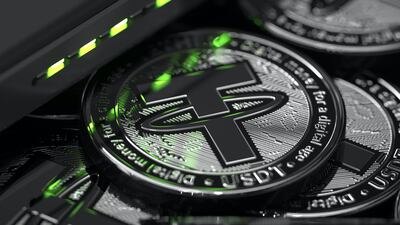
Tether, also known as USTD, is considered a stablecoin as it was designed to always be worth $1. Unsplash -
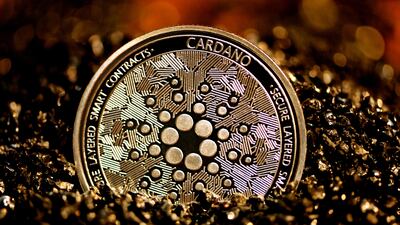
Cardano is growing in popularity with cryptocurrency investors after reaching a market cap of $77 billion in May this year. Unsplash -
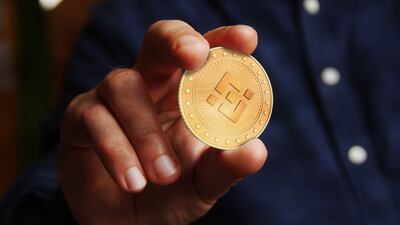
Binance Coin is one of the biggest cryptocurrencies in the world. Alamy -
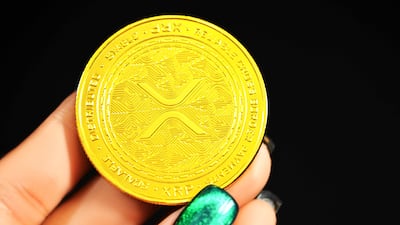
US technology company Ripple created the XRP cryptocurrency in 2012. Today, it is trading at about $0.94, according to Coinbase. Unsplash -

Solana, a programmable blockchain cryptocurrency, hit a record $80.12 in August. Bloomberg -

The USD Coin is a stablecoin with about $27 billion worth of coins in global circulation. Unsplash -
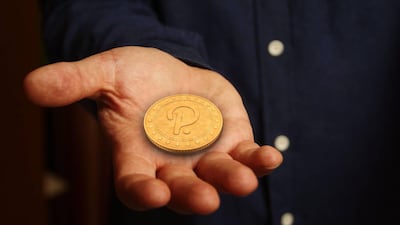
The Polkadot cryptocurrency is built on a multi-blockchain network and has a market cap of about $28.8 billion. Alamy -
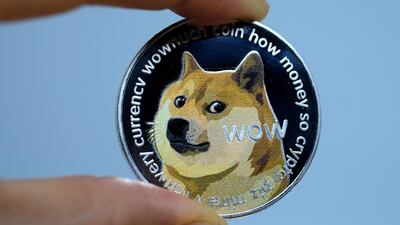
Originally designed as a meme joke in 2013, Dogecoin today trades for about $0.21 and has a market capitalisation of about $27.6 billion. Getty Images


Cryptocurrency-based crime hit a high in 2021, with illicit addresses receiving $14bn over the course of the year, up from $7.8bn in 2020, according to Chainalysis’ 2022 Crypto Crime Report.
However, those numbers do not reflect the “full story”, the report said.
Across all cryptocurrencies tracked by Chainalysis, the total transaction volume surged to $15.8 trillion in 2021, up 567 per cent compared with the previous year.
“Given that roaring adoption, it’s no surprise that more cybercriminals are using cryptocurrency,” Chainalysis said in the report.
“But the fact that the increase in illicit transaction volume was just 79 per cent – nearly an order of magnitude lower than overall adoption – might be the biggest surprise of all,” it said.
co-founder of Chainalysis
“With the growth of legitimate cryptocurrency usage far outpacing the growth of criminal usage, illicit activity’s share of cryptocurrency transaction volume has never been lower.”
The future of the cryptocurrency sector lies in the widespread adoption of digital coins and the “financialisation” of the asset class, Mr Levin said.
This would entail more sophisticated financial products – such as offering interest on cryptocurrency deposits or borrowing against cryptocurrency deposits – being offered to consumers, he said.
“All of that becomes a more sophisticated financial system that actually can help broaden the adoption and power general financial instruments beyond what we've typically considered to be the cryptocurrency industry."
However, the financialisation of the industry would take time, Mr Levin said.
“It's affecting the lives of hundreds of millions of people at this point, but not like billions of people. We need to get to the point where there are billions of people that are actually accessing crypto technology in their lives [for this to happen].”

