

The rollercoaster ride of Bitcoin continues after the cryptocurrency hit another milestone with the launch of the ProShares Bitcoin Strategy Exchange Traded Fund on the New York Stock Exchange on Tuesday, which allows investors to invest in the digital coin through futures contracts rather than owning it outright.
Some financial analysts believe this is going to be a big deal that will drive the price higher – to $100,000 and beyond – by giving institutional investors the confidence and security to invest in Bitcoin.
So far, the optimists are feeling vindicated.
The ProShares Bitcoin Strategy ETF, which started trading on the New York Stock Exchange under the ticker Bito, drew trades estimated at nearly $1 billion, putting it on track to be the third-biggest ETF launch of all time. By the end of the day, the ETF had jumped 4.8 per cent to $41.94.
It is not the first Bitcoin ETF but it is a first for the US. In Europe, the XBT Bitcoin Tracker was launched way back in 2015 on Nasdaq’s Nordic exchange, while the Purpose Bitcoin ETF began trading on the Toronto Stock Exchange in February. Some US investors have used these to gain exposure to Bitcoin, instead of waiting on the Securities and Exchange Commission's approval.
By listing in the US, the ProShares Bitcoin Strategy ETF has exposure to the biggest investment market in the world.
First-year inflows could exceed $50 billion, according to Tom Lee at Fundstrat, who says it could drive the Bitcoin price to $168,000.
The SEC has yet to formally approve Bitcoin futures ETFs, which track the price of futures contracts, but it is not shooting them down either. SEC chair Gary Gensler believes they offer investors greater protection than ETFs that trade the spot Bitcoin price.
Marcus de Maria, chief executive of Investment Mastery, reckons Bito will drive Bitcoin's price even higher than today’s $64,760 by making it simple and safe for institutions to invest without worrying about their exchange being hacked or forgetting the keys to their digital wallets and losing access to their holdings forever.
“This has opened the gates for some of the world's biggest investors to get into cryptos safely and more are likely to follow,” Mr de Maria says.
-

Bitcoin slid about 8 per cent to $40,237 in early Asian trading on September 21, 2021, dropping to its lowest level since the beginning of August. Reuters -

Vitalik Buterin, the co-founder of Ethereum, became the world's youngest crypto billionaire after Ether breached the $3,000 level in May this year. Bloomberg -
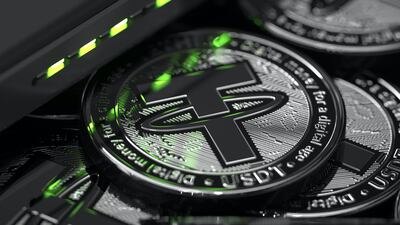
Tether, also known as USTD, is considered a stablecoin as it was designed to always be worth $1. Unsplash -

Cardano is growing in popularity with cryptocurrency investors after reaching a market cap of $77 billion in May this year. Unsplash -

Binance Coin is one of the biggest cryptocurrencies in the world. Alamy -

US technology company Ripple created the XRP cryptocurrency in 2012. Today, it is trading at about $0.94, according to Coinbase. Unsplash -

Solana, a programmable blockchain cryptocurrency, hit a record $80.12 in August. Bloomberg -

The USD Coin is a stablecoin with about $27 billion worth of coins in global circulation. Unsplash -

The Polkadot cryptocurrency is built on a multi-blockchain network and has a market cap of about $28.8 billion. Alamy -

Originally designed as a meme joke in 2013, Dogecoin today trades for about $0.21 and has a market capitalisation of about $27.6 billion. Getty Images


This is a less risky way for investors to jump on board the Bitcoin rollercoaster, Nigel Frith, lead analyst at Bitcoinmoney.net, says. “It offers exposure to Bitcoin while avoiding the risks of hacking and unregulated exchanges altogether. It is a great next step for mass adoption of cryptocurrency.”
Mr Frith expects more funds to follow. “There has already been a rush for new futures ETFs and I only see that continuing in the short term.”
Invesco has abandoned plans to launch its own US Bitcoin futures ETF – possibly unhappy at coming in second – but will still try to launch a physical ETF.
VanEck has been fighting to bring a Bitcoin ETF to market since 2017 and is not giving up yet.
The ProShares Bitcoin Strategy ETF will be just as risky as buying Bitcoin, but with the added rollover costs and spreads of futures contracts, Vijay Valecha, chief investment officer at Century Financial in Dubai, says.
“The ETF is likely to be more volatile as a result, especially during settlement expiry and monthly open or close periods.”
Correlation of existing Bitcoin ETFs has been mixed, he says. The Grayscale Bitcoin Trust has lagged spot Bitcoin by 160 per cent over the past year.
Investors will sit on the sidelines for now to see how the new launch performs, Mr Valecha says. “To succeed, it needs sizeable participation from traders and prominent institutional players such as market makers and mutual fund managers. The ETF with the most volume will have an advantage over the rest of the pack.”
chief executive of Investment Mastery
The ProShares Bitcoin Strategy ETF will appeal to short-term intraday traders rather than long-term investors, who can safely ignore it, he says.
Investors no longer need to worry about custody and securing their digital wallets, Ross Thompson, finance and accountancy lecturer at Arden University, says.
“The ETF should attract those who are wary of the lack of crypto regulation and its inherent security, but are still eager to get a piece of the action.”
They must still proceed with caution as it could further inflate the Bitcoin bubble, he warns. “Bubbles have a habit of bursting.”
The ETF is based on futures and will not directly increase the demand for Bitcoin itself, Antony Portno, founder of Traders of Crypto, says. Instead, it could surprise everyone by proving bearish.
When Bitcoin futures were listed on the Chicago Mercantile Exchange in 2017, allowing investors to short sell the cryptocurrency, the price quickly crashed.
Bitcoin will remain volatile and investors should aim to buy low and sell high, Mr Portno says. “If Bitcoin traded closer to $50,000 than $60,000 by the end of the week, it would be no surprise to me. A few weeks from now, the next speculative event will have taken over and it may have surpassed its record high.”
Traditional ETFs allow retail investors access to hand over investment decisions to an expert with insight into market data and research, Katharine Wooller, UK managing director at cryptocurrency wealth platform Dacxi, says. In this case, there is a catch. “With Bitcoin, no fund manager performance data exists.”
By trading future price movements, she says the ETF is essentially betting on price volatility. “Trying to predict the ups and downs of Bitcoin is like playing a game of ‘pin the tail on the donkey’.”
It may help that most Bitcoin is now locked-up in long-term holdings. “With few sellers, prices naturally go up. In these circumstances, it would be a poor futures trader who couldn’t make money,” she says.
Investors who believe the Bitcoin price is on a long-term upwards curve to $100,000 and beyond would be better off simply buying and holding Bitcoin itself, she says.
Futures trading does nothing to support the global vision of decentralised finance, or DeFi, Ms Wooller adds. “It is all about ‘gaming the market’ rather than having any real commitment to crypto as the catalyst for a more viable global economy.”
The Bitcoin futures ETF may stray from Bitcoin's price, warns Roman Matkovskyy, an expert in cryptocurrencies at Rennes School of Business.
Given that Bitcoin is a speculative and volatile asset, betting on price movements will be not an easy task.
Nobody can be sure how Bitcoin futures ETFs will trade, Mr Matkovskyy says, but investors will have to pay a premium while they wait to find out. “ProShares will charge 0.95 per cent a year for the Bito fund while the average equity ETF charges 0.71 per cent.”
Bitcoin futures ETFs will be sold through broker accounts, Mr Matkovskyy says. “They can be traded like a stock and do not require an account at a cryptocurrency exchange. This will allow investors to keep all their holdings under one roof, simplifying tax and performance reporting.”
However, he says Bitcoin futures ETFs are best left to more sophisticated institutions, rather than private investors.

The new offering is “starting out on the fringes of the investing world”, says Chris Muller, director of audience growth at money website DoughRoller.net.
“It is better than nothing but, for now, it will be traded without formal approval from the SEC.”
Although it is legal to trade the ETF, its future “lies in the world of the unknown”, Mr Muller says.
“Predicting the ups and downs of Bitcoin is a challenge in itself, so there might be more inherent risk when investing in Bito, for little additional reward.”
He also advises against buying cryptocurrency exposure at a premium through stocks such as Bitcoin miners Riot Blockchain ($Riot) and Marathon Digital Holdings ($Mara), Bitcoin investor MicroStrategy ($MSTR) and the Grayscale Bitcoin Trust ($GBTC).
Stocks and cryptocurrency trading are two inherently different entities. “Achieving exposure to one entity through another feels like trying to build a proverbial bridge between an apple and a tomato,” Mr Muller says.
“For investors who are serious about exposure to Bitcoin, buy Bitcoin.”

