


Indonesia could more than double its rice imports this year to keep domestic food prices stable ahead of a general election and with a possible El Nino weather pattern on the horizon.
-

-
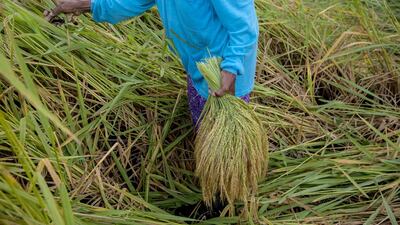
The main rice harvest in Indonesia is usually in June or August, with the government typically deciding whether to import from June onwards. Above, a farmer harvests rice in Tabanan, Bali. Agung Parameswara / Getty Images -
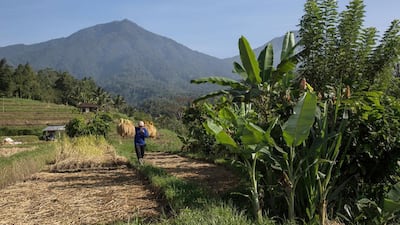
Dry weather late last year and flooding in early 2014 hurt harvests on parts of the main rice-growing island of Java in Indonesia. Above, harvest season underway in Bali. Agung Parameswara / Getty Images -
Indonesia’s government has cut its estimates for unmilled rice output to 73 million metric tonnes this year, compared to 71.29 million in 2013, but industry sources said this was still an ambitious prediction. Agung Parameswara / Getty Images -
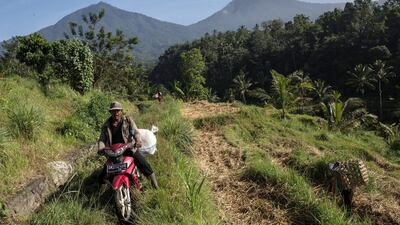
Indonesia was self-sufficient in rice in the early 1980s, but output gradually declined as farmland was used for housing as the population boomed. Above, a farmer transports a sack of paddy stalks at Jatiluwih in Bali. Agung Parameswara / Getty Images -
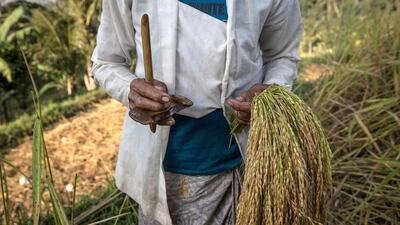
A farmer with a special knife called anggapan, which is used to cut the paddy stalks during harvest season at Jatiluwih in Bali. Agung Parameswara / Getty Images -

Forecasts indicate that El Nino is likely to develop around mid-year in Indonesia, which could keep local rice prices strong. The weather phenomenon usually brings dry conditions to Southeast Asia. Agung Parameswara / Getty Images -
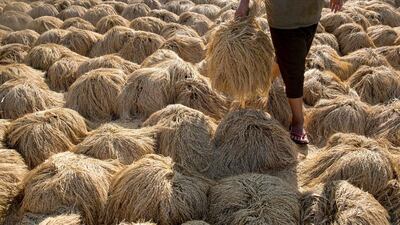
Indonesia’s powerful food procurement body Bulog is the dominant rice buyer, tasked with maintaining annual stocks of 1.5 to 2 million metric tonnes. Above, a farmer holds a tied paddy stalks to be dried under the sunlight during harvest season. Agung Parameswara / Getty Images -
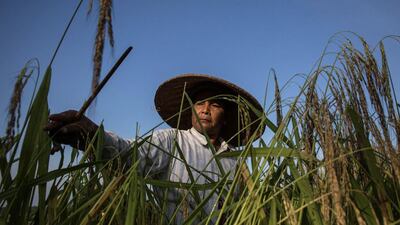
A farmer with a special knife called anggapan, which is used to cut the paddy stalks during harvest season at Jatiluwih in Bali. Agung Parameswara / Getty Images -
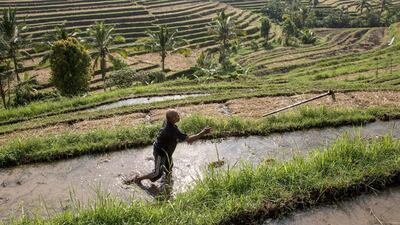
A farmer prepares to open the water irrigation after finishing the rice harvest. Agung Parameswara / Getty Images -
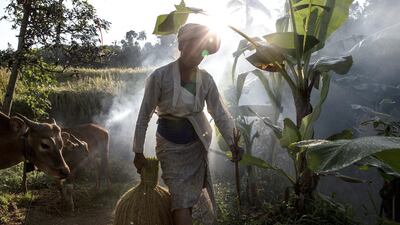
Indonesia’s powerful food procurement body Bulog is the dominant rice buyer, tasked with maintaining annual stocks of 1.5 to 2 million metric tonnes. Above, a farmer carries tied paddy stalks to be dried under the sunlight during harvest season. Agung Parameswara / Getty Images -
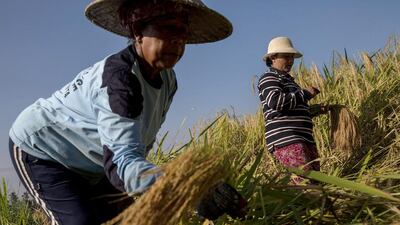
Farmers cut stalks of rice during harvest season at Jatiluwih in Bali. Industry officials and analysts are expecting Indonesia to more than double its rice imports to around 1.5 million tonnes in 2014 from an estimated 700,000 tonnes imported in 2013. Agung Parameswara / Getty Images -
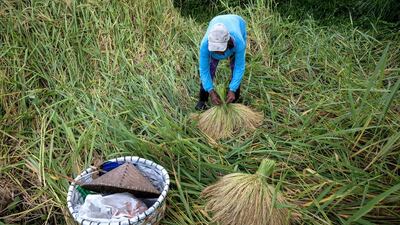
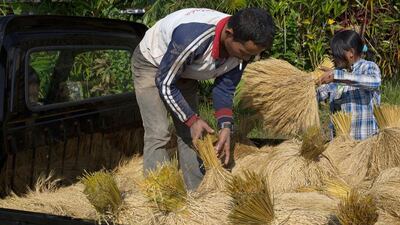
A farmer ties paddy stalks to be dried under the sunlight during Indonesia's harvest season. Agung Parameswara / Getty Images -
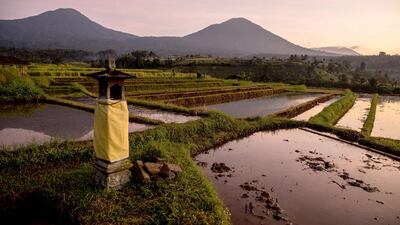
Forecasts indicate that El Nino is likely to develop around mid-year in Indonesia, which could keep local rice prices strong. The weather phenomenon usually brings dry conditions to Southeast Asia. Agung Parameswara / Getty Images
In pictures: Indonesia could double rice imports
Most popular today

