


Davos Klosters in Switzerland has been the destination for the World Economic Forum's annual meeting since 1974. However, the forum's new foray into the metaverse will open up options for how its members convene.
The WEF is working with Accenture and Microsoft to build a metaverse platform as a new meeting ground for the public-private co-operation that is at the core of its mission and for solutions-building on an international scale, the organisation said on Monday.
A proof-of-concept of the experience and functionality is being shown at the annual meeting that is currently under way.
The new platform is “an extension” of the international organisation and it will be “a more open, more sustained and more comprehensive process for coming together”, said WEF founder and executive chairman Klaus Schwab.
He predicted that the advent of the metaverse is set to influence how companies and governments “think, work, interact and communicate”.
The metaverse is the next evolution of the internet, blending social networks using real-time 3D software with virtual and augmented realities. It presents a massive opportunity to bring people together.
_______________________
Opening day at Davos - in pictures
-
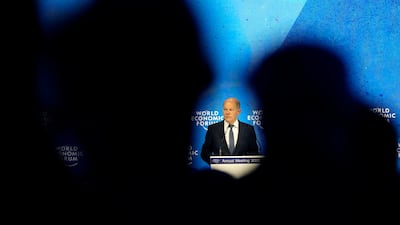
German chancellor Olaf Scholz speaks at the World Economic Forum in Davos, Switzerland. The annual meeting of the World Economic Forum is taking place in Davos from May 22 until May 26, 2022. AP Photo -
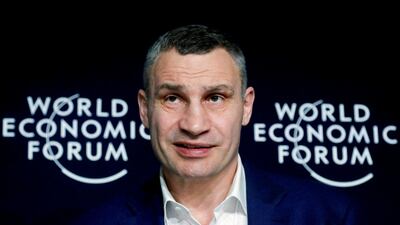
The Mayor of Ukraine's capital Kyiv, Vitali Klitschko, addresses a news conference at the media village of the World Economic Forum (WEF) in the alpine resort of Davos, Switzerland. Reuters -
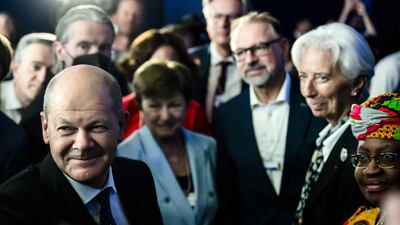
German Chancellor Olaf Scholz, IMF managing director Kristalina Georgieva, European Central Bank president Christine Lagarde and WTO director general Ngozi Okonjo-Iweala join other dignitaries in Davos. EPA -
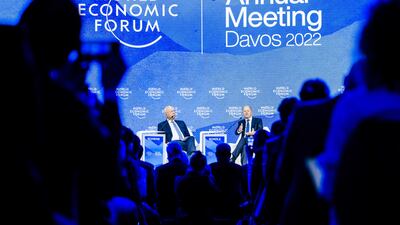
Klaus Schwab, founder and executive chairman of the World Economic Forum, and German Chancellor Olaf Scholz address a plenary session. EPA -
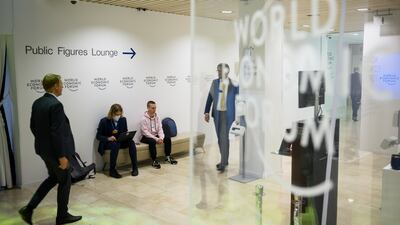
It is the 51st annual WEF meeting to be held in Switzerland. EPA -
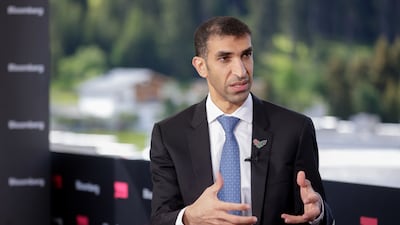
Dr Thani Al Zeyoudi, the UAE’s Minister of State for Foreign Trade, is interviewed by Bloomberg on the closing day of the Swiss summit. Bloomberg -

European Commission Vice President Valdis Dombrovskis, India's Commerce Minister Piyush Goyal, World Trade Organization President (WTO) Ngozi Okonjo-Iweala and Flexport CEO Ryan Petersen take part at the panel discussion "Trade: Now what?" during the World Economic Forum 2022 (WEF) in the Alpine resort of Davos, Switzerland. Reuters -

German Chancellor Olaf Scholz leaves the stage after he addressed the assembly during the WEF annual meeting. AFP -
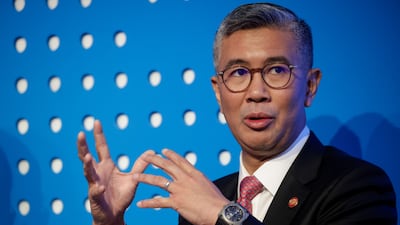
Malaysia's finance minister, Zafrul Abdul Aziz, during a panel session on the closing day of the event. Bloomberg -
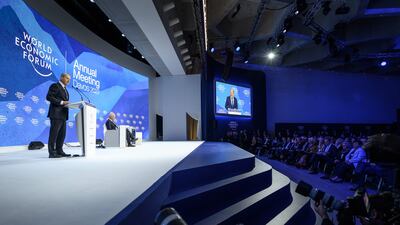
German Chancellor Olaf Scholz addresses the Davos assembly. AFP -
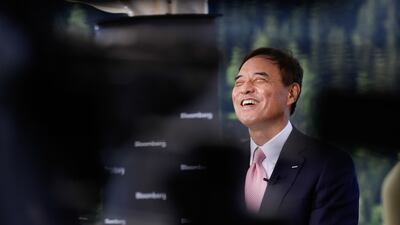
Takeshi Niinami, chief executive of Suntory Holdings Ltd., during a Bloomberg television interview. Bloomberg -
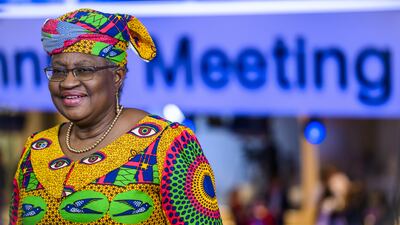
World Trade Organisation Director General Ngozi Okonjo-Iweala during the 51st annual event. EPA -
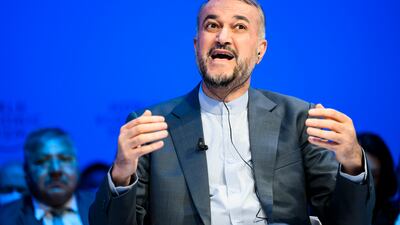
Hossein Amir-Abdollahian, Minister of Foreign Affairs of Iran. AP Photo -
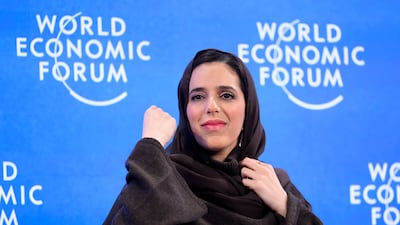
Princess Haifa Al Saud, the Saudi assistant minister for tourism. AP Photo -
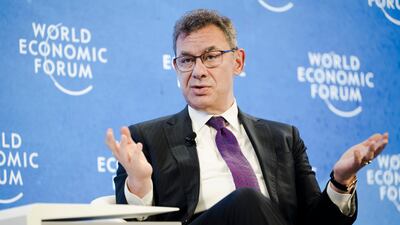
Pfizer chief executive Albert Bourla. AP Photo -
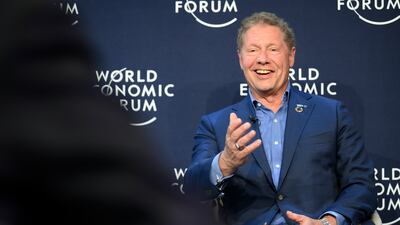
Seth Berkley, chief executive of Gavi, the Vaccine Alliance. AP Photo -
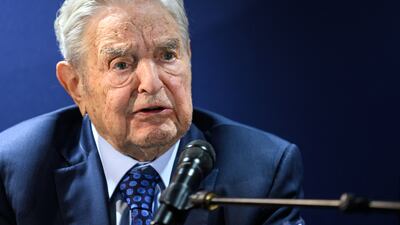
Investor and philanthropist George Soros answers questions after giving a speech in Davos. AFP -

Bill Gates attends a session of the 51st annual meeting of the World Economic Forum in Davos. AP -
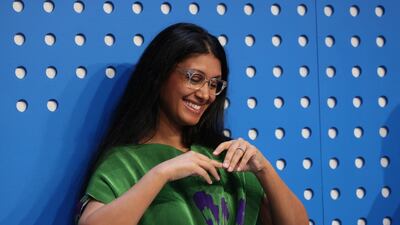
Roshni Nadar Malhotra, chairwoman of HCL Technologies, during a panel session on day two of the annual meeting of the World Economic Forum. Bloomberg -
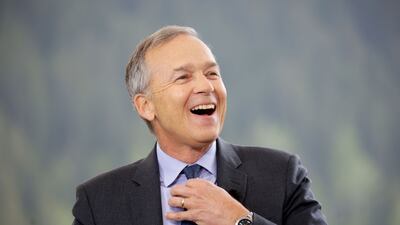
Bob Prince, co-chief investment officer at Bridgewater Associates LP, speaks during an interview at the event. Bloomberg -
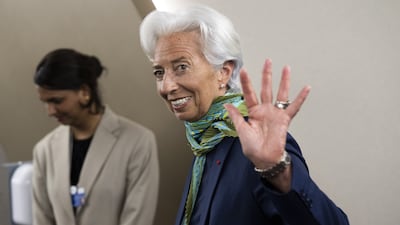
European Central Bank President Christine Lagarde waves as she attends the annual meeting of the World Economic Forum. EPA -
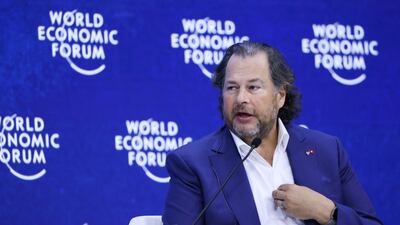
Marc Benioff, billionaire and chief executive of Salesforce.com, speaks during a panel session. Bloomberg -
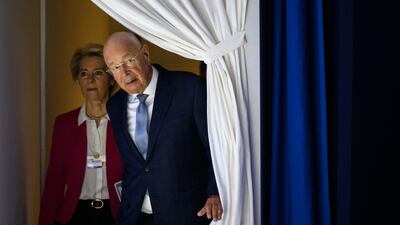
European Commission President Ursula von der Leyen and founder and executive chairman of the World Economic Forum Klaus Schwab prepare to address the assembly in Davos. AFP -
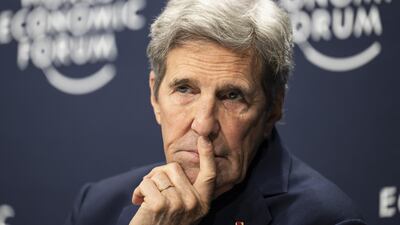
US Special Presidential Envoy for Climate John Kerry addresses a panel session during the annual meeting of the World Economic Forum. EPA -
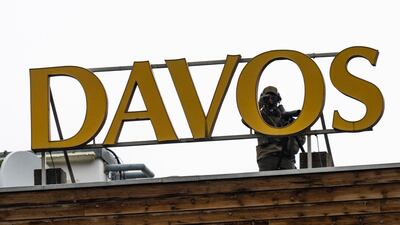
Police stand guard on a roof near where the annual meeting of the World Economic Forum is taking place. AP -
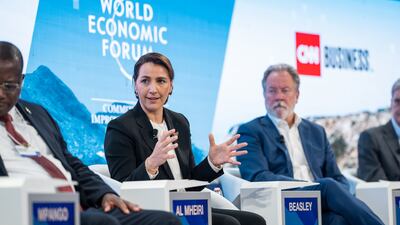
Mariam Al Mheiri, Minister of Climate Change and Environment, speaking at the Averting a Global Food Crisis session at Davos. Photo: World Economic Forum Flickr -
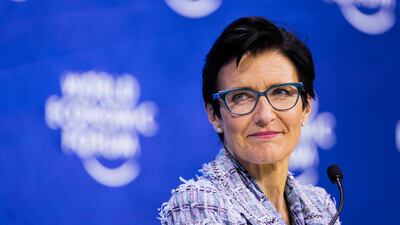
Jane Fraser, chief executive of Citi, at the Global Economic Outlook session at Davos. Photo: World Economic Forum -
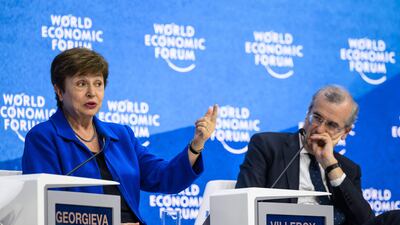
IMF managing director Kristalina Georgieva and governor of the Bank of France Francois Villeroy de Galhau attend a session at Davos. AFP -

Sadhguru poses for a photo with a guest at the World Economic Forum in Davos, Switzerland. Photo: World Economic Forum Flickr -
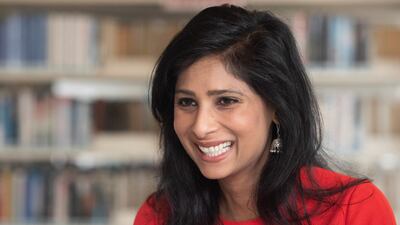
Gita Gopinath, economic counsellor and director of the research department at the International Monetary Fund, speaks during an interview with Reuters in the Alpine resort of Davos. Reuters -
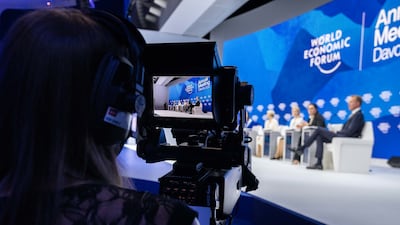
A camera crew filming the World Economic Forum in Davos. Photo: World Economic Forum Flickr -
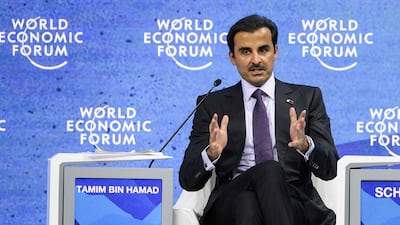
Emir of Qatar Sheikh Tamim bin Hamad al Thani addresses the assembly. AFP -
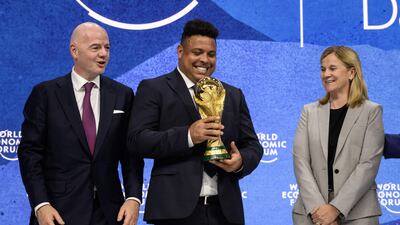
(L-R) Fifa president Gianni Infantino, former Brazilian footballer Ronaldo with the World Cup trophy and former footballer and coach Jill Ellis in Davos. AFP -
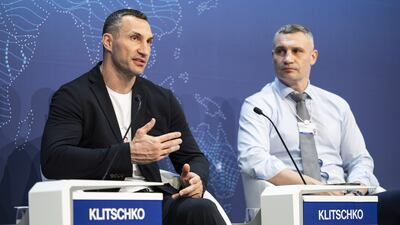
Wladimir Klitschko (L), Ukrainian former professional boxer and businessman, and his brother Vitali Klitschko, Mayor of Kyiv and also a former professional boxer, address a WEF panel session. EPA -
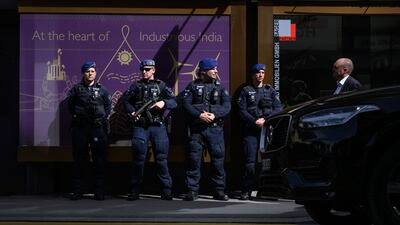
Swiss Police officers on guard on a street during the WEF annual meeting in Davos. AFP -
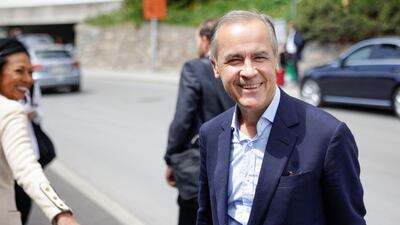
Mark Carney, vice chairman and head of transition investing at Brookfield Asset Management, on the opening day of the World Economic Forum. Bloomberg -
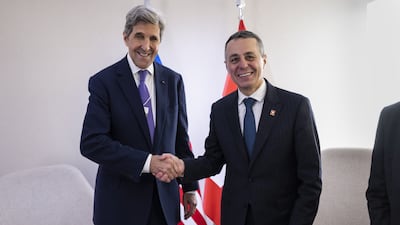
Ignazio Cassis, President of the Swiss Confederation and federal councillor, welcomes John Kerry, US special presidential envoy for climate, in Davos. EPA -
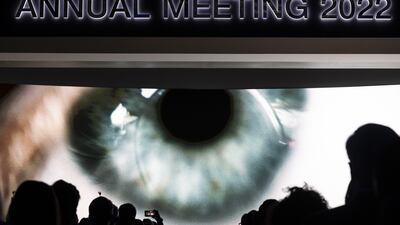
A projection is displayed advertising the 51st annual meeting of the World Economic Forum n Davos. EPA -
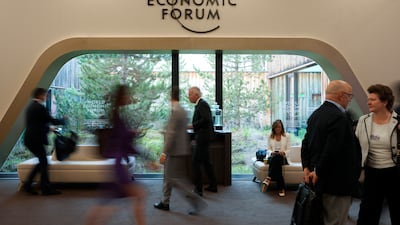
Participants walk through the Davos Congress Centre, the venue of the annual meeting. AP -
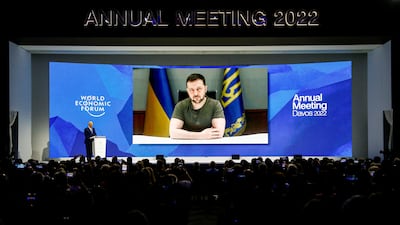
Ukraine’s President Volodymyr Zelenskyy speaks by video at the opening ceremony of the World Economic Forum in Davos, Switzerland. Reuters -
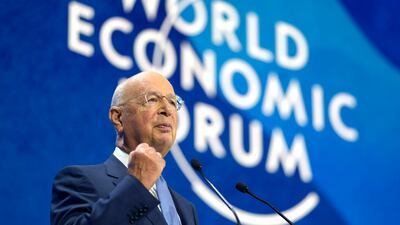
Klaus Schwab, President and founder of the World Economic Forum, delivers his opening speech at the event in 2020. AP -
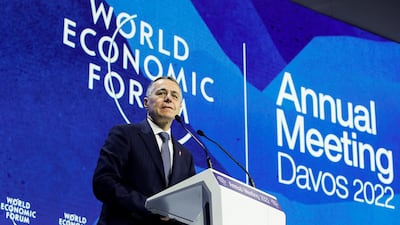
Swiss President Ignazio Cassis addresses delegates during the opening ceremony. Reuters -
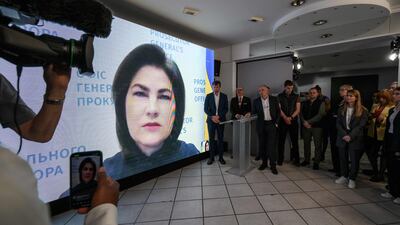
Ukraine’s prosecutor general Iryna Venediktova speaks by video during the opening ceremony of the Russian Warcrimes House, a photographic exhibition documenting atrocities alleged to have been committed by Russian troops in Ukraine. The display was organised by The Victor Pinchuk Foundation. AFP -
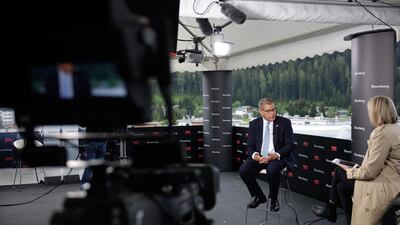
Alok Sharma, president of Cop26, is interviewed by Bloomberg on the opening day of the forum. Bloomberg -
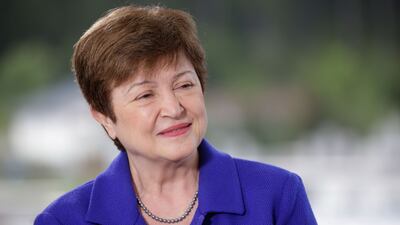
Kristalina Georgieva, chairwoman and managing director of the International Monetary Fund, is interviewed by Bloomberg Television. Bloomberg -
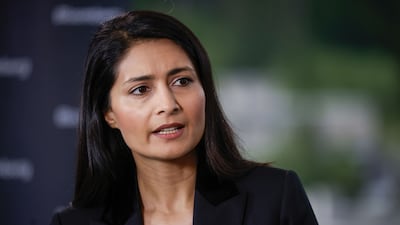
WEF director Saadia Zahidi is interviewed by Bloomberg Television. Bloomberg -

A Swiss police helicopter flies over the Alpine resort of Davos, Switzerland. Reuters -
The annual WEF meeting began on Sunday and will end on Thursday. AP -
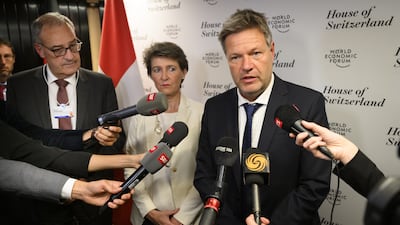
German Vice Chancellor Robert Habeck, right, with Swiss ministers Simonetta Sommaruga and Guy Parmelin after a meeting held on the sidelines of the summit. EPA -
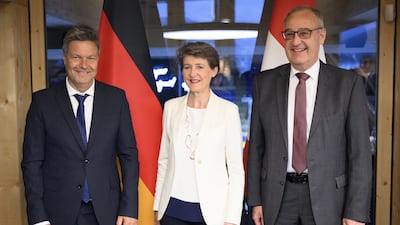
Mr Habeck, Ms Sommaruga and Mr Parmelin discussed the impact of the war in Ukraine on energy supply. EPA -
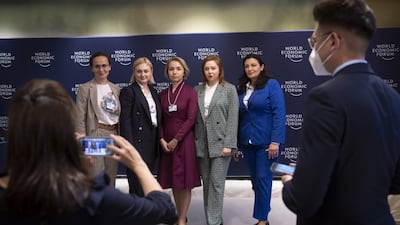
Ukrainian MPs Yulia Klymenko, Yevheniya Kravchuk, Anastasia Radina, Alyona Shkrum and Ivanna Klympush-Tsintsadze attend a media reception. EPA -
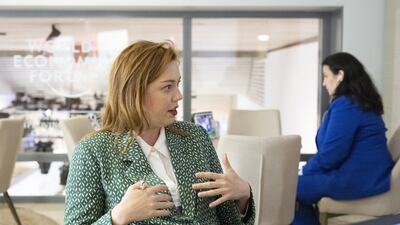
Ms Shkrum and Ms Klympush-Tsintsadze have urged world leaders to step up sanctions against Russia. EPA -
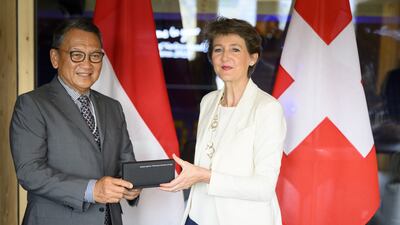
Arifin Tasrif, Indonesia’s Minister for Energy and Mineral Resources, with Simonetta Sommaruga, the Swiss Environment, Transport, Energy and Communications Minister. EPA -

Google, which owns YouTube, is one of the businesses represented at the event. Reuters -
Facebook owner Meta Platforms is also Davos. Reuters -

The US software company Palantir Technologies has sent delegates to Davos. Reuters -
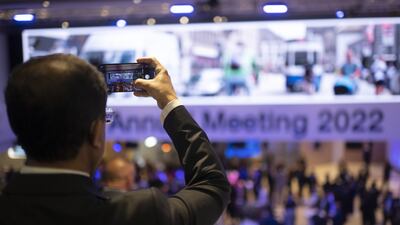
Participants gather at the 51st annual WEF meeting. EPA -
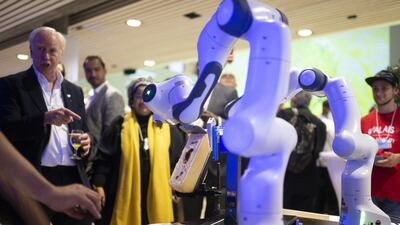
A robot on display in Davos. WEF delegates have gathered in person for the first time in two years. EPA -

The four-day meeting of political leaders, top executives and celebrities is expected to focus on the Ukraine conflict. Bloomberg -

A chef serves canapes during the WEF's welcome reception in Davos. Bloomberg


_______________________
Roblox, for example, one of the most popular online games in the metaverse, attracts about 43 million users a day.
Interest in metaverse technology grew significantly during the coronavirus pandemic amid growing demand for more immersive ways of interacting online.
Bloomberg Intelligence reported that online game makers, social networks and other big technology players are jumping in to capture part of the market opportunity worth about $800 billion.
The annual meeting of WEF is under way against the most complex geopolitical and economic backdrop in decades, Borge Brende, the forum’s president, said last week.
He highlighted the war in Ukraine, the climate emergency, a weakening outlook for global economic growth, a food crisis, rising inflation and an uncertain recovery from the pandemic.
Meanwhile, a new legion of protesters have gathered outside of the meeting in Davos: a group of millionaires demanding that world leaders attending the conference “tax us now” to address a widening gap among the world's richest and the rest.
Such a scenario may be played out in the WEF's metaverse, called the Global Collaboration Village, which will simulate alternative futures and provide immersive experiences to build a better understanding of global challenges.
The WEF also announced a new initiative to define and build the metaverse, which convenes 60 companies from the technology sector and other industries, alongside experts from governments, academia and civil society to accelerate the development of policy frameworks for the metaverse and strengthen economic opportunities.

