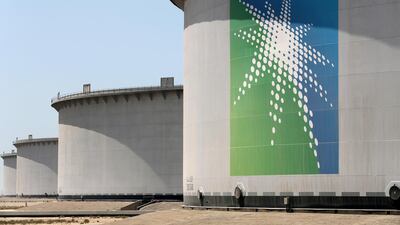
Oil tanks at Saudi Aramco's Ras Tanura oil refinery in Saudi Arabia. Reuters

Saudi Aramco awards 8 contractors long-term agreements to upgrade projects


Jennifer Gnana
  • English
  • Arabic

Saudi Aramco, the world's largest oil exporter, awarded long term agreements to eight contracting companies for a number of plant upgrade projects.

The six-year contracts, which come with a provision to extend for another six years include engineering, procurement, construction, start-up and pre-commissioning of each project, as well as the installation of the upgraded facilities in the designated operating areas, Aramco said on Wednesday.

The companies that won the contracts include a consortium of Nasser Saeed Al Hajri and Contracting and Samsung, Daelim, ENPPI, GS Construction Arabia, Snamprogetti,  JGC Gulf Engineering, Technip as well as Hyundai Engineering and Construction.

The company did not disclose the value of the contracts.

"These LTAs [long-term agreements] which are associated with huge business ... allow us to boost the performance of our brownfield and upgrade projects," said Ahmad Al Sa'adi, Aramco’s technical services senior vice president.

Earlier this year, the world's largest oil-exporting company signed partnership agreements worth more than $21 billion with international companies to work across its value chain in the energy sector. Saudi Aramco also signed a $110 million joint venture with Baker Hughes in the non-metallics sector.

The company is also planning to increase the amount it procures locally, aiming to meet at least 70 per cent of procurement spending from Saudi Arabian companies by 2021.

Aramco, which floated a 1.75 per cent stake on Tadawul in December last year, returned to global bond markets last week.

The company will begin issuing senior, unsecured bonds denominated in US dollars, but said the amount issued and the bond values are "subject to market conditions".


Company Fact Box

Company name/date started: Abwaab Technologies / September 2019

Founders: Hamdi Tabbaa, co-founder and CEO. Hussein Alsarabi, co-founder and CTO

Based: Amman, Jordan

Sector: Education Technology

Size (employees/revenue): Total team size: 65. Full-time employees: 25. Revenue undisclosed

Stage: early-stage startup 

Investors: Adam Tech Ventures, Endure Capital, Equitrust, the World Bank-backed Innovative Startups SMEs Fund, a London investment fund, a number of former and current executives from Uber and Netflix, among others.

The burning issue

The internal combustion engine is facing a watershed moment – major manufacturer Volvo is to stop producing petroleum-powered vehicles by 2021 and countries in Europe, including the UK, have vowed to ban their sale before 2040. The National takes a look at the story of one of the most successful technologies of the last 100 years and how it has impacted life in the UAE. 

Read part four: an affection for classic cars lives on

Read part three: the age of the electric vehicle begins

Read part two: how climate change drove the race for an alternative 

Mercer, the investment consulting arm of US services company Marsh & McLennan, expects its wealth division to at least double its assets under management (AUM) in the Middle East as wealth in the region continues to grow despite economic headwinds, a company official said.

Mercer Wealth, which globally has $160 billion in AUM, plans to boost its AUM in the region to $2-$3bn in the next 2-3 years from the present $1bn, said Yasir AbuShaban, a Dubai-based principal with Mercer Wealth.

Within the next two to three years, we are looking at reaching $2 to $3 billion as a conservative estimate and we do see an opportunity to do so,” said Mr AbuShaban.

Mercer does not directly make investments, but allocates clients’ money they have discretion to, to professional asset managers. They also provide advice to clients.

“We have buying power. We can negotiate on their (client’s) behalf with asset managers to provide them lower fees than they otherwise would have to get on their own,” he added.

Mercer Wealth’s clients include sovereign wealth funds, family offices, and insurance companies among others.

From its office in Dubai, Mercer also looks after Africa, India and Turkey, where they also see opportunity for growth.

Wealth creation in Middle East and Africa (MEA) grew 8.5 per cent to $8.1 trillion last year from $7.5tn in 2015, higher than last year’s global average of 6 per cent and the second-highest growth in a region after Asia-Pacific which grew 9.9 per cent, according to consultancy Boston Consulting Group (BCG). In the region, where wealth grew just 1.9 per cent in 2015 compared with 2014, a pickup in oil prices has helped in wealth generation.

BCG is forecasting MEA wealth will rise to $12tn by 2021, growing at an annual average of 8 per cent.

Drivers of wealth generation in the region will be split evenly between new wealth creation and growth of performance of existing assets, according to BCG.

Another general trend in the region is clients’ looking for a comprehensive approach to investing, according to Mr AbuShaban.

“Institutional investors or some of the families are seeing a slowdown in the available capital they have to invest and in that sense they are looking at optimizing the way they manage their portfolios and making sure they are not investing haphazardly and different parts of their investment are working together,” said Mr AbuShaban.

Some clients also have a higher appetite for risk, given the low interest-rate environment that does not provide enough yield for some institutional investors. These clients are keen to invest in illiquid assets, such as private equity and infrastructure.

“What we have seen is a desire for higher returns in what has been a low-return environment specifically in various fixed income or bonds,” he said.

“In this environment, we have seen a de facto increase in the risk that clients are taking in things like illiquid investments, private equity investments, infrastructure and private debt, those kind of investments were higher illiquidity results in incrementally higher returns.”

The Abu Dhabi Investment Authority, one of the largest sovereign wealth funds, said in its 2016 report that has gradually increased its exposure in direct private equity and private credit transactions, mainly in Asian markets and especially in China and India. The authority’s private equity department focused on structured equities owing to “their defensive characteristics.”

COMPANY%20PROFILE
%3Cp%3E%3Cstrong%3ECompany%3A%20%3C%2Fstrong%3EEducatly%3Cbr%3E%3Cstrong%3EStarted%3A%20%3C%2Fstrong%3E2020%3Cbr%3E%3Cstrong%3EBased%3A%20%3C%2Fstrong%3EUAE%3Cbr%3E%3Cstrong%3EFounders%3A%20%3C%2Fstrong%3EMohmmed%20El%20Sonbaty%2C%20Joan%20Manuel%20and%20Abdelrahman%20Ayman%3Cbr%3E%3Cstrong%3EIndustry%3A%20%3C%2Fstrong%3EEducation%20technology%3Cbr%3E%3Cstrong%3EFunding%20size%3A%20%3C%2Fstrong%3E%242%20million%3Cbr%3E%3Cstrong%3EInvestors%3A%20%3C%2Fstrong%3EEnterprise%20Ireland%2C%20Egypt%20venture%2C%20Plus%20VC%2C%20HBAN%2C%20Falak%20Startups%3C%2Fp%3E%0A