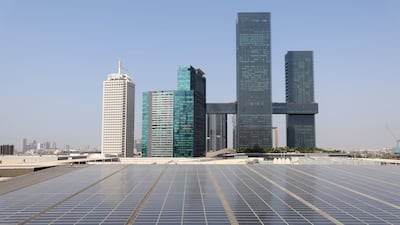

The UAE is projected to become the world's biggest generator of solar electricity by 2031, with the capacity of renewable energy sources in the Middle East as a whole set to triple through that span, the International Energy Agency has said.
Solar power per capita to be generated by the Arab world's second biggest economy through the next six years is estimated to be more than 4,000 kilowatt-hours, the Paris-based IEA said in the 2026 edition of its Renewables report.
Gulf nations Oman and Qatar are the other Middle East countries in the top 10 at third and fifth respectively, while Australia and Bulgaria are at second and fourth. Rounding out the list are Greece, Austria, Spain, China and Chile.
All countries in the top 10 are expected to generate at least 2,000kWh by 2031, which is well above the global average of about 800kWh, the IEA said.
Solar power will also account for about three quarters of the world’s total renewable electricity capacity, which is expected to increase by nearly 85 per cent between by 2031, it added.
"At the global level, average per-capita solar output is more than twice as high by 2031, but the leading countries still generate multiple times that average," analysts at the IEA wrote in the report.
"This highlights persistent disparities in both deployment rates and access to solar generation."
The UAE has continued to champion the use of renewable energy sources as part of its economic diversification efforts.
At September's Middle East Energy summit, Energy and Infrastructure Minister Suhail Al Mazrouei said that the UAE boosted its clean energy target, which covers renewables and nuclear, to 35 per cent by 2030 to 2031.
Achieving that target will require new projects, stronger competition and broader opportunities for the private sector in power generation, Mr Al Mazrouei was quoted as saying.
The IEA data also comes as it expects the Middle East to triple its renewable energy capacity through 2031, which is also a similar view for Africa and Southeast Asia.
"New ambitions, energy security benefits, supportive policies and the growing competitiveness of wind and solar PV [photovoltaic] have raised the forecast for emerging and developing economies by almost 20 per cent compared with our Renewables report a year ago," the IEA said.
Saudi Arabia, the Arab world's largest economy, is forecast to boost its renewable energy expansion fivefold through 2031, followed by the UAE, "marking a structural step-change in the region’s energy market", the agency said.
That is part of a global renewables market whose capacity is projected to hit nearly 4,800GW by between 2026 and 2031, which is a 57 per cent jump compared to the previous six years, the IEA said. China would remain the top market, with India rising to second, it added.
The Middle East will "substantially increase [its] contributions to global renewable capacity growth due to strong policy support and renewable market development", the agency's analysts wrote.

