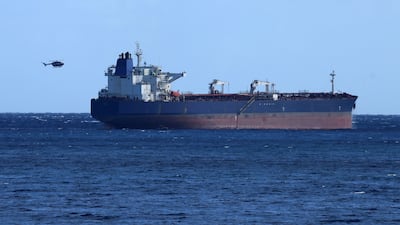

The US is turning to an unlikely saviour in its latest efforts to ease rising energy prices: the “dark fleet” that it has spent years sanctioning.
US Energy Secretary Chris Wright revealed the administration's latest endeavour on Monday, telling those at a New York event that Washington wants to “move some of the ships from what I call the 'bad-guy fleet' to the 'good-guy fleet'".
The dark fleet, sometimes referred to as the shadow fleet, refers to a group of ships that sail outside conventional shipping regulations. These vessels use deceptive shipping practices to transport cargo that is under sanctions or high risk, deliberately concealing it to avoid detection.

Estimates on the size of the fleet vary. Mr Wright said he believes there are about 1,600 vessels. Data from TankerTrackers set the number at 1,480 active ships, while maritime company Windward said it has identified 1,100 dark fleet vessels.
The dark fleet has grown in recent years after sanctions were imposed on Russian oil in response to Moscow's invasion of Ukraine.
Many of these vessels are past the 15-year threshold that marks the point at which technical failures begin to mount, adding to environmental safety risks.
Mr Wright said the administration's plan would involve investors buying and refurbishing these idle sanctioned vessels before using them to transport legitimate oil.
“They will not carry sanctioned oil any more,” he said.
The US has delisted sanctioned vessels before. In March, the Treasury Department's Office of Foreign Assets Control removed sanctions on the Panama-flagged crude oil supertanker Kiara M, which had been placed as part of the Trump administration's pressure campaign on Venezuela.
Richard Nephew, a senior research scholar at Columbia University's Centre on Global Energy Policy, said the move does little to address the security issue facing seafarers today in the Strait of Hormuz. At least 15 container ships have been struck in the waterway in the past 10 days.
“You can repurpose all the ships you want. If you can’t solve the security problem, then you’re not solving the security premium shippers are charging and thereby the consequence to energy markets,” Mr Nephew said.
War risk insurance premiums have surged since the start of the conflict. Rates have climbed to as high as 10 per cent of hull value, compared to 0.25 per cent before the conflict, adding millions to the premiums ship and cargo owners pay.
Mr Wright's comments also come less than two weeks after US President Donald Trump waived sanctions on Russian diesel in an agreement with President Vladimir Putin. Mr Trump said the agreement would include Moscow supplying millions of barrels of diesel to US and global markets.
senior research scholar at Columbia University
With only two weeks until the US midterm elections on November 3, diesel prices at the pump have risen to more than $6 a gallon [$1.59 a litre] on average, compared to about $3 the same time last year.
Wholesale diesel prices passed $200 a barrel in Singapore in mid-September and hit all-time highs of about $220 a barrel in Europe and the US, the International Energy Agency said in an October 14 report.
The seven-day moving average for tanker traffic in the Strait of Hormuz was seven vessels for the week ending September 18, a small fraction of its pre-war levels, according to the International Monetary Fund's PortWatch monitor.
Analysts at Kpler estimate only 24 of the about 160 vessels under sanctions from the US Treasury Department's Office of Foreign Assets Control could return to mainstream trade after taking into account their age and ownership restrictions.
“If this is about getting ships out of sanctions, fine, no problem, proceed as you wish. If this is about solving the problem with whether we can get enough diesel and other products to market, this is not it," Mr Nephew said.

