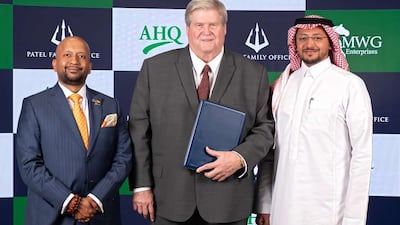

A US-Saudi consortium is advancing plans for a $5 billion oil refinery and export base in the Gulf, narrowing its search to three sites just outside the Strait of Hormuz as the Iran war disrupts energy flows.
Texas-based MWG Enterprises, Patel Family Office and PWS, a unit of Saudi Arabia’s AHQ Group, have entered the final stage of selecting a site for the refinery, with a capacity of 200,000 barrels per day, the Mera Oil consortium said in a statement on Wednesday.
The preferred site will be confirmed by the end of the year.

The integrated refinery will be linked to deepwater port infrastructure, large-scale storage of crude and refined products, and marine export facilities, with direct access to international shipping routes.
An industrial base will also be set up to strengthen manufacturing, logistics, technical capability and energy security in the Arabian Gulf.
Once a host jurisdiction is confirmed, the project is expected to move into final site due diligence and engineering design, with mechanical completion of phase one targeted for the end of 2029, followed by commissioning and commercial operations.
“Three years of evaluation across the region and two years of detailed engagement with three outstanding locations have brought us to a clear decision point,” said Marc Gunderson, founder of MWG Enterprises.
Gulf infrastructure under attack
The development comes as Gulf energy infrastructure is under fire. Iranian forces have attacked energy sites in the UAE, Saudi Arabia, Qatar, Kuwait and Bahrain since the start of the Iran war on February 28, which has disrupted crude flows to global markets and caused oil prices to surge on supply concerns.

Oil flows across two vital chokepoints, the Strait of Hormuz and the Bab Al Mandeb strait, have also been disrupted as attacks on ships transiting the channels persist, leaving Gulf countries looking for alternative export routes.
Saudi Arabia and the UAE, the two largest crude exporters in the Arabian Gulf, are relying on pipelines, with the UAE announcing a new project in May to double export capacity.

The project by Mera is expected to be developed on 485 to 600 hectares of port-connected industrial land, supporting up to 3,000 direct jobs across construction, commissioning and operations. Up to 15,000 indirect employment opportunities are also expected.
Products, including middle distillates such as ultra-low sulphur diesel and jet fuel, will be manufactured to cater to markets in the US, the Atlantic Basin, the Gulf region and other international markets.
Funding for phase one of the project will be raised through sponsor equity, sovereign and institutional participation, international project finance, export-credit support and Shariah-compliant financing structures.

