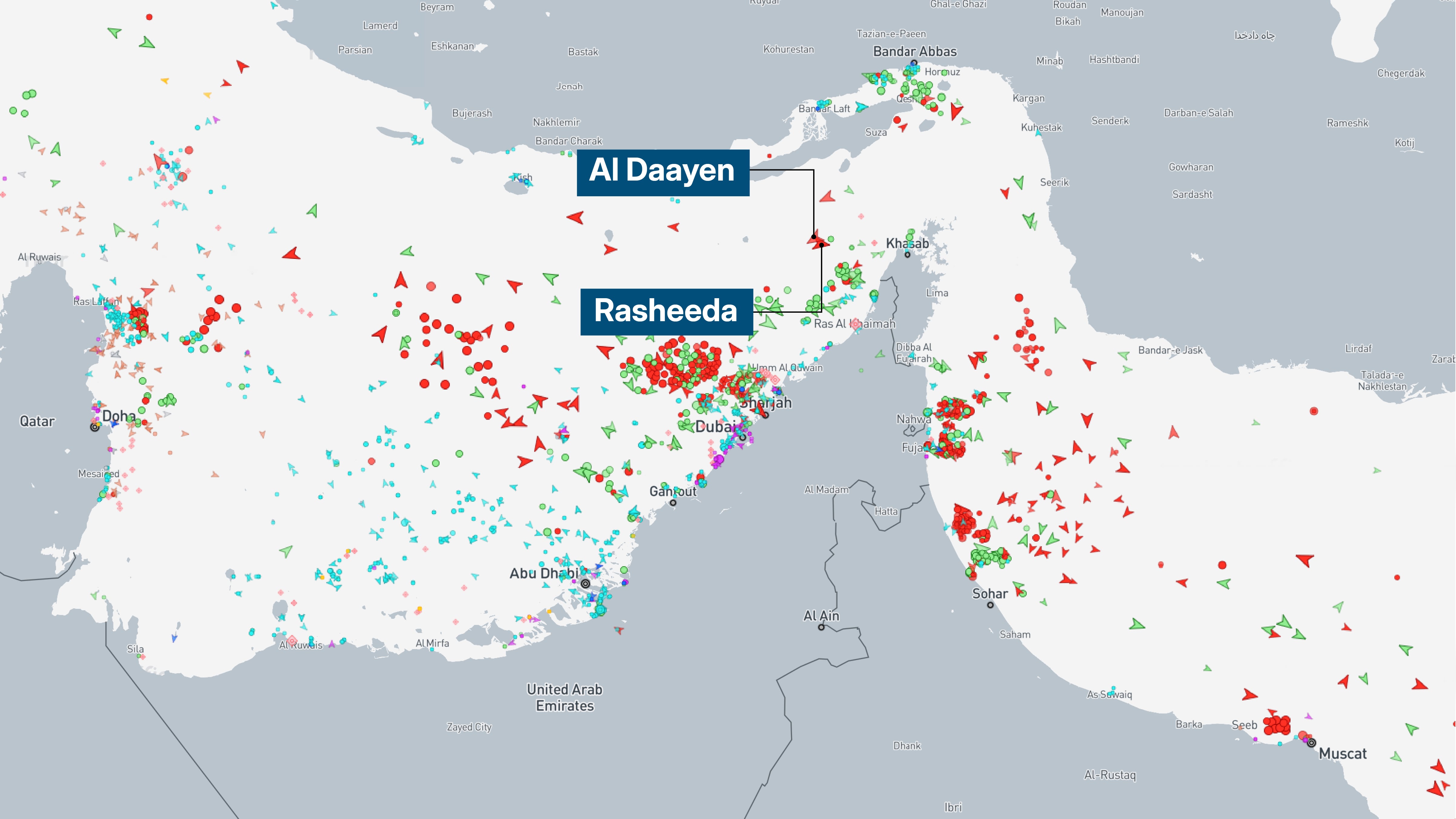


Two Qatari liquefied natural gas tankers aborted an attempted crossing of the Strait of Hormuz on Monday, dashing hopes of the first LNG shipments out of the Gulf since the war began.
The Marshall Islands-flagged Rasheeda and Bahamian-flagged Al Daayen turned back before they could complete the transit of the narrow waterway this afternoon.
The reversal underscores the gravity of Iran's effective blockade of Hormuz. A senior Iranian official said on Monday that while Tehran was reviewing a peace proposal, the strait would not be reopened as part of any temporary arrangement. Iran struck US forces on Kuwait's Bubiyan island earlier in the day, while the UAE intercepted 12 ballistic missiles, two cruise missiles and 19 drones.
Qatar accounts for about a fifth of global LNG supply and Iranian strikes on its infrastructure have already knocked an estimated 17 per cent of its export capacity offline for about five years. Any sustained closure of Hormuz to Qatari tankers would tighten an already constrained global LNG market, with ripple effects reaching buyers in Europe and Asia. Limited production is expected to cost Qatar about $20 billion annually.
The tankers’ aborted crossing mirrored an earlier one by two Cosco ultra-large container vessels – the CSCL Indian Ocean and CSCL Arctic Ocean. Both successfully crossed the strait on March 30 after aborting an earlier attempt on March 27, the first confirmed transit by a major container carrier since the start of the conflict on February 28. Iran has permitted passage for vessels from countries it designates as “friendly”, a list that includes China, India, Pakistan and Russia, among others.
The turnaround of Qatari tankers comes at a time when many countries in Asia, which are leading importers of LNG, are in the throes of a serious fuel crisis. Nearly half of India’s LNG intake has been anchored to Qatari supply. Many of those volumes are tied to long-term contracts with importers, including Petronet LNG, which operates large receiving terminals on India’s west coast. Reports suggest India has instructed its industry leaders to cut gas supply by 10 to 20 per cent since the loss of Qatari supply.

