
When a Saudi consortium led by utilities giant Acwa Power signed $8.3 billion in deals this July to build seven solar and wind projects across the kingdom, it marked more than just another line entry in the country’s growing clean energy portfolio.
The projects will add 15 gigawatts of new renewable capacity, suggesting that Saudi Arabia is committing serious money and scale to green energy.
But does this mean the world’s largest oil exporter is genuinely changing how it invests in energy? That question matters because oil still dominates the kingdom’s economy, with Saudi Arabia shipping more than 15 per cent of total global crude exports last year. Those petrodollars fill state coffers and provide the dry powder for its $940 billion sovereign wealth fund, the Public Investment Fund.
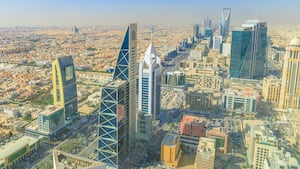
That foundation is not going anywhere. But the kingdom is looking to hedge its bets, by maximising oil revenues today and investing in clean energy, technology and industry to prepare for a future in which global demand for oil is expected to peak around 2030 and begin a steady decline.
Acwa Power deal
The Acwa Power deal is part of that strategy. It aligns with Saudi Arabia’s “green initiative”, a programme launched by Crown Prince Mohammed bin Salman in 2021 to curb the kingdom’s reliance on oil money and diversify its economy.
The deal also supports its ambitious target of generating 50 per cent of its electricity from renewable sources by 2030 − which would be a meteoric rise from 1 per cent in 2023. It should also go a way to helping the kingdom reach its longer-term goal of net-zero carbon emissions by 2060.
However, some see Saudi Arabia’s continued investment in fossil fuels as a contradiction that undermines the credibility of these climate pledges. The country contends that it needs to balance the realities of energy security with long-term decarbonisation.
That balance comes at a price. Major green projects require huge investment, even though Saudi Arabia can produce renewable energy at a fairly low cost, thanks to abundant sunshine and low-cost solar panels. The highest hurdle is the upfront investment.
For its part, the Public Investment Fund plays a big role in making that possible, by offering long-term contracts and financial support to reduce risk and attract private capital. Without that state backing, such projects are unlikely to be commercially viable, and private sector participation would be far harder to secure.
State support was central to the Acwa Power deal. The PIF and Aramco Power, a subsidiary of oil giant Saudi Aramco, joined the consortium that signed long-term contracts with the state electricity buyer to develop the five solar farms and two wind projects across the kingdom.
But even as deals like this move forward, the need for large-scale investment is only growing. Electricity demand in Saudi Arabia has grown rapidly for decades, fuelled by economic expansion, population growth and rising living standards, though the pace has eased slightly in recent years.
Households still account for nearly 50 per cent of total electricity use, with air-conditioning alone responsible for most of that − a necessity in summer months when temperatures can reach a scorching 50°C.
What's driving the demand?
However, other factors are also driving that demand, including the energy needs of water desalination (removing salt from seawater to produce fresh water), as well as heavy industry and digital infrastructure, as the kingdom looks to diversify its economy.
But meeting that demand still relies heavily on fossil fuels. At present, the country burns about one million barrels of oil equivalent each day to meet electricity needs. And that carries not just a financial cost, but a climate burden.
Those two pressures are precisely why Saudi Arabia is investing in renewable energy. The thinking is that by switching to solar and wind power, the kingdom can free up more oil to export. This boosts petrodollar revenues and slashes the kingdom’s scope 2 emissions simultaneously. It is a win-win.
This is where green finance comes into focus, and not just in Saudi Arabia but in the broader Middle East region. One way that countries finance their energy transitions is through issuing green bonds. And here, Saudi Arabia has fallen behind its neighbour, the UAE. In 2024, the Emirates issued $7.4 billion in green bonds, the highest in the region, compared to $5.6 billion from Saudi Arabia, according to S&P Global Ratings.
Yet when it comes to scale, Saudi Arabia is aiming far higher. It plans to build 130 gigawatts of renewable energy by 2030, nearly 10 times the UAE’s 14-gigawatt target.
Some may view this as a reputational play; an attempt to present Saudi Arabia as more than just an oil state. But that overlooks the economic logic behind it. This is not about walking away from fossil fuels. It is about risk management.
By investing in clean energy, the kingdom is hedging against a future where oil may lose value. It is not a leap of faith. It is a calculated move to use current oil revenues to maintain relevance in a changing global energy system.
That logic is reflected in the Acwa Power deal. It is not a green revolution, but it marks a shift in posture. Saudi Arabia is no longer experimenting at the edges of clean energy; it is now building at industrial scale.
Oil will remain central to the Saudi economy for years, but Riyadh is ensuring that when the world moves on, it will have more than crude to offer.
Karl Schmedders is professor of finance at IMD

Killing of Qassem Suleimani
The%20specs
%3Cp%3E%3Cstrong%3EEngine%3A%20%3C%2Fstrong%3E3.6-litre%2C%20V6%0D%3Cbr%3E%3Cstrong%3ETransmission%3A%20%3C%2Fstrong%3Eeight-speed%20auto%0D%3Cbr%3E%3Cstrong%3EPower%3A%20%3C%2Fstrong%3E285hp%0D%3Cbr%3E%3Cstrong%3ETorque%3A%20%3C%2Fstrong%3E353Nm%0D%3Cbr%3E%3Cstrong%3EPrice%3A%20%3C%2Fstrong%3EDh159%2C900%0D%3Cbr%3E%3Cstrong%3EOn%20sale%3A%20%3C%2Fstrong%3Enow%3C%2Fp%3E%0A
The President's Cake
Director: Hasan Hadi
Starring: Baneen Ahmad Nayyef, Waheed Thabet Khreibat, Sajad Mohamad Qasem
Rating: 4/5
The five pillars of Islam
AIDA%20RETURNS
%3Cp%3E%3Cstrong%3EDirector%3A%20%3C%2Fstrong%3ECarol%20Mansour%3C%2Fp%3E%0A%3Cp%3E%3Cstrong%3EStarring%3A%20%3C%2Fstrong%3EAida%20Abboud%2C%20Carol%20Mansour%3C%2Fp%3E%0A%3Cp%3E%3Cstrong%3ERating%3A%3C%2Fstrong%3E%203.5.%2F5%3C%2Fp%3E%0A
VEZEETA PROFILE
Date started: 2012
Founder: Amir Barsoum
Based: Dubai, UAE
Sector: HealthTech / MedTech
Size: 300 employees
Funding: $22.6 million (as of September 2018)
Investors: Technology Development Fund, Silicon Badia, Beco Capital, Vostok New Ventures, Endeavour Catalyst, Crescent Enterprises’ CE-Ventures, Saudi Technology Ventures and IFC
Company%20profile
%3Cp%3EName%3A%20Tabby%3Cbr%3EFounded%3A%20August%202019%3B%20platform%20went%20live%20in%20February%202020%3Cbr%3EFounder%2FCEO%3A%20Hosam%20Arab%2C%20co-founder%3A%20Daniil%20Barkalov%3Cbr%3EBased%3A%20Dubai%2C%20UAE%3Cbr%3ESector%3A%20Payments%3Cbr%3ESize%3A%2040-50%20employees%3Cbr%3EStage%3A%20Series%20A%3Cbr%3EInvestors%3A%20Arbor%20Ventures%2C%20Mubadala%20Capital%2C%20Wamda%20Capital%2C%20STV%2C%20Raed%20Ventures%2C%20Global%20Founders%20Capital%2C%20JIMCO%2C%20Global%20Ventures%2C%20Venture%20Souq%2C%20Outliers%20VC%2C%20MSA%20Capital%2C%20HOF%20and%20AB%20Accelerator.%3Cbr%3E%3C%2Fp%3E%0A
Mercer, the investment consulting arm of US services company Marsh & McLennan, expects its wealth division to at least double its assets under management (AUM) in the Middle East as wealth in the region continues to grow despite economic headwinds, a company official said.
Mercer Wealth, which globally has $160 billion in AUM, plans to boost its AUM in the region to $2-$3bn in the next 2-3 years from the present $1bn, said Yasir AbuShaban, a Dubai-based principal with Mercer Wealth.
“Within the next two to three years, we are looking at reaching $2 to $3 billion as a conservative estimate and we do see an opportunity to do so,” said Mr AbuShaban.
Mercer does not directly make investments, but allocates clients’ money they have discretion to, to professional asset managers. They also provide advice to clients.
“We have buying power. We can negotiate on their (client’s) behalf with asset managers to provide them lower fees than they otherwise would have to get on their own,” he added.
Mercer Wealth’s clients include sovereign wealth funds, family offices, and insurance companies among others.
From its office in Dubai, Mercer also looks after Africa, India and Turkey, where they also see opportunity for growth.
Wealth creation in Middle East and Africa (MEA) grew 8.5 per cent to $8.1 trillion last year from $7.5tn in 2015, higher than last year’s global average of 6 per cent and the second-highest growth in a region after Asia-Pacific which grew 9.9 per cent, according to consultancy Boston Consulting Group (BCG). In the region, where wealth grew just 1.9 per cent in 2015 compared with 2014, a pickup in oil prices has helped in wealth generation.
BCG is forecasting MEA wealth will rise to $12tn by 2021, growing at an annual average of 8 per cent.
Drivers of wealth generation in the region will be split evenly between new wealth creation and growth of performance of existing assets, according to BCG.
Another general trend in the region is clients’ looking for a comprehensive approach to investing, according to Mr AbuShaban.
“Institutional investors or some of the families are seeing a slowdown in the available capital they have to invest and in that sense they are looking at optimizing the way they manage their portfolios and making sure they are not investing haphazardly and different parts of their investment are working together,” said Mr AbuShaban.
Some clients also have a higher appetite for risk, given the low interest-rate environment that does not provide enough yield for some institutional investors. These clients are keen to invest in illiquid assets, such as private equity and infrastructure.
“What we have seen is a desire for higher returns in what has been a low-return environment specifically in various fixed income or bonds,” he said.
“In this environment, we have seen a de facto increase in the risk that clients are taking in things like illiquid investments, private equity investments, infrastructure and private debt, those kind of investments were higher illiquidity results in incrementally higher returns.”
The Abu Dhabi Investment Authority, one of the largest sovereign wealth funds, said in its 2016 report that has gradually increased its exposure in direct private equity and private credit transactions, mainly in Asian markets and especially in China and India. The authority’s private equity department focused on structured equities owing to “their defensive characteristics.”
Opening day UAE Premiership fixtures, Friday, September 22:
- Dubai Sports City Eagles v Dubai Exiles
- Dubai Hurricanes v Abu Dhabi Saracens
- Jebel Ali Dragons v Abu Dhabi Harlequins
AndhaDhun
Director: Sriram Raghavan
Producer: Matchbox Pictures, Viacom18
Cast: Ayushmann Khurrana, Tabu, Radhika Apte, Anil Dhawan
Rating: 3.5/5
The five pillars of Islam
SQUADS
Bangladesh (from): Shadman Islam, Mominul Haque, Soumya Sarkar, Shakib Al Hasan (capt), Mahmudullah Riyad, Mohammad Mithun, Mushfiqur Rahim, Liton Das, Taijul Islam, Mosaddek Hossain, Nayeem Hasan, Mehedi Hasan, Taskin Ahmed, Ebadat Hossain, Abu Jayed
Afghanistan (from): Rashid Khan (capt), Ihsanullah Janat, Javid Ahmadi, Ibrahim Zadran, Rahmat Shah, Hashmatullah Shahidi, Asghar Afghan, Ikram Alikhil, Mohammad Nabi, Qais Ahmad, Sayed Ahmad Shirzad, Yamin Ahmadzai, Zahir Khan Pakteen, Afsar Zazai, Shapoor Zadran
EA Sports FC 24
The alternatives
• Founded in 2014, Telr is a payment aggregator and gateway with an office in Silicon Oasis. It’s e-commerce entry plan costs Dh349 monthly (plus VAT). QR codes direct customers to an online payment page and merchants can generate payments through messaging apps.
• Business Bay’s Pallapay claims 40,000-plus active merchants who can invoice customers and receive payment by card. Fees range from 1.99 per cent plus Dh1 per transaction depending on payment method and location, such as online or via UAE mobile.
• Tap started in May 2013 in Kuwait, allowing Middle East businesses to bill, accept, receive and make payments online “easier, faster and smoother” via goSell and goCollect. It supports more than 10,000 merchants. Monthly fees range from US$65-100, plus card charges of 2.75-3.75 per cent and Dh1.2 per sale.
• 2checkout’s “all-in-one payment gateway and merchant account” accepts payments in 200-plus markets for 2.4-3.9 per cent, plus a Dh1.2-Dh1.8 currency conversion charge. The US provider processes online shop and mobile transactions and has 17,000-plus active digital commerce users.
• PayPal is probably the best-known online goods payment method - usually used for eBay purchases - but can be used to receive funds, providing everyone’s signed up. Costs from 2.9 per cent plus Dh1.2 per transaction.
BUNDESLIGA FIXTURES
Friday (UAE kick-off times)
Borussia Dortmund v Paderborn (11.30pm)
Saturday
Bayer Leverkusen v SC Freiburg (6.30pm)
Werder Bremen v Schalke (6.30pm)
Union Berlin v Borussia Monchengladbach (6.30pm)
Eintracht Frankfurt v Wolfsburg (6.30pm)
Fortuna Dusseldof v Bayern Munich (6.30pm)
RB Leipzig v Cologne (9.30pm)
Sunday
Augsburg v Hertha Berlin (6.30pm)
Hoffenheim v Mainz (9pm)
UAE currency: the story behind the money in your pockets
Desert Warrior
Starring: Anthony Mackie, Aiysha Hart, Ben Kingsley
Director: Rupert Wyatt
Rating: 3/5
More from Neighbourhood Watch
The White Lotus: Season three
Creator: Mike White
Starring: Walton Goggins, Jason Isaacs, Natasha Rothwell
Rating: 4.5/5
UAE Premiership
Results
Dubai Exiles 24-28 Jebel Ali Dragons
Abu Dhabi Harlequins 43-27 Dubai Hurricanes
Final
Abu Dhabi Harlequins v Jebel Ali Dragons, Friday, March 29, 5pm at The Sevens, Dubai
The specs
Engine: 1.5-litre turbo
Power: 181hp
Torque: 230Nm
Transmission: 6-speed automatic
Starting price: Dh79,000
On sale: Now
Dhadak
Director: Shashank Khaitan
Starring: Janhvi Kapoor, Ishaan Khattar, Ashutosh Rana
Stars: 3
COMPANY%20PROFILE
%3Cp%3E%3Cstrong%3ECompany%3A%20%3C%2Fstrong%3EMascotte%20Health%3C%2Fp%3E%0A%3Cp%3E%3Cstrong%3EStarted%3A%20%3C%2Fstrong%3E2023%3C%2Fp%3E%0A%3Cp%3E%3Cstrong%3EBased%3A%20%3C%2Fstrong%3EMiami%2C%20US%3C%2Fp%3E%0A%3Cp%3E%3Cstrong%3EFounder%3A%3C%2Fstrong%3E%20Bora%20Hamamcioglu%3C%2Fp%3E%0A%3Cp%3E%3Cstrong%3ESector%3A%20%3C%2Fstrong%3EOnline%20veterinary%20service%20provider%3C%2Fp%3E%0A%3Cp%3E%3Cstrong%3EInvestment%20stage%3A%3C%2Fstrong%3E%20%241.2%20million%20raised%20in%20seed%20funding%3C%2Fp%3E%0A
