


Live updates: Follow the latest on Israel-Iran conflict
The Israel-Iran confrontation has entered a perilous new phase. Reported Israeli military attacks on Iran’s gas sites put energy targets in the crosshairs. Global energy markets might escape crisis this time, but the margin of safety is getting ever narrower.
An onshore site of Phase 14 of the South Pars gasfield, Iran’s largest, in the Gulf industrial city of Assaluyeh, was struck, causing an explosion and fire. Iranian news agency Tasnim reported that 12 million cubic metres of gas production a day was halted. The Fajr Jam gas processing plant, near Bushehr, suffered from apparent drone attacks. Phase 14 processes 18.3 billion cubic metres of gas a year and Fajr Jam 20 bcm; the reported damage to the two amounts to about a tenth of Iran’s gas output.
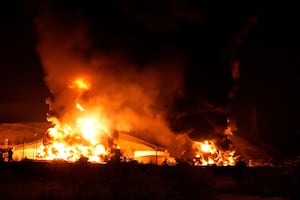
Israeli military attacks have also destroyed petrol depots near Tehran. Iran denied reports that the Tabriz refinery was damaged but the Shahr Rey oil refinery south of Tehran was reported to be on fire. In response, an Iranian missile was reported to have hit Israel’s Bazan oil refinery in the port of Haifa. As already seen in the Russia-Ukraine war, any taboo about attacking civil infrastructure is long gone.
Oil prices climbed by more than $7 per barrel on the initial news of the air strikes. European natural gas prices are up less than 5 per cent. No doubt they will rise again when markets re-open on Monday. But so far, this remains a moderate response. Crude prices are not yet back to the level on April 2, just before the announcement of US President Donald Trump’s massive tariffs and the increase in production by Opec+.
So far, Israel’s energy targets appear to be those that serve the domestic market: gas, petrol terminals and oil refineries. It is early summer, and not the peak winter demand season. Still, Iran was already struggling with serious gas and electricity shortages. Exports to Turkey may be affected, but Ankara is already familiar with the unreliability of Iranian supplies, and can increase imports from Russia or buy more liquefied natural gas. Iraq relies on Iranian gas, but it was already facing a cut-off as the US tightened pressure on Baghdad.
So far, Israel has stayed away from sites that directly serve the international market, notably the Kharg oil export terminal in the northern Gulf. This enables Israel to evade immediate responsibility for causing a worldwide energy crisis.
Iran’s oil exports, nearly all to China, are about 1.5 million barrels per day. If they were completely cut off, whether by a US blockade or direct Israeli strikes on Kharg and other oil sites, the volumes could quite easily be replaced by the spare capacity in Saudi Arabia, the UAE and elsewhere – assuming that Tehran does not retaliate, a risky assumption.
-
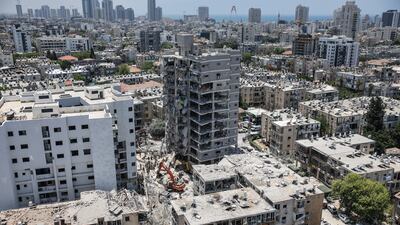
Damaged buildings are seen following a missile attack from Iran, in Bat Yam, Israel, June 15, 2025. REUTERS / Ronen Zvulun -
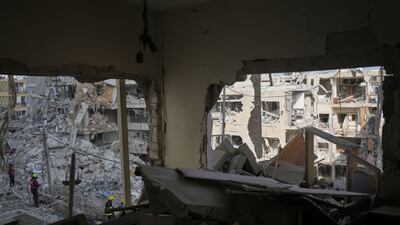
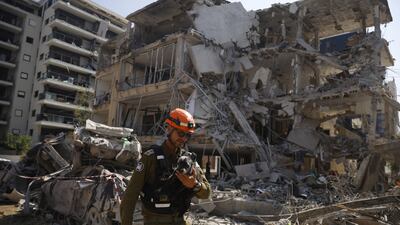
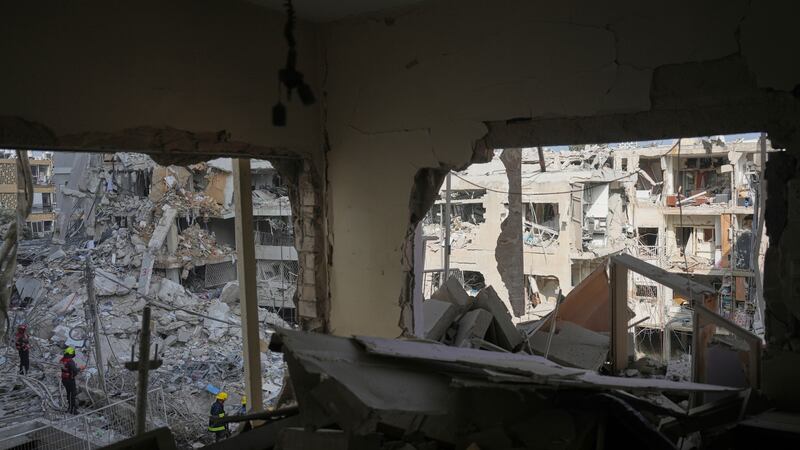
Israeli soldiers search for survivors amid the rubble of residential buildings destroyed by an Iranian missile strike in Bat Yam, central Israel, on Sunday, June 15, 2025. (AP Photo / Ariel Schalit) -
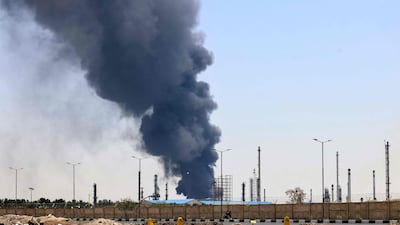
A plume of heavy smoke and fire rise over an oil refinery in southern Tehran, after it was hit in an overnight Israeli strike, on June 15, 2025. Iran fired a fresh barrage of missiles at Israel, state television announced early on June 15, as the rivals exchanged fire for a third day. (Photo by ATTA KENARE / AFP) -
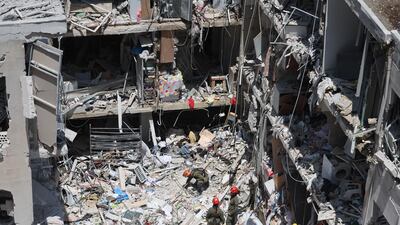
Members of Israel's Home Front Command search for missing people under the rubble of a partially collapsed residential building after Iranian ballistic missiles hit Bat Yam, central Israel, 15 June 2025. Iran launched a barrage of ballistic missiles at Israel overnight in retaliation for Israeli airstrikes on Iranian targets. Magen David Adom (MDA), Israel's national emergency services, reported at least six killed and dozens injured, including two in critical condition. EPA / ABIR SULTAN -
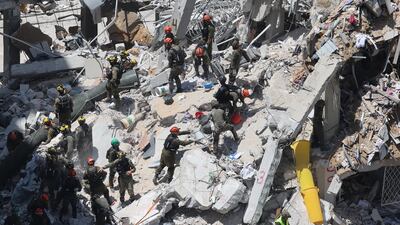
Members of Israel's Home Front Command search for missing people under the rubble of a partially collapsed residential building after Iranian ballistic missiles hit Bat Yam, central Israel, 15 June 2025. Iran launched a barrage of ballistic missiles at Israel overnight in retaliation for Israeli airstrikes on Iranian targets. Magen David Adom (MDA), Israel's national emergency services, reported at least six killed and dozens injured, including two in critical condition. EPA / ABIR SULTAN -
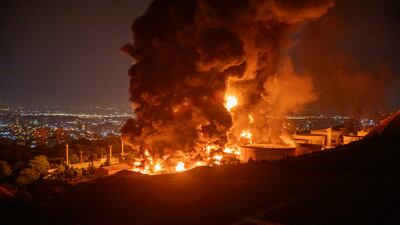
TEHRAN, IRAN - JUNE 15: Fire and smoke rise into the sky after an Israeli attack on the Shahran oil depot on June 15, 2025 in Tehran, Iran. Iran's foreign minister said the country would respond decisively and proportionally to a wave of attacks that Israel launched beginning in the early hours of June 13. The attacks targeted multiple military, scientific and residential locations, as well as senior government officials. (Photo by Stringer / Getty Images) -
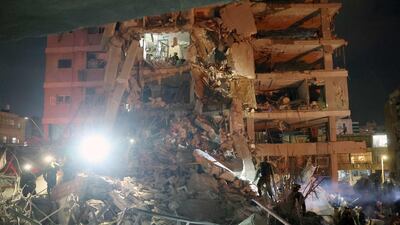
Responders work beside a damaged building following an Iranian ballistic missile attack in the Israeli city of Bat Yam, south of Tel Aviv, on June 15, 2025. Air raid sirens rang out in Jerusalem and Tel Aviv, AFP journalists said, as Israel and Iran exchanged fire for a third day. AFP -
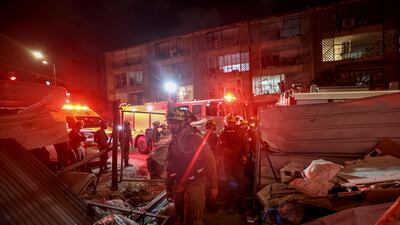
Israeli rescue teams work at the scene where Iranian ballistic missiles hit residential buildings in Bat Yam. According to emergency service Magen David Adom, paramedics pronounced the death of a woman about 60 years old and provided medical care to a total of 65 injured. EPA -

Israeli rescue teams work at the scene. EPA -
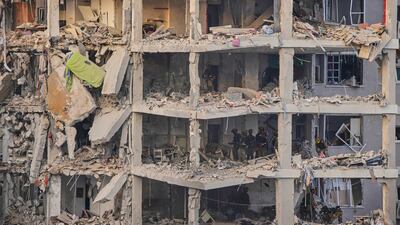
Israeli security troops inspect a destroyed building that was hit by a missile fired from Iran, near Tel Aviv. AP -

Responders take a person on a stretcher following a strike by an Iranian missile in Bat Yam. AFP -
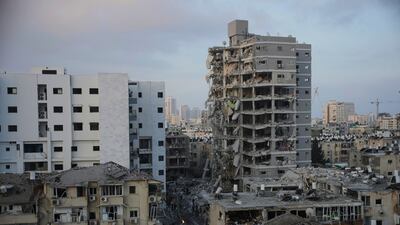
Israeli security troops inspect destroyed buildings that were hit by a missile fired from Iran, near Tel Aviv. AP -
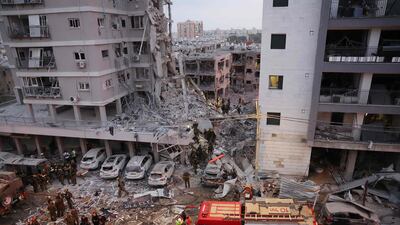
Responders work amid building rubble following a strike by an Iranian missile in Bat Yam. AFP -
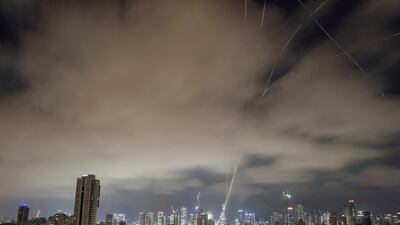
Missiles launched from Iran towards Israel are intercepted. Reuters -
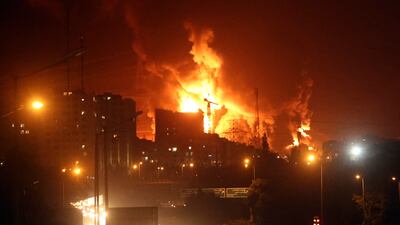
Fire and smoke at Tehran's oil warehouse in Iran. The Israeli army is continuing its strikes on Iran's nuclear programme and energy sites. EPA -
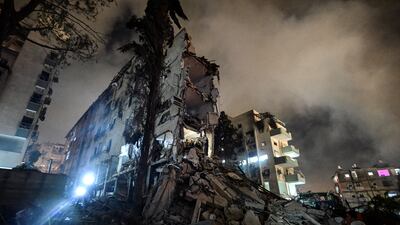
Rescue personel work at a residential building following missile attack from Iran on Israel, at central Israel June 15, 2025. REUTERS/Yossi Zeliger ISRAEL OUT. NO COMMERCIAL OR EDITORIAL SALES IN ISRAEL -
An emergency worker carries a dog rescued from a building damaged in an overnight strike on June 14, 2025 in Ramat Gan, Israel. Getty Images -
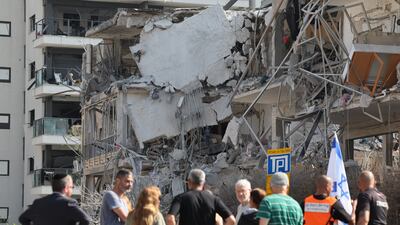
People look at the damage to residential building after a ballistic missile strike in Ramat Gan, near Tel Aviv, Israel. EPA -

Emergency and rescue workers on site at a building in Ramat Gan, Israel. Getty Images -

A rescue worker carries a dog away from a bombed building in Ramat Gan, Israel. Reuters -
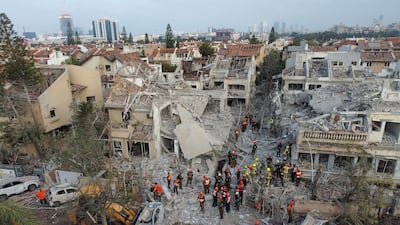
Israeli rescue teams at the site of an Iranian ballistic missile strike on residential Rishon LeZion, near Tel Aviv, where 21 people were injured. EPA -

Rescue teams surrounded by gutted vehicles at a missile impact site in Rishon LeZion, Tel Aviv, on June 14, 2025. Reuters -
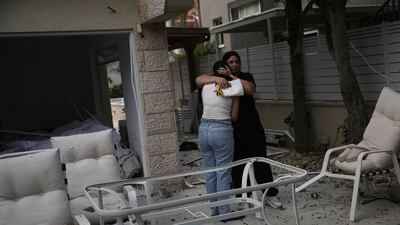
Householders in Rishon LeZion look over the damage to their home. AP Photo -
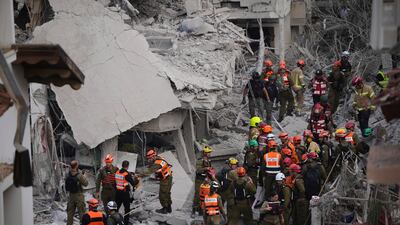
Damage assessments in daylight at Rishon LeZion after a wave of Iranian missiles hit. AP Photo -
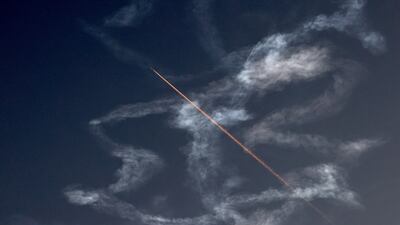
Israel's Iron Dome air defence system is sent to intercept a projectile over the West Bank city of Nablus on June 14. EPA -
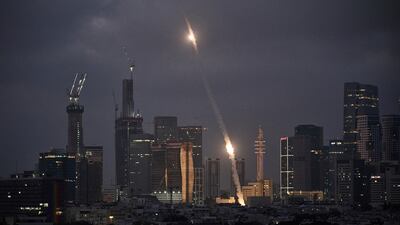
Air defences in action against missiles over Tel Aviv on June 14, 2025. AP Photo



The crucial question is where things go from here. The stated Israeli goal of eliminating Iran’s nuclear programme appears unrealistic; it may be set back, but destruction is not feasible without American involvement. No doubt Israel hopes the US will be sucked in. Even then, the lesson of recent years – Ukraine and Libya contrasted to North Korea and Pakistan – is that those who give up their nuclear weapons are attacked with impunity by those who have them.
Israeli Prime Minister Benjamin Netanyahu’s other suggested goal, of toppling the Islamic Republic, is even less plausible. Yes, the regime of Iranian supreme leader Ayatollah Ali Khamenei is repressive and unpopular. Its incompetence in one area where it should be capable has been unmasked by Israel’s successes so far, first in severely mauling Hezbollah, then in striking the Iran homeland directly with impunity.
But Iranians have deep memories, personal or learnt, of the resistance to Saddam Hussein’s invasion, which also featured extensive bombing of urban areas. Neither democratic nor authoritarian regimes are overthrown by air campaigns alone.
Even a new leadership, perhaps a secular nationalist one, would now seriously have to consider acquiring nuclear weapons. The former Shah, ousted in the 1979 Revolution, himself said, “If small states began building them, Iran might have to reconsider its policy [of not acquiring nuclear weapons]”.
American diplomacy has been exposed as duplicitous or ineffectual or both. With China wisely sitting out and Russia untrustworthy and stuck in its own war, there is no honest broker at hand. So, it is hard to imagine Iranian diplomats sitting down seriously again to negotiate a halt to their nuclear programme. That would look like a surrender under duress similar to the reviled treaties of Turkmenchay and Golestan that gave up much of Iran’s territory to Russia in the early 19th century.
It seems much less likely that Tehran can do as it did in April last year, launching a few face-saving retaliations against Israel and then reaching a ceasefire. Top regime individuals have been killed, military and nuclear sites have suffered damage. Israel will not want to give a respite to Iran to rebuild air defences and harden crucial sites.
Iran does not seem to have the ability to launch a really devastating attack on Israel either, and if it did, it would be met with further reprisal and probably draw in the US. But Tehran also seems unwilling to sit idly by while it is pummelled.
This draws attention to energy targets elsewhere. Mr Trump is acutely sensitive to higher oil prices and inflation. About 20 million barrels of oil and products per day goes through the famous Strait of Hormuz. This includes virtually all the spare production capacity in the Opec+ countries, other than Russia.
Saudi Arabia can divert up to 5 million bpd to the Red Sea, though that brings its own problems. More than half of the UAE’s exports, or about 1.8 million bpd, go through a pipeline to Fujairah, outside the strait but still potentially vulnerable. Iraq is mostly friendly to Iran, but its 3.3 million barrels of exports through the Gulf could easily be interrupted by “accidents”.
Europe, having lost most Russian gas supplies, would be acutely worried about another interruption. About 82 million tonnes of liquefied natural gas, a fifth of global supply, came from the Gulf last year, mostly from Qatar. For Russian President Vladimir Putin, this crisis could bail out his troubled war economy, and bring political gains.
Simply-equipped Houthi troops have been able to shut down most shipping through the southern Red Sea, and have not been prevented by US naval escorts and missile strikes. Iran’s planned responses have probably been severely disrupted by the killing of so many of the top brass, but as war so often demonstrates, it is an error to underestimate your enemy forever.
Attacking energy sites or shipments could be one point of leverage for Tehran. It would be very risky. It would cut off its own oil exports, assuming they have not already been disrupted. It would anger China, which brokered the Iran-Saudi rapprochement in March 2023 with a major aim of safeguarding energy supplies. But the remaining Iranian regime may conclude that caution and restraint have not paid off for them so far, despite the calls for calm.
Robin M. Mills is chief executive of Qamar Energy, and author of The Myth of the Oil Crisis

