Global renewable energy deployment set a record in 2023 as transition efforts continued, but it fell short of levels required to triple capacity by 2030, according to the International Renewable Energy Agency (Irena).
Renewable energy capacity in the power sector grew by 473 gigawatts from 2022 to 3,870 gigawatts last year, the Abu Dhabi-based agency said in a report on Wednesday.
Although renewables accounted for 86 per cent of total capacity additions in the energy sector globally, compared to 84 per cent in 2022, the growth was unevenly distributed across the world, the agency said.
“This extraordinary surge in renewable generation capacity shows that renewables are the only technology available to rapidly scale up the energy transition aligned with the goals of the Paris Agreement,” said Francesco La Camera, Irena’s director-general.
“Nevertheless, the data also serves as a telltale sign that progress is not moving fast enough to add the required 7.2 terawatts of renewable power within the next seven years,” Mr La Camera added.
The Middle East last year recorded its highest renewable capacity expansion on record, up 16.6 per cent annually, with 5.1 gigawatts of new capacity commissioned last year.
Total capacity is currently at 36 gigawatts, with the region accounting for 0.9 per cent global share.
Overall, Asia accounted for the biggest expansion of renewable energy capacity last year, making up about 69 per cent of the total increase.
The region grew its renewable capacity by 327.8 gigawatts to reach 1,961 gigawatts, accounting for 50.7 per cent of the global total.
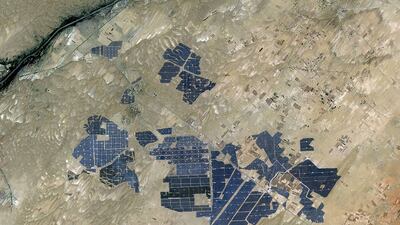
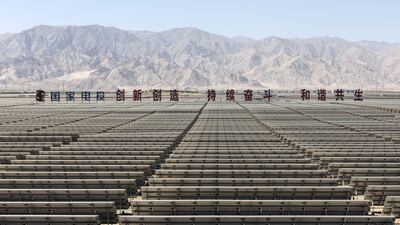
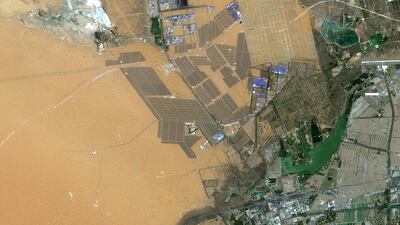
China, the world’s second-largest economy, played a significant role in this expansion, with its capacity increasing by 63 per cent to reach about 298 gigawatts.
The rising competitiveness of solar and wind energy compared with coal and natural gas has driven renewable power development in the country, Irena said.
Capacity in Europe and North America expanded by 71.2 gigawatts (up 10 per cent) and 34.9 gigawatts (up 7 per cent), respectively.
Renewable energy capacity growth in the EU was supported by policy focus and energy security concerns, alongside the improving cost-competitiveness of renewables versus fossil fuels, Irena said.
As a group, the G7 countries increased their capacity by 7.6 per cent, adding 69.4 gigawatts last year. Meanwhile, the G20 nations boosted their capacity by 15 per cent, reaching 3,084 gigawatts.
Oceania's installed capacity increased by 9.4 per cent, largely due to Australia, while South America reported expansion of 8.4 per cent annually.
Africa also recorded modest renewable energy capacity increase of 4.6 per cent, resulting in a total capacity of 62 gigawatts.
Financing renewable energy projects is considered challenging in Africa due to limited access to capital, high upfront costs and perceived investment risks.
Africa requires $2.8 trillion between 2020 and 2030 to implement its nationally determined contributions under the Paris Agreement, according to the Climate Policy Initiative.
“Policy interventions and a global course-correction are urgently needed to effectively overcome structural barriers and create local value in emerging market and developing economies,” Mr La Camera said.
“The patterns of concentration in both geography and technology threaten to intensify the decarbonisation divide and pose a significant risk to achieving the tripling target,” he added.
However, to achieve the global target of more than 11 terawatts for the tripling goal, the G20 members alone must reach 9.4 TW of renewable power capacity by 2030, the report said.
At the Cop28 climate conference in Dubai last year, more than 100 countries committed to triple renewable energy capacity worldwide by the end of the decade and double the annual rate of energy efficiency improvements.
However, China and India – two of Asia's largest economies – refrained from signing the pledge.
The countries also did not agree with initial drafts of the final agreement that included curbs on investments in coal-fired power plants.
The delegates ultimately settled on a milder agreement to “accelerate efforts towards the phase-down of unabated coal power”.
Although India and China – two of the most populous countries in the world – have set ambitious clean energy targets, they intend to rely on coal for the longer-term to meet growing power demand.
Coal accounts for around three-quarters of India's power generation and nearly 61 per cent of China's.
Renewable energy is set to make up more than one-third of total electricity generation by early 2025, overtaking coal, according to the International Energy Agency.
Global power demand will grow at a faster rate over the next three years as the energy transition gathers pace, with low-emission technologies expected to meet the additional increase in consumption, the Paris-based agency said in its Electricity 2024 report in January.
Earlier this year, the IEA said that the rate of expansion of global renewable energy capacity surged by 50 per cent in 2023, with solar accounting for three-quarters of the growth.
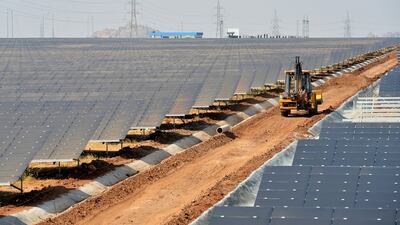
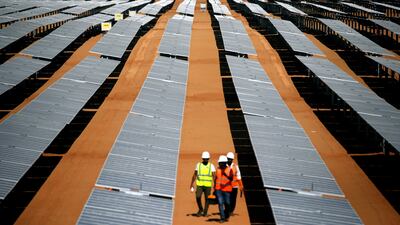
According to Irena, solar accounted for 73 per cent of the renewable growth last year, reaching 1,419 gigawatts, followed by wind power with a 24 per cent share.

RACE CARD
6.30pm Maiden Dh165,000 (Dirt) 1,200
7.05pm Handicap Dh165,000 (D) 1,600m
7.40pm Maiden Dh165,000 (D) 1,600m
8.15pm Handicap Dh190,000 (D) 1,600m
8.50pm Handicap Dh175,000 (D) 1,400m
9.25pm Handicap Dh175,000 (D) 2,000m
The National selections:
6.30pm Underwriter
7.05pm Rayig
7.40pm Torno Subito
8.15pm Talento Puma
8.50pm Etisalat
9.25pm Gundogdu
MISSION: IMPOSSIBLE – FINAL RECKONING
Director: Christopher McQuarrie
Starring: Tom Cruise, Hayley Atwell, Simon Pegg
Rating: 4/5
GRAN%20TURISMO
%3Cp%3E%3Cstrong%3EDirector%3A%3C%2Fstrong%3E%20Neill%20Blomkamp%3C%2Fp%3E%0A%3Cp%3E%3Cstrong%3EStars%3A%3C%2Fstrong%3E%20David%20Harbour%2C%20Orlando%20Bloom%2C%20Archie%20Madekwe%2C%20Darren%20Barnet%3C%2Fp%3E%0A%3Cp%3E%3Cstrong%3ERating%3A%3C%2Fstrong%3E%203%2F5%3C%2Fp%3E%0A
ALRAWABI%20SCHOOL%20FOR%20GIRLS
%3Cp%3ECreator%3A%20Tima%20Shomali%3C%2Fp%3E%0A%3Cp%3EStarring%3A%C2%A0Tara%20Abboud%2C%C2%A0Kira%20Yaghnam%2C%20Tara%20Atalla%3C%2Fp%3E%0A%3Cp%3ERating%3A%204%2F5%3C%2Fp%3E%0A
MATCH INFO
Chelsea 3 (Abraham 11', 17', 74')
Luton Town 1 (Clark 30')
Man of the match Abraham (Chelsea)
How to wear a kandura
Dos
- Wear the right fabric for the right season and occasion
- Always ask for the dress code if you don’t know
- Wear a white kandura, white ghutra / shemagh (headwear) and black shoes for work
- Wear 100 per cent cotton under the kandura as most fabrics are polyester
Don’ts
- Wear hamdania for work, always wear a ghutra and agal
- Buy a kandura only based on how it feels; ask questions about the fabric and understand what you are buying
What can you do?
Document everything immediately; including dates, times, locations and witnesses
Seek professional advice from a legal expert
You can report an incident to HR or an immediate supervisor
You can use the Ministry of Human Resources and Emiratisation’s dedicated hotline
In criminal cases, you can contact the police for additional support
Guardians%20of%20the%20Galaxy%20Vol%203
%3Cp%3E%3Cstrong%3EDirector%3A%20%3C%2Fstrong%3EJames%20Gunn%3C%2Fp%3E%0A%3Cp%3E%3Cstrong%3EStars%3A%3C%2Fstrong%3E%20Chris%20Pratt%2C%20Zoe%20Saldana%2C%20Dave%20Bautista%2C%20Vin%20Diesel%2C%20Bradley%20Cooper%3C%2Fp%3E%0A%3Cp%3E%3Cstrong%3ERating%3A%3C%2Fstrong%3E%204%2F5%3C%2Fp%3E%0A
Our family matters legal consultant
Name: Hassan Mohsen Elhais
Position: legal consultant with Al Rowaad Advocates and Legal Consultants.
WHAT IS A BLACK HOLE?
1. Black holes are objects whose gravity is so strong not even light can escape their pull
2. They can be created when massive stars collapse under their own weight
3. Large black holes can also be formed when smaller ones collide and merge
4. The biggest black holes lurk at the centre of many galaxies, including our own
5. Astronomers believe that when the universe was very young, black holes affected how galaxies formed
COMPANY%20PROFILE
%3Cp%3E%3Cstrong%3EName%3A%20%3C%2Fstrong%3ESmartCrowd%0D%3Cbr%3E%3Cstrong%3EStarted%3A%20%3C%2Fstrong%3E2018%0D%3Cbr%3E%3Cstrong%3EFounder%3A%20%3C%2Fstrong%3ESiddiq%20Farid%20and%20Musfique%20Ahmed%0D%3Cbr%3E%3Cstrong%3EBased%3A%20%3C%2Fstrong%3EDubai%0D%3Cbr%3E%3Cstrong%3ESector%3A%20%3C%2Fstrong%3EFinTech%20%2F%20PropTech%0D%3Cbr%3E%3Cstrong%3EInitial%20investment%3A%20%3C%2Fstrong%3E%24650%2C000%0D%3Cbr%3E%3Cstrong%3ECurrent%20number%20of%20staff%3A%3C%2Fstrong%3E%2035%0D%3Cbr%3E%3Cstrong%3EInvestment%20stage%3A%20%3C%2Fstrong%3ESeries%20A%0D%3Cbr%3E%3Cstrong%3EInvestors%3A%20%3C%2Fstrong%3EVarious%20institutional%20investors%20and%20notable%20angel%20investors%20(500%20MENA%2C%20Shurooq%2C%20Mada%2C%20Seedstar%2C%20Tricap)%3C%2Fp%3E%0A
The five pillars of Islam
Turkish Ladies
Various artists, Sony Music Turkey
Tamkeen's offering
- Option 1: 70% in year 1, 50% in year 2, 30% in year 3
- Option 2: 50% across three years
- Option 3: 30% across five years
COMPANY%20PROFILE
%3Cp%3E%3Cstrong%3EName%3A%20%3C%2Fstrong%3EYango%20Deli%20Tech%0D%3Cbr%3E%3Cstrong%3EBased%3A%20%3C%2Fstrong%3EUAE%0D%3Cbr%3E%3Cstrong%3ELaunch%20year%3A%20%3C%2Fstrong%3E2022%0D%3Cbr%3E%3Cstrong%3ESector%3A%20%3C%2Fstrong%3ERetail%20SaaS%0D%3Cbr%3E%3Cstrong%3EFunding%3A%20%3C%2Fstrong%3ESelf%20funded%0D%3Cbr%3E%3C%2Fp%3E%0A
White hydrogen: Naturally occurring hydrogen
Chromite: Hard, metallic mineral containing iron oxide and chromium oxide
Ultramafic rocks: Dark-coloured rocks rich in magnesium or iron with very low silica content
Ophiolite: A section of the earth’s crust, which is oceanic in nature that has since been uplifted and exposed on land
Olivine: A commonly occurring magnesium iron silicate mineral that derives its name for its olive-green yellow-green colour
Who are the Sacklers?
The Sackler family is a transatlantic dynasty that owns Purdue Pharma, which manufactures and markets OxyContin, one of the drugs at the centre of America's opioids crisis. The family is well known for their generous philanthropy towards the world's top cultural institutions, including Guggenheim Museum, the National Portrait Gallery, Tate in Britain, Yale University and the Serpentine Gallery, to name a few. Two branches of the family control Purdue Pharma.
Isaac Sackler and Sophie Greenberg were Jewish immigrants who arrived in New York before the First World War. They had three sons. The first, Arthur, died before OxyContin was invented. The second, Mortimer, who died aged 93 in 2010, was a former chief executive of Purdue Pharma. The third, Raymond, died aged 97 in 2017 and was also a former chief executive of Purdue Pharma.
It was Arthur, a psychiatrist and pharmaceutical marketeer, who started the family business dynasty. He and his brothers bought a small company called Purdue Frederick; among their first products were laxatives and prescription earwax remover.
Arthur's branch of the family has not been involved in Purdue for many years and his daughter, Elizabeth, has spoken out against it, saying the company's role in America's drugs crisis is "morally abhorrent".
The lawsuits that were brought by the attorneys general of New York and Massachussetts named eight Sacklers. This includes Kathe, Mortimer, Richard, Jonathan and Ilene Sackler Lefcourt, who are all the children of either Mortimer or Raymond. Then there's Theresa Sackler, who is Mortimer senior's widow; Beverly, Raymond's widow; and David Sackler, Raymond's grandson.
Members of the Sackler family are rarely seen in public.