Global electricity demand is rising due the electrification of energy systems, greater indoor cooling needs and strong demand growth in emerging and developing economies. Reuters

Electricity demand growth set to ease this year amid economic slowdown, IEA says


  • English
  • Arabic

Growth of electricity demand worldwide is expected to ease in 2023 as advanced economies grapple with the effects of the energy crisis and an economic slowdown, the International Energy Agency has said.

Global electricity demand is set to increase by less than 2 per cent this year, down from a growth of 2.3 per cent in 2022, the Paris-based agency said in its Electricity Market Report on Wednesday.

However, growth is projected to rebound to 3.3 per cent in 2024 as the global economy recovers, the agency said.

“The world’s need for electricity is set to grow strongly in the years to come. The global increase in demand through 2024 is expected to amount to about three times the current electricity consumption of Germany,” said Keisuke Sadamori, the agency's director for energy markets and security.

“And we’re encouraged to see renewables accounting for a rising share of electricity generation, resulting in declines in the use of fossil fuels for power generation.”

Power consumption in the US is projected to decline by nearly 2 per cent this year while demand in Japan is forecast to fall by 3 per cent, the agency said.

Meanwhile, demand for electricity in the EU is set to drop by 3 per cent, similar to the decline recorded in 2022, it added.

“Following these two consecutive declines, which together amount to the [region’s] largest slump in demand on record, EU electricity consumption is poised to drop to levels last seen in 2002,” the agency said.

The EU’s energy-intensive industries have still not recovered from last year’s production slump, despite prices of energy commodities and electricity falling from previous highs, it added.

China’s demand is forecast to increase by 5.2 per cent annually over the next two years, while India is expected to record annual growth of 6.5 per cent through 2024, according to the agency.

Global electricity demand is rising due to the electrification of energy systems, increased indoor cooling needs, and strong demand growth in emerging and developing economies, it said.

Renewable energy will account for more than a third of global electricity generation by next year.

“Depending on weather conditions, 2024 could well become the first year in which more electricity is generated worldwide from renewables than from coal,” the report said.

Electricity generated from crude oil is projected to fall significantly, while coal-fired generation will slightly decline in 2023 and 2024, after rising 1.7 per cent last year.

“The world is rapidly moving towards a tipping point in which global electricity generation from fossil fuels will increasingly be replaced by electricity from clean energy sources,” according to the report.

Global additions of renewable power capacity are expected to increase by a third this year as growing policy momentum, higher fossil fuel prices and energy security concerns drive adoption of solar and wind power, the agency said in a report last month.

The growth will continue in 2024, with the world’s total renewable electricity capacity rising to 4,500 gigawatts, equivalent to the total power output of China and the US combined, according to the agency.

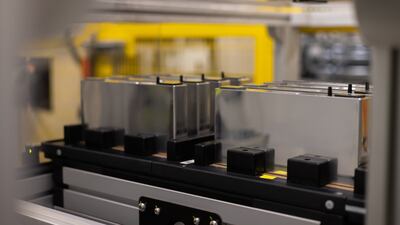
  • Northvolt, which counts BMW and Volkswagen among its investors, last year delivered its first battery cells from its gigafactory in Sweden. Photo: Northvolt AB
    Northvolt, which counts BMW and Volkswagen among its investors, last year delivered its first battery cells from its gigafactory in Sweden. Photo: Northvolt AB
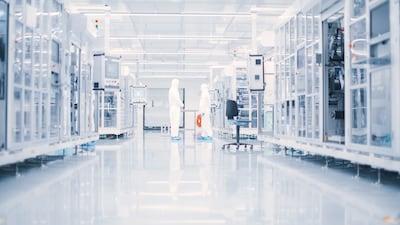
  • The factory is racing to electrify Europe's vehicle manufacturing sector as governments restrict the sale of petrol and diesel vehicles to meet decarbonisation targets. Photo: Northvolt AB
    The factory is racing to electrify Europe's vehicle manufacturing sector as governments restrict the sale of petrol and diesel vehicles to meet decarbonisation targets. Photo: Northvolt AB
  • The electric battery plant aims to have an annual production capacity of 60 gigawatt hours, which will be enough to power hundreds of thousands of vehicles. Photo: Northvolt AB
    The electric battery plant aims to have an annual production capacity of 60 gigawatt hours, which will be enough to power hundreds of thousands of vehicles. Photo: Northvolt AB
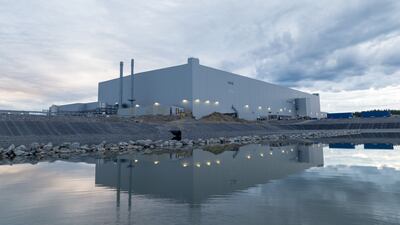
  • The power plant is located in Skelleftea, a small city in north-eastern Sweden, which is surrounded by pine forests and lakes. Daniel Bardsley / The National
    The power plant is located in Skelleftea, a small city in north-eastern Sweden, which is surrounded by pine forests and lakes. Daniel Bardsley / The National
  • Northvolt is part of the Swedish green investment company Vargas. Photo: Northvolt AB
    Northvolt is part of the Swedish green investment company Vargas. Photo: Northvolt AB
  • The gigafactory has attracted workers from around the globe, with more than 80 nationalities working on site. Daniel Bardsley / The National
    The gigafactory has attracted workers from around the globe, with more than 80 nationalities working on site. Daniel Bardsley / The National
  • The company has about 1,800 employees, but when the plant is completed in two years' time, that figure is set to rise to about 4,000. Daniel Bardsley / The National
    The company has about 1,800 employees, but when the plant is completed in two years' time, that figure is set to rise to about 4,000. Daniel Bardsley / The National
  • Helena Renstrom said that the company can guarantee 100 per cent renewable energy in Skelleftea. Daniel Bardsley / The National
    Helena Renstrom said that the company can guarantee 100 per cent renewable energy in Skelleftea. Daniel Bardsley / The National
  • The company says it has been able to cut emissions by 70 per cent compared to a Chinese-produced electric cary battery. Daniel Bardsley / The National
    The company says it has been able to cut emissions by 70 per cent compared to a Chinese-produced electric cary battery. Daniel Bardsley / The National
  • Sanna Backstrom, communications manager for Northvolt, said the company has grown from nothing to a functioning production facility in two years. Bardsley / The National
    Sanna Backstrom, communications manager for Northvolt, said the company has grown from nothing to a functioning production facility in two years. Bardsley / The National
  • Carl-Erik Lagercrantz, chief executive of parent company Vargas, said Northvolt is a key part of the European transition to electric vehicles. AFP
    Carl-Erik Lagercrantz, chief executive of parent company Vargas, said Northvolt is a key part of the European transition to electric vehicles. AFP
Winners

Ballon d’Or (Men’s)
Ousmane Dembélé (Paris Saint-Germain / France)

Ballon d’Or Féminin (Women’s)
Aitana Bonmatí (Barcelona / Spain)

Kopa Trophy (Best player under 21 – Men’s)
Lamine Yamal (Barcelona / Spain)

Best Young Women’s Player
Vicky López (Barcelona / Spain)

Yashin Trophy (Best Goalkeeper – Men’s)
Gianluigi Donnarumma (Paris Saint-Germain and Manchester City / Italy)

Best Women’s Goalkeeper
Hannah Hampton (England / Aston Villa and Chelsea)

Men’s Coach of the Year
Luis Enrique (Paris Saint-Germain)

Women’s Coach of the Year
Sarina Wiegman (England)

The specs: 2018 Nissan Altima


Price, base / as tested: Dh78,000 / Dh97,650

Engine: 2.5-litre in-line four-cylinder

Power: 182hp @ 6,000rpm

Torque: 244Nm @ 4,000rpm

Transmission: Continuously variable tranmission

Fuel consumption, combined: 7.6L / 100km

Our legal consultant

Name: Hassan Mohsen Elhais

Position: legal consultant with Al Rowaad Advocates and Legal Consultants

Russia's Muslim Heartlands

Dominic Rubin, Oxford

T20 WORLD CUP QUALIFIER

Results

UAE beat Nigeria by five wickets

Hong Kong beat Canada by 32 runs

Friday fixtures

10am, Tolerance Oval, Abu Dhabi – Ireland v Jersey

7.30pm, Zayed Cricket Stadium, Abu Dhabi – Canada v Oman

The specs

Engine: 4.0-litre V8 twin-turbocharged and three electric motors

Power: Combined output 920hp

Torque: 730Nm at 4,000-7,000rpm

Transmission: 8-speed dual-clutch automatic

Fuel consumption: 11.2L/100km

On sale: Now, deliveries expected later in 2025

Price: expected to start at Dh1,432,000

Ferrari 12Cilindri specs

Engine: naturally aspirated 6.5-liter V12

Power: 819hp

Torque: 678Nm at 7,250rpm

Price: From Dh1,700,000

Available: Now

Specs

Engine: Dual-motor all-wheel-drive electric

Range: Up to 610km

Power: 905hp

Torque: 985Nm

Price: From Dh439,000

Available: Now

The specs
Engine: 2.0-litre 4-cyl turbo

Power: 201hp at 5,200rpm

Torque: 320Nm at 1,750-4,000rpm

Transmission: 6-speed auto

Fuel consumption: 8.7L/100km

Price: Dh133,900

On sale: now 

Mercer, the investment consulting arm of US services company Marsh & McLennan, expects its wealth division to at least double its assets under management (AUM) in the Middle East as wealth in the region continues to grow despite economic headwinds, a company official said.

Mercer Wealth, which globally has $160 billion in AUM, plans to boost its AUM in the region to $2-$3bn in the next 2-3 years from the present $1bn, said Yasir AbuShaban, a Dubai-based principal with Mercer Wealth.

Within the next two to three years, we are looking at reaching $2 to $3 billion as a conservative estimate and we do see an opportunity to do so,” said Mr AbuShaban.

Mercer does not directly make investments, but allocates clients’ money they have discretion to, to professional asset managers. They also provide advice to clients.

“We have buying power. We can negotiate on their (client’s) behalf with asset managers to provide them lower fees than they otherwise would have to get on their own,” he added.

Mercer Wealth’s clients include sovereign wealth funds, family offices, and insurance companies among others.

From its office in Dubai, Mercer also looks after Africa, India and Turkey, where they also see opportunity for growth.

Wealth creation in Middle East and Africa (MEA) grew 8.5 per cent to $8.1 trillion last year from $7.5tn in 2015, higher than last year’s global average of 6 per cent and the second-highest growth in a region after Asia-Pacific which grew 9.9 per cent, according to consultancy Boston Consulting Group (BCG). In the region, where wealth grew just 1.9 per cent in 2015 compared with 2014, a pickup in oil prices has helped in wealth generation.

BCG is forecasting MEA wealth will rise to $12tn by 2021, growing at an annual average of 8 per cent.

Drivers of wealth generation in the region will be split evenly between new wealth creation and growth of performance of existing assets, according to BCG.

Another general trend in the region is clients’ looking for a comprehensive approach to investing, according to Mr AbuShaban.

“Institutional investors or some of the families are seeing a slowdown in the available capital they have to invest and in that sense they are looking at optimizing the way they manage their portfolios and making sure they are not investing haphazardly and different parts of their investment are working together,” said Mr AbuShaban.

Some clients also have a higher appetite for risk, given the low interest-rate environment that does not provide enough yield for some institutional investors. These clients are keen to invest in illiquid assets, such as private equity and infrastructure.

“What we have seen is a desire for higher returns in what has been a low-return environment specifically in various fixed income or bonds,” he said.

“In this environment, we have seen a de facto increase in the risk that clients are taking in things like illiquid investments, private equity investments, infrastructure and private debt, those kind of investments were higher illiquidity results in incrementally higher returns.”

The Abu Dhabi Investment Authority, one of the largest sovereign wealth funds, said in its 2016 report that has gradually increased its exposure in direct private equity and private credit transactions, mainly in Asian markets and especially in China and India. The authority’s private equity department focused on structured equities owing to “their defensive characteristics.”

The specs

Engine: 1.5-litre turbo

Power: 181hp

Torque: 230Nm

Transmission: 6-speed automatic

Starting price: Dh79,000

On sale: Now

Emergency phone numbers in the UAE

Estijaba – 8001717 –  number to call to request coronavirus testing

Ministry of Health and Prevention – 80011111

Dubai Health Authority – 800342 – The number to book a free video or voice consultation with a doctor or connect to a local health centre

Emirates airline – 600555555

Etihad Airways – 600555666

Ambulance – 998

Knowledge and Human Development Authority – 8005432 ext. 4 for Covid-19 queries

Updated: July 19, 2023, 12:28 PM