Oil rigs in the Loco Hills, New Mexico. The IEA expects oil-producing countries outside the Opec+ to add 5.1 million bpd to the global crude supply in the next five years. AP

Global oil demand growth to slow significantly by 2028, IEA says


  • English
  • Arabic

Global oil demand growth is set to slow significantly by 2028 as high prices and supply concerns hasten the shift to cleaner energy, the International Energy Agency says.

Based on current policies and market trends, crude demand will rise by 6 per cent between 2022 and 2028 to reach 105.7 million barrels per day, supported by strong demand from the petrochemical and aviation sectors, the Paris-based agency said in its medium-term oil market report on Wednesday.

However, annual demand growth is expected to fall to 400,000 bpd in 2028 from 2.4 million bpd this year.

“The shift to a clean energy economy is picking up pace, with a peak in global oil demand in sight before the end of this decade as electric vehicles, energy efficiency and other technologies advance,” said Fatih Birol, IEA executive director.

“Oil producers need to pay careful attention to the gathering pace of change and calibrate their investment decisions to ensure an orderly transition.”

The IEA said that the use of oil for transport fuels is set to go into decline after 2026 amid rising sales of electric vehicles, growth of biofuels and improving fuel economy.

Global oil markets could tighten “significantly” in the coming months, as production cuts by the Opec+ alliance temper an upswing in global oil supplies, the agency said.

On June 4, top crude exporter Saudi Arabia announced a unilateral production cut of a million bpd for July and said that an extension could be possible.

The Opec+ group of 23 oil-producing countries has extended its current production cuts until the end of 2024.

The group has total production curbs of 3.66 million bpd, or about 3.7 per cent of global demand, in place, including a two million bpd reduction agreed last year and voluntary cuts of 1.66 million bpd announced in April.

Meanwhile, global upstream spending is on course to reach $528 billion this year, its highest level since 2015, the IEA said.

“While the impact of higher spending will be partly offset by cost inflation, this level of investment, if sustained, would be adequate to meet forecast demand in the period covered by the report,” the agency said.

“However, it exceeds the amount that would be needed in a world that gets on track for net-zero emissions.”

The IEA expects oil demand growth in China, the world’s largest crude importer, to slow “markedly” from 2024 onwards.

Economic growth in the Asian country has been largely uneven since it lifted Covid-19 restrictions earlier this year.

However, burgeoning petrochemical demand and strong consumption growth in emerging economies will “more than offset” a contraction in advanced economies, the agency said.

The IEA expects oil-producing countries outside the Opec+ to add 5.1 million bpd to the global crude supply in the next five years, led by the US, Brazil and Guyana.

Meanwhile, Opec+ members will grow their production capacity by 800,000 bpd in the same period.

“Saudi Arabia, the UAE and Iraq lead the plans for capacity building within Opec+, while African and Asian members are set to struggle with continuing declines, and Russian production falls due to sanctions,” the agency said.

Refinery capacity additions by 2028 are expected to outpace demand growth for refined products, but a repeat of the tightness in the middle distillate market “cannot be ruled out”, the IEA said.

Middle distillates, also known as gas oil, include extra light heating oil and diesel fuel.

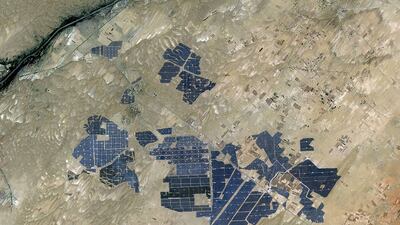
  • The solar park covers an area of 56 square kilometers. Photo: Alamy
    The solar park covers an area of 56 square kilometers. Photo: Alamy
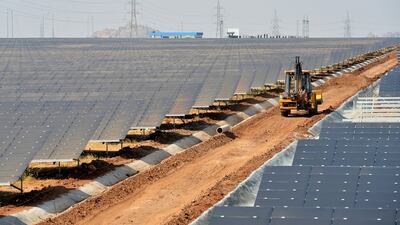
  • The 200 megawatt structure is the second biggest in the world. Bloomberg
    The 200 megawatt structure is the second biggest in the world. Bloomberg
  • The park covers an area of 53 square kilometres. AFP
    The park covers an area of 53 square kilometres. AFP
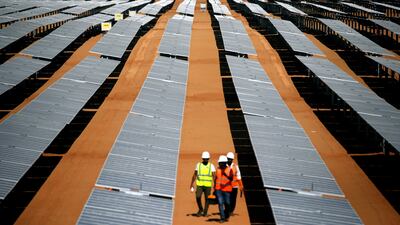
  • The Egyptian plant has a capacity of 1650 megawatts. Reuters.
    The Egyptian plant has a capacity of 1650 megawatts. Reuters.
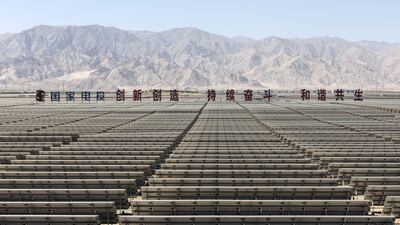
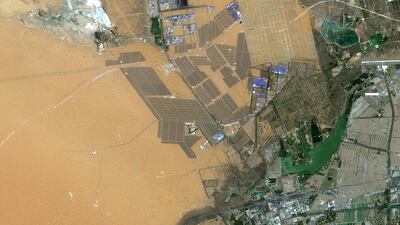
  • The solar farm in China is in the fourth largest desert in China. Getty
    The solar farm in China is in the fourth largest desert in China. Getty
How to get there

Emirates (www.emirates.com) flies directly to Hanoi, Vietnam, with fares starting from around Dh2,725 return, while Etihad (www.etihad.com) fares cost about Dh2,213 return with a stop. Chuong is 25 kilometres south of Hanoi.
 

Ten tax points to be aware of in 2026

1. Domestic VAT refund amendments: request your refund within five years

If a business does not apply for the refund on time, they lose their credit.

2. E-invoicing in the UAE

Businesses should continue preparing for the implementation of e-invoicing in the UAE, with 2026 a preparation and transition period ahead of phased mandatory adoption. 

3. More tax audits

Tax authorities are increasingly using data already available across multiple filings to identify audit risks. 

4. More beneficial VAT and excise tax penalty regime

Tax disputes are expected to become more frequent and more structured, with clearer administrative objection and appeal processes. The UAE has adopted a new penalty regime for VAT and excise disputes, which now mirrors the penalty regime for corporate tax.

5. Greater emphasis on statutory audit

There is a greater need for the accuracy of financial statements. The International Financial Reporting Standards standards need to be strictly adhered to and, as a result, the quality of the audits will need to increase.

6. Further transfer pricing enforcement

Transfer pricing enforcement, which refers to the practice of establishing prices for internal transactions between related entities, is expected to broaden in scope. The UAE will shortly open the possibility to negotiate advance pricing agreements, or essentially rulings for transfer pricing purposes. 

7. Limited time periods for audits

Recent amendments also introduce a default five-year limitation period for tax audits and assessments, subject to specific statutory exceptions. While the standard audit and assessment period is five years, this may be extended to up to 15 years in cases involving fraud or tax evasion. 

8. Pillar 2 implementation 

Many multinational groups will begin to feel the practical effect of the Domestic Minimum Top-Up Tax (DMTT), the UAE's implementation of the OECD’s global minimum tax under Pillar 2. While the rules apply for financial years starting on or after January 1, 2025, it is 2026 that marks the transition to an operational phase.

9. Reduced compliance obligations for imported goods and services

Businesses that apply the reverse-charge mechanism for VAT purposes in the UAE may benefit from reduced compliance obligations. 

10. Substance and CbC reporting focus

Tax authorities are expected to continue strengthening the enforcement of economic substance and Country-by-Country (CbC) reporting frameworks. In the UAE, these regimes are increasingly being used as risk-assessment tools, providing tax authorities with a comprehensive view of multinational groups’ global footprints and enabling them to assess whether profits are aligned with real economic activity. 

Contributed by Thomas Vanhee and Hend Rashwan, Aurifer

Company%20profile
%3Cp%3EName%3A%20Tabby%3Cbr%3EFounded%3A%20August%202019%3B%20platform%20went%20live%20in%20February%202020%3Cbr%3EFounder%2FCEO%3A%20Hosam%20Arab%2C%20co-founder%3A%20Daniil%20Barkalov%3Cbr%3EBased%3A%20Dubai%2C%20UAE%3Cbr%3ESector%3A%20Payments%3Cbr%3ESize%3A%2040-50%20employees%3Cbr%3EStage%3A%20Series%20A%3Cbr%3EInvestors%3A%20Arbor%20Ventures%2C%20Mubadala%20Capital%2C%20Wamda%20Capital%2C%20STV%2C%20Raed%20Ventures%2C%20Global%20Founders%20Capital%2C%20JIMCO%2C%20Global%20Ventures%2C%20Venture%20Souq%2C%20Outliers%20VC%2C%20MSA%20Capital%2C%20HOF%20and%20AB%20Accelerator.%3Cbr%3E%3C%2Fp%3E%0A
The biog

Year of birth: 1988

Place of birth: Baghdad

Education: PhD student and co-researcher at Greifswald University, Germany

Hobbies: Ping Pong, swimming, reading


The Penguin

Starring: Colin Farrell, Cristin Milioti, Rhenzy Feliz

Creator: Lauren LeFranc

Rating: 4/5

Company Fact Box

Company name/date started: Abwaab Technologies / September 2019

Founders: Hamdi Tabbaa, co-founder and CEO. Hussein Alsarabi, co-founder and CTO

Based: Amman, Jordan

Sector: Education Technology

Size (employees/revenue): Total team size: 65. Full-time employees: 25. Revenue undisclosed

Stage: early-stage startup 

Investors: Adam Tech Ventures, Endure Capital, Equitrust, the World Bank-backed Innovative Startups SMEs Fund, a London investment fund, a number of former and current executives from Uber and Netflix, among others.

Updated: June 14, 2023, 8:00 AM