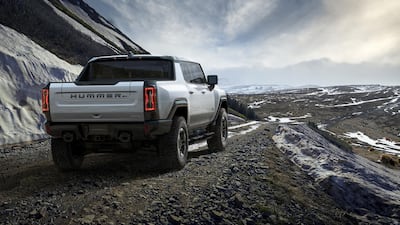
In the evolution of the electric vehicle, 2022 will be remembered for its megafauna: massive electric trucks finally roamed the land, with equally outsized prices. Next year, however, should bring some subspecies — a diaspora of SUVs, including some slightly smaller options and, rarer still, a precious few with more modest window stickers. If you are in the market for a car, here are four prognostications to keep in mind.
You can expect to see more EVs at Costco.
Somewhere around 20 all-new electric vehicle models are expected to launch in the US over the next 12 months, roughly the same amount as debuted this year. Critically, however, many of them are aimed at a sweet spot in the American market, which is to say good for carrying cargo and families, and not extremely expensive.
Days ago, Nissan’s long-awaited Ariya finally rolled into dealerships with a starting price of $43,190. A few months from now, Chevrolet says it will add its Blazer EV at just shy of $45,000, followed by the smaller, cheaper Equinox EV in autumn. Kia’s EV9, a bonafide three-row, will probably land in somewhat affordable territory as well, if it tracks its smaller sibling, the EV6. And on the startup front, VinFast, a Vietnamese manufacturer, will debut with its VF 8, a small SUV priced at $40,700 (although the battery is packaged in a monthly subscription plan).
European drivers can expect many of the same options, plus a few that are strictly Continental, like the Jeep Avenger, a stubby SUV that stands as the brand’s first all-electric offering. It’s joined by some sporty station wagons, including the Opel Astra Electric and the Peugeot e-308 SW. In part because of their lower profiles, both cars boast impressive efficiency, posting road-trip-ready range figures with batteries far smaller than those found in most American EVs.
The $100,000+ market isn’t slowing down.
Plenty of swankier SUVs are in the offing this year, including a version of GMC’s Hummer EV, with a price tag squarely in six-figure territory; the first electric Lexus, dubbed RZ; an “Electrified” version of Hyundai’s GV70; two more small crossover-type things from Polestar, named simply 3 and 4; and at the top of the luxury pyramid, the Mercedes EQE and EQS. There’s even talk of a large electric Volvo.
We’ll also start seeing greater numbers of EVs like the Rivian R1S and Cadillac’s new Lyric, which are technically on the market but still uncommon on most American roads. On the truck side, GM will finally start stamping out its Silverado EV, a model that regularly wins more than half a million gas customers a year.
Manufacturing issues will barely ease up.
Those on the hunt for an electric SUV will see their choices double in 2023. But choosing a new whip and actually buying a new whip will continue to be very different things. Supplies will stay tight, prices will stay elevated and legacy automakers will still be eager to sell gas vehicles while they spool up almost the entire EV market.
Startup automakers, meanwhile, are still figuring out how to actually build an auto at scale. Rivian, for example, only made about 25,000 vehicles this year, although it has more than four times that many orders on its books. Lucid Group was aiming for just 6,000 to 7,000 EVs in 2022 after halving its production goals late in the summer.
S&P Global Mobility expects drivers around the world to snap up 10 million EVs in 2023, almost 14 per cent of the entire market, but they won’t come cheap. S&P warns that EV fever is pushing prices even higher and a rash of new incentives laid out in the Inflation Reduction Act will only lessen the sting slightly.
Making money on EVs won’t get much easier.
While the suits in Detroit, Seoul, Stuttgart and Tokyo may finally get the computer chips they need, the unit economics on electric vehicles are still crummy. Lithium-ion battery prices increased in 2022 for the first time on record, a 7 per cent bump. And some of the biggest brains in the business, including Toyota President Akio Toyoda and Rivian CEO and co-founder RJ Scaringe, worry that it will take years for the battery supply chain to catch up.
That’s why the best strategy for auto executives may be to stick with the simple bait-and-switch: get drivers hyped to go electric with low base prices, while predominantly stamping out far more expensive, higher-trim models. If you already can’t make enough cars, the logic goes, make the most profitable ones.
But if the economy stays on shaky ground and interest rates continue to climb, banking on indefinite demand may be unwise. “US consumers are hunkering down,” says S&P analyst Chris Hopson, “and recovery towards pre-pandemic vehicle demand seems like a hard sell”.

In Search of Mary Shelley: The Girl Who Wrote Frankenstein
By Fiona Sampson
Profile
How to improve Arabic reading in early years
One 45-minute class per week in Standard Arabic is not sufficient
The goal should be for grade 1 and 2 students to become fluent readers
Subjects like technology, social studies, science can be taught in later grades
Grade 1 curricula should include oral instruction in Standard Arabic
First graders must regularly practice individual letters and combinations
Time should be slotted in class to read longer passages in early grades
Improve the appearance of textbooks
Revision of curriculum should be undertaken as per research findings
Conjugations of most common verb forms should be taught
Systematic learning of Standard Arabic grammar
Results
2pm: Serve U – Maiden (TB) Dh60,000 (Dirt) 1,400m; Winner: Violent Justice, Pat Dobbs (jockey), Doug Watson (trainer)
2.30pm: Al Shafar Investment – Conditions (TB) Dh100,000 (D) 1,400m; Winner: Desert Wisdom, Bernardo Pinheiro, Ahmed Al Shemaili
3pm: Commercial Bank of Dubai – Handicap (TB) Dh68,000 (D) 1,200m; Winner: Fawaareq, Sam Hitchcott, Doug Watson
3.30pm: Shadwell – Rated Conditions (TB) Dh100,000 (D) 1,600m; Winner: Down On Da Bayou, Xavier Ziani, Salem bin Ghadayer
4pm: Dubai Real Estate Centre – Maiden (TB) Dh60,000 (D) 1,600m; Winner: Rakeez, Patrick Cosgrave, Bhupat Seemar
4.30pm: Al Redha Insurance Brokers – Handicap (TB) Dh78,000 (D) 1,800m; Winner: Capla Crusader, Bernardo Pinheiro, Rashed Bouresly
The years Ramadan fell in May
MATCH INFO
Delhi Daredevils 174-4 (20 ovs)
Mumbai Indians 163 (19.3 ovs)
Delhi won the match by 11 runs
The specs
Engine: 2.0-litre 4cyl turbo
Power: 261hp at 5,500rpm
Torque: 405Nm at 1,750-3,500rpm
Transmission: 9-speed auto
Fuel consumption: 6.9L/100km
On sale: Now
Price: From Dh117,059
Lewis Hamilton in 2018
Australia 2nd; Bahrain 3rd; China 4th; Azerbaijan 1st; Spain 1st; Monaco 3rd; Canada 5th; France 1st; Austria DNF; Britain 2nd; Germany 1st; Hungary 1st; Belgium 2nd; Italy 1st; Singapore 1st; Russia 1st; Japan 1st; United States 3rd; Mexico 4th
If you go
The flights
There are various ways of getting to the southern Serengeti in Tanzania from the UAE. The exact route and airstrip depends on your overall trip itinerary and which camp you’re staying at.
Flydubai flies direct from Dubai to Kilimanjaro International Airport from Dh1,350 return, including taxes; this can be followed by a short flight from Kilimanjaro to the Serengeti with Coastal Aviation from about US$700 (Dh2,500) return, including taxes. Kenya Airways, Emirates and Etihad offer flights via Nairobi or Dar es Salaam.
Tottenham's 10 biggest transfers (according to transfermarkt.com):
1). Moussa Sissokho - Newcastle United - £30 million (Dh143m): Flop
2). Roberto Soldado - Valencia - £25m: Flop
3). Erik Lamela - Roma - £25m: Jury still out
4). Son Heung-min - Bayer Leverkusen - £25m: Success
5). Darren Bent - Charlton Athletic - £21m: Flop
6). Vincent Janssen - AZ Alkmaar - £18m: Flop
7). David Bentley - Blackburn Rovers - £18m: Flop
8). Luka Modric - Dynamo Zagreb - £17m: Success
9). Paulinho - Corinthians - £16m: Flop
10). Mousa Dembele - Fulham - £16m: Success
Glossary of a stock market revolution
Reddit
A discussion website
Redditor
The users of Reddit
Robinhood
A smartphone app for buying and selling shares
Short seller
Selling a stock today in the belief its price will fall in the future
Short squeeze
Traders forced to buy a stock they are shorting
Naked short
An illegal practice
Real estate tokenisation project
Dubai launched the pilot phase of its real estate tokenisation project last month.
The initiative focuses on converting real estate assets into digital tokens recorded on blockchain technology and helps in streamlining the process of buying, selling and investing, the Dubai Land Department said.
Dubai’s real estate tokenisation market is projected to reach Dh60 billion ($16.33 billion) by 2033, representing 7 per cent of the emirate’s total property transactions, according to the DLD.
Abu Dhabi Sustainability Week
More Expo 2020 Dubai pavilions:
Mercer, the investment consulting arm of US services company Marsh & McLennan, expects its wealth division to at least double its assets under management (AUM) in the Middle East as wealth in the region continues to grow despite economic headwinds, a company official said.
Mercer Wealth, which globally has $160 billion in AUM, plans to boost its AUM in the region to $2-$3bn in the next 2-3 years from the present $1bn, said Yasir AbuShaban, a Dubai-based principal with Mercer Wealth.
“Within the next two to three years, we are looking at reaching $2 to $3 billion as a conservative estimate and we do see an opportunity to do so,” said Mr AbuShaban.
Mercer does not directly make investments, but allocates clients’ money they have discretion to, to professional asset managers. They also provide advice to clients.
“We have buying power. We can negotiate on their (client’s) behalf with asset managers to provide them lower fees than they otherwise would have to get on their own,” he added.
Mercer Wealth’s clients include sovereign wealth funds, family offices, and insurance companies among others.
From its office in Dubai, Mercer also looks after Africa, India and Turkey, where they also see opportunity for growth.
Wealth creation in Middle East and Africa (MEA) grew 8.5 per cent to $8.1 trillion last year from $7.5tn in 2015, higher than last year’s global average of 6 per cent and the second-highest growth in a region after Asia-Pacific which grew 9.9 per cent, according to consultancy Boston Consulting Group (BCG). In the region, where wealth grew just 1.9 per cent in 2015 compared with 2014, a pickup in oil prices has helped in wealth generation.
BCG is forecasting MEA wealth will rise to $12tn by 2021, growing at an annual average of 8 per cent.
Drivers of wealth generation in the region will be split evenly between new wealth creation and growth of performance of existing assets, according to BCG.
Another general trend in the region is clients’ looking for a comprehensive approach to investing, according to Mr AbuShaban.
“Institutional investors or some of the families are seeing a slowdown in the available capital they have to invest and in that sense they are looking at optimizing the way they manage their portfolios and making sure they are not investing haphazardly and different parts of their investment are working together,” said Mr AbuShaban.
Some clients also have a higher appetite for risk, given the low interest-rate environment that does not provide enough yield for some institutional investors. These clients are keen to invest in illiquid assets, such as private equity and infrastructure.
“What we have seen is a desire for higher returns in what has been a low-return environment specifically in various fixed income or bonds,” he said.
“In this environment, we have seen a de facto increase in the risk that clients are taking in things like illiquid investments, private equity investments, infrastructure and private debt, those kind of investments were higher illiquidity results in incrementally higher returns.”
The Abu Dhabi Investment Authority, one of the largest sovereign wealth funds, said in its 2016 report that has gradually increased its exposure in direct private equity and private credit transactions, mainly in Asian markets and especially in China and India. The authority’s private equity department focused on structured equities owing to “their defensive characteristics.”
SQUADS
Bangladesh (from): Shadman Islam, Mominul Haque, Soumya Sarkar, Shakib Al Hasan (capt), Mahmudullah Riyad, Mohammad Mithun, Mushfiqur Rahim, Liton Das, Taijul Islam, Mosaddek Hossain, Nayeem Hasan, Mehedi Hasan, Taskin Ahmed, Ebadat Hossain, Abu Jayed
Afghanistan (from): Rashid Khan (capt), Ihsanullah Janat, Javid Ahmadi, Ibrahim Zadran, Rahmat Shah, Hashmatullah Shahidi, Asghar Afghan, Ikram Alikhil, Mohammad Nabi, Qais Ahmad, Sayed Ahmad Shirzad, Yamin Ahmadzai, Zahir Khan Pakteen, Afsar Zazai, Shapoor Zadran
Paatal Lok season two
Directors: Avinash Arun, Prosit Roy
Stars: Jaideep Ahlawat, Ishwak Singh, Lc Sekhose, Merenla Imsong
Rating: 4.5/5