

Live updates: follow the latest news on Russia-Ukraine
Shell has started to withdraw staff from its joint ventures with Russia’s Gazprom as it moves forward with plans to exit investments in response to the war in Ukraine.
Dozens of Shell employees on temporary assignment at the Sakhalin-2 liquefied natural gas export project in Russia were removed over the weekend to be relocated back to other offices, according to people with knowledge of the matter. Operations at the facility are unlikely to be affected by the move, the people said.
Shell is demobilising its seconded employees in ventures with Gazprom and Gazprom Neft in a phased process, according to a company statement.
“Our key focus in this process is safety of our people and operations and compliance with applicable laws,” a Shell representative said.
Some of the world’s top energy producers, including Shell and Exxon Mobil, pledged to exit Russian projects in a bid to reduce reputational damage after Moscow's military offensive in Ukraine.
Shell said earlier this month the withdrawal will result in $4 billion to $5bn of impairments.
London-based Shell has increased its effort to distance itself from Moscow after the company came under fire in early March for purchasing Russian crude at a steep discount.
Since then, Shell said it won’t make any new purchases of Russian oil or gas. The energy major has also idled LNG vessels chartered from Russian companies.
-
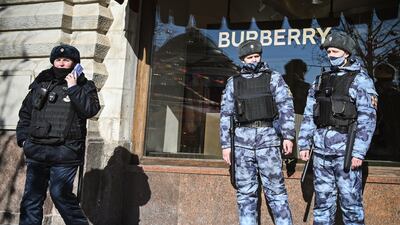
Members of the Russian police force and Rosgvardia, the country’s domestic army, patrol Red Square, Moscow. AFP -

A Renault car showroom in St Petersburg. Reuters -
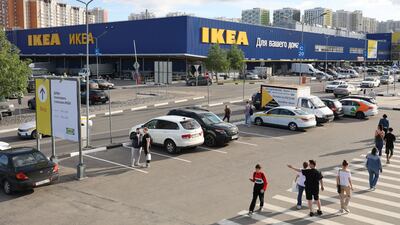
An Ikea store in Khimki, about 18 kilometres north-west of Moscow. Bloomberg -
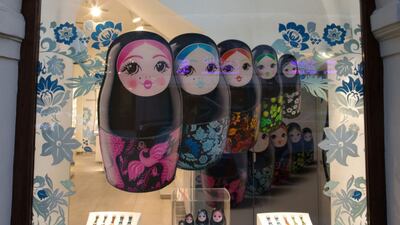
Traditional Russian dolls, also known as matryoshki, sit in the window of a Swatch Group wristwatch shop at the GUM department store in Moscow. Bloomberg -
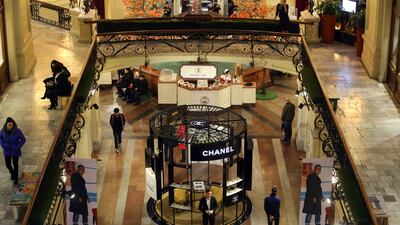
A Chanel concession occupies the middle of the lower floor of the GUM department store, on Red Square in the Russian capital. Bloomberg -
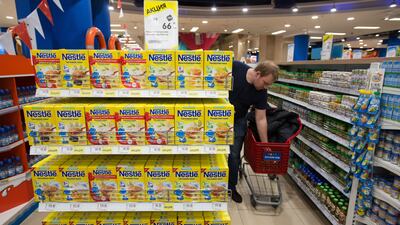
Food manufactured by Nestle sits on display inside the Detsky Mir children’s goods store on Vozdvizhenka St, Moscow. Bloomberg -

US chipmaker Intel Corp’s ‘smart building’ in Petah Tikva, near Tel Aviv, Israel. Intel announced on Tuesday that it was suspending operations in Russia. Reuters -

A woman walks past a closed H&M store in Moscow. Reuters -

An electronic billboard on RusHydro’s Institute Hydroproject building in Moscow displays a Samsung advert. Reuters -

Customers queue to enter Uniqlo in Moscow. In early March, the Japanese fashion brand said it would stop selling clothes in Russia, having earlier defended its decision to keep its stores in the country open. Reuters -
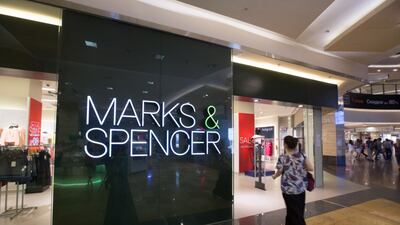
A Marks & Spencer store in the Afimall City mall at Moscow International Business Centre. Bloomberg -

An Apple store at the Aviapark shopping centre in Khoroshyovsky, Moscow, in 2020. Bloomberg -

A woman drinks coffee inside a Starbucks cafe in Khimki in 2007. Reuters -

An employee fills the tank of a car at a BP petrol station in Moscow in 2016. Reuters -
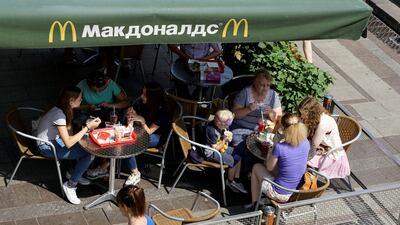
People eat at McDonald’s in central Moscow in 2016. Reuters -

An advert for US soft drink giant Pepsi sits above a sign for a McDonald's restaurant in Moscow. AFP -

Bottles of Coca-Cola are displayed at Colonial Liquors in Corte Madera, California. In early March, the soft drinks brand said it was withdrawing from the Russian market. AFP -

The Netflix building on Sunset Boulevard in Los Angeles, California. The streaming site has suspended its services in Russia. AFP -

TikTok’s UK office in London. The Chinese company has restricted uploads to its social media service in Russia to avoid falling foul of the country’s strict new online publishing rules. AFP



