


Live updates: follow the latest news on Russia-Ukraine
British energy company BP’s decision to exit operations in Russia is expected to hit the company’s share price and "jeopardise" gains achieved on the back of soaring energy prices, according to analysts.
BP on Sunday said it is abandoning its 19.75 per cent stake in the Russian oil giant Rosneft following Moscow’s decision to attack Ukraine.
The company’s chief executive Bernard Looney, as well as its former chief executive Bob Dudley, also resigned from the board of Rosneft “with immediate effect”. The decision is expected to cost BP as much as $25 billion, according to the company.
“It’s a huge deal as the two companies [have] worked closely together since 30 years and Rosneft stands for about half of BP's oil and gas reserves and a third of its production,” said Ipek Ozkardeskaya, senior analyst at Swissquote.
“The latest news will probably be a decent blow to BP’s share price and jeopardise the latest gains due to the soaring energy prices.”
London-listed BP swung to its highest profit in eight years last year on the back of higher energy prices. It reported a net profit of $12.8bn in 2021, compared to a loss of $5.7bn in 2020 as oil and gas prices surged due to a rise in demand and tight supply. BP’s share price was down 7.12 per cent at 5:15pm UAE time on Monday.
“The BP news also raises questions on how the other oil giants will react to the Ukrainian calamity. Will other oil companies like TotalEnergies or Shell dare make similar moves?” Ms Ozkardeskaya said.
France's TotalEnergies holds a 19.4 per cent interest in Novatek as well as other oil and gas projects in the country, according to its website.

The decision by BP to exit operations in Russia comes as the US and its allies in Europe moved to block some Russian banks from the Swift international payments system for its actions in Ukraine.
The countries also announced a slew of punitive measures to limit Russia’s ability to do business in dollars, euros, pounds and yen.
“Stricter rules around access to the international financial system could hurt international oil companies’ ability to receive dividends and other payments,” global consultancy Wood Mackenzie said. “Targeted sanctions against their Russian partners seem unlikely, but would present a much more profound challenge.”
Norway’s oil company Equinor also said on Monday that it will be withdrawing from its joint ventures in Russia. The company has been in Russia for over 30 years and entered a co-operation agreement with Rosneft in 2012.
“In the current situation, we regard our position as untenable,” its chief executive and president Anders Opedal said in a statement posted on Equinor's website. “We will now stop new investments into our Russian business, and we will start the process of exiting our joint ventures in a manner that is consistent with our values.”
At the end of 2021, Equinor had $1.2bn in non-current assets in Russia and the decision to exit operations is expected to affect the book value of its assets in the country and lead to impairments, the company said.
-
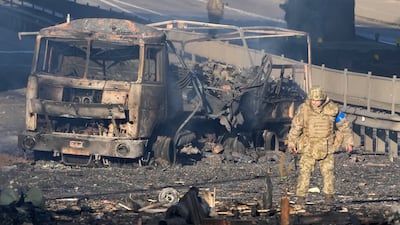
A Ukrainian soldier walks past the shell of a burnt military vehicle, on a street in Kiev. AP -
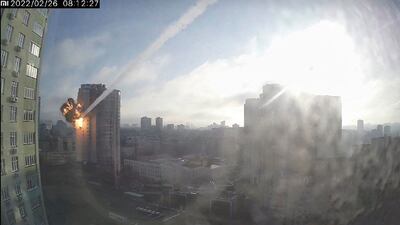
A screengrab from CCTV footage shows a missile hitting a residential building in Kiev. Reuters -
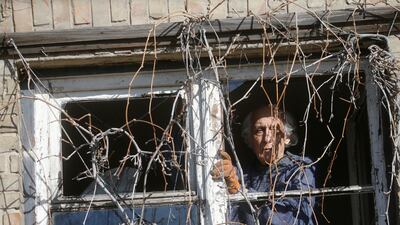
A man inspects a broken window, after shelling carried out by Russian troops in the Ukrainian capital. Reuters -
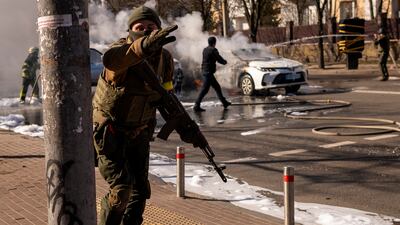
Ukrainian soldiers take positions outside a military centre as two cars burn on a street in Kiev. AP -

Medical specialists transport a woman, who was wounded in the shelling of an apartment building, to an ambulance, as her husband looks on. Reuters -
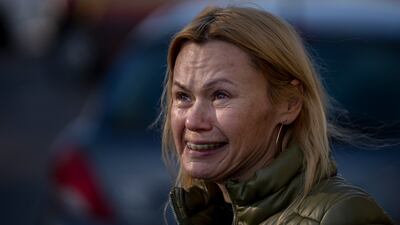
A woman outside her apartment building after it was damaged by a rocket, in Kiev. AP -

A Ukrainian police officer detains a driver on a street in Kiev. AP -
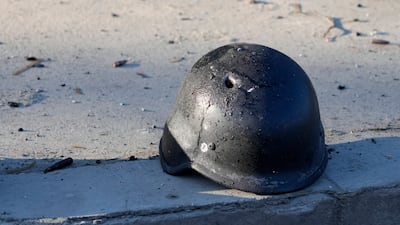
A soldier's helmet with a bullet hole on a street in the Ukrainian capital. AP -
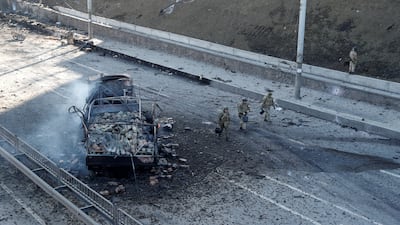
Ukrainian soldiers walk by a damaged vehicle, at the site of fighting with Russian troops, in Kiev. Reuters -
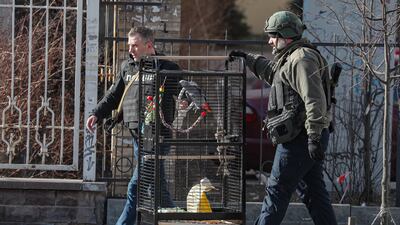
Ukrainian policemen move parrots to safety after a high-rise apartment block was damaged by shelling in Kiev. EPA -
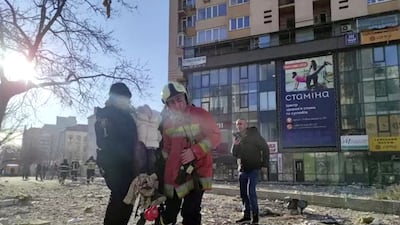
A screengrab from a video shows rescue workers carrying a person at the site of a damaged multi-storey residential building, south-west of the Ukrainian capital. Reuters -
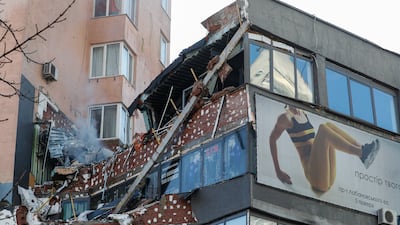
A building damaged by shelling carried out by Russian troops in Kiev. EPA -
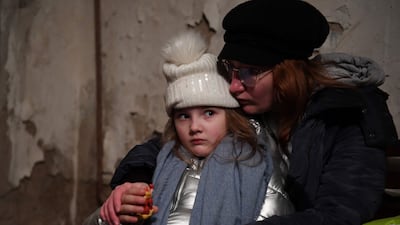
Helga Tarasova comforts her daughter Kira Shapovalova as they wait in an underground shelter during a bombing alert in Kiev. AFP -
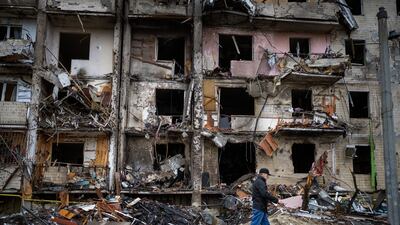
A man walks past a building damaged by a rocket attack in the Ukrainian capital. AP -

Emergency services workers near an apartment building damaged by shelling in Kiev. Reuters -
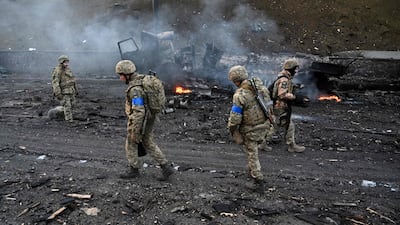
Ukrainian soldiers collect unexploded shells in the capital. AFP -
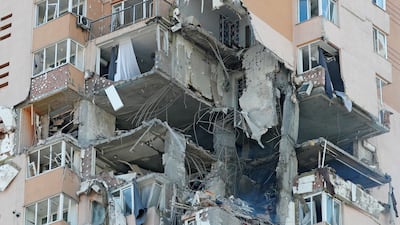
An apartment building damaged by shelling in Kiev. Reuters -
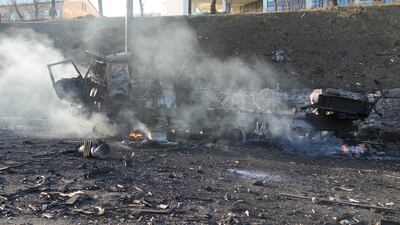
Debris of a burnt military truck on a street in Kiev. AP -
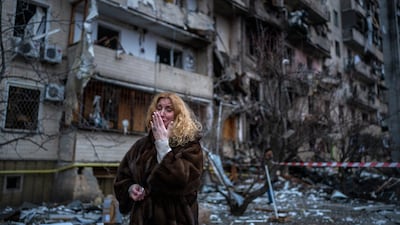
Natali Sevriukova stands next to her home after a rocket attack in Kiev, Ukraine. AP -
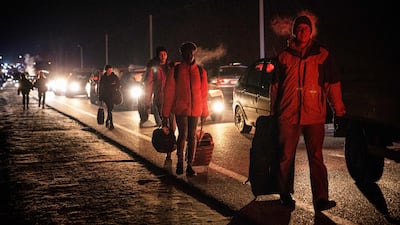
People on foot and in cars move to cross from Ukraine to Poland at the Korczowa-Krakovets border crossing following the Russian invasion of Ukraine. AFP -
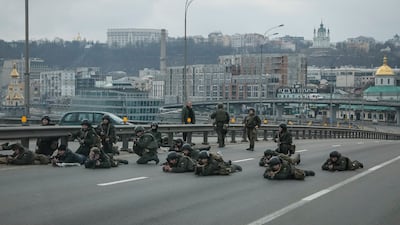
Servicemen from the Ukrainian National Guard in central Kiev. Reuters -
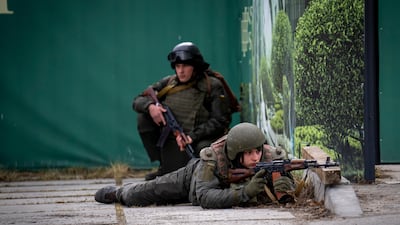
Ukrainian soldiers in downtown Kiev after Russian troops reached the outskirts of the capital. AP Photo -
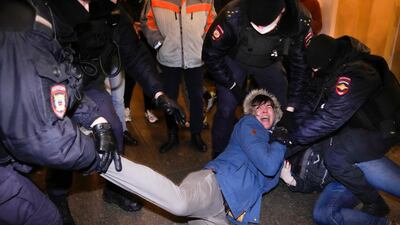
Police officers detain demonstrators in St. Petersburg, Russia. Hundreds of people gathered in Moscow and St. Petersburg on Thursday, protesting against Russia's attack on Ukraine. Similar protests took place in other Russian cities, and activists were also arrested. AP Photo -
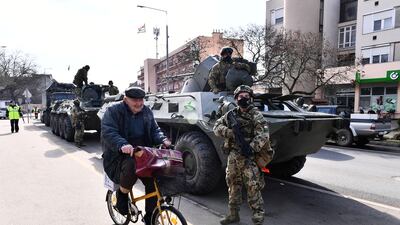
Hungarian troops in Vasarosnameny, close to the border with Ukraine, prepare to help refugees. AP Photo -
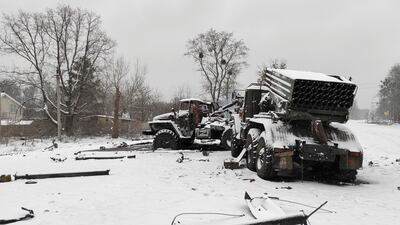
Wrecked Russian army rocket launchers in Kharkiv, Ukraine. Reuters -

The aftermath of a rocket attack in Kiev. AP Photo -
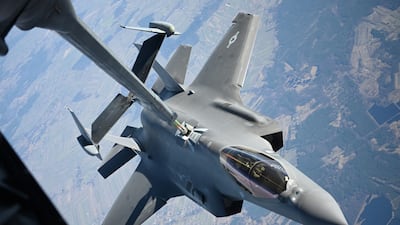
A US Air Force jet refuels over Poland. Reuters -
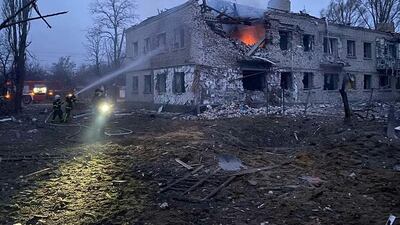
Devastation after shelling in Ukraine's Luhansk enclave. Reuters -
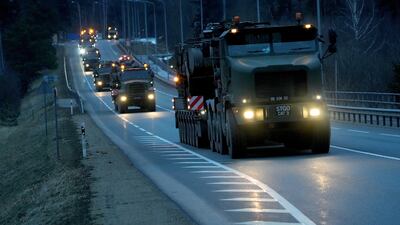
The Royal Welsh Battlegroup from the UK makes its way to Estonia. Reuters -
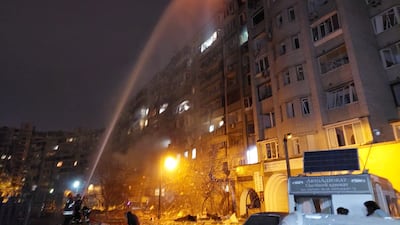
Firefighters tackle a blaze in a building in Kiev. AFP -
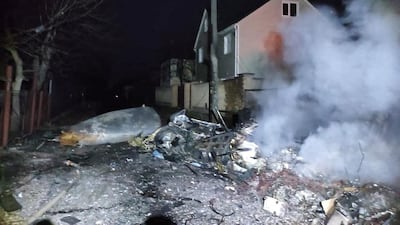
The wreckage of an unidentified aircraft in a residential area in Kiev. Reuters -
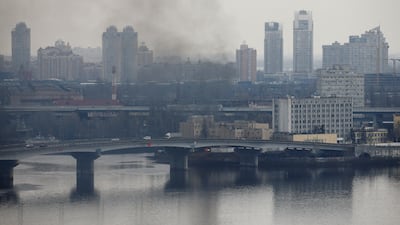
Smoke rises near the Ukrainian Defence Ministry in Kiev. Reuters -
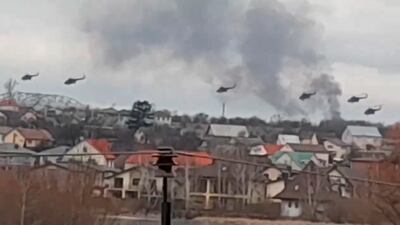
Russian military helicopters fly over the Ukrainian capital. AP -
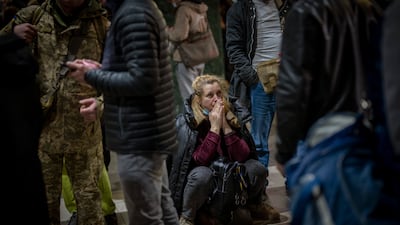
An anxious wait to board a train to leave Kiev as the attack loomed. AP Photo -
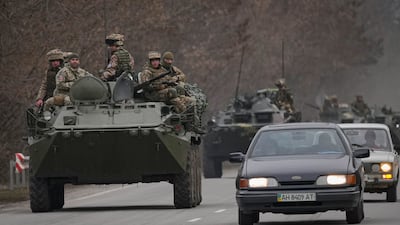
Ukrainian servicemen on tanks in the Donetsk region, eastern Ukraine. AP Photo -
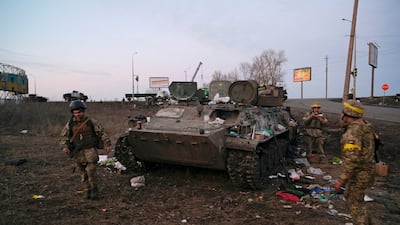
Ukraine troops said this destroyed armoured vehicle outside Kharkiv belonged to the Russian army. Reuters -
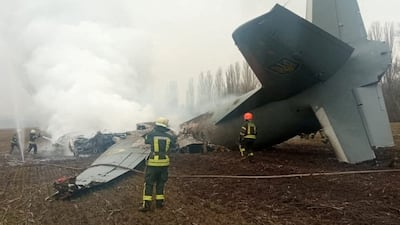
Rescuers at the crash site after a Ukraine armed forces Antonov aircraft was shot down in Kiev, according to the Ukrainian authorities. Reuters -
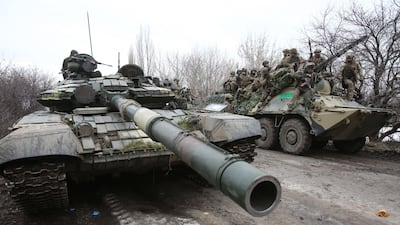
Ukrainian tanks that aim to repel an attack by the Russian military in the Luhansk enclave of Ukraine. AFP -

A Ukrainian State Border Guard Service base is ablaze after heavy shelling near Kiev. Reuters -
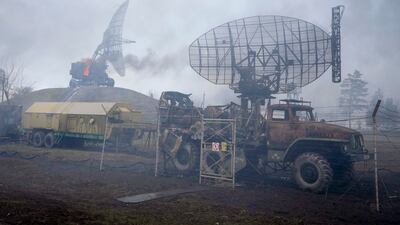
Damaged radar at a Ukrainian military plant outside Mariupol. Officials in Kiev say Russian troops have rolled into the country from the north, east and south. AP Photo -
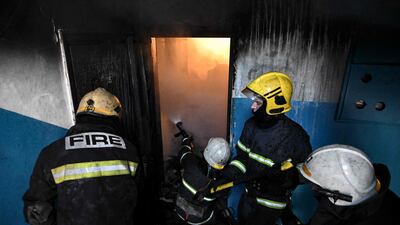
Firefighters attend a blaze after bombing in the eastern Ukrainian town of Chuguiv, as Russian armed forces appeared to be bombarding Ukraine from several directions. AFP -
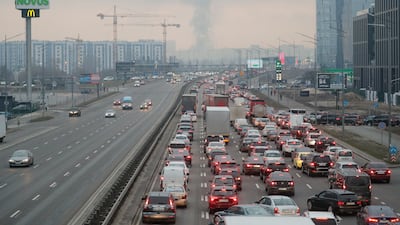
A traffic jam in Kiev, with many Ukrainians leaving their capital after Russian troops entered. EPA -
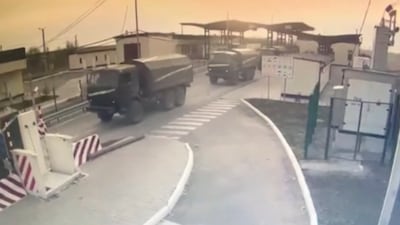
The Border Service of Ukraine released CCTV footage purporting to show Russian military vehicles passing a checkpoint to drive into Crimea. AP -
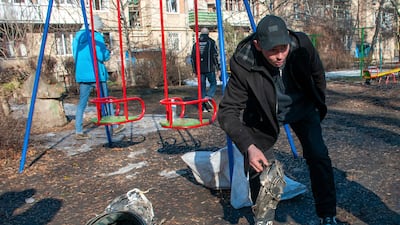
A man picks up fragments of military materiel on the street after an apparent Russian strike in Kharkiv, Ukraine. AP -
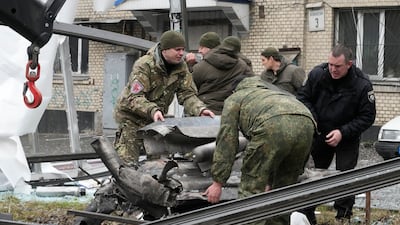
Workers load the debris of a rocket on to a lorry in the aftermath of Russian shelling in Kiev. AP -
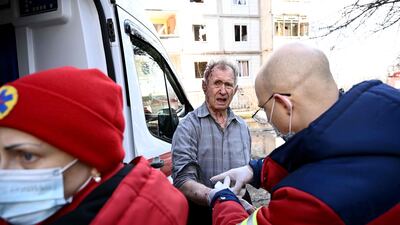
Emergency staff treat an injured man after bombing in Chuguiv. AFP -
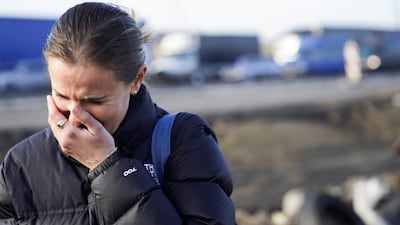
An American woman in distress after crossing the border to flee the violence in Ukraine, in Medyka, Poland. Reuters -

People take shelter in a Kiev subway station, after Russian President Vladimir Putin authorised a military operation in eastern Ukraine. Reuters -
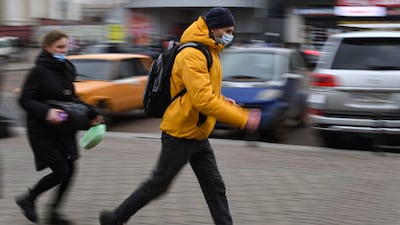
People in a rush near Kiev-Pasazhyrskyi railway station in the Ukrainian capital. AFP -
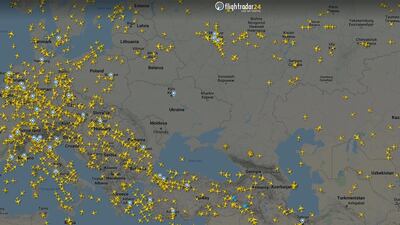
A Flightradar24.com screengrab shows a dearth of civilian aircraft in Ukrainian airspace after the Russian invasion. AP -
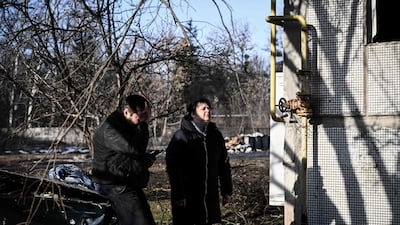
The aftermath of bombing in Chuguiv. AFP -

A Ukrainian rocket launcher vehicle prepares for action. Reuters -
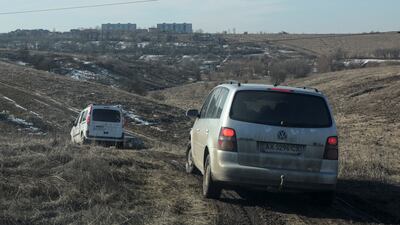
Cars are driven across a field to leave the city of Kharkiv. Reuters -
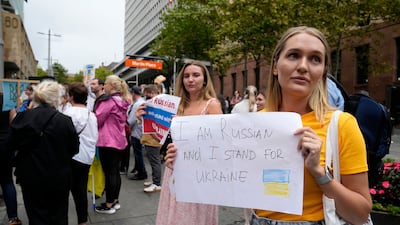
People chant, carry placards and wave Ukrainian flags as they gather in Sydney, to demonstrate against Russian attacks on its neighbour. AP -

People with many of their belongings packed take shelter in a Metro station in Kiev. AFP -
Emergency services at the scene of an explosion at a military unit building in Kiev. EPA -
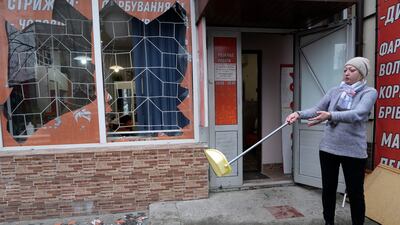
A Kiev resident sweeps up debris after Russian shelling. AP -
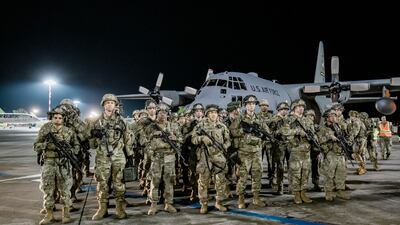
The first 40 soldiers of the 173rd US Army Airborne Brigade step off a military plane in Latvia. EPA -

More damage from shelling in Kiev. AP -
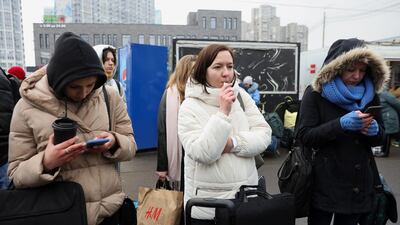
People wait at a bus station to travel to western parts of Ukraine, after violence in the east. Reuters -

A woman carries her cats in a quest for a safe haven. AFP -
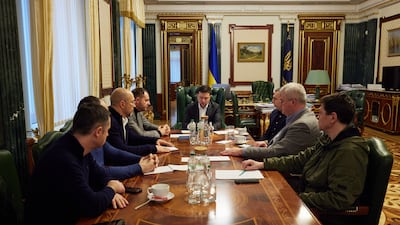
Ukrainian President Volodymyr Zelenskyy holds an urgent government meeting in Kiev to discuss the next step. AFP -
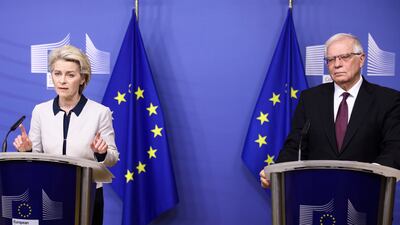
European Commission President Ursula von der Leyen and foreign policy chief Josep Borrell give a joint statement in Brussels, updating the press about the situation in Ukraine. EPA -
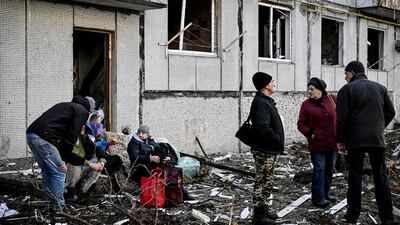
People survey the damage after bombing in Chuguiv. AFP -

A building on fire in Chuguiv. AFP


Russia is one of the world's top producers of oil and gas. In 2020, it produced about 10.2 million barrels a day of crude oil and natural gas condensate, placing it second after the US, with Saudi Arabia in third place, according to the 2021 BP Statistical Review of World Energy. Russia is also the second-largest producer of natural gas in the world.
“If the economic sanctions against Russia stick in the coming months, western companies may increasingly find it difficult to do business in the country and end up retreating in subsequent waves,” Vandana Hari, founder and chief executive of Vanda Insights in Singapore told The National.
More European and American companies could also come under government or shareholder pressure to “leave Russia or pare down their businesses in the country” following BP’s move, she said.
“This will hurt the Russian oil and gas sector hard — both in terms of its ability to bring back production in line with Opec+ easing its cuts and developing projects to develop new reserves.”
Local or Chinese companies could step in to fill the gap but it would be difficult to replace big oil companies because of their superior technology and financial strength, Ms Hari said.
Trevor Sikorski, head of natural gas and energy transition at London-based Energy Aspects, said BP is already under pressure to spend more of its capex on energy transition, and the latest decision will “hasten that move”.
“The major implication is for Russia’s energy sector, that will find it very difficult for the coming years to access western finance and technology — mostly important for any highly complex projects,” he said.

