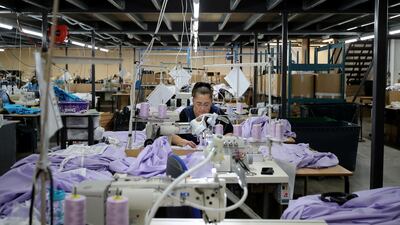
Employees make NHS uniforms at a factory in Dukinfield, Britain. The coronavirus pandemic has made the need to address the rapidly ageing workforce more urgent. Reuters

Britain’s ageing workforce could put the brakes on the country's economic recovery


  • English
  • Arabic

The coronavirus pandemic is transforming workplaces across the world, with offices and factory floors adjusting to social-distancing rules. For metal pressing company Bruderer UK, it has underscored a weakness in the British economy that management has been grappling with for years.

About 60 per cent of employees at the firm’s plant in Luton, southern England, is aged 60 and above, putting them statistically at higher risk of complications from Covid-19 than younger workers. Chief executive Adrian Haller said he’s been trying to train apprentices and hire fresh blood for years, but to little avail.

The combination of an ageing workforce in some sectors and the potential changes to worker availability and migration rules, essentially is coming together with this huge increase in unemployment.

“Our engineers couldn’t go out to site because of their age,” said Mr Haller. “There’s a massive space between the ages of 25 and 40. I’ve been looking for service engineers for over four years. It’s horrendous.”

Already mired in the worst productivity slump since the Industrial Revolution, the UK is now headed for the deepest recession among developed nations after recording more Covid-19 deaths than anywhere else in Europe. The downturn will arrive as the decision to leave the European Union’s seamless labour market reduces the supply of workers who previously helped plug skill shortages in some industries that are key cogs in the economy.

From producers of medical packing components to lorry drivers and agriculture, the pandemic has made the need to address the rapidly ageing workforce more urgent.

With young workers bearing the brunt of job losses, Chancellor Rishi Sunak said on Friday that one of his priorities is to support people who have lost their job to find new work. He is scheduled to unveil more details of recovery plans in the coming weeks.

“The combination of an ageing workforce in some sectors and the potential changes to worker availability and migration rules, essentially is coming together with this huge increase in unemployment,” said Stephen Evans, chief executive of the Learning and Work Institute, which develops policies on employment and skills. “If we invest now, we can improve them together.”

One area where the challenge is particularly acute is among hauler companies. Lorry drivers carry 98 per cent of goods in Britain, making them the logistical backbone of the economy. Yet their average age is about 57, according to the Road Haulage Association.

Finding younger people able – or willing – to invest as much as £5,000 (Dh22,740) in qualifying for a licence to drive a lorry isn’t easy. The job typically pays only marginally higher than the average wage and a life on the road doesn’t appeal to everyone.

To fill the resulting 60,000 shortfall in personnel, companies have for years looked elsewhere. Depending on the day, up to 60 per cent of the lorry drivers on UK roads are from continental Europe. A post-Brexit requirement that immigrants can only take jobs paying at least £25,600 could halt that.

The pandemic has laid bare the risks of failing to bring more young people into the job. The government even had to change rules that require heavy goods vehicle drivers over 65 to undergo an annual medical examination, after warnings that a lack of appointments in a stretched health service could force up to 30,000 truckers off the road.

“No lorries would have been disastrous for medicine, a disaster for supermarkets, and for all of us,” said Rod McKenzie, policy director at the haulers association, which is leading a government-backed initiative to recruit a more diverse driver pool. “We shouldn’t take things for granted. If things work well now, that doesn’t mean to say you can forget about it.”

Lorry driving is an extreme case, but across the economy, a shift is happening as the birth rate drops to a record low and better healthcare prolongs our active lives. Over 11 per cent of those over 65 are still working, more than double the proportion 20 years ago. While a higher activity rate is a positive for the economy, relying on those older workers with no supply line of new recruits to replace them is not.

Even now that lockdown restrictions are being lifted, sexagenarians and others with underlying health issues are warned to take special care to minimise contact with others. That’s easier for HGV drivers, but not simple in most workplaces.

Bruderer chief executive Mr Haller has had to find a way to keep his business operating while protecting employees that may be at greatest risk. Most were unable to do their job while isolating at home.

The company is still operating at half of its capacity as some workers – including one aged 75 – continue to shield from the virus and sluggish demand has slashed revenue to a quarter of usual levels.

Coronavirus could help to solve some of the problems it has exposed. With the right, targeted support, people who have lost their jobs could be retrained to fill some of the gaps.

But younger workers’ attitudes and skill-sets have been shaped by successive governments encouraging higher education over vocational qualifications. A 2010 study found that 32 per cent of teens aged between 16 and 18 in Britain were undertaking technical training, compared with almost half in the rest of the EU.

That was laid bare this year in farming. With about 12 per cent of agricultural workers aged over 70 and little interest among younger people, the industry has long relied on a huge number of seasonal workers from Eastern Europe to bring the harvest in.

Once it became apparent that those pickers would struggle to arrive this year, industry bodies and the government tried to encourage furloughed British workers into the fields with a high profile “Pick for Britain” campaign. But while data from jobs site Indeed showed an initial jump in interest, recruiters said that few actually accepted positions.

For Mr Haller, making precision metal parts is hardly more popular. He’s relocating the firm to the Midlands, a region in the country’s industrial heartland with more training centres and potentially a larger pool of qualified workers.

The trick is to bring the balance right. Finding trained, skilled workers in their 30s and 40s is where Bruderer struggles most, he said.

“You need to have a guy with a wide varied experience, so you do need age,” he said. “When I go out and try to bring a new electromechanical engineer, the quality is not there at all.”


COMPANY%20PROFILE
%3Cp%3E%0D%3Cbr%3E%3Cstrong%3ECompany%20name%3A%20%3C%2Fstrong%3EClara%0D%3Cbr%3E%3Cstrong%3EStarted%3A%20%3C%2Fstrong%3E2019%0D%3Cbr%3E%3Cstrong%3EFounders%3A%20%3C%2Fstrong%3EPatrick%20Rogers%2C%20Lee%20McMahon%2C%20Arthur%20Guest%2C%20Ahmed%20Arif%0D%3Cbr%3E%3Cstrong%3EBased%3A%20%3C%2Fstrong%3EDubai%0D%3Cbr%3E%3Cstrong%3EIndustry%3A%20%3C%2Fstrong%3ELegalTech%0D%3Cbr%3E%3Cstrong%3EFunding%20size%3A%3C%2Fstrong%3E%20%244%20million%20of%20seed%20financing%0D%3Cbr%3E%3Cstrong%3EInvestors%3A%20%3C%2Fstrong%3EWamda%20Capital%2C%20Shorooq%20Partners%2C%20Techstars%2C%20500%20Global%2C%20OTF%2C%20Venture%20Souq%2C%20Knuru%20Capital%2C%20Plug%20and%20Play%20and%20The%20LegalTech%20Fund%3C%2Fp%3E%0A
The%20specs
%3Cp%3E%3Cstrong%3EEngine%3A%20%3C%2Fstrong%3E2.9-litre%20twin-turbo%20V6%0D%3Cbr%3E%3Cstrong%3ETransmission%3A%20%3C%2Fstrong%3E8-speed%20auto%0D%3Cbr%3E%3Cstrong%3EPower%3A%20%3C%2Fstrong%3E536hp%20(including%20138hp%20e-motor)%0D%3Cbr%3E%3Cstrong%3ETorque%3A%20%3C%2Fstrong%3E750Nm%20(including%20400Nm%20e-motor)%0D%3Cbr%3E%3Cstrong%3EPrice%3A%20%3C%2Fstrong%3EFrom%20Dh1%2C380%2C000%0D%3Cbr%3E%3Cstrong%3EOn%20sale%3A%20%3C%2Fstrong%3Enow%3C%2Fp%3E%0A
Teenage%20Mutant%20Ninja%20Turtles%3A%20Shredder's%20Revenge
%3Cp%3E%3Cstrong%3EDeveloper%3A%20%3C%2Fstrong%3ETribute%20Games%3Cbr%3E%3Cstrong%3EPublisher%3A%3C%2Fstrong%3E%20Dotemu%3Cbr%3E%3Cstrong%3EConsoles%3A%20%3C%2Fstrong%3ENintendo%20Switch%2C%20PlayStation%204%26amp%3B5%2C%20PC%20and%20Xbox%20One%3Cbr%3E%3Cstrong%3ERating%3A%3C%2Fstrong%3E%204%2F5%3C%2Fp%3E%0A
ARM%20IPO%20DETAILS
%3Cp%3E%3Cstrong%3EShare%20price%3A%3C%2Fstrong%3E%20Undisclosed%3C%2Fp%3E%0A%3Cp%3E%3Cstrong%3ETarget%20raise%3A%3C%2Fstrong%3E%20%248%20billion%20to%20%2410%20billion%3C%2Fp%3E%0A%3Cp%3E%3Cstrong%3EProjected%20valuation%3A%3C%2Fstrong%3E%20%2460%20billion%20to%20%2470%20billion%20(Source%3A%20Bloomberg)%3C%2Fp%3E%0A%3Cp%3E%3Cstrong%3ELead%20underwriters%3A%3C%2Fstrong%3E%20Barclays%2C%20Goldman%20Sachs%20Group%2C%20JPMorgan%20Chase%20and%20Mizuho%20Financial%20Group%3C%2Fp%3E%0A
The burning issue

The internal combustion engine is facing a watershed moment – major manufacturer Volvo is to stop producing petroleum-powered vehicles by 2021 and countries in Europe, including the UK, have vowed to ban their sale before 2040. The National takes a look at the story of one of the most successful technologies of the last 100 years and how it has impacted life in the UAE. 

Read part four: an affection for classic cars lives on

Read part three: the age of the electric vehicle begins

Read part two: how climate change drove the race for an alternative 

Company%20Profile
%3Cp%3E%3Cstrong%3ECompany%20name%3A%20%3C%2Fstrong%3ENamara%0D%3Cbr%3E%3Cstrong%3EStarted%3A%20%3C%2Fstrong%3EJune%202022%0D%3Cbr%3E%3Cstrong%3EFounder%3A%20%3C%2Fstrong%3EMohammed%20Alnamara%0D%3Cbr%3E%3Cstrong%3EBased%3A%20%3C%2Fstrong%3EDubai%20%0D%3Cbr%3E%3Cstrong%3ESector%3A%20%3C%2Fstrong%3EMicrofinance%0D%3Cbr%3E%3Cstrong%3ECurrent%20number%20of%20staff%3A%20%3C%2Fstrong%3E16%0D%3Cbr%3E%3Cstrong%3EInvestment%20stage%3A%20%3C%2Fstrong%3ESeries%20A%0D%3Cbr%3E%3Cstrong%3EInvestors%3A%20%3C%2Fstrong%3EFamily%20offices%0D%3Cbr%3E%3C%2Fp%3E%0A
Some of Darwish's last words

"They see their tomorrows slipping out of their reach. And though it seems to them that everything outside this reality is heaven, yet they do not want to go to that heaven. They stay, because they are afflicted with hope." - Mahmoud Darwish, to attendees of the Palestine Festival of Literature, 2008

His life in brief: Born in a village near Galilee, he lived in exile for most of his life and started writing poetry after high school. He was arrested several times by Israel for what were deemed to be inciteful poems. Most of his work focused on the love and yearning for his homeland, and he was regarded the Palestinian poet of resistance. Over the course of his life, he published more than 30 poetry collections and books of prose, with his work translated into more than 20 languages. Many of his poems were set to music by Arab composers, most significantly Marcel Khalife. Darwish died on August 9, 2008 after undergoing heart surgery in the United States. He was later buried in Ramallah where a shrine was erected in his honour.


Company: Instabug

Founded: 2013

Based: Egypt, Cairo

Sector: IT

Employees: 100

Stage: Series A

Investors: Flat6Labs, Accel, Y Combinator and angel investors

Indoor cricket World Cup:
Insportz, Dubai, September 16-23

UAE fixtures:
Men

Saturday, September 16 – 1.45pm, v New Zealand
Sunday, September 17 – 10.30am, v Australia; 3.45pm, v South Africa
Monday, September 18 – 2pm, v England; 7.15pm, v India
Tuesday, September 19 – 12.15pm, v Singapore; 5.30pm, v Sri Lanka
Thursday, September 21 – 2pm v Malaysia
Friday, September 22 – 3.30pm, semi-final
Saturday, September 23 – 3pm, grand final

Women
Saturday, September 16 – 5.15pm, v Australia
Sunday, September 17 – 2pm, v South Africa; 7.15pm, v New Zealand
Monday, September 18 – 5.30pm, v England
Tuesday, September 19 – 10.30am, v New Zealand; 3.45pm, v South Africa
Thursday, September 21 – 12.15pm, v Australia
Friday, September 22 – 1.30pm, semi-final
Saturday, September 23 – 1pm, grand final

Roll of honour 2019-2020

Dubai Rugby Sevens

Winners: Dubai Hurricanes

Runners up: Bahrain


West Asia Premiership

Winners: Bahrain

Runners up: UAE Premiership


UAE Premiership

Winners: Dubai Exiles

Runners up: Dubai Hurricanes


UAE Division One

Winners: Abu Dhabi Saracens

Runners up: Dubai Hurricanes II


UAE Division Two

Winners: Barrelhouse

Runners up: RAK Rugby

Need to know

Unlike other mobile wallets and payment apps, a unique feature of eWallet is that there is no need to have a bank account, credit or debit card to do digital payments.

Customers only need a valid Emirates ID and a working UAE mobile number to register for eWallet account.

Mercer, the investment consulting arm of US services company Marsh & McLennan, expects its wealth division to at least double its assets under management (AUM) in the Middle East as wealth in the region continues to grow despite economic headwinds, a company official said.

Mercer Wealth, which globally has $160 billion in AUM, plans to boost its AUM in the region to $2-$3bn in the next 2-3 years from the present $1bn, said Yasir AbuShaban, a Dubai-based principal with Mercer Wealth.

Within the next two to three years, we are looking at reaching $2 to $3 billion as a conservative estimate and we do see an opportunity to do so,” said Mr AbuShaban.

Mercer does not directly make investments, but allocates clients’ money they have discretion to, to professional asset managers. They also provide advice to clients.

“We have buying power. We can negotiate on their (client’s) behalf with asset managers to provide them lower fees than they otherwise would have to get on their own,” he added.

Mercer Wealth’s clients include sovereign wealth funds, family offices, and insurance companies among others.

From its office in Dubai, Mercer also looks after Africa, India and Turkey, where they also see opportunity for growth.

Wealth creation in Middle East and Africa (MEA) grew 8.5 per cent to $8.1 trillion last year from $7.5tn in 2015, higher than last year’s global average of 6 per cent and the second-highest growth in a region after Asia-Pacific which grew 9.9 per cent, according to consultancy Boston Consulting Group (BCG). In the region, where wealth grew just 1.9 per cent in 2015 compared with 2014, a pickup in oil prices has helped in wealth generation.

BCG is forecasting MEA wealth will rise to $12tn by 2021, growing at an annual average of 8 per cent.

Drivers of wealth generation in the region will be split evenly between new wealth creation and growth of performance of existing assets, according to BCG.

Another general trend in the region is clients’ looking for a comprehensive approach to investing, according to Mr AbuShaban.

“Institutional investors or some of the families are seeing a slowdown in the available capital they have to invest and in that sense they are looking at optimizing the way they manage their portfolios and making sure they are not investing haphazardly and different parts of their investment are working together,” said Mr AbuShaban.

Some clients also have a higher appetite for risk, given the low interest-rate environment that does not provide enough yield for some institutional investors. These clients are keen to invest in illiquid assets, such as private equity and infrastructure.

“What we have seen is a desire for higher returns in what has been a low-return environment specifically in various fixed income or bonds,” he said.

“In this environment, we have seen a de facto increase in the risk that clients are taking in things like illiquid investments, private equity investments, infrastructure and private debt, those kind of investments were higher illiquidity results in incrementally higher returns.”

The Abu Dhabi Investment Authority, one of the largest sovereign wealth funds, said in its 2016 report that has gradually increased its exposure in direct private equity and private credit transactions, mainly in Asian markets and especially in China and India. The authority’s private equity department focused on structured equities owing to “their defensive characteristics.”

THE BIO

Favourite holiday destination: Whenever I have any free time I always go back to see my family in Caltra, Galway, it’s the only place I can properly relax.

Favourite film: The Way, starring Martin Sheen. It’s about the Camino de Santiago walk from France to Spain.

Personal motto: If something’s meant for you it won’t pass you by.