
Beirut port seen through smashed windows at St George Hospital. The August 4, 2020 explosion killed more than 200 people, injured thousands and upended lives. Photo: Getty Images

'No accountability' for Beirut port blast as businesses reopen after self-funded rebuild


  • English
  • Arabic

Victims of the Beirut port blast say they have not received promised insurance payouts and still await accountability for those responsible for the devastation − as impacted businesses continue to search for answers, reparations and justice, five years on.

Much of the reconstruction was carried out by residents and business owners with support from Lebanese expatriate community, international aid agencies and NGOs, analysts say.

The Beirut port explosion, triggered by improper storage of nearly 3,000 tonnes of ammonium nitrate, killed more than 220 people, injured thousands and flattened large parts of the capital on August 4, 2020. No high-ranking officials have been convicted over the blast.
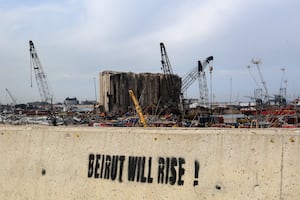
At the time, the World Bank estimated that the explosion caused losses of more than $8 billion, with severe damage to buildings and infrastructure, and economic decline from the numerous businesses affected.

Lebanon's real gross domestic product contracted by 24.6 per cent in 2020, largely because of the blast, with a contraction of 33.2 per cent in the third quarter if that year, Beirut-based Byblos Bank said.

“There's been no accountability,” Nasser Saidi, a former economy minister and deputy governor of Lebanon's central bank, told The National from Beirut.

The inquiry has repeatedly been hampered by political interference, legal challenges and the removal of lead investigators, leaving victims’ families still searching for answers.

Mr Saidi said: “We have not seen a report, a verifiable report, of why the explosion took place. This issue of accountability is important because it covers the overall perception that things happen in Lebanon – disasters, economic collapse – and there is no accountability.”

Who paid?

The Lebanese government has failed to help businesses and people affected by the blast, Mr Saidi said.

“The state has been nearly absent. So what has happened is that it is the private-sector people who rebuilt their own lives and businesses and homes … supported by NGOs, charities and the like … and the Lebanese expatriate community was the main contributor to reconstruction,” he said.

However, “not everything has been rebuilt, but a good part of the homes and small businesses have started again and its mainly because of external finance,” Mr Saidi said. His own apartment was damaged in the blast and he rebuilt it himself.

Lebanon was in the throes of economic crisis when the blast ripped through the port, with the Lebanese pound losing more than 90 per cent of its value against the US dollar on the black market after decades of financial mismanagement and corruption by ruling elite.

The country’s economy went into a tailspin after the government defaulted on about $31 billion of Eurobonds in March 2020.

Lebanon’s economy shrank about 58 per cent between 2019 and 2021, with its GDP plummeting to $21.8 billion in 2021, from about $52 billion in 2019, the World Bank said in a report in 2022, calling it the world's worst economic collapse since the 1850s.

The Covid outbreak in early 2020 exacerbated the situation, with the private sector contracting amid a drop in demand and rising inflation.

Food and dining, hospitality, retail, real estate and the commercial sector are those to have reopened for business.

Michael Young, a senior editor at the Malcolm H Kerr Carnegie Middle East Centre in Beirut, said he too had to spend his own savings to repair his damaged apartment.

“I was told the state would pay me a share and the army came twice to my home to assess damages. I didn’t get a cent, however, and had to pay several thousand dollars out of my own pocket. I suspect this was widespread and many businesses simply closed, as the blast came on top of the financial collapse and Covid crisis,” he said.

Calculating the cost

The World Bank in a preliminary report after the blast put total estimated costs at $8.1 billion – $4.6 billion in damage to infrastructure and physical assets, and $3.5 billion in economic losses as a result of the decline in Lebanese output.

Housing, transport and cultural assets, including religious and archaeological sites and national monuments, were badly affected.

Physical damage in the housing sector was estimated at between $1.9 billion and $2.3 billion, the cultural sector at $1 billion to $1.2 billion, and the transport and ports sector at between $280 million and $345 million.

The World Bank also estimated the damage to the tourism sector at between $170 million and $205 million, commerce and industry at between $105 million and $125 million, and health care at $95 million to $115 million. It put damage to the financial sector at between $10 million and $15 million.

“Beirut continues to grapple with the aftermath of the blast, especially in the areas most affected by the explosion,” said Samer Talhouk, senior economist at S&P Global Market Intelligence.

“Some businesses in the affected areas have closed down permanently, while some damage can still be seen, especially in the lower income areas adjacent to the port.”

Those who delivered

Mr Talkhouk said economic activity in affected areas has recovered but not to pre-blast levels.

“There are some businesses that have closed permanently and not reopened, while new business have replaced some old ones in the area.”

The rebuilding process has largely been driven by private initiatives, NGOs and international aid, rather than the Lebanese government, Mr Talhouk added.

“Many property owners and businesses relied on support from local and international NGOs, diaspora donations and some international agencies. A large portion of people affected have also relied on their savings to rebuild their damaged properties.”

Lebanese banks' arbitrary restrictions on their clients' access to savings in their accounts complicated matters.

On the first anniversary of the blast, the international community pledged about $370 million to help support Lebanon's reconstruction.

French President Emmanuel Macron pledged $120 million, while Joe Biden, US president at the time, announced $100 million in aid.

Germany, Kuwait, Canada and Sweden pledged $50 million, $30 million, $20 million and $14 million, respectively.

“There was lot of foreign aid, especially from Lebanese expatriates around the world, that poured in to support the affected families and neighbourhoods, and to fill the vacuum that the government at the time left behind,” said Nassib Ghobril, chief economist at Byblos Bank.

Port operations

The Beirut port, which suffered extensive damage, has not resumed to full operations as the heavily destroyed part has yet to be rebuilt, Mr Ghobril said.

The port suffered damage of about $350 million in the explosion, the World Bank said.

The container processing section, however, is “functioning normally, with the most recent figures showing the port of Beirut was the entry point for 61 per cent of Lebanon’s merchandise imports in the first five months of 2025, while it was the exit point of 41.2 per cent of merchandise exports in the same period of time”.

But the port has not just been overcoming the aftermath of the blast, it has also been dealing with Houthi attacks on Red Sea shipping that have impacted the maritime industry, analysts say.

In the second quarter of 2020, before the blast, Beirut port was ranked 120th in UNCTAD's Port Liner Shipping Connectivity Index. By the second quarter of 2025, the port's ranking had plummeted to 133rd.

However, despite this most recent drop, the port's ranking had improved in to 85th position in the first quarter of 2024, indicating signs of recovery after the blast. However, this was undone by the impact of the Houthis' Red Sea attacks on shipping.

“The subsequent fall in ranking can very likely be attributed to the rerouting of ships due to Houthi attacks in the Red Sea,” Niels Rasmussen, Bimco's head of shipping market analysis, told The National. “The re-routing not only reduced the number of ships transiting the Suez Canal but also the number of ships continuing into the Eastern Mediterranean after having sailed around the Cape of Good Hope.”

Business owners speak out

Le Chef restaurant, in Beirut's trendy Gemmayzeh district, closed after the explosion, but has since reopened. AFP

Charbel Bassil, owner of Le Chef restaurant:

Le Chef is one of Beirut's oldest restaurants owned by Charbel Bassil. It's a family-owned business that is very popular among tourists and locals for its homestyle dishes and affordable prices. Damage from the port explosion forced the popular Gemmayzeh spot to close down for the first time since Francois Bassil, Mr Charbel's father, opened the restaurant in 1967.

When the blast happened, business was slow due to the coronavirus pandemic and Lebanon's economic crisis. Lockdown measures meant the restaurant was open only a few days a week, and would usually serve only a few tables.

At the time of the explosion, Mr Charbel had two customers. The blast destroyed everything he and two of his staff were injured, one badly.

The restaurant was shut down for four months. In December 2020, it was able to reopen with the help of a community fund-raiser launched by loyal customers. A generous donation of $5,000 by actor Russell Crowe helped Le Chef open its doors again.

The Gladiator actor made the pledge in memory of celebrity chef Anthony Bourdain, who featured Le Chef twice on his TV show No Reservations.

Mr Bassil said: “Some people called me and said they wanted to help us rebuild. I didn't know what to say, so I consulted my brother because we're a family business, and he said 'why not, whatever support people offer us, God will give them back twofold'.”

“We're blessed with people's love and support, we thank God for this gift and we thank God that we were able to survive this.

Le Chef owner Charbel Bassil at the restaurant before the explosion. Photo: Le Chef

“Our plan was to work and rebuild with the money we make, this is how we have done it over the past decades, through all of Lebanon's crises. But we were open to people helping us and we appreciate it.”

Business has since returned to normal but Mr Charbel says there's always a sense of fear in Lebanon of what comes next.

“We're tired, we just want some peace, we want calm, we're tired of all the crises. But regardless, we resist and we live, what else can we do?”

He could not say how much the business had lost.

Mohamad Al Ayan, owner of a convenience store:

Mohamad Al Ayan, 38, who owns a convenience store in Sodeco in east Beirut, spoke of how he struggled to rebuild his damaged shop after the blast.

The area is around 3km from the port but still suffered extensive damage. Although it was during the pandemic, he had permission to open until 3pm.

“It was the worst day of my life because we were stuck inside for 15 minutes, we didn’t know what was going on. It was dark, there was screaming.”

Initially he thought the city’s tallest building, Sama Beirut, opposite the shop, had been bombed, such was the extent of the damage to his shop.

“It was like a nightmare,” he added.

Mr Al Ayan stayed until midnight to fix his electricity feed and rebuild the front door so no one could break in. He remembers how all of the businesses and buildings in the area were “broken”, their shopfronts destroyed and glass shattered.

Much of Al Ayan’s inventory was destroyed and an expensive fridge was ripped from its position and flung outside by the blast. He doesn’t remember exactly how much the damage cost but it was a lot for a small business. It would be at least two days until he could reopen.

“I paid a lot of money. Many thousands. No one gave me one dollar,” he said.

He paid for everything himself and did not have any insurance. No one from the government came to offer support or visit. Some NGOs made inquiries but “disappeared”.

Mr Al Ayan has worked in the area for more than a decade and knows his fellow business owners well. He believed they were all in the same position, forced to fend for themselves.

“Beirut was destroyed. I don’t want to remember anything, I don’t want to be traumatised again. But everything after August 4 was changed. We are different people. They [the authorities] killed the fear inside us.”

William Dobson, co-owner of Aaliya’s Books:

William Dobson, who was co-owner of the much-loved Aaliya’s Books in Gemmayzeh, can tell you the rough financial cost the bookshop and cafe incurred when the Beirut blast came crashing through its doors and windows.

Aaliya’s Books in Gemmayzeh sustained severe damage in the blast. Photo: William Dobson.

In the aftermath, Aaliya’s received £35,000 ($46,200) in donations from a crowdfunding campaign organised by a former customer based in the UK, $7,500 from a British government initiative that helped replenish its stock of books and a few thousand dollars from an insurance policy − the insurance company's own offices were badly damaged in the explosion.

This was balanced against costs of about $100,000 − both for refurbishing Aaliya’s and the impact of Covid-19 on business.

But Mr Dobson says the greatest cost in many ways was the emotional toll from the unrelenting uncertainty brought by the explosion, Lebanon’s economic crises, the pandemic and Israel’s war in the country.

Aaliya's managed to survive almost all of these, but finally closed in December 2024, as the impact of Israel's war against Hezbollah became just too much.

“Even post-explosion and post-recovery, what you end up losing is ambition,” said Mr Dobson.

“Ambition was lost, not just in terms of the people who were working for us and who saw less of a future for themselves, but also, I think, for us. We felt less ambitious in what we were able to achieve and we felt less confident in the thing that we were doing.”

William Dobson, co-owner of Aaliya's Books, says his sense of ambition was affected by the blast and Lebanon's other crises. Jamie Prentis / The National

Aaliya’s was set up in 2016 to be something new − a fresh space that allowed people to talk and express themselves, “not driven by profit but driven by value”.

Mr Dobson said he wanted the bookshop to be somewhere where people could thrive; where they could “start off as a busboy and become a manager”.

“When you’re trying to do something and you think you’re making a difference and you see the differences that you are making. You’re seeing people read, you’re seeing people coming to storytelling nights,” he said.

Mr Dobson recalled when Aaliya’s first opened, 300 people came to storytelling event by a collective called Cliffhangers.

“It was kind of indicative of something more compelling, that there was a yearning for spaces like this in the city and at a specific moment in time,” he said.

“And that became harder to justify after the explosion. Because it almost felt like, what’s the point in making micro-improvements when you can see every single one of those improvements disintegrate − both literally and figuratively − in the space of 30 seconds.”

Deena Kamel contributed to this report

THE%20FLASH
%3Cp%3E%3Cstrong%3EDirector%3A%3C%2Fstrong%3E%20Andy%20Muschietti%3Cbr%3E%3Cstrong%3EStars%3A%3C%2Fstrong%3E%20Sasha%20Calle%2C%20Ben%20Affleck%2C%20Ezra%20Miller%3Cbr%3E%3Cstrong%3ERating%3A%20%3C%2Fstrong%3E3%2F5%3C%2Fp%3E%0A
Types of bank fraud

1) Phishing

Fraudsters send an unsolicited email that appears to be from a financial institution or online retailer. The hoax email requests that you provide sensitive information, often by clicking on to a link leading to a fake website.

2) Smishing

The SMS equivalent of phishing. Fraudsters falsify the telephone number through “text spoofing,” so that it appears to be a genuine text from the bank.

3) Vishing

The telephone equivalent of phishing and smishing. Fraudsters may pose as bank staff, police or government officials. They may persuade the consumer to transfer money or divulge personal information.

4) SIM swap

Fraudsters duplicate the SIM of your mobile number without your knowledge or authorisation, allowing them to conduct financial transactions with your bank.

5) Identity theft

Someone illegally obtains your confidential information, through various ways, such as theft of your wallet, bank and utility bill statements, computer intrusion and social networks.

6) Prize scams

Fraudsters claiming to be authorised representatives from well-known organisations (such as Etisalat, du, Dubai Shopping Festival, Expo2020, Lulu Hypermarket etc) contact victims to tell them they have won a cash prize and request them to share confidential banking details to transfer the prize money.

Islamic%20Architecture%3A%20A%20World%20History
%3Cp%3E%3Cstrong%3EAuthor%3A%3C%2Fstrong%3E%20Eric%20Broug%3Cbr%3E%3Cstrong%3EPublisher%3A%3C%2Fstrong%3E%20Thames%20%26amp%3B%20Hudson%3Cbr%3E%3Cstrong%3EPages%3A%3C%2Fstrong%3E%20336%3Cbr%3E%3Cstrong%3EAvailable%3A%3C%2Fstrong%3E%20September%3C%2Fp%3E%0A
The specs

Engine: 6.2-litre supercharged V8

Power: 712hp at 6,100rpm

Torque: 881Nm at 4,800rpm

Transmission: 8-speed auto

Fuel consumption: 19.6 l/100km

Price: Dh380,000

On sale: now 

POWERWASH%20SIMULATOR
%3Cp%3E%3Cstrong%3EDeveloper%3A%3C%2Fstrong%3E%20FuturLab%3Cbr%3E%3Cstrong%3EPublisher%3A%20%3C%2Fstrong%3ESquare%20Enix%20Collective%3Cbr%3E%3Cstrong%3EConsole%3A%20%3C%2Fstrong%3ENintendo%20Switch%2C%3Cstrong%3E%20%3C%2Fstrong%3EPlayStation%204%20%26amp%3B%205%2C%20Xbox%20Series%20X%2FS%20and%20PC%3Cbr%3E%3Cstrong%3ERating%3A%3C%2Fstrong%3E%204%2F5%3C%2Fp%3E%0A
'Moonshot'

Director: Chris Winterbauer

Stars: Lana Condor and Cole Sprouse 

Rating: 3/5

Going grey? A stylist's advice

If you’re going to go grey, a great style, well-cared for hair (in a sleek, classy style, like a bob), and a young spirit and attitude go a long way, says Maria Dowling, founder of the Maria Dowling Salon in Dubai.
It’s easier to go grey from a lighter colour, so you may want to do that first. And this is the time to try a shorter style, she advises. Then a stylist can introduce highlights, start lightening up the roots, and let it fade out. Once it’s entirely grey, a purple shampoo will prevent yellowing.
“Get professional help – there’s no other way to go around it,” she says. “And don’t just let it grow out because that looks really bad. Put effort into it: properly condition, straighten, get regular trims, make sure it’s glossy.”

MATCH INFO

What: 2006 World Cup quarter-final
When: July 1
Where: Gelsenkirchen Stadium, Gelsenkirchen, Germany

Result:
England 0 Portugal 0
(Portugal win 3-1 on penalties)

INVESTMENT PLEDGES

Cartlow: $13.4m

Rabbitmart: $14m

Smileneo: $5.8m

Soum: $4m

imVentures: $100m

Plug and Play: $25m

10 tips for entry-level job seekers
  • Have an up-to-date, professional LinkedIn profile. If you don’t have a LinkedIn account, set one up today. Avoid poor-quality profile pictures with distracting backgrounds. Include a professional summary and begin to grow your network.
  • Keep track of the job trends in your sector through the news. Apply for job alerts at your dream organisations and the types of jobs you want – LinkedIn uses AI to share similar relevant jobs based on your selections.
  • Double check that you’ve highlighted relevant skills on your resume and LinkedIn profile.
  • For most entry-level jobs, your resume will first be filtered by an applicant tracking system for keywords. Look closely at the description of the job you are applying for and mirror the language as much as possible (while being honest and accurate about your skills and experience).
  • Keep your CV professional and in a simple format – make sure you tailor your cover letter and application to the company and role.
  • Go online and look for details on job specifications for your target position. Make a list of skills required and set yourself some learning goals to tick off all the necessary skills one by one.
  • Don’t be afraid to reach outside your immediate friends and family to other acquaintances and let them know you are looking for new opportunities.
  • Make sure you’ve set your LinkedIn profile to signal that you are “open to opportunities”. Also be sure to use LinkedIn to search for people who are still actively hiring by searching for those that have the headline “I’m hiring” or “We’re hiring” in their profile.
  • Prepare for online interviews using mock interview tools. Even before landing interviews, it can be useful to start practising.
  • Be professional and patient. Always be professional with whoever you are interacting with throughout your search process, this will be remembered. You need to be patient, dedicated and not give up on your search. Candidates need to make sure they are following up appropriately for roles they have applied.

Arda Atalay, head of Mena private sector at LinkedIn Talent Solutions, Rudy Bier, managing partner of Kinetic Business Solutions and Ben Kinerman Daltrey, co-founder of KinFitz

Red flags
  • Promises of high, fixed or 'guaranteed' returns.
  • Unregulated structured products or complex investments often used to bypass traditional safeguards.
  • Lack of clear information, vague language, no access to audited financials.
  • Overseas companies targeting investors in other jurisdictions - this can make legal recovery difficult.
  • Hard-selling tactics - creating urgency, offering 'exclusive' deals.

Courtesy: Carol Glynn, founder of Conscious Finance Coaching

ASHES FIXTURES

1st Test: Brisbane, Nov 23-27 
2nd Test: Adelaide, Dec 2-6
3rd Test: Perth, Dec 14-18
4th Test: Melbourne, Dec 26-30
5th Test: Sydney, Jan 4-8

Fifa%20World%20Cup%20Qatar%202022%20
%3Cp%3E%3Cstrong%3EFirst%20match%3A%20%3C%2Fstrong%3ENovember%2020%0D%3Cbr%3E%3Cstrong%3EFinal%2016%20round%3A%20%3C%2Fstrong%3EDecember%203%20to%206%0D%3Cbr%3E%3Cstrong%3EQuarter-finals%3A%20%3C%2Fstrong%3EDecember%209%20and%2010%0D%3Cbr%3E%3Cstrong%3ESemi-finals%3A%20%3C%2Fstrong%3EDecember%2013%20and%2014%0D%3Cbr%3E%3Cstrong%3EFinal%3A%20%3C%2Fstrong%3EDecember%2018%3C%2Fp%3E%0A

GOLF’S RAHMBO

- 5 wins in 22 months as pro
- Three wins in past 10 starts
- 45 pro starts worldwide: 5 wins, 17 top 5s
- Ranked 551th in world on debut, now No 4 (was No 2 earlier this year)
- 5th player in last 30 years to win 3 European Tour and 2 PGA Tour titles before age 24 (Woods, Garcia, McIlroy, Spieth)

Tips for taking the metro

- set out well ahead of time

- make sure you have at least Dh15 on you Nol card, as there could be big queues for top-up machines

- enter the right cabin. The train may be too busy to move between carriages once you're on

- don't carry too much luggage and tuck it under a seat to make room for fellow passengers

SPECS
%3Cp%3E%0D%3Cstrong%3EEngine%3A%3C%2Fstrong%3E%204.0-litre%20twin-turbo%20V8%0D%3Cbr%3E%3Cstrong%3EPower%3A%3C%2Fstrong%3E%20750hp%20at%207%2C500rpm%0D%3Cbr%3E%3Cstrong%3ETorque%3A%3C%2Fstrong%3E%20800Nm%20at%205%2C500rpm%0D%3Cbr%3E%3Cstrong%3ETransmission%3A%3C%2Fstrong%3E%207%20Speed%20dual-clutch%20auto%0D%0D%3Cbr%3E%3Cstrong%3ETop%20speed%3A%3C%2Fstrong%3E%20332kph%0D%3Cbr%3E%3Cstrong%3EFuel%20consumption%3A%3C%2Fstrong%3E%2012.2L%2F100km%0D%3Cbr%3E%3Cstrong%3EOn%20sale%3A%20%3C%2Fstrong%3EYear%20end%0D%3Cbr%3E%3Cstrong%3EPrice%3A%3C%2Fstrong%3E%20From%20Dh1%2C430%2C000%20(coupe)%3B%20From%20Dh1%2C566%2C000%20(Spider)%3C%2Fp%3E%0A
Benefits of first-time home buyers' scheme
  • Priority access to new homes from participating developers
  • Discounts on sales price of off-plan units
  • Flexible payment plans from developers
  • Mortgages with better interest rates, faster approval times and reduced fees
  • DLD registration fee can be paid through banks or credit cards at zero interest rates
Why it pays to compare

A comparison of sending Dh20,000 from the UAE using two different routes at the same time - the first direct from a UAE bank to a bank in Germany, and the second from the same UAE bank via an online platform to Germany - found key differences in cost and speed. The transfers were both initiated on January 30.

Route 1: bank transfer

The UAE bank charged Dh152.25 for the Dh20,000 transfer. On top of that, their exchange rate margin added a difference of around Dh415, compared with the mid-market rate.

Total cost: Dh567.25 - around 2.9 per cent of the total amount

Total received: €4,670.30 

Route 2: online platform

The UAE bank’s charge for sending Dh20,000 to a UK dirham-denominated account was Dh2.10. The exchange rate margin cost was Dh60, plus a Dh12 fee.

Total cost: Dh74.10, around 0.4 per cent of the transaction

Total received: €4,756

The UAE bank transfer was far quicker – around two to three working days, while the online platform took around four to five days, but was considerably cheaper. In the online platform transfer, the funds were also exposed to currency risk during the period it took for them to arrive.

Company profile

Name: Dukkantek 

Started: January 2021 

Founders: Sanad Yaghi, Ali Al Sayegh and Shadi Joulani 

Based: UAE 

Number of employees: 140 

Sector: B2B Vertical SaaS(software as a service) 

Investment: $5.2 million 

Funding stage: Seed round 

Investors: Global Founders Capital, Colle Capital Partners, Wamda Capital, Plug and Play, Comma Capital, Nowais Capital, Annex Investments and AMK Investment Office  

It’ll be summer in the city as car show tries to move with the times

If 2008 was the year that rocked Detroit, 2019 will be when Motor City gives its annual car extravaganza a revamp that aims to move with the times.

A major change is that this week's North American International Auto Show will be the last to be held in January, after which the event will switch to June.

The new date, organisers said, will allow exhibitors to move vehicles and activities outside the Cobo Center's halls and into other city venues, unencumbered by cold January weather, exemplified this week by snow and ice.

In a market in which trends can easily be outpaced beyond one event, the need to do so was probably exacerbated by the decision of Germany's big three carmakers – BMW, Mercedes-Benz and Audi – to skip the auto show this year.

The show has long allowed car enthusiasts to sit behind the wheel of the latest models at the start of the calendar year but a more fluid car market in an online world has made sales less seasonal.

Similarly, everyday technology seems to be catching up on those whose job it is to get behind microphones and try and tempt the visiting public into making a purchase.

Although sparkly announcers clasp iPads and outline the technical gadgetry hidden beneath bonnets, people's obsession with their own smartphones often appeared to offer a more tempting distraction.

“It's maddening,” said one such worker at Nissan's stand.

The absence of some pizzazz, as well as top marques, was also noted by patrons.

“It looks like there are a few less cars this year,” one annual attendee said of this year's exhibitors.

“I can't help but think it's easier to stay at home than to brave the snow and come here.”

Desert Warrior

Starring: Anthony Mackie, Aiysha Hart, Ben Kingsley

Director: Rupert Wyatt

Rating: 3/5

The specs

  Engine: 2-litre or 3-litre 4Motion all-wheel-drive Power: 250Nm (2-litre); 340 (3-litre) Torque: 450Nm Transmission: 8-speed automatic Starting price: From Dh212,000 On sale: Now

COMPANY%20PROFILE%20
%3Cp%3E%3Cstrong%3EName%3A%3C%2Fstrong%3E%20Haltia.ai%0D%3Cbr%3E%3Cstrong%3EStarted%3A%3C%2Fstrong%3E%202023%0D%3Cbr%3E%3Cstrong%3ECo-founders%3A%3C%2Fstrong%3E%20Arto%20Bendiken%20and%20Talal%20Thabet%0D%3Cbr%3E%3Cstrong%3EBased%3A%3C%2Fstrong%3E%20Dubai%2C%20UAE%0D%3Cbr%3E%3Cstrong%3EIndustry%3A%3C%2Fstrong%3E%20AI%0D%3Cbr%3E%3Cstrong%3ENumber%20of%20employees%3A%3C%2Fstrong%3E%2041%0D%3Cbr%3E%3Cstrong%3EFunding%3A%3C%2Fstrong%3E%20About%20%241.7%20million%0D%3Cbr%3E%3Cstrong%3EInvestors%3A%3C%2Fstrong%3E%20Self%2C%20family%20and%20friends%26nbsp%3B%3C%2Fp%3E%0A
UAE%20Warriors%2033%20Results
%3Cp%3E%3Cstrong%3EFeatherweight%20title%3C%2Fstrong%3E%3Cbr%3EAli%20Al%20Qaisi%20by%20Jesse%20Arnett%20by%20submission%2C%20round%203%3Cbr%3E%3Cstrong%3EWelterweight%20title%3C%2Fstrong%3E%3Cbr%3EJosh%20Togo%20bt%20Tahir%20Abdullaev%20by%20unanimous%20decision%3Cbr%3E%3Cstrong%3EFlyweight%3C%2Fstrong%3E%3Cbr%3EIago%20Ribeiro%20bt%20Juan%20Puerta%20by%20unanimous%20decision%3Cbr%3E%3Cstrong%3EMiddleweight%3C%2Fstrong%3E%3Cbr%3EYerkin%20Darmen%20bt%20Tyler%20Ray%20by%20TKO%2C%20round%203%3Cbr%3E%3Cstrong%3EWelterweight%3C%2Fstrong%3E%3Cbr%3EAbdulla%20Al%20Bousheiri%20bt%20John%20Adajar%20by%20submission%2C%20round%201%3Cbr%3E%3Cstrong%3ECatchweight%20232lb%3C%2Fstrong%3E%3Cbr%3EAsylzhan%20Bakhytzhanuly%20bt%20Hasan%20Yousefi%20by%20submission%2C%20round%202%3Cbr%3E%3Cstrong%3ECatchweight%20176lb%3C%2Fstrong%3E%3Cbr%3EAlin%20Chirila%20bt%20Silas%20Robson%20by%20KO%2C%20round%201%3Cbr%3E%3Cstrong%3ECatchweight%20176lb%3C%2Fstrong%3E%3Cbr%3EArvin%20Chan%20bt%20Abdi%20Farah%20by%20TKO%2C%20round%201%3Cbr%3E%3Cstrong%3ELightweight%3C%2Fstrong%3E%3Cbr%3EOle-Jorgen%20Johnsen%20bt%20Nart%20Abida%20by%20TKO%2C%20round%201%3Cbr%3E%3Cstrong%3EBantamweight%3C%2Fstrong%3E%3Cbr%3EOtar%20Tanzilov%20bt%20Eduardo%20Dinis%20by%20TKO%2C%20round%203%3Cbr%3E%3Cstrong%3EStrawweight%3C%2Fstrong%3E%3Cbr%3EColine%20Biron%20bt%20Aysun%20Erge%20via%20submission%2C%20round%202%3Cbr%3E%3Cstrong%3EWelterweight%3C%2Fstrong%3E%3Cbr%3ESoslan%20Margiev%20bt%20Mathieu%20Rakotondrazanany%20by%20unanimous%20decision%3Cbr%3E%3Cstrong%3EBantamweight%3C%2Fstrong%3E%3Cbr%3EBakhromjon%20Ruziev%20bt%20Younes%20Chemali%20by%20majority%20decision%3C%2Fp%3E%0A
The%C2%A0specs%20
%3Cp%3E%3Cstrong%3EEngine%3A%3C%2Fstrong%3E%20Dual%20synchronous%20electric%20motors%20%20%0D%3Cbr%3E%3Cstrong%3EPower%3A%20%3C%2Fstrong%3E646hp%0D%3Cbr%3E%3Cstrong%3ETorque%3A%20%3C%2Fstrong%3E830Nm%0D%3Cbr%3E%3Cstrong%3ETransmission%3A%20%3C%2Fstrong%3ETwo-speed%20auto%20(rear%20axle)%3B%20single-speed%20auto%20(front)%20%0D%3Cbr%3E%3Cstrong%3EPrice%3A%20%3C%2Fstrong%3EFrom%20Dh552%2C311%3B%20Dh660%2C408%20(as%20tested)%0D%3Cbr%3E%3Cstrong%3EOn%20sale%3A%20%3C%2Fstrong%3Enow%3C%2Fp%3E%0A
PROFILE OF SWVL

Started: April 2017

Founders: Mostafa Kandil, Ahmed Sabbah and Mahmoud Nouh

Based: Cairo, Egypt

Sector: transport

Size: 450 employees

Investment: approximately $80 million

Investors include: Dubai’s Beco Capital, US’s Endeavor Catalyst, China’s MSA, Egypt’s Sawari Ventures, Sweden’s Vostok New Ventures, Property Finder CEO Michael Lahyani

Ten tax points to be aware of in 2026

1. Domestic VAT refund amendments: request your refund within five years

If a business does not apply for the refund on time, they lose their credit.

2. E-invoicing in the UAE

Businesses should continue preparing for the implementation of e-invoicing in the UAE, with 2026 a preparation and transition period ahead of phased mandatory adoption. 

3. More tax audits

Tax authorities are increasingly using data already available across multiple filings to identify audit risks. 

4. More beneficial VAT and excise tax penalty regime

Tax disputes are expected to become more frequent and more structured, with clearer administrative objection and appeal processes. The UAE has adopted a new penalty regime for VAT and excise disputes, which now mirrors the penalty regime for corporate tax.

5. Greater emphasis on statutory audit

There is a greater need for the accuracy of financial statements. The International Financial Reporting Standards standards need to be strictly adhered to and, as a result, the quality of the audits will need to increase.

6. Further transfer pricing enforcement

Transfer pricing enforcement, which refers to the practice of establishing prices for internal transactions between related entities, is expected to broaden in scope. The UAE will shortly open the possibility to negotiate advance pricing agreements, or essentially rulings for transfer pricing purposes. 

7. Limited time periods for audits

Recent amendments also introduce a default five-year limitation period for tax audits and assessments, subject to specific statutory exceptions. While the standard audit and assessment period is five years, this may be extended to up to 15 years in cases involving fraud or tax evasion. 

8. Pillar 2 implementation 

Many multinational groups will begin to feel the practical effect of the Domestic Minimum Top-Up Tax (DMTT), the UAE's implementation of the OECD’s global minimum tax under Pillar 2. While the rules apply for financial years starting on or after January 1, 2025, it is 2026 that marks the transition to an operational phase.

9. Reduced compliance obligations for imported goods and services

Businesses that apply the reverse-charge mechanism for VAT purposes in the UAE may benefit from reduced compliance obligations. 

10. Substance and CbC reporting focus

Tax authorities are expected to continue strengthening the enforcement of economic substance and Country-by-Country (CbC) reporting frameworks. In the UAE, these regimes are increasingly being used as risk-assessment tools, providing tax authorities with a comprehensive view of multinational groups’ global footprints and enabling them to assess whether profits are aligned with real economic activity. 

Contributed by Thomas Vanhee and Hend Rashwan, Aurifer

Abaya trends

The utilitarian robe held dear by Arab women is undergoing a change that reveals it as an elegant and graceful garment available in a range of colours and fabrics, while retaining its traditional appeal.

The burning issue

The internal combustion engine is facing a watershed moment – major manufacturer Volvo is to stop producing petroleum-powered vehicles by 2021 and countries in Europe, including the UK, have vowed to ban their sale before 2040. The National takes a look at the story of one of the most successful technologies of the last 100 years and how it has impacted life in the UAE. 

Read part four: an affection for classic cars lives on

Read part three: the age of the electric vehicle begins

Read part two: how climate change drove the race for an alternative 

Harry%20%26%20Meghan
%3Cp%3E%3Cstrong%3EDirector%3A%20%3C%2Fstrong%3ELiz%20Garbus%26nbsp%3B%3C%2Fp%3E%0A%3Cp%3E%3Cstrong%3EStars%3A%3C%2Fstrong%3E%20Duke%20and%20Duchess%20of%20Sussex%0D%3Cbr%3E%0D%3Cbr%3E%3Cstrong%3ERating%3A%20%3C%2Fstrong%3E3%2F5%3C%2Fp%3E%0A
Updated: August 03, 2025, 3:35 PM
