


The British government is looking to strengthen ties with India, one of the world's fastest growing economies with which it shares a complex history and a sometimes fractious relationship.
The timing to enhance trade relations between the two cricket-loving countries has moved on to a kinder wicket. A period of post-electoral political stability in both countries means negotiations towards an FTA can progress.
This week, the City of London Corporation and the National Institution for Transforming India (NITI Aayog), an Indian government think tank, launched the United Kingdom-India Infrastructure Financing Bridge (UKIIFB).
The finance bridge essentially seeks to lay the groundwork for billions of dollars of investment to be made in India's infrastructure in the coming years, much of which will be funnelled through the financial institutions of the City of London.
Modern India
Recent relations have not always been cordial. The fact that the Indian farmers' protest was debated in the British parliament led to accusations from New Delhi of interference in its domestic affairs.
That adds to the weight of history. British rule, or the Raj, lasted from 1856 to 1947, when India and Pakistan became independent, and according to scholars like Robin Niblett, the former director of the Chatham House think tank, “the legacy of British colonial rule consistently curdles the relationship [between the UK and India].”
“In contrast, the US has become the most important strategic partner for India, as recent US administrations have intensified their bilateral security relations, putting the UK in the shade,” he wrote.
But post-Brexit Britain's desire to overcome grievances with rapidly-modernising India is simple: two years ago, India overtook the UK as the world's fifth largest economy, according to analysis by the World Bank, and since than Prime Minister Narendra Modi has accelerated a programme of rapid development that the International Monetary Fund says will put the Indian economy in fourth place by 2027, leaving Britain trailing in sixth.
Indeed, this week, Shaktikanta Das, the governor of the Reserve Bank of India (RBI), said the country is on a “sustainable growth path” and that “consumption and investment demand, the two main drivers of growth, are growing in tandem”.
“Overall, the RBI's projection of GDP growth at 7.2 per cent for 2024-25 does not appear out of place,” he added.
Meanwhile, the latest estimates from the British Chambers of Commerce (BCC) this week forecast the UK economy growing by 1.1 per cent this year and just 1 per cent in 2025.
India and Britain's historic relationship – in pictures
-
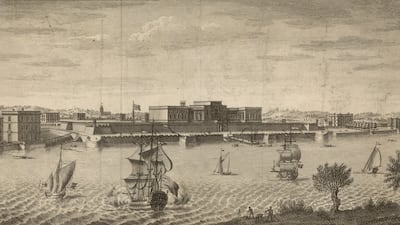
Fort William, Kolkata, as seen from the Hoogli River, circa 1760. Built by the British East India Company. All photos: Getty Images -
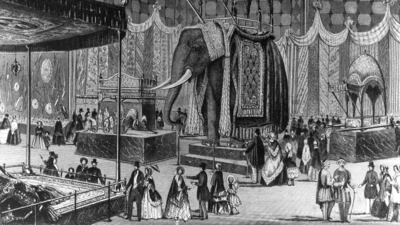
Visitors in the Indian Department of the Great Exhibition at Hyde Park, London, see the vast elephant and finery from India in 1851 -
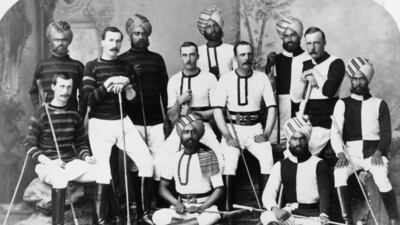
Indian princes and British Army officers in the Hyderabad contingent polo team in 1880 -
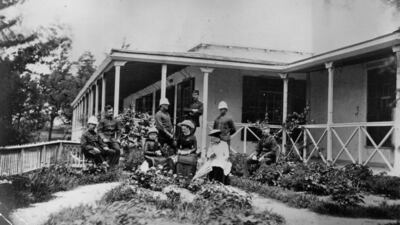
A group of British expatriates, some in military uniform, sitting outside their house in India in 1880 -
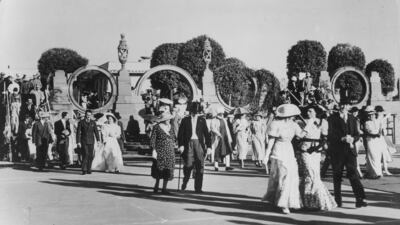
Members of the British Raj walking together in an Indian park in 1918 -

British troops in Calcutta in 1946 -

Lord Louis Mountbatten, 1st Earl Mountbatten of Burma, at Viceroy House in New Delhi, as he takes up his position as Viceroy of India in 1947 -
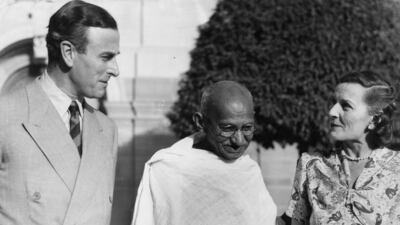
The Indian Nationalist leader Mahatma Gandhi meets the Viceroy of India Lord Mountbatten and his wife, at the Viceroy's House in New Delhi in 1947 -
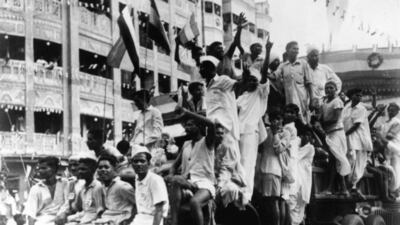
Citizens celebrate India's independence from British rule in the streets of Calcutta in 1947 -
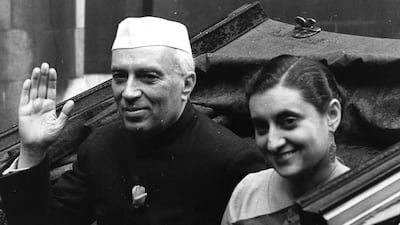
India's first Prime Minister Jawaharlal Nehru is driven through the streets of London after the Freedom of the City of London was bestowed on MR Nehru at the Guild Hall in 1956 -
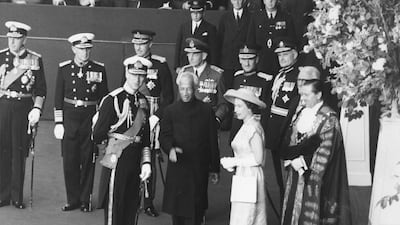
Queen Elizabeth II greeting Sarvepalli Radhakrishnan, President of India, as he arrives at Victoria Station, London, in 1963 -

British Prime Minister Tony Blair sits beside India's Prime Minister Manmohan Singh during a session of an India-UK investment summit in London in 2006 -
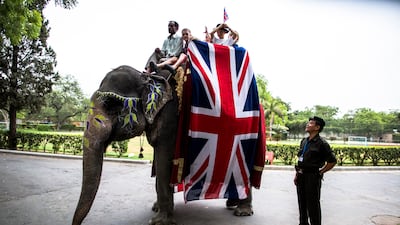
Family members of British expatriates living in New Delhi take a ride on Rupa, a rented elephant, during an event to celebrate Queen Elizabeth II Diamond Jubilee anniversary at the British High Commission in New Delhi in 2012 -
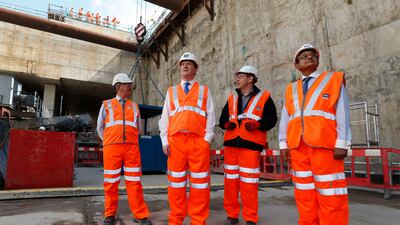
Britain's Chancellor of the Exchequer George Osborne accompanied by India's Finance Minister Palaniappan Chidambaram tour the Pudding Mill Lane Crossrail construction site in east London in 2013 -
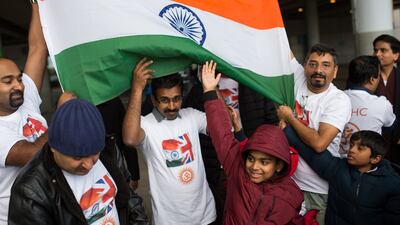
Members of the Greater Manchester Malayalee Hindu Community arrive at Wembley Stadium in London to hear Indian Prime Minister Narendra Modi speak in 2015 -

Suki Waterhouse and Neelam Gill with pilots Suneil Banerjee and Caitlin Emery to mark the launch of flights by the new British Airways Boeing 787-9 Dreamliner from London to New Dehli at Heathrow Airport in 2015 -
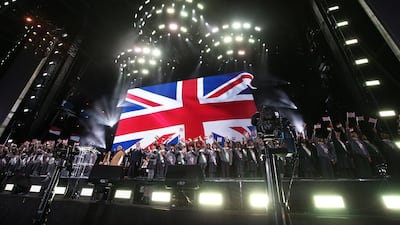
British Prime Minister David Cameron welcomes Mr Modi on stage at Wembley Stadium during a welcome rally in 2015 -
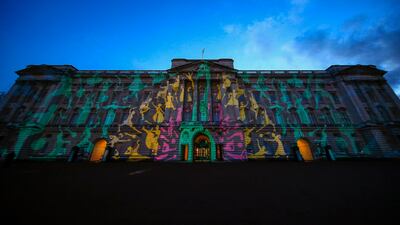
Buckingham Palace in London is lit with a projection of a colourful peacock at a reception to mark the launch of the UK-India Year of Culture 2017 -
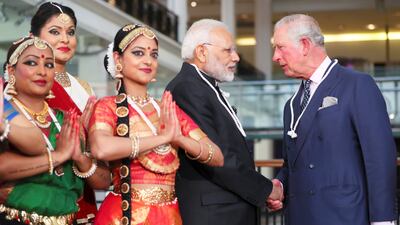
Prince Charles, Prince of Wales and Mr Modi during their visit to the Science Museum in London in 2018 -
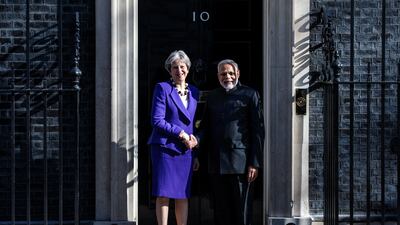
British Prime Minister Theresa May greets Mr Modi outside Number 10 Downing Street in London in 2018 -
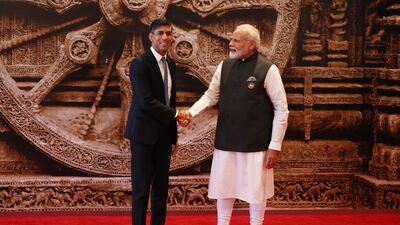
Mr Modi welcomes British Prime Minister Rishi Sunak to the G20 Leaders' Summit in New Delhi in 2023


'Major investment destination'
As such, smiles and handshakes were in abundance at the historic medieval Guildhall in London this week as figures from the City of London's financial district mingled and chatted with senior Indian business consultants and diplomats as the finance bridge was unveiled.
Aside from being an important vehicle in itself, the UKIIFB is also symbolic of a growing desire to deepen the trade relationship between the UK and India, not least with the added bonus of establishing a free-trade agreement (FTA).
“India is going to be a major investment destination for the world,” BVR Subrahmanyam, chief executive of NITI Aayog said in response to a question from The National. “15-20 per cent of the world’s incremental growth in absolute terms is now coming from India. So, this is a place where there will be a need for a lot of investment, industry as well as infrastructure.”

Mr Subrahmanyam added that India is now ready to be a magnet for global investment opportunities not least because the country “has licked the problems of the past in terms of providing basic services”, and the fact that “90 per cent of India is not yet built”.
“India will look like a construction site for a while,” he quipped.

'The hard yards'
The UK's new Labour government has certainly been making the right noises for closer ties, with business and trade secretary Jonathan Reynolds saying he wants teams back into negotiating rooms “as soon as possible”.
But the path to an FTA has not been simple and neither side wants to commit to a target date, given that Boris Johnson famously said a deal would be struck by Diwali in 2022, when he was Britain's prime minister.
Thirteen rounds of negotiations have been completed since early 2022, but the 14th was stalled when India went to the polls in April and then again when the UK had a general election in July.
As such, there's been a period of delay, not least because the new Labour government in the UK is making some changes within its negotiating team.
“We are committed to negotiating an FTA and Bilateral Investment Treaty with India and are working to resume talks and strengthen our trading relationship,” a representative for the UK's Department of Business and Trade (DBT) told The National.

“It is reasonable for the new government [in the UK] to take a little time as we expected them to want to do, to ensure that they are at a comfortable place with everything that’s been agreed so far,” said Vikram Doraiswamy, high commissioner of India to the UK.
“I’m not betraying any negotiating secrets when I say I believe we are close [to an FTA], but it’s not just in the eating, but ensuring it comes out of the oven at the right time. So, we are in the process of getting the last bits in place and those are always the hard yards.”
The “hard yards” mostly concern issues such as seriously lowering or scrapping tariffs on UK exports, such as diary products, cars and Scotch whisky, which can run as high as 150 per cent. For its part, India has some issues with Britain's visa regime and the fact that people who stay in the UK on business grounds are required to pay national insurance even though they would not qualify for social security or pensions in the UK.

“Many such issues may not be resolved at the negotiator level and may require political intervention as both countries look at issues differently,” Ajay Srivastava, founder of the Global Trade Research Initiative and a former Indian trade negotiator, told The National.
“Political stability following the elections could provide the necessary environment for resolving outstanding challenges and advancing towards an agreement,” he added.
Nonetheless, despite senior politicians, like Britain's Foreign Secretary David Lammy contending that an FTA would “unlock our shared potential and deliver growth from Bengaluru to Birmingham”, the practicalities of striking a deal are more to do with actions than words.
“We need to be very realistic about the prospects and the challenges that still remain to get the deal across the line,” said Ben Mellor, director of the India and Indian Ocean Directorate at the UK's Foreign, Commonwealth and Development Office (FCDO).
“Free trade is not always seen as quite the panacea that it was in the past, but it is still something that will deliver economic opportunity, growth and jobs in both our countries and is something, therefore, that is really important to those of us who are strong believers in the UK-India relationship.”
There is a general consensus that while a significant and important goal, an FTA is not a prerequisite for a healthy trade relationship, according to Chris Hayward, policy chairman at the City of London Corporation.
“Of course, getting an FTA with India is highly desirable, but it is not essential,” he said, “business does not stop because we have not got an FTA with India,” he said.

“Of course, an FTA creates an endorsement and an environment which is positive, but we should never think about it as a be-all and end-all. An FTA in itself doesn’t achieve economic growth and business opportunities.”
Nonetheless, an FTA would be significant for both the UK and India. It would be the biggest trade success any British government will have pulled off since Brexit, adding £3.3 billion ($4.3 billion) to the UK economy by 2035 (in 2019 prices), which would be an equivalent increase of 0.22 per cent.
Likewise for India, said Chietigi Bajpaee, senior research fellow at Chatham House, the conclusion of a deal could “grant New Delhi more leverage in negotiations with other more significant trade partners, such as with the European Union, which are ongoing”.
“Beyond the specifics of the deal itself, the FTA is also important in symbolising a renewed commitment by both countries towards the bilateral relationship.”
'Champagne moments'
Much is at stake. After all, the total trade in goods and services (exports plus imports) between the UK and India was £39.7 billion ($52.2 billion) in the four quarters to the first quarter of this year, an increase of 4 per cent on the four quarters ending at Q1 in 2023.
India is the UK's 11th largest trading partner and accounts for 2.3 per cent of Britain's total trade, according to the DBT.
Ten years ago, when Mr Modi came to power in India, the country's economy was sluggish and not the most attractive place for international investors to put their money. While it cannot be denied that, at times, Mr Modi and his government have faced political controversy at home and abroad, between 2014 and 2022, GDP per capita in India grew by 40 per cent, and the IMF predicts its economic growth will outstrip that of China this year.
But sometimes the picture is less clear. Good signs like the inclusion of Indian bonds in the JP Morgan Index need to be balanced with the opaqueness of the official figures on poverty.
Nonetheless, “Modinomics” is reaping rewards for many Indians and the opening up of the economy is grabbing the attention of foreign investors and governments, hence the UK's efforts towards an FTA and the launch of the UKIIFB.
Construction is ubiquitous in India as infrastructure spending is one of the keystones of Mr Modi's economic policy. He has already spent over $100 billon every year for the last three years on such projects and there is more to come, particularly if it can be done in conjunction with foreign capital.
Trade deals are all well and good, Mr Mellor said, “but even when we get that agreed it will only be the beginning of unlocking the potential in terms of the investment and trading opportunities”.
“We have a danger as government of the ‘champagne moment’, the signature on the piece of paper rather than the hard work.
“The hard work starts at the point of signature, it doesn’t stop there.”

