India's Reliance announced a joint venture with UK fashion brand Superdry, acquiring the company’s intellectual property assets for India, as well as for Bangladesh and Sri Lanka. Reuters

How tapping foreign retail brands is helping India’s Reliance cash in on future growth


  • English
  • Arabic

Mukesh Ambani’s Reliance Industries is rapidly expanding its fashion retail footprint in India in an effort to tap a market that has enormous scope for growth, with consumer spending only set to rise in the world’s most populous country.

The conglomerate is focused on expanding an array of international brands in India.

In its latest move, the group’s Reliance Brands – part of Reliance Retail – on Wednesday announced a joint venture with the UK fashion brand Superdry, acquiring the company’s intellectual property assets for India, as well as for Bangladesh and Sri Lanka.

The move will see Reliance Brands owning 76 per cent for $48 million, while Superdry will own the remaining 24 per cent stake. Reliance Brands already had a long-term franchise agreement with Superdry, which began in 2012.

While announcing the deal, Reliance Brands said the “strategic evolution of brand ownership aims to capitalise on the increasing affluence and evolving consumption patterns of Indian shoppers”. That “coupled with Reliance Brands’ appetite to invest in accelerating Indian consumption narrative, the deal paves way for Superdry’s future expansion in the country and neighbouring territories”.

Reliance Retail has brought some of the biggest international fashion and retail brands to India. Its other partnerships include Jimmy Choo, Burberry, Michael Kors, Armani Exchange, and Coach. Reliance Brands operates 905 stores and 1,264 shop-in-shops in India.

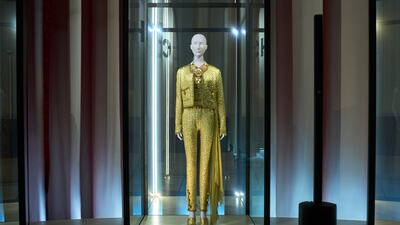
  • An embossed silk lamé Chanel jacket, trousers and shoes set from autumn/winter 1989 on display at the NMACC's India in Fashion exhibition. All photos: NMACC
    An embossed silk lamé Chanel jacket, trousers and shoes set from autumn/winter 1989 on display at the NMACC's India in Fashion exhibition. All photos: NMACC
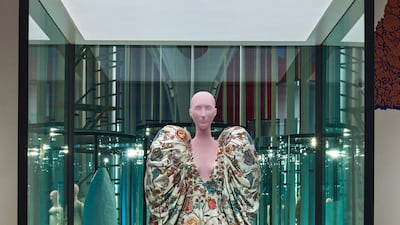
  • A dress by Rahul Mishra, specially commissioned for the India in Fashion exhibition
    A dress by Rahul Mishra, specially commissioned for the India in Fashion exhibition
  • Three looks on display by Rahul Mishra from spring/summer 2023
    Three looks on display by Rahul Mishra from spring/summer 2023
  • A silk Jean Paul Gaultier evening ensemble from spring/summer 2013
    A silk Jean Paul Gaultier evening ensemble from spring/summer 2013
  • Three looks by Indian designer Sabyasachi - an asymmetrical kedia, tulle lehenga and veil from 2015's Bater collection; a flapper-style gown with an extended tulle gilet and a veil from 2013; and a fluted tulle gown also from the Bater collection
    Three looks by Indian designer Sabyasachi - an asymmetrical kedia, tulle lehenga and veil from 2015's Bater collection; a flapper-style gown with an extended tulle gilet and a veil from 2013; and a fluted tulle gown also from the Bater collection
  • Ensembles from the Chanel section of the exhibition
    Ensembles from the Chanel section of the exhibition
  • Ensembles by Zandra Rhodes (left and centre) and Jean Paul Gaultier (right)
    Ensembles by Zandra Rhodes (left and centre) and Jean Paul Gaultier (right)

India’s $3.75 trillion economy is a consumption-driven one – and consumer spending is only expected to increase over the coming years in what is the world’s fastest-growing major economy.

The country’s retail sector took a hit during the Covid-19 pandemic, but since then, it has recovered to surpass pre-pandemic levels. It is expected to see 10 per cent growth annually and reach $2 trillion by 2032, according to a report by the Boston Consulting Group.

Reliance and foreign brands aim to tap a market in a country of more than 1.4 billion people with an increasing propensity to spend and a rising appetite for branded goods.

“The younger population is open to spending more, offering opportunities for brands to explore the Indian market … with its growing importance,” says Anil Joshi, managing partner at Unicorn India Ventures, a venture fund.

India is offering a growth opportunity at a time when some other markets for retailers are sluggish.

Superdry's joint venture with Reliance comes as the British retailer has been struggling in its home market. Last month, Superdry reported a loss of £148 million ($181 million) for the year to April 29, as its sales were hit amid a cost-of-living crisis in the UK. The company said this had impacted its liquidity and needed to shore up its balance sheet as part of its turnaround plan.

For Reliance, there are clear advantages to partnering with well-established names.

“Rather than initiating new brands and businesses from scratch, Reliance is actively pursuing mergers, acquisitions, partnerships and collaborations with established brands and companies,” says Parul Saxena, associate professor of management at Sharda University in Noida in the northern Indian state of Uttar Pradesh.

“This approach offers the advantage of rapid portfolio expansion and the assimilation of valuable expertise and market presence from these existing entities.”

For international brands, while India is an increasingly important potential market, Ms Saxena explains that it is also one that has a complex regulatory landscape, including restrictions on foreign ownership in certain sectors, and requirements for compliance with local sourcing requirements, as well as the challenges that come with navigating varying state-level regulations. This means that foreign brands often partner with local companies to enter India.

Owning a brand will help Reliance to have better control on market demand and cost
Anil Joshi,
managing partner, Unicorn India Ventures

“India's burgeoning middle class, expanding urban consumer base, increasing purchasing power, untapped retail potential, and government initiatives have collectively contributed to making India an immensely promising and attractive marketplace for multinational corporations in the retail sector,” says Ms Saxena.

“The country's retail industry is poised for exponential growth, with opportunities not only in major cities but also in smaller towns and cities, setting the stage for a transformative period of development and expansion in the organised retail market.”

During the current financial year, which runs until March 2024, the brick and mortar apparel segment of India's retail market is expected to have revenue growth of 7 per cent to 8 per cent over the previous year, according to Crisil Ratings, a global analytics company based in India, which is part of S&P Global.

It says that this is buoyed by the festive and wedding season demand and that continued store expansion, including to smaller cities, will also help growth this year and over the medium term.

“Demand from the premium segment is rising gradually with consumers increasingly preferring branded garments,” says Anuj Sethi, a senior director at Crisil.

This bodes well for foreign brands such as Superdry in India, as well as for Reliance as it expands its retail business.

“We believe that the spree of acquisitions and joint ventures of Reliance with several foreign brands is aimed at capturing the growing affluence and increasing shift of Indian consumers towards premium brands,” says Manish Chowdhury, head of research at broker StoxBox.

“With India’s per capita income set to increase to $4,000 from $2,500 in the next five to six years, the discretionary spending is set to rise which would benefit companies with a presence in the mid-to-upper spend range.”

There is an opportunity in premium fashion that is still “relatively untapped” across much of India, he adds.

For Reliance, there are clear advantages to partnering with well-established names. Reuters

“Also, Reliance has aptly built its presence across product categories including clothing, furniture, toys, FMCG [fast-moving consumer goods] and cosmetics, thereby creating a complete ecosystem in the retail space which it would leverage with its pan-India presence,” Mr Chowdhury says.

Other factors that are likely to support rising demand for premium retail, including fashion brands over the coming years, include the “influx of population towards urban and semi-urban areas, rise of nuclear families, easy availability of credit and rising penetration of digital channels for information on social media, and shopping through e-commerce”, he adds.

For Reliance, which has interests across sectors including energy and telecommunications, its retail expansion “diversifies its revenue streams, thereby mitigating risks associated with reliance on a single industry”, according to Ms Saxena.

“Furthermore, in its pursuit of becoming a ‘house of brands’, Reliance is poised to challenge some of the world’s largest consumer groups and established brands that have operated in India for decades,” she says.

Entering joint ventures, as Reliance has done with Superdry, can open up new sourcing channels, and allow the introduction of products aimed at the Indian market, and ultimately help to create cost efficiencies and improve profitability, analysts say.

“Owning a brand will help Reliance to have better control on market demand and cost,” says Mr Joshi of Unicorn India Ventures.

“This acquisition will help get a decent market share of the growing demand for their range of products. Reliance has been acquiring brands to have better control on supply and cost, and the acquisition of Superdry appears to be a part of their strategy.”

One of the reasons Superdry entered the joint venture is that it will enable the brands to expand more rapidly in India.

“India represents an incredible opportunity for Superdry, and our excellent existing relationship with Reliance means we will be able to hit the ground running,” Julian Dunkerton, Superdry’s chief executive and founder, said.

“Under our new partnership, I am confident that the brand will … become a major force in the Indian fashion market.”

Superdry said it will continue to support brand development, sharing expertise in design, product development, and marketing in India.


Company%20profile
%3Cp%3E%3Cstrong%3ECompany%20name%3A%20%3C%2Fstrong%3EHakbah%0D%3Cbr%3E%3Cstrong%3EStarted%3A%20%3C%2Fstrong%3E2018%0D%3Cbr%3E%3Cstrong%3EFounder%3A%20%3C%2Fstrong%3ENaif%20AbuSaida%0D%3Cbr%3E%3Cstrong%3EBased%3A%20%3C%2Fstrong%3ESaudi%20Arabia%0D%3Cbr%3E%3Cstrong%3ESector%3A%20%3C%2Fstrong%3EFinTech%0D%3Cbr%3E%3Cstrong%3ECurrent%20number%20of%20staff%3A%20%3C%2Fstrong%3E22%20%0D%3Cbr%3E%3Cstrong%3EInitial%20investment%3A%20%3C%2Fstrong%3E%24200%2C000%0D%3Cbr%3E%3Cstrong%3EInvestment%20stage%3A%20%3C%2Fstrong%3Epre-Series%20A%0D%3Cbr%3E%3Cstrong%3EInvestors%3A%20%3C%2Fstrong%3EGlobal%20Ventures%20and%20Aditum%20Investment%20Management%0D%3Cbr%3E%3Cbr%3E%3C%2Fp%3E%0A
Libya's Gold

UN Panel of Experts found regime secretly sold a fifth of the country's gold reserves. 

The panel’s 2017 report followed a trail to West Africa where large sums of cash and gold were hidden by Abdullah Al Senussi, Qaddafi’s former intelligence chief, in 2011.

Cases filled with cash that was said to amount to $560m in 100 dollar notes, that was kept by a group of Libyans in Ouagadougou, Burkina Faso.

A second stash was said to have been held in Accra, Ghana, inside boxes at the local offices of an international human rights organisation based in France.

Teri%20Baaton%20Mein%20Aisa%20Uljha%20Jiya
%3Cp%3E%3Cstrong%3EDirectors%3A%3C%2Fstrong%3E%20Amit%20Joshi%20and%20Aradhana%20Sah%3C%2Fp%3E%0A%3Cp%3E%3Cstrong%3ECast%3A%3C%2Fstrong%3E%20Shahid%20Kapoor%2C%20Kriti%20Sanon%2C%20Dharmendra%2C%20Dimple%20Kapadia%2C%20Rakesh%20Bedi%3C%2Fp%3E%0A%3Cp%3E%3Cstrong%3ERating%3A%3C%2Fstrong%3E%204%2F5%3C%2Fp%3E%0A

Mercer, the investment consulting arm of US services company Marsh & McLennan, expects its wealth division to at least double its assets under management (AUM) in the Middle East as wealth in the region continues to grow despite economic headwinds, a company official said.

Mercer Wealth, which globally has $160 billion in AUM, plans to boost its AUM in the region to $2-$3bn in the next 2-3 years from the present $1bn, said Yasir AbuShaban, a Dubai-based principal with Mercer Wealth.

Within the next two to three years, we are looking at reaching $2 to $3 billion as a conservative estimate and we do see an opportunity to do so,” said Mr AbuShaban.

Mercer does not directly make investments, but allocates clients’ money they have discretion to, to professional asset managers. They also provide advice to clients.

“We have buying power. We can negotiate on their (client’s) behalf with asset managers to provide them lower fees than they otherwise would have to get on their own,” he added.

Mercer Wealth’s clients include sovereign wealth funds, family offices, and insurance companies among others.

From its office in Dubai, Mercer also looks after Africa, India and Turkey, where they also see opportunity for growth.

Wealth creation in Middle East and Africa (MEA) grew 8.5 per cent to $8.1 trillion last year from $7.5tn in 2015, higher than last year’s global average of 6 per cent and the second-highest growth in a region after Asia-Pacific which grew 9.9 per cent, according to consultancy Boston Consulting Group (BCG). In the region, where wealth grew just 1.9 per cent in 2015 compared with 2014, a pickup in oil prices has helped in wealth generation.

BCG is forecasting MEA wealth will rise to $12tn by 2021, growing at an annual average of 8 per cent.

Drivers of wealth generation in the region will be split evenly between new wealth creation and growth of performance of existing assets, according to BCG.

Another general trend in the region is clients’ looking for a comprehensive approach to investing, according to Mr AbuShaban.

“Institutional investors or some of the families are seeing a slowdown in the available capital they have to invest and in that sense they are looking at optimizing the way they manage their portfolios and making sure they are not investing haphazardly and different parts of their investment are working together,” said Mr AbuShaban.

Some clients also have a higher appetite for risk, given the low interest-rate environment that does not provide enough yield for some institutional investors. These clients are keen to invest in illiquid assets, such as private equity and infrastructure.

“What we have seen is a desire for higher returns in what has been a low-return environment specifically in various fixed income or bonds,” he said.

“In this environment, we have seen a de facto increase in the risk that clients are taking in things like illiquid investments, private equity investments, infrastructure and private debt, those kind of investments were higher illiquidity results in incrementally higher returns.”

The Abu Dhabi Investment Authority, one of the largest sovereign wealth funds, said in its 2016 report that has gradually increased its exposure in direct private equity and private credit transactions, mainly in Asian markets and especially in China and India. The authority’s private equity department focused on structured equities owing to “their defensive characteristics.”

PROFILE OF SWVL

Started: April 2017

Founders: Mostafa Kandil, Ahmed Sabbah and Mahmoud Nouh

Based: Cairo, Egypt

Sector: transport

Size: 450 employees

Investment: approximately $80 million

Investors include: Dubai’s Beco Capital, US’s Endeavor Catalyst, China’s MSA, Egypt’s Sawari Ventures, Sweden’s Vostok New Ventures, Property Finder CEO Michael Lahyani

UAE%20athletes%20heading%20to%20Paris%202024
%3Cp%3E%3Cstrong%3EEquestrian%3C%2Fstrong%3E%3Cbr%3EAbdullah%20Humaid%20Al%20Muhairi%2C%20Abdullah%20Al%20Marri%2C%20Omar%20Al%20Marzooqi%2C%20Salem%20Al%20Suwaidi%2C%20and%20Ali%20Al%20Karbi%20(four%20to%20be%20selected).%3Cbr%3E%3Cstrong%3EJudo%3C%2Fstrong%3E%3Cbr%3EMen%3A%20Narmandakh%20Bayanmunkh%20(66kg)%2C%20Nugzari%20Tatalashvili%20(81kg)%2C%20Aram%20Grigorian%20(90kg)%2C%20Dzhafar%20Kostoev%20(100kg)%2C%20Magomedomar%20Magomedomarov%20(%2B100kg)%3B%20women's%20Khorloodoi%20Bishrelt%20(52kg).%3Cbr%3E%3Cbr%3E%3Cstrong%3ECycling%3C%2Fstrong%3E%3Cbr%3ESafia%20Al%20Sayegh%20(women's%20road%20race).%3Cbr%3E%3Cbr%3E%3Cstrong%3ESwimming%3C%2Fstrong%3E%3Cbr%3EMen%3A%20Yousef%20Rashid%20Al%20Matroushi%20(100m%20freestyle)%3B%20women%3A%20Maha%20Abdullah%20Al%20Shehi%20(200m%20freestyle).%3Cbr%3E%3Cbr%3E%3Cstrong%3EAthletics%3C%2Fstrong%3E%3Cbr%3EMaryam%20Mohammed%20Al%20Farsi%20(women's%20100%20metres).%3C%2Fp%3E%0A
What is the FNC?

The Federal National Council is one of five federal authorities established by the UAE constitution. It held its first session on December 2, 1972, a year to the day after Federation.
It has 40 members, eight of whom are women. The members represent the UAE population through each of the emirates. Abu Dhabi and Dubai have eight members each, Sharjah and Ras al Khaimah six, and Ajman, Fujairah and Umm Al Quwain have four.
They bring Emirati issues to the council for debate and put those concerns to ministers summoned for questioning. 
The FNC’s main functions include passing, amending or rejecting federal draft laws, discussing international treaties and agreements, and offering recommendations on general subjects raised during sessions.
Federal draft laws must first pass through the FNC for recommendations when members can amend the laws to suit the needs of citizens. The draft laws are then forwarded to the Cabinet for consideration and approval. 
Since 2006, half of the members have been elected by UAE citizens to serve four-year terms and the other half are appointed by the Ruler’s Courts of the seven emirates.
In the 2015 elections, 78 of the 252 candidates were women. Women also represented 48 per cent of all voters and 67 per cent of the voters were under the age of 40.
 

The%20specs
%3Cp%3E%3Cstrong%3EEngine%3A%3C%2Fstrong%3E%204.0-litre%20twin-turbo%20V8%3Cbr%3E%3Cstrong%3EPower%3A%20%3C%2Fstrong%3E680hp%20at%206%2C000rpm%3Cbr%3E%3Cstrong%3ETorque%3A%20%3C%2Fstrong%3E800Nm%20at%202%2C750-6%2C000rpm%3Cbr%3E%3Cstrong%3ETransmission%3A%20%3C%2Fstrong%3ERear-mounted%20eight-speed%20auto%3Cbr%3E%3Cstrong%3EFuel%20consumption%3A%20%3C%2Fstrong%3E13.6L%2F100km%3Cbr%3E%3Cstrong%3EOn%20sale%3A%3C%2Fstrong%3E%20Orderbook%20open%3B%20deliveries%20start%20end%20of%20year%3Cbr%3E%3Cstrong%3EPrice%3A%20%3C%2Fstrong%3EFrom%20Dh970%2C000%3C%2Fp%3E%0A
The specs

Engine: 3.8-litre, twin-turbo V8

Transmission: eight-speed automatic

Power: 582bhp

Torque: 730Nm

Price: Dh649,000

On sale: now  

The White Lotus: Season three

Creator: Mike White

Starring: Walton Goggins, Jason Isaacs, Natasha Rothwell

Rating: 4.5/5

Company profile

Date started: December 24, 2018

Founders: Omer Gurel, chief executive and co-founder and Edebali Sener, co-founder and chief technology officer

Based: Dubai Media City

Number of employees: 42 (34 in Dubai and a tech team of eight in Ankara, Turkey)

Sector: ConsumerTech and FinTech

Cashflow: Almost $1 million a year

Funding: Series A funding of $2.5m with Series B plans for May 2020

Our legal consultant

Name: Hassan Mohsen Elhais

Position: legal consultant with Al Rowaad Advocates and Legal Consultants

THE%20HOLDOVERS
%3Cp%3E%3Cstrong%3EDirector%3A%20%3C%2Fstrong%3EAlexander%20Payne%3C%2Fp%3E%0A%3Cp%3E%3Cstrong%3EStarring%3A%3C%2Fstrong%3E%20Paul%20Giamatti%2C%20Da'Vine%20Joy%20Randolph%2C%20Dominic%20Sessa%3C%2Fp%3E%0A%3Cp%3E%3Cstrong%3ERating%3A%3C%2Fstrong%3E%204.5%2F5%3C%2Fp%3E%0A
GAC GS8 Specs

Engine: 2.0-litre 4cyl turbo

Power: 248hp at 5,200rpm

Torque: 400Nm at 1,750-4,000rpm

Transmission: 8-speed auto

Fuel consumption: 9.1L/100km

On sale: Now

Price: From Dh149,900

The Sand Castle

Director: Matty Brown

Stars: Nadine Labaki, Ziad Bakri, Zain Al Rafeea, Riman Al Rafeea

Rating: 2.5/5

Normal People

Sally Rooney, Faber & Faber
 

The specs: 2019 BMW i8 Roadster

Price, base: Dh708,750

Engine: 1.5L three-cylinder petrol, plus 11.6 kWh lithium-ion battery

Transmission: Six-speed automatic

Power: 374hp (total)

Torque: 570Nm (total)

Fuel economy, combined: 2.0L / 100km

The specs

Engine: 2.0-litre 4cyl turbo

Power: 261hp at 5,500rpm

Torque: 405Nm at 1,750-3,500rpm

Transmission: 9-speed auto

Fuel consumption: 6.9L/100km

On sale: Now

Price: From Dh117,059

Ten tax points to be aware of in 2026

1. Domestic VAT refund amendments: request your refund within five years

If a business does not apply for the refund on time, they lose their credit.

2. E-invoicing in the UAE

Businesses should continue preparing for the implementation of e-invoicing in the UAE, with 2026 a preparation and transition period ahead of phased mandatory adoption. 

3. More tax audits

Tax authorities are increasingly using data already available across multiple filings to identify audit risks. 

4. More beneficial VAT and excise tax penalty regime

Tax disputes are expected to become more frequent and more structured, with clearer administrative objection and appeal processes. The UAE has adopted a new penalty regime for VAT and excise disputes, which now mirrors the penalty regime for corporate tax.

5. Greater emphasis on statutory audit

There is a greater need for the accuracy of financial statements. The International Financial Reporting Standards standards need to be strictly adhered to and, as a result, the quality of the audits will need to increase.

6. Further transfer pricing enforcement

Transfer pricing enforcement, which refers to the practice of establishing prices for internal transactions between related entities, is expected to broaden in scope. The UAE will shortly open the possibility to negotiate advance pricing agreements, or essentially rulings for transfer pricing purposes. 

7. Limited time periods for audits

Recent amendments also introduce a default five-year limitation period for tax audits and assessments, subject to specific statutory exceptions. While the standard audit and assessment period is five years, this may be extended to up to 15 years in cases involving fraud or tax evasion. 

8. Pillar 2 implementation 

Many multinational groups will begin to feel the practical effect of the Domestic Minimum Top-Up Tax (DMTT), the UAE's implementation of the OECD’s global minimum tax under Pillar 2. While the rules apply for financial years starting on or after January 1, 2025, it is 2026 that marks the transition to an operational phase.

9. Reduced compliance obligations for imported goods and services

Businesses that apply the reverse-charge mechanism for VAT purposes in the UAE may benefit from reduced compliance obligations. 

10. Substance and CbC reporting focus

Tax authorities are expected to continue strengthening the enforcement of economic substance and Country-by-Country (CbC) reporting frameworks. In the UAE, these regimes are increasingly being used as risk-assessment tools, providing tax authorities with a comprehensive view of multinational groups’ global footprints and enabling them to assess whether profits are aligned with real economic activity. 

Contributed by Thomas Vanhee and Hend Rashwan, Aurifer

Updated: October 10, 2023, 10:15 AM