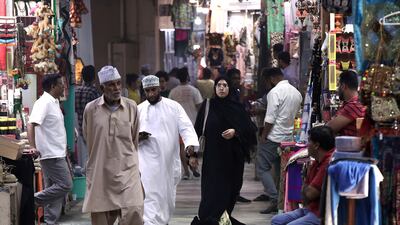
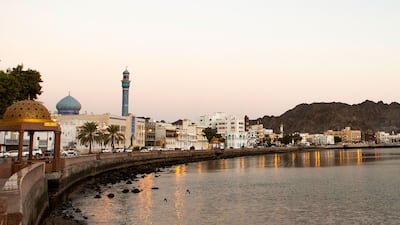
Khareef season in Salalah, Oman. The Gulf country expects a budget deficit of $3.39 billion in 2023. Photo: Oman Ministry of Tourism

Oman records budget surplus of $1.7 billion in first half of 2023


Deena Kamel
  • English
  • Arabic

Oman recorded a budget surplus of 656 million Omani rials ($1.7 billion) in the first six months of 2023 on the back of higher oil revenue, according to the Ministry of Finance.

That compares with a surplus of 784 million rials recorded by the sultanate in the corresponding period last year.

Net oil revenue grew to 3.2 billion rials in the first half of 2023, up 2 per cent from the same period in 2022, the ministry said in its Fiscal Performance Bulletin.

Average oil prices amounted to $83 per barrel while average oil production reached 1,061,000 barrels per day, it said.

The Gulf country's public revenue for the six months stood at 6.3 billion rials, a decline of 6 per cent annually, while public spending for the period dropped 4 per cent on an annual basis to 5.6 billion rials, the ministry said.

“By the end of H1 2023, the Ministry of Finance did not withdraw from reserves as planned, as a result of generating additional revenue,” it said.

Oman expects a budget deficit of 1.3 billion Omani rials in 2023, or 3 per cent of its gross domestic product. The revenue and spending estimates for the year are based on an oil price assumption of $55 per barrel.

Oman's economy is on a strong footing as it presses forward with its economic diversification initiatives, buttressed by favourable oil prices and fiscal reforms at a time when inflation remains contained, the International Monetary Fund said in June.

Real GDP grew by 4.3 per cent in 2022, primarily driven by a strong expansion of the hydrocarbon sector, it said.

  • Oman predicted a fiscal deficit of 1.5 billion rials ($3.9bn) in 2022, down about 32 per cent from the previous year. Victor Besa / The National
    Oman predicted a fiscal deficit of 1.5 billion rials ($3.9bn) in 2022, down about 32 per cent from the previous year. Victor Besa / The National
  • A draft law introducing income tax on high earners in Oman was passed on Sunday by the country's Shura Council. AFP
    A draft law introducing income tax on high earners in Oman was passed on Sunday by the country's Shura Council. AFP
  • Pending approval from the Council of Ministers and a final endorsement from Sultan Haitham, the tax will then become law. AFP
    Pending approval from the Council of Ministers and a final endorsement from Sultan Haitham, the tax will then become law. AFP
  • As the levy for wealthier people becomes more of a reality in Oman, citizens at both ends of the pay scale have expressed mixed reactions. AFP
    As the levy for wealthier people becomes more of a reality in Oman, citizens at both ends of the pay scale have expressed mixed reactions. AFP
  • If a tax on income is introduced, the sultanate would be the first GCC country to do so. AFP
    If a tax on income is introduced, the sultanate would be the first GCC country to do so. AFP
  • Oman began weighing up plans to introduce income tax on high earners two years ago, as part of the finance ministry's 2020-2024 economic scheme and efforts to reduce the fiscal deficit. Unsplash
    Oman began weighing up plans to introduce income tax on high earners two years ago, as part of the finance ministry's 2020-2024 economic scheme and efforts to reduce the fiscal deficit. Unsplash
  • Plans for an income tax on high earners were mentioned in a bond prospectus published by the ministry in 2020, when the sultanate raised $2 billion in external financing. Silvia Razgova / The National
    Plans for an income tax on high earners were mentioned in a bond prospectus published by the ministry in 2020, when the sultanate raised $2 billion in external financing. Silvia Razgova / The National

Economic growth is projected to slow to 1.3 per cent in 2023 and then rebound to 2.7 per cent in 2024, amid oil production cuts by Opec+ and moderate growth in the non-hydrocarbon sector.

Fitch Ratings expects the sultanate’s economy to expand 1.1 per cent in 2023, slowing from 4.3 per cent in 2022 on lower oil production. It estimates non-oil sector growth of 2.3 per cent, driven by the recovery of the construction industry.

By the end of the first half of 2023, the Ministry of Finance said it repaid more than 1.5 billion rials against public debt, reducing the total public debt to 16.3 billion rials, it said.

“Oman’s general budgets registered deficits as a result of the oil price collapse since 2014, forcing Oman to finance these deficits by borrowing from local and external institutions,” the ministry said.

Oman’s public debt increased to 29.1 per cent of GDP in 2016 from 4.9 per cent of GDP in 2014 and peaked at 67.9 per cent of GDP in 2020.

“Despite oil prices remaining low and the impact of the Covid-19 pandemic on the economy, Oman has succeeded in reducing public debt to 40 per cent in 2022,” it said.


COMPANY%20PROFILE
%3Cp%3E%3Cstrong%3EDate%20started%3A%3C%2Fstrong%3E%202020%3Cbr%3E%3Cstrong%3EFounders%3A%3C%2Fstrong%3E%20Khaldoon%20Bushnaq%20and%20Tariq%20Seksek%3Cbr%3E%3Cstrong%3EBased%3A%3C%2Fstrong%3E%20Abu%20Dhabi%20Global%20Market%3Cbr%3E%3Cstrong%3ESector%3A%3C%2Fstrong%3E%20HealthTech%3Cbr%3E%3Cstrong%3ENumber%20of%20staff%3A%3C%2Fstrong%3E%20100%3Cbr%3E%3Cstrong%3EFunding%20to%20date%3A%3C%2Fstrong%3E%20%2415%20million%3C%2Fp%3E%0A
Tips to stay safe during hot weather
  • Stay hydrated: Drink plenty of fluids, especially water. Avoid alcohol and caffeine, which can increase dehydration.
  • Seek cool environments: Use air conditioning, fans, or visit community spaces with climate control.
  • Limit outdoor activities: Avoid strenuous activity during peak heat. If outside, seek shade and wear a wide-brimmed hat.
  • Dress appropriately: Wear lightweight, loose and light-coloured clothing to facilitate heat loss.
  • Check on vulnerable people: Regularly check in on elderly neighbours, young children and those with health conditions.
  • Home adaptations: Use blinds or curtains to block sunlight, avoid using ovens or stoves, and ventilate living spaces during cooler hours.
  • Recognise heat illness: Learn the signs of heat exhaustion and heat stroke (dizziness, confusion, rapid pulse, nausea), and seek medical attention if symptoms occur.
COMPANY%20PROFILE%20
%3Cp%3E%3Cstrong%3ECompany%20name%3A%20%3C%2Fstrong%3ENomad%20Homes%3Cbr%3E%3Cstrong%3EStarted%3A%20%3C%2Fstrong%3E2020%3Cbr%3E%3Cstrong%3EFounders%3A%20%3C%2Fstrong%3EHelen%20Chen%2C%20Damien%20Drap%2C%20and%20Dan%20Piehler%3Cbr%3E%3Cstrong%3EBased%3A%3C%2Fstrong%3E%20UAE%20and%20Europe%3Cbr%3E%3Cstrong%3EIndustry%3C%2Fstrong%3E%3A%20PropTech%3Cbr%3E%3Cstrong%3EFunds%20raised%20so%20far%3A%3C%2Fstrong%3E%20%2444m%3Cbr%3E%3Cstrong%3EInvestors%3A%3C%2Fstrong%3E%20Acrew%20Capital%2C%2001%20Advisors%2C%20HighSage%20Ventures%2C%20Abstract%20Ventures%2C%20Partech%2C%20Precursor%20Ventures%2C%20Potluck%20Ventures%2C%20Knollwood%20and%20several%20undisclosed%20hedge%20funds%3C%2Fp%3E%0A

Mercer, the investment consulting arm of US services company Marsh & McLennan, expects its wealth division to at least double its assets under management (AUM) in the Middle East as wealth in the region continues to grow despite economic headwinds, a company official said.

Mercer Wealth, which globally has $160 billion in AUM, plans to boost its AUM in the region to $2-$3bn in the next 2-3 years from the present $1bn, said Yasir AbuShaban, a Dubai-based principal with Mercer Wealth.

Within the next two to three years, we are looking at reaching $2 to $3 billion as a conservative estimate and we do see an opportunity to do so,” said Mr AbuShaban.

Mercer does not directly make investments, but allocates clients’ money they have discretion to, to professional asset managers. They also provide advice to clients.

“We have buying power. We can negotiate on their (client’s) behalf with asset managers to provide them lower fees than they otherwise would have to get on their own,” he added.

Mercer Wealth’s clients include sovereign wealth funds, family offices, and insurance companies among others.

From its office in Dubai, Mercer also looks after Africa, India and Turkey, where they also see opportunity for growth.

Wealth creation in Middle East and Africa (MEA) grew 8.5 per cent to $8.1 trillion last year from $7.5tn in 2015, higher than last year’s global average of 6 per cent and the second-highest growth in a region after Asia-Pacific which grew 9.9 per cent, according to consultancy Boston Consulting Group (BCG). In the region, where wealth grew just 1.9 per cent in 2015 compared with 2014, a pickup in oil prices has helped in wealth generation.

BCG is forecasting MEA wealth will rise to $12tn by 2021, growing at an annual average of 8 per cent.

Drivers of wealth generation in the region will be split evenly between new wealth creation and growth of performance of existing assets, according to BCG.

Another general trend in the region is clients’ looking for a comprehensive approach to investing, according to Mr AbuShaban.

“Institutional investors or some of the families are seeing a slowdown in the available capital they have to invest and in that sense they are looking at optimizing the way they manage their portfolios and making sure they are not investing haphazardly and different parts of their investment are working together,” said Mr AbuShaban.

Some clients also have a higher appetite for risk, given the low interest-rate environment that does not provide enough yield for some institutional investors. These clients are keen to invest in illiquid assets, such as private equity and infrastructure.

“What we have seen is a desire for higher returns in what has been a low-return environment specifically in various fixed income or bonds,” he said.

“In this environment, we have seen a de facto increase in the risk that clients are taking in things like illiquid investments, private equity investments, infrastructure and private debt, those kind of investments were higher illiquidity results in incrementally higher returns.”

The Abu Dhabi Investment Authority, one of the largest sovereign wealth funds, said in its 2016 report that has gradually increased its exposure in direct private equity and private credit transactions, mainly in Asian markets and especially in China and India. The authority’s private equity department focused on structured equities owing to “their defensive characteristics.”

Updated: August 13, 2023, 1:48 PM