


The global economy is now at a “crucial and perilous” point as countries struggle to control inflation, according to the Bank for International Settlements (BIS), the group of the world’s largest central banks.
Despite the relentless increase in rates over the past 18 months, inflation in many top economies remains stubbornly high, while the jump in borrowing costs triggered the most serious banking collapses since the financial crisis 15 years ago, the Switzerland-based organisation said in its annual report published on Sunday.
“The global economy has reached a critical and perilous juncture. Policymakers are facing a unique constellation of challenges. Each of them, taken in isolation, is not new; but their combination on a global scale is,” the BIS said.
“On the one hand, central banks have been tightening to bring inflation back under control: prices are rising far too fast. On the other hand, financial vulnerabilities are widespread: debt levels – private and public – are historically high; asset prices, especially those of real estate, are elevated; and risk-taking in financial markets was rife during the phase in which interest rates stayed historically low for unusually long. Indeed, financial stress has already emerged.”
The world economy is set to grow at a slower pace as continued monetary policy tightening to rein in inflation is expected to crimp development, the World Bank said in its latest Global Economic Prospects report.
Growth has been forecast at 2.1 per cent this year, down from 3.1 per cent last year, before recovering to 2.4 per cent in 2024, the Washington-based lender said.
Tight global financial conditions and subdued external demand are expected to weigh on growth across emerging markets and developing economies, it added.
This month, the US Federal Reserve paused increasing US interest rates to assess its tightening cycle on the economy, but signalled that it would resume raising rates again later this year.
The Federal Reserve has been aggressively increasing interest rates since March last year to tame consumer prices that hit a 40-year high in 2022.
Meanwhile, the Bank of England raised interest rates by 0.5 percentage points to 5 per cent last week, a day after figures showed inflation remained at 8.7 per cent in May.
Globally, inflation will decrease to 7 per cent this year and 4.9 per cent in 2024, from 8.7 per cent in 2022, according to International Monetary Fund estimates.
In the short term, the global economy could overcome the obstacles it is facing, the BIS report said.
However, both short- and long-term hazards are lurking along the way and policies will be the deciding factor, the organisation added.
“The priority for monetary policy is to bring inflation back to target. The longer inflation is allowed to persist, the greater the likelihood that it becomes entrenched and the bigger the costs of quenching it,” according to the report.
Central banks face three challenges in bringing inflation back to target. First, there exists limited guidance from historical statistical relationships when a transition to a high-inflation regime threatens, the BIS said.
Second, the transmission mechanism of monetary policy is clouded by the exceptional post-pandemic conditions, forcing many central banks to pause to better assess the impact of the tightening so far.
Finally, further financial system stress could emerge. If the stress is acute, addressing it without compromising the fight against inflation will require the active support of other prudential and fiscal policies, the BIS added.
“The priority for fiscal policy is to consolidate. Consolidation would provide critical support in the inflation fight,” the report suggested.
“It would also reduce the need for monetary policy to keep interest rates higher for longer, thereby reducing the risk of financial instability.”
Policymakers will have to focus on two short-term challenges: restoring price stability and managing any financial risks that may materialise, the BIS said.
Inflation could turn out to be more stubborn than currently anticipated, and it has substantially eroded purchasing power. Wage demands have been rising in a number of countries, the bank pointed out.
“Historically high private indebtedness and elevated asset valuations can heighten the sensitivity of private expenditures to higher interest rates,” it said.
Inflation around the world – in pictures
-
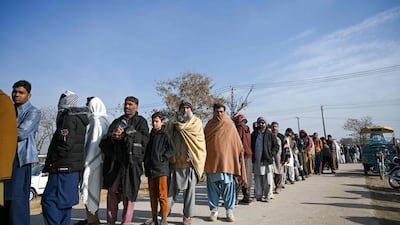
People queue to buy wheat flour at government-controlled prices in Islamabad. Pakistan's economy has been hit hard by a political crisis, as well as devastating floods and the global energy crisis, with the rupee plummeting and inflation at decades-high levels. AFP -
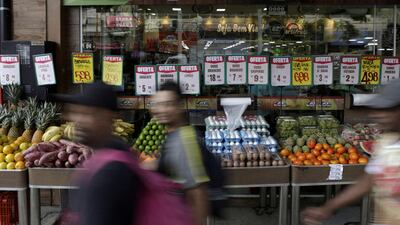
A market in Rio de Janeiro. Brazil's inflation ended 2022 with a sharp slowdown from double-digit peaks seen throughout the year. Reuters -
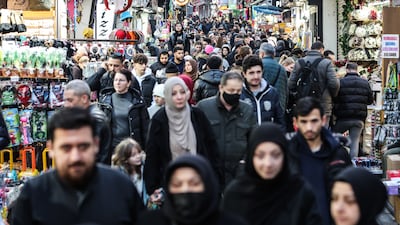
A market in Istanbul. Turkey's inflation at the end of 2022 stood at 64. 27 per cent, the country's Statistical Institute said, while the independent group of inflation researchers ENAG calculated it at 137. 55 per cent. EPA -
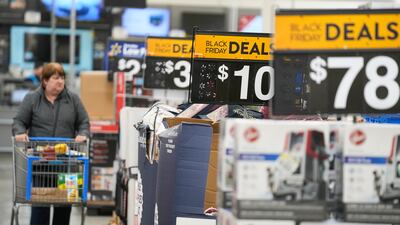
A Walmart in New Jersey. According to a poll, US Republicans and Democrats have distinct views of what’s most important for the government to address amid high inflation. More Republicans name gas and food prices, energy and immigration, while Democrats focus on health care, climate change and poverty. AP -

A used car sales lot in California. US Federal Reserve officials have indicated it’s possibly too early to declare victory over inflation. AFP -
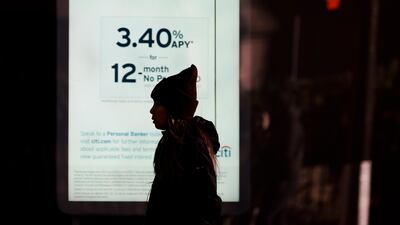
A person walks by a sign showing interest rates at a bank in New York. EPA -
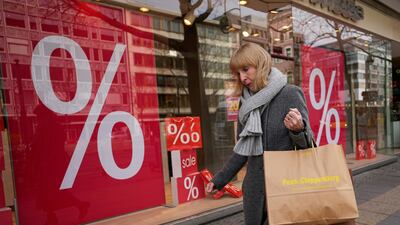
A woman walks with purchases past a store in Berlin. In December, consumer price growth across the Euro zone slowed to 9.2 per cent from 10.1 per cent a month earlier, Eurostat data showed last week. AP -

Workers sit in front of a banner reading "Stop the Inflation Monster" at the Burchardkai Container Terminal as they go on strike for higher wages at the harbour in Hamburg, Germany. Reuters -

Price tags at a market in Nice, France. Reuters -
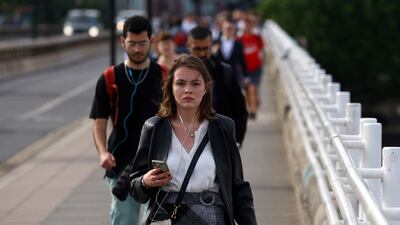
Commuters cross Waterloo Bridge in London. The British Retail Consortium said spending in store chains rose by 6.9 per cent in annual terms in December, but this was a long way off consumer price inflation, which hit 10.7 per cent in November. Reuters -
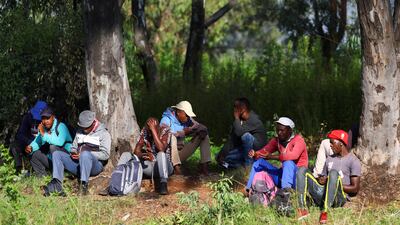
Jobseekers in Johannesburg. South Africa’s governing party wants the central bank’s mandate broadened to shore up the economy and promote employment in addition to its existing task of tackling inflation. Reuters -
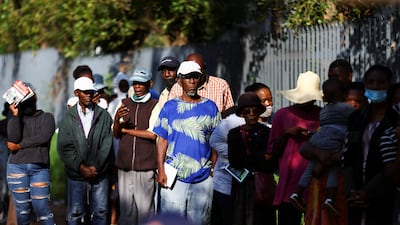
Social grant recipients stand in a queue outside a post office, as joblessness takes its toll in Meadowlands, South Africa. Reuters


“Higher interest rates, a turn in the financial cycle and an economic slowdown would eventually raise credit losses. These, in turn, could generate further strains in the financial system.”
The BIS also warned that it is quite common for banking stress to emerge following a tightening of monetary policy.
The incidence rises considerably when initial debt levels are high, real estate prices are elevated or the increase in inflation is stronger – the current episode ticks all the boxes, it added.

